

- Ashok Leyland
- Indian Institute of Technology Madras
- IIT Madras
- Centre of Excellence for Zero Emission Trucking
- CoEZET
- GET ZET
- Boss Electric Truck
- Shenu Agarwal
- Manu Santhanam
Ashok Leyland, IIT Madras Partner For 40-City Electric Truck Demonstration Drive
- By MT Bureau
- September 29, 2026
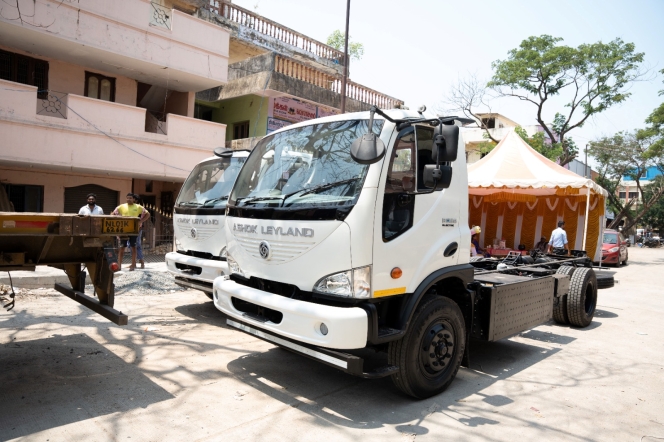
Ashok Leyland, one of the leading commercial vehicle manufacturers, has launched a nationwide initiative titled ‘GET ZET - Electric Truck Awareness to Acceptance’ in partnership with the Centre of Excellence for Zero Emission Trucking (CoEZET) at IIT Madras. The initiative will run from September 2026 to February 2027, the campaign will cover 40 cities across India to promote the commercial deployment of battery-electric trucks.
The roadshow will traverse logistics hubs and industrial corridors across 15 states, including Tamil Nadu, Kerala, Karnataka, Andhra Pradesh, Telangana, Chhattisgarh, Madhya Pradesh, Gujarat, Maharashtra, Rajasthan, Haryana, Uttar Pradesh, Delhi, Punjab and Himachal Pradesh. The events will convene fleet owners, logistics operators, financiers, freight providers, infrastructure developers and policymakers.
As part of the campaign, Ashok Leyland and CoEZET will showcase the BOSS Electric truck alongside charging infrastructure, offering trial rides and technical demonstrations to evaluate real-world vehicle performance and operational requirements.
Shenu Agarwal, MD & CEO, Ashok Leyland, said, “The transition to zero-emission mobility will be defined not just by the maturity of technology, but by the confidence of the users to adopt it at scale. At Ashok Leyland, we believe the best way to build that confidence is by taking electric trucking closer to the people who will use and enable it. Through ‘GET ZET - Electric Truck Awareness to Acceptance’, in collaboration with Centre of Excellence for Zero Emission Trucking (CoEZET), IIT Madras, we are bringing the electric truck technology to 40 cities, creating opportunities for customers and stakeholders to experience its real-world potential first-hand. This is a step towards making electric mobility more accessible, practical and ready for the future of India’s freight ecosystem.”
Manu Santhanam, Dean (ICSR) at the Indian Institute of Technology, Madras, said, “CoEZET, IIT Madras has been working towards the adoption of zero-emission trucks since 2022, with a vision of achieving 100 percent ZET penetration by Viksit Bharat 2047. Our work spans policy, technology, skilling and outreach. The current Outreach Acceptance Initiative builds on our earlier awareness activities across hundreds of locations and focuses on enabling stakeholders to experience, evaluate and build confidence in battery electric trucks, as we move towards the next phase of adoption. Through in-depth interactions and hands-on trial rides, we aim to demonstrate the quieter, smoother and more comfortable experience of electric trucks, while helping address driver concerns and build greater acceptance among the trucking community. We are glad to collaborate with industry partners such as Ashok Leyland in this effort and look forward to engaging with a wider range of stakeholders to strengthen acceptance and enable the wider adoption of zero-emission trucks in India.”
The joint programme forms part of broader efforts to support zero-emission freight transportation across key national transport corridors.
CHARGEZONE Partners Ador-Quench To Deploy Fast-Charging Infrastructure Across 1,000 Stations
- By MT Bureau
- November 05, 2026
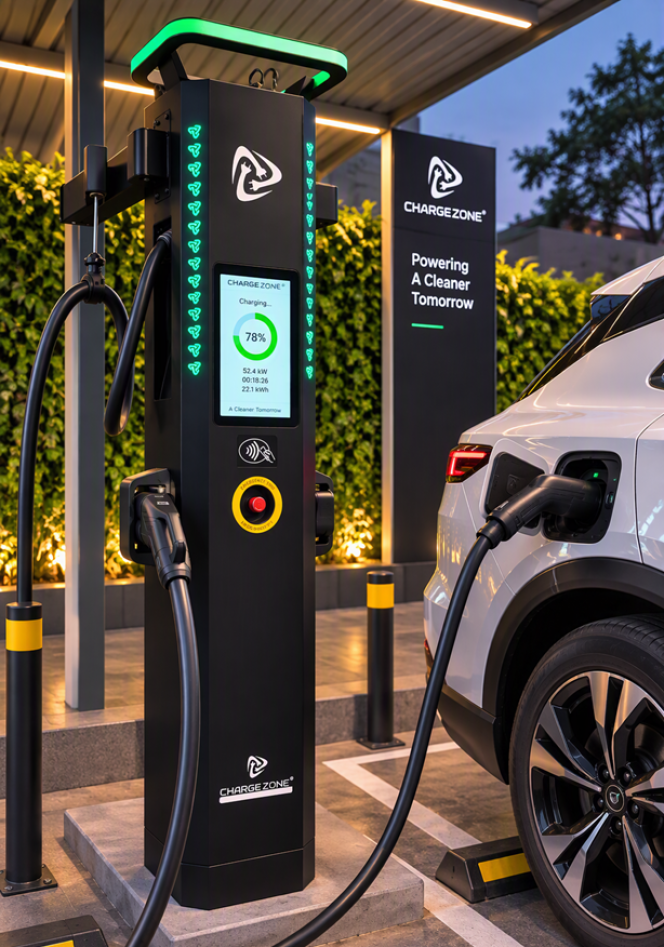
CHARGEZONE has announced an expanded partnership with Ador-Quench to procure and deploy made-in-India DC fast chargers across 1,000 new supercharging locations in India. The deployment supports CHARGEZONE's target of reaching 300 MW in cumulative network capacity.
The rollout will feature Ador-Quench DC fast-charging systems ranging from 120 kW chargers to 480 kW dispenser systems. Built on a modular 30 kW AC-DC converter architecture, the equipment caters to passenger cars, electric buses and commercial trucks.
The 360 kW and 480 kW units are targeted at commercial fleet operations to support high energy throughput, while the 120 kW chargers will be installed along intercity routes and highways.
The infrastructure features an energy efficiency rating exceeding 96 per cent, forced-air cooling, and a digital CAN interface for monitoring system diagnostics. The units will integrate into ChargeCloud, CHARGEZONE's proprietary network management platform, to enable dynamic load management and predictive maintenance.
Kartikey Hariyani, Founder and CEO, CHARGEZONE, said, "India’s EV transition has reached a tipping point where charging infrastructure must perform for every vehicle type, from a family car on a weekend road trip to a 55-ton electric truck running 24/7. As EV adoption grows across both passenger and commercial segments, the next phase of infrastructure development has to address very different charging requirements. By partnering with Ador-Quench for Made-in-India superchargers, we are strengthening our ability to deploy high-power charging infrastructure suited to these needs, while supporting the expansion of our national network."
Ravin Mirchandani, Chairperson, Ador Powertron and Quench Chargers, said, "CHARGEZONE was our first-ever customer for fast chargers, and we are delighted to be supporting the growth of one of the most dynamic companies in this sector. We are particularly proud that these chargers are 100% Made in India, including the Rectifier and controller modules, reflecting our commitment to world-class indigenous technology and manufacturing."
Rincell Targets To Ship 500,000 Battery Cells By December 2026
- By MT Bureau
- November 04, 2026
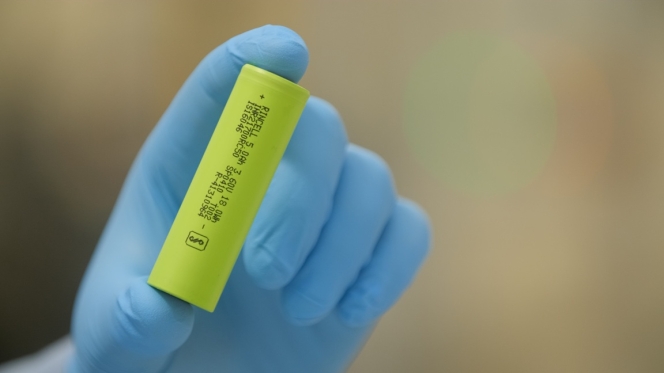
Rincell has announced that it expects to ship over 500,000 battery cells across its product portfolio by the end of 2026, driven by commercial adoption of its RC50 21700 cell. The company is actively supplying battery cells to customers across the US, Europe and India.
The RC50 cell combines a 5Ah energy capacity with a 25A continuous and 50A burst output, retaining 80 per cent of its capacity after 1,200 full charge cycles. The cell has achieved UN 38.3 certification for international transport, IEC 62133 compliance for European markets, and BIS certification for India.
Applications for the RC50 encompass medical X-ray equipment, industrial machinery, commercial drones, and electric two-wheelers. In India, battery pack manufacturer Autorev is integrating the RC50 into its battery packs for electric scooters and motorcycles.
Founded in January 2023, Rincell operates a 6,500 sqft pilot manufacturing facility in Fremont, California, while carrying out volume production primarily in India. The company is currently constructing a production facility in the US, which is scheduled to become operational in late 2027.
Jignesh Parikh, Co-Founder and CEO, Rincell, said, "The RC50 is our all-rounder. It combines high energy, high power and long life in one cell, driving adoption across a wide spectrum of demanding commercial markets and building major order traction. Delivering that level of performance consistently and at scale is where so much of the battery industry has struggled, and it is what Rincell was built to do."
Mohammad Ubeduddin, CTO, Autorev, said, "Electric two-wheelers are one of the toughest jobs a battery can do. Riders in India push their scooters and motorcycles hard every day, through heat and stop-start traffic, so our packs need range, punch and a long working life all at once. The RC50 gives us all three in a single cell, and it has performed consistently in our own testing. That is what lets us build packs our customers can rely on as India’s electric two-wheeler market scales."
Epsilon Advanced Materials Launches EpSil Silicon-Graphite Anode Material
- By MT Bureau
- November 04, 2026
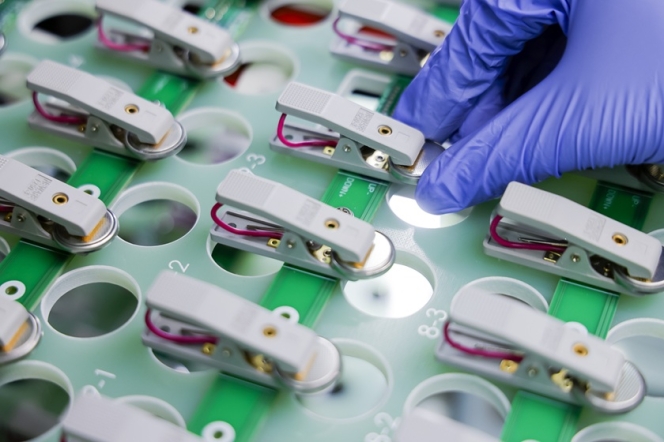
Epsilon Advanced Materials has announced the launch of EpSil, a silicon-graphite composite anode material developed for electric vehicle battery cell manufacturing. The material is designed to increase battery energy density and enable driving range extensions of up to 30 percent without altering existing battery pack dimensions, or allow vehicle manufacturers to reduce pack size while maintaining current range metrics.
EpSil delivers a claimed reversible capacity of 600–650 mAh/g, compared to 340–360 mAh/g for conventional graphite anodes. The composite addresses structural cycle-life challenges associated with silicon expansion and contraction during charge cycles while supporting 1C–5C charge rates.
The material engineered by Epsilon aims to limit lithium plating risk and dendrite formation during high-rate charging protocols, and is compatible with existing battery cell production lines. The launch occurs against an expansion in global battery demand, with International Energy Agency data recording 1.2 TWh of electric vehicle battery deployment in 2025 and projecting demand to approach 3 TWh by 2030.
Vikram Handa, Managing Director, Epsilon Advanced Materials, said, "Battery manufacturers are being asked to deliver more range and faster charging without making battery packs larger. With Epsil, we are delivering higher anode capacity, stable fast charging and compatibility with existing manufacturing lines. Our aim is to give customers more flexibility in how they design for vehicle range and pack size, through a resilient & secure anode material supply option from India."
Revolt Motors Secures Order For 1,100 Electric Motorcycles From Bihar Police
- By MT Bureau
- November 04, 2026
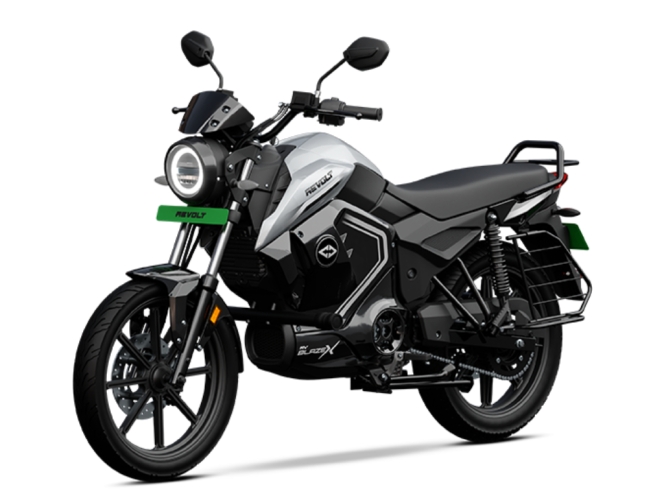
Revolt Motors, a wholly-owned subsidiary of RattanIndia Enterprises, has secured an order to supply 1,100 BlazeX electric motorcycles to the Bihar Police for patrolling operations. The contract represents an expansion of the company's institutional business into law enforcement mobility.
The BlazeX model features a claimed range of up to 150 km per charge and can be recharged using a standard 10A power socket. The vehicle is equipped with a removable battery, under-seat storage for the charger and built-in GPS for fleet location tracking and monitoring.
Delivery of the vehicles is contracted for completion by January 2027, with Revolt Motors targeting completion of deliveries by November 2026. The deployment expands Revolt Motors' operational footprint, which currently includes a network of over 182 dealerships across India.
Anjali Rattan, Chairperson of RattanIndia Enterprises, said, "Securing an order for 1,100 electric bikes from Bihar Police is a significant step for Revolt. Institutional mobility presents a different set of requirements from individual ownership, and engagements of this scale give us an opportunity to take our products into real-world operating environments. We see institutional adoption as an important avenue for expanding the role of electric bikes in India."
Comments (0)
ADD COMMENT