

Eicher Motors Announces Strategic Investment In Stark Future SL
- By MT News
- December 30, 2022

Eicher Motors Ltd., parent company of Royal Enfield, announced a strategic collaboration in the space of electric motorcycles with Spain-based Stark Future SL, on Thursday. Stark Future is a European electric motorcycle manufacturer with specific focus in the area of performance electric motorcycles. As part of this collaboration, the Board of Directors of Eicher Motors Ltd has approved an investment of € 50 million on Thursday, for a close to 10.35 percent equity stake in Stark Future. With this investment, Eicher Motors Ltd claims that it will have a seat on Stark Future’s Board and will explore further opportunities to collaborate in the space of electric mobility. It will also pave the way for a long-term partnership in collaborative research and development in electric motorcycles, technology sharing, technical licensing and manufacturing.
This investment has strategic significance for both Royal Enfield and Stark Future. According to Eicher Motors Ltd, this is because both companies are keenly invested in creating innovative and sustainable solutions in global mobility. Stark Future recently launched its first high performance electric motocross bike, the Stark VARG, which received an exceptional response from global media, professional riders and dealers.
Speaking about Stark Future and this partnership, Siddhartha Lal, Managing Director, Eicher Motors Ltd, said, “We love the vision, passion and focus of the amazing team at Stark Future. Leisure motorcycles do not easily lend themselves to EV technology at this stage, due to challenges like the battery range, packaging, weight and cost. This has resulted in stunted growth of this segment till now. Stark Future has been able to understand and harness the potential of EV technology by dramatically outperforming ICE offerings, without compromising on range, weight, packaging and cost. They have created an absolutely astounding motocross motorcycle – the Stark VARG – as their entry into the EV world. We believe that Stark Future has the highest potential for real breakout growth in the EV leisure space with this model, and the potential to use this strong base to extend into other contiguous segments and beyond.”
At the helm of affairs at Royal Enfield, B Govindarajan, CEO of the company, feels this is a perfectly symbiotic partnership, claims Eicher Motors Ltd. Govindarajan said, “We are very excited to closely collaborate with Stark Future, who are as focused as we are on challenging norms, pushing the boundaries and building uniquely differentiated offerings for riders. In addition to the sheer potential of Stark Future, we see immense synergies in this partnership. While they are scaling up and planning their market entry soon, we will support Stark in the industrialisation process. While they are thought leaders in EV technology, particularly in lightweight components and innovative solutions, we, at Royal Enfield, will draw on these capabilities for developing our EV platforms and will also plan to share some EV platforms in the future.”
Also speaking about this partnership, Anton Wass, Founder and CEO, Stark Future, said, “We aimed to challenge and inspire the motorcycle industry with the creation of the Stark VARG and by bringing our electric technology from the drawing board to reality. To now partner with one of the very first motorcycle brands in history and be part of their journey towards sustainability is a huge inspiration for us at Stark. We have now worked closely with Sid, Govind and team for a few months, and have been deeply impressed by what they have created in the past 25 years, as well as the mindset and focus to continue to build and develop Royal Enfield into the future of sustainable motorcycling. With the Stark VARG, we believe we have a launch model that will reset benchmarks, so to know that the bike’s technical basis will spread much further and filter into more machinery and products is another source of pride for us. It has been a short, intense and incredible journey for us so far but our link with Royal Enfield and what lies in store in the coming years are brilliant signs for the future.”
Epsilon CAM And C4V Sign Agreement For Cathode Material Qualification In North America
- By MT Bureau
- October 14, 2026
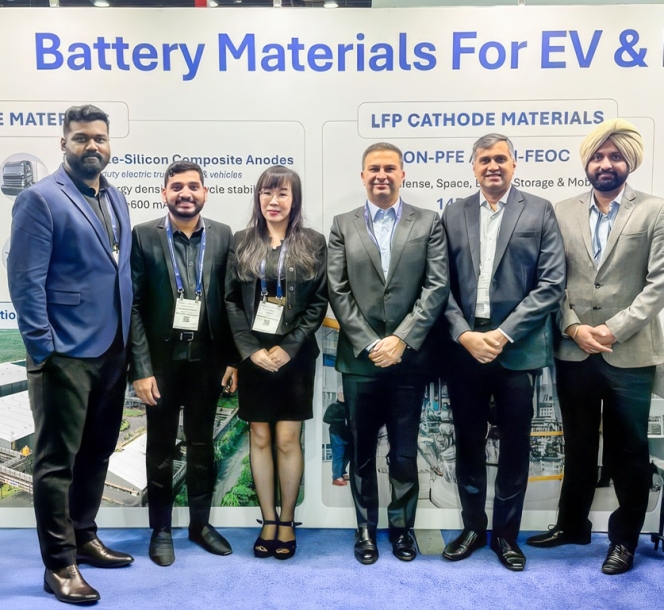
Epsilon CAM, one of the leading battery cathode active material manufacturers, and cell technology firm C4V have signed a Letter of Intent (LoI) to evaluate and qualify lithium iron phosphate and bio-mineralised lithium mixed metal phosphate cathode active materials.
The agreement establishes a framework to evaluate Epsilon CAM's cathode materials for cell-level integration across C4V's battery platforms and North American manufacturing programs, including those operated by sister company Near Prime Technologies.
As per the arrangement, Epsilon CAM will provide material samples and engineering data for testing, including electrochemical performance validation, cycle-life evaluation and process compatibility assessments. Subject to technical qualification and definitive contracts, the firms plan to explore multi-year material supply arrangements and technology integrations.
The evaluation will assess supply-chain sourcing for critical raw material inputs, including lithium, manganese and phosphorus, to align with North American content requirements.
Epsilon CAM is advancing plans for a 20,000-tonne-per-annum cathode active materials plant in India by 2028, positioning its production as a non-foreign-entity-of-concern source for global cell manufacturers.
Vikram Handa, MD, Epsilon CAM, said, "This LoI brings together complementary capabilities across cathode materials, cell technology and manufacturing. Our focus is to demonstrate material performance at the cell level and to work with C4V toward scalable, high-quality LFP and LMFP solutions that address the evolving needs of battery manufacturers and automotive customers."
Dr. Shailesh Upreti, CEO, C4V, said, "Epsilon is helping address one of the most important gaps in the U.S. battery supply chain: reliable access to scalable, ex-China phosphate cathode active materials. C4V is currently evaluating Epsilon’s materials through our Digital DNA qualification process for potential use across C4V cell platforms and U.S. manufacturing programs at Near Prime. Successful qualifications would create an important pathway connecting advanced cathode materials with C4V battery technology and domestic cell manufacturing."
JSW MG Motor India Launches MG Windsor INDULGE Edition At INR 1.79 Million
- By MT Bureau
- October 14, 2026
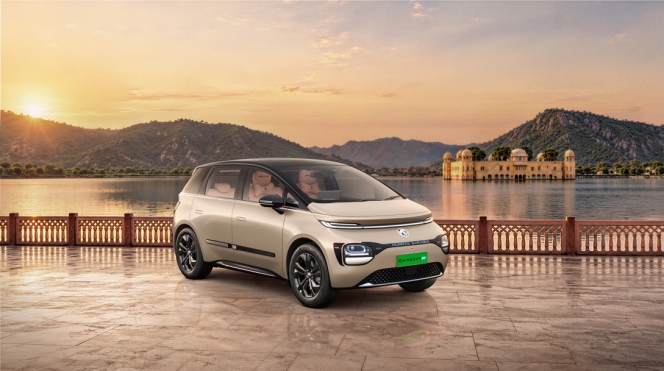
JSW MG Motor India, one of the leading passenger vehicle manufacturers, has launched the MG Windsor INDULGE Edition at INR 1.79 million ex-showroom.
The MG Windsor INDULGE Edition features a dual-tone exterior with a Shadow Gold body finish paired with a black roof, black exterior mirror housings, 18-inch black alloy wheels and edition badges on the C-pillar.
The interior adopts a tan and black upholstery scheme, embroidered headrests, and a rear-seat entertainment display screen supplied as standard equipment, alongside rear cabin accessories including themed cushions and window sunshades. The EV retains its 38 kWh battery pack delivering 100 kW of power and 200 Nm of torque, with a certified driving range of 332 kilometres per charge.
Vinay Raina, Chief Commercial Officer at JSW MG Motor India, said, "The MG Windsor is an important product not only for us but for the EV segment, as it has encouraged many fence-sitters to embrace electric mobility. Reaching over 80,000 families in just 24 months is a remarkable milestone and a testament to the value the Windsor delivers to customers. Building on this success, the INDULGE Edition introduces exclusive enhancements and an elevated cabin experience, offering customers a more premium and personalised expression of the Windsor lifestyle. It reflects our commitment to continuously evolving the product in line with changing customer preferences while retaining the qualities that have made the Windsor a preferred choice in the EV segment."
The SUV retains its structural layout, including rear seatbacks capable of reclining up to 135 degrees and a 15.6-inch central infotainment touchscreen, as JSW MG Motor expands its electric vehicle lineup across domestic retail networks.
Royal Enfield Expands Flying Flea Sales In Hyderabad
- By MT Bureau
- October 09, 2026
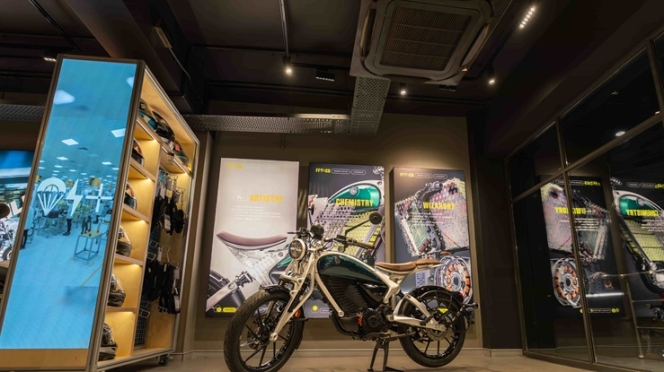
Flying Flea, the electric mobility brand from Royal Enfield, has expanded its retail network in India by launching operations in Hyderabad. Following its initial rollout in Bengaluru, where registered vehicles have accumulated over 100,000 kilometres, Hyderabad becomes the second Indian market for the brand.
The expansion includes four touchpoints across Hyderabad, comprising one company-owned store in Erragadda and three dealer partner locations operated by Taurus Motors in Vanasthalipuram, Bolt Motorcycles in Hi-Tech City and SVR Motors in Kondapur. The network utilises a hub-and-spoke operational structure, designating the Erragadda facility for technical support while the partner locations handle routine service and sales operations.
The brand's initial offering, the Flying Flea C6 electric motorcycle, is priced at INR 279,000 ex-showroom or INR 199,000 under a Battery-as-a-Service model. The vehicle is offered in three colour options: Storm Black, Flea Green, and Parachute White, with roadside assistance provided across retail channels.
The retail launch in Hyderabad follows Flying Flea's international expansion into European and UK markets, including retail locations in Paris, Barcelona, Berlin, Rome and London.
- Zomato
- Blinkit
- Eternal
- EV Bazaar
- Mahmood Ahmed
- MoRTH
- Jitender Patil
- Anjalli Ravi Kumar
- EMO Energy
- Sheetanshu Tyagi
- Zomato Local Services
Zomato And Blinkit Host EV Bazaar 3.0 To Accelerate Fleet Electrification
- By MT Bureau
- October 09, 2026
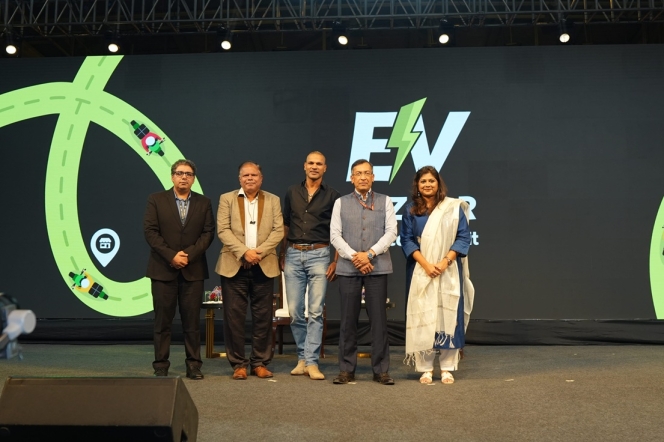
Zomato and Blinkit, operating under parent company Eternal, hosted the third edition of EV Bazaar at the KD Jadhav Stadium in New Delhi to promote electric two-wheeler adoption among delivery partners.
The event drew participation from 2,500 delivery gig workers and over 20 original equipment manufacturers and ecosystem partners, showcasing more than 30 electric two-wheeler models alongside vehicle rental, financing and charging solutions.
The event included addresses by Mahmood Ahmed, Additional Secretary at the Ministry of Road Transport and Highways and Jitender Patil, Head of the EV Cell at the Transport Department of Maharashtra.
As of 30 September 2026, over 200,000 delivery partners across the Zomato and Blinkit platforms operate electric two-wheelers. During FY2026, electric vehicles completed 228 million deliveries across both platforms, avoiding an estimated 9,926 tonnes of carbon dioxide emissions.
Mahmood Ahmed said, “The electrification of the transportation section is a critical contributor to India’s energy security and air pollution control. The adoption of EVs by delivery partners is important to accelerating the transition since charging, swapping and servicing networks will expand for the industry and benefit other users as well. I appreciate this proactive initiative by Zomato and Blinkit to further the gig ecosystem’s shift to electric mobility and enabling a better future for India.”
Anjalli Ravi Kumar, Chief Sustainability Officer, Eternal, said, “For our delivery partners, the performance of their bike is critical to their ability to earn efficiently. Delivery may only be one of their many responsibilities on the same day. That makes the move to electric a practical and financial question as much as an environmental one. EV Bazaar gives delivery partners a place to evaluate their EV bike purchase options by directly interacting with companies who build, rent, finance and charge EV bikes. We thank each of them for being part of the third edition.”
To facilitate vehicle access, the companies operate a 'Rent a vehicle' feature within their delivery partner mobile applications, enabling workers to lease electric two-wheelers and locate charging and battery-swapping stations within assigned delivery zones. Over 23,000 delivery partners utilised the rental feature in fiscal year 2026. Additionally, Zomato Local Services launched an owned electric vehicle rental fleet in June 2025, deploying over 1,500 electric two-wheelers across Delhi and Chennai by March 2026.
Sheetanshu Tyagi, Co-Founder and CEO, EMO Energy, said, “EMO Energy brings advanced batteries and 20-minute charging together to keep last-mile vehicles moving. With Zomato and Blinkit, we are enabling riders to charge faster, operate with zero downtime, and have greater vehicle availability.”
During the event, three delivery partners received new electric two-wheelers and one partner was awarded a one-year rental sponsorship from the network in recognition of operational performance and participation in platform electrification initiatives.
Comments (0)
ADD COMMENT