

ACMA Expects Component Industry To Clock 10% Growth In FY2027, Outlook Remains Positive
- By Nilesh Wadhwa
- July 07, 2026
The Indian automotive component industry has delivered another strong performance in FY2026, reinforcing its position as a critical pillar of the country’s auto ecosystem and a growing player in global value chains.
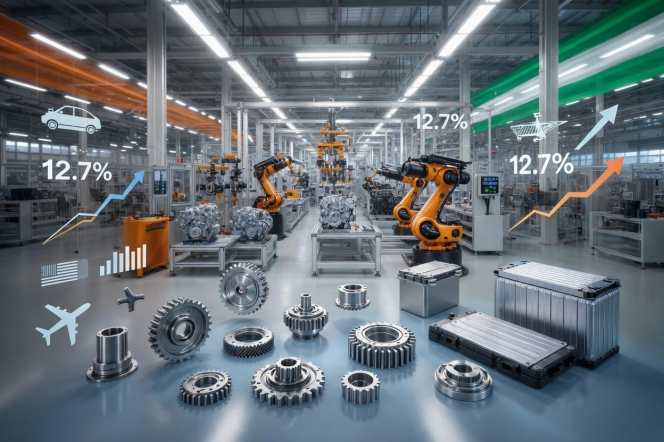
According to the Automotive Component Manufacturers Association of India (ACMA), the sector recorded sales of USD 85.9 billion (INR 7,600 billion), marking a healthy 12.7 percent YoY growth. Supply to original equipment manufacturers (OEMs) grew even faster at 16.3 percent, driven by commercial vehicles (13%), two-wheelers (12%) and passenger vehicles (10%). The aftermarket segment expanded by 9 percent, supported by a rising vehicle population and increasing market formalisation.
Exports grew modestly by 5 percent, while imports rose 13 percent, resulting in a trade deficit of USD 1,370 million. Supply to the electric vehicle (EV) segment accounted for 4.6 percent of OEM sales, highlighting the sector’s gradual but steady participation in the country’s electrification journey.
Early indicators for FY2027 are encouraging. Despite global headwinds, Q1 performance has been resilient, underpinned by robust domestic demand and aftermarket growth. “Overall mood in the industry has been very positive. Since the GST 2.0 revision, the auto industry has continued to grow both domestically and in exports, and the component industry has followed suit,” noted Vikrampati Singhani, President, ACMA.
Infrastructure development has further boosted vehicular movement across categories, while demand for both new and used vehicles remains healthy. Several Free Trade Agreements (FTAs) have begun yielding results, with more expected to materialise.
The industry body stated that Europe has emerged as a bright spot for exports, benefiting from favourable trade pacts, even as overall European sentiment remains somewhat subdued. Exports to the region have contributed to an overall industry export growth trajectory around 9 percent in recent assessments.
Export Resilience Amid Geopolitical Challenges
Indian component makers have demonstrated remarkable consistency. North American exports held steady at USD 7.3 billion despite tariff pressures. However, CIS and Baltic region saw a sharp around 40 percent decline, largely linked to minimal trade with Russia.
ACMA noted that in Latin America the automotive industry faces a Section 301 investigation citing unfair labour practices and alleged government subsidies leading to overcapacity – claims strongly refuted by the industry.
Vinnie Mehta, Director General, ACMA, noted that “The auto component industry does not get any subsidy from the government,” pointing out that under the PLI scheme, only 2 out of over 1,100 ACMA members have availed benefits.
He also highlighted ongoing capacity expansions as evidence against overcapacity claims. Top export destinations remain the USA, Germany and Thailand, while imports are dominated by China, Japan, and Germany, with Asian imports (primarily China) reaching USD 17.75 billion, up 19 percent.
The rupee’s 10 percent depreciation helped limit USD growth to 7.1 percent, providing some cushion. Positive developments include the reopening of the Strait of Hormuz and normalisation of LNG routes, which are expected to further ease freight costs.
The split across vehicle segments has remained largely stable: Passenger Vehicles account for 45 percent of OEM sales, followed by Commercial Vehicles (25%) and Two-Wheelers (19%).
ACMA stated that localisation levels average around 70 percent industry-wide, though high-end vehicles and advanced technologies (such as certain drivetrains) lag. The push for deeper localisation, especially in electronics and EV supply chains, continues, with OEMs and component makers collaborating on the third round of related studies.
Leaders expressed optimism that sustained localisation efforts, combined with OEM capacity expansions, could help narrow the trade deficit in the coming years.
Mehta stated that challenges remain in areas like rare earth magnets, where licensing issues persist, and EV supply chains, which are still heavily influenced by China’s cost competitiveness.
Headwinds and Adaptive Strategies
Labour shortages have emerged as a significant, cross-industry issue expected to persist for the next 8-10 years. Factors include seasonal agricultural demands, festivals, elections and rising urban living costs, which have resulted in challenges for industries. Despite this, the automotive component industry has shown resilience – no major production disruptions have been attributed to component shortages.
Furthermore, small and medium enterprises (SMEs) face elongated CAPEX cycles, raw material price pressures and working capital challenges.
The industry is responding through increased focus on digitisation, robotics and automation.
“Opportunities are immense, with many traditional players diversifying into software, electronics and new-age technologies. Today, 7-8 percent of ACMA members are new-age firms and consumer electronics players have also joined the fold. India’s Global Capability Centers (GCCs) in automotive – over 200,000 total, with strong representation in components – are driving significant software and design work domestically,” said Mehta.
Capacity expansion & FTAs
It is no secret that the growing demand for newer vehicles has also led to automakers further expanding their manufacturing capacity, including both greenfield and brownfield projects.
For the automotive component industry, capacity utilisation currently hovers around 70 percent, aligned with peak industry needs.
“As OEMs expand – particularly in emerging hubs like Aurangabad, touted as the ‘next Sanand’ – component makers are expected to follow with corresponding investments,” revealed Mehta.
Furthermore, India’s emergence as a reliable alternative in global supply chains is gaining traction amid diversification away from concentrated sources. FTAs are viewed not merely as duty-reduction tools but as enablers of long-term partnerships.
“US RFQs increasingly seek certified Indian components, bypassing China and boosting Make-in-India appeal. We are hopeful about the EU FTA and potential US BTA, which could significantly elevate India’s share in global auto value chains,” said Singhania.
For the unversed, the automotive component industry in India directly employs around 5 million people, with the broader auto industry supporting nearly 30 million livelihoods. “India is emerging as a strong long-term partner,” stated Mehta.
With twin engines of direct exports and indirect contributions through global customers, the component industry is well-positioned for sustained growth.
FY2027 and Beyond: Cautious Optimism
Going forward, ACMA projects 8-10 percent value growth for FY2027 if current momentum holds, supported by strong Q1 performance and steady exports. While trade deficit reversal will take time – particularly with EV growth and imported advanced technologies – commitment to localisation from both OEMs and suppliers provides a clear pathway forward.
As Singhani summarised, “The short-to-medium-term outlook is positive, with momentum in infrastructure, alternative fuels and technology transitions. Global volatility remains a risk, but the industry’s resilience, adaptability and strategic focus on automation and partnerships signal a bright road ahead for Indian auto components.”
Eastman Auto & Power Appoints Rajesh Jindal As Chief Executive Officer
- By MT Bureau
- October 12, 2026
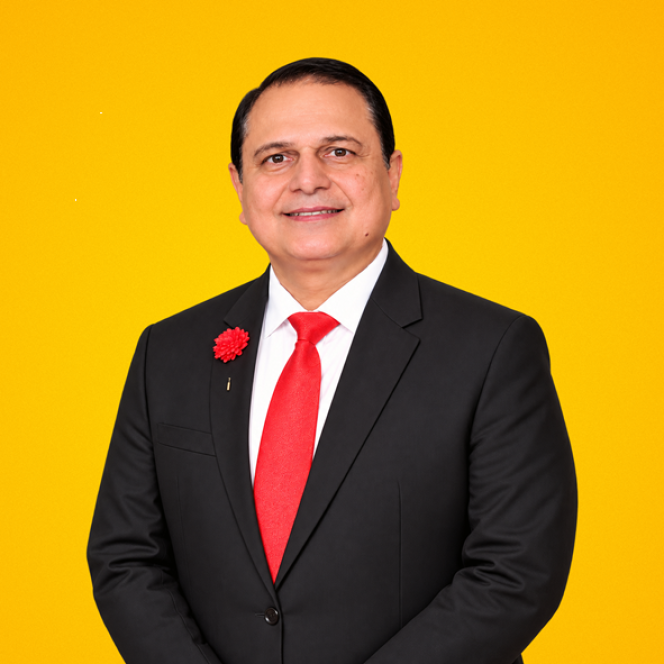
Auto component manufacturer Eastman Auto and Power has appointed Rajesh Jindal as Chief Executive Officer.
He comes with over 34 years of corporate experience spanning sales, marketing and product management, following a 24-year tenure at Amara Raja Energy and Mobility, where he most recently served as Chief Marketing Officer for automotive batteries in India.
Jindal holds a bachelor's degree in mechanical engineering alongside a Master of Business Administration qualification. During his career, he has managed distribution networks, channel partner relations and go-to-market strategies within the energy storage and automotive component sectors.
Shekhar Singal, MD, Eastman Auto and Power, said, "With over 34 years of experience, Jindal has garnered experience in sales, marketing and product development and is well-positioned to accelerate Eastman’s growth journey. As he begins this new chapter at Eastman, we look forward to his leadership in deepening our commitment for delivering sustainable value for our customers, partners, employees and stakeholders - advancing the company's long-term growth aspirations and inspiring the organisation to achieve new milestones together."
Established in 2000, Eastman Auto and Power operates across three business verticals: last-mile electric mobility solutions, residential solar storage systems and energy storage solutions.
The company employs over 3,600 personnel across seven manufacturing plants in India, supported by a distribution network of more than 1,200 direct partners and over 400 original equipment manufacturer clients worldwide.
Kuraray America Showcases GENESTAR PA9T At SAE Thermal Management Symposium
- By MT Bureau
- October 10, 2026
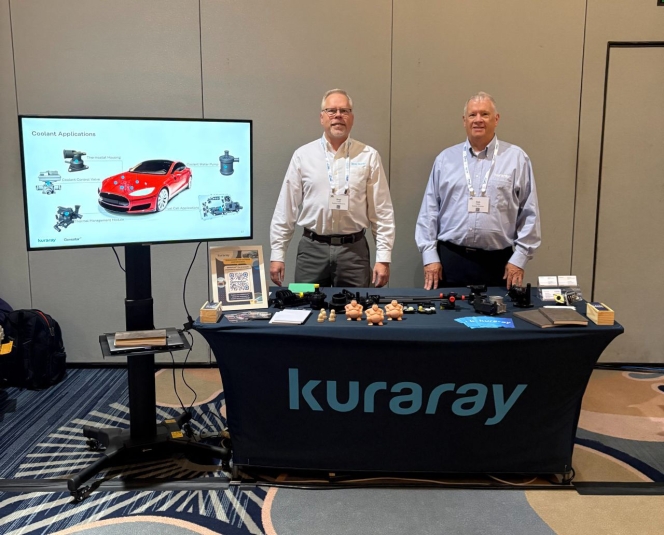
Kuraray America, Inc. (KAI) recently took part in the SAE International Thermal Management Systems Symposium, held on 6–7 October 2026 in Dearborn, Michigan. The event gathered mobility-industry professionals to discuss technologies and emerging challenges in vehicle thermal management. Throughout the two-day symposium, the Kuraray GENESTAR team connected with attendees at Booth #19, sharing insights into high-performance engineering materials.
The team demonstrated how GENESTAR PA9T can meet demanding automotive application requirements. This heat-resistant polyamide engineering plastic was developed by Kuraray using unique monomers, combining low water absorption, high heat resistance, chemical resistance, dimensional precision and excellent moldability. It also offers electrical properties suitable for demanding electrical and electronic applications, including low water absorption, chemical resistance, moldability, insulation performance, thermal resistance and dimensional stability.
These characteristics make GENESTAR relevant for a broad range of electrical, electronic and automotive components. Kuraray lists automotive applications including connectors, relays, insulators and wire harnesses, while GENESTAR materials also serve in sliding, fuel and air-intake systems. The company reports use in automotive gears, bearings, piping and intercooler tanks, and the material is being considered for electric-vehicle applications as well.
The SAE symposium provided a forum for exchanging insights into evolving thermal management technologies. The 2026 programme covered battery and electronics cooling, climate control, alternative refrigerants and vehicle thermal engineering approaches. For Kuraray, participation enabled direct engagement with engineers and industry professionals about how high-performance materials can address increasingly complex automotive design requirements, with GENESTAR PA9T offering a material option where multiple performance demands must be met simultaneously.
- Highway Roop Precision Technologies
- Carlyle
- Chamundi Die Cast
- Mohit Oswal
- Dharmesh Arora
- Yasin Khan
- Amit Jain
- Carlyle India Advisors
Highway Roop Precision Technologies Acquires Chamundi Die Cast
- By MT Bureau
- September 29, 2026
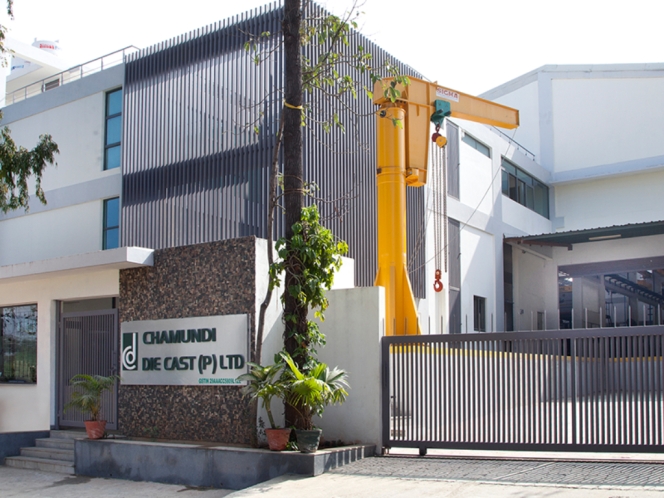
Highway Roop Precision Technologies, a Carlyle-backed manufacturer of precision torque and control components, has completed the acquisition of Chamundi Die Cast, which manufactures complex aluminium die-cast components for automotive and industrial applications.
The transaction adds integrated aluminium die-casting and machining capabilities to Highway Roop's existing forging and precision-machining operations across steering, transmission and powertrain systems.
The acquisition expands Highway Roop’s product portfolio into lightweight vehicle solutions and electric vehicle components, while establishing a manufacturing footprint in South India alongside Chamundi's existing customer base in India, North America and Europe.
At present, Chamundi exports 60 percent of its products to global markets, while domestic business accounts for 40 percent. Interestingly, 98 percent of its business comes from the automotive industry, while the remaining comes from non-automotive sector.
Mohit Oswal, Chairman, Highway Roop, said, “This acquisition is an important milestone in our journey to build Highway Roop into a scaled, diversified precision manufacturing platform anchored in mission-critical torque and control applications. Chamundi’s capabilities and customer relationships complement our existing strengths and strengthen our ability to serve customers across automotive and industrial applications. Together, we are building a stronger platform for the next phase of growth.”
Dharmesh Arora, Group CEO and Director, Highway Roop, said, “Chamundi meaningfully strengthens Highway Roop’s capabilities around our core focus on torque and control applications. Its integrated aluminum die-casting and precision-machining capabilities expand our ability to deliver complex, lightweight engineered solutions across vehicle technologies. Its South India manufacturing base also diversifies our footprint, brings us closer to key customers, and strengthens the resilience of our manufacturing network and supply chain. We are delighted to welcome the Chamundi team to Highway Roop and look forward to building a stronger platform together.”
Yasin Khan, Managing Director, Chamundi, said, “Over four decades, Chamundi has built a strong business anchored in engineering excellence, a committed workforce and long-standing customer relationships. We are pleased to partner with Highway Roop for the next phase of our journey and will continue to hold a stake in the combined entity. Highway Roop’s complementary capabilities and scale will enable us to build on this foundation, deepen our relationships with customers, and create new opportunities for our employees, as we grow together.”
Amit Jain, Partner and Head, Carlyle India Advisors, said, “This transaction reflects Carlyle’s continued commitment to building a scaled, differentiated precision manufacturing platform in India. Highway Roop has established itself as a trusted partner to global OEMs for mission-critical torque and control components, and Chamundi adds complementary capabilities that further strengthen its customer proposition. We remain focused on supporting Highway Roop as it scales its capabilities and builds towards becoming one of India’s leading precision manufacturing companies serving automotive and industrial customers globally.”
Following the completion of the acquisition, Chamundi's leadership will retain an equity stake in the combined entity as part of the integration into Highway Roop's global supply platform.
- Stoneridge
- Uwe Brandeburg
- Natalia Noblet
- Valeo
- DXC Technology
- Continental
- Autoliv
- TRW Automotive
- BlincVision
Stoneridge Appoints Uwe Brandenburg As Global VP Of Engineering & Innovation
- By MT Bureau
- September 25, 2026

American component supplier Stoneridge has appointed Uwe Brandenburg as its Global Vice-President, Engineering and Innovation, effective 2 November 2026. Brandenburg will report to President and Chief Executive Officer Natalia Noblet and join the company’s executive management team.
In his new role, Brandenburg will oversee Stoneridge’s global engineering division, managing product development, technology innovation and product roadmaps across vision systems, safety technology, vehicle intelligence and connectivity platforms for commercial vehicles and off-highway equipment.
Natalia Noblet said, "Uwe is a recognised voice in automotive electronics and engineering leadership, with a proven track record of building world-class engineering teams and delivering breakthrough innovations in ADAS, autonomous driving and software-defined vehicles. His extensive experience bringing next-generation radar, camera, safety electronics and AI-powered platforms to market, combined with his strategic vision and commitment to operational excellence, make him an exceptional addition to our Executive Team. We are excited to leverage his expertise to accelerate Stoneridge’s technology roadmap and strengthen our competitive position in vehicle intelligence and safety.”
Brandenburg comes with over 25 years of experience in Tier 1 automotive electronics, software engineering and vehicle systems. Prior to joining Stoneridge, he served as Chief Technology Officer and Senior Vice-President for Automotive and Manufacturing at DXC Technology.
His previous positions include Global Head of Engineering and Chief Technology Officer for advanced driver assistance systems at Valeo, alongside engineering leadership roles at Continental, Autoliv and TRW Automotive focused on radar, camera and safety electronics systems.
Uwe Brandenburg said, “Stoneridge has a clear technology strategy, a highly talented engineering organisation, and a mission centred on improving safety, reducing emissions and increasing vehicle efficiency for our customers. When cutting-edge technology is paired with the right team and a purpose that truly matters, we have what it takes to create strong value for our customers. I look forward to building on this strong foundation and helping the team deliver the next generation of vision and safety solutions.”
Brandenburg holds a degree in Electrical and Telecommunications Engineering from the University of Applied Sciences Constance and currently serves on the board of directors of BlincVision.
Comments (0)
ADD COMMENT