

Schaeffler Receives German Innovation Award For Industrial Metaverse Development
- By MT Bureau
- April 17, 2026

Klaus Rosenfeld (third from the right) accepts the German Innovation Award in the category 'Large Companies' together with the Schaeffler project team.
Schaeffler, the motion technology company, has been awarded the German Innovation Award in the ‘Large Companies’ category for its Industrial Metaverse. This digital ecosystem integrates artificial intelligence (AI), simulation models, and software to connect physical manufacturing floors with virtual environments. The platform is designed to facilitate a transition towards autonomous production, specifically supporting the deployment of humanoid robots and automated guided vehicles (AGVs).
The Industrial Metaverse functions by combining three-dimensional digital maps of production sites with simulations of physical processes. By evaluating sensor signals through physical AI, the system identifies patterns and determines actions for autonomous resources. This allows robots to practice motion sequences and enables the optimisation of assembly processes in a virtual space before physical implementation. Currently, the technology is operational at ten Schaeffler locations, with a target to expand to 50 percent of its global plants by 2030.

The award is presented annually by WirtschaftsWoche in partnership with Accenture, the BMW Foundation, and O2 Telefónica, under the patronage of the German Federal Ministry for Economic Affairs and Energy. It recognises innovations that contribute to the competitiveness of German and European industry. Schaeffler’s application of the metaverse is intended to automate complex processes that were previously considered uneconomical.
Klaus Rosenfeld, CEO, Schaeffler, said, “We are very pleased to have received the German Innovation Award in the ‘Large Companies’ category. With the Industrial Metaverse, we are not only creating a digital twin of our plants but also a learning ecosystem in manufacturing that will help secure our long-term competitiveness. By using AI in industrial applications and deploying humanoid robots in manufacturing, we are laying the foundation for the factory of the future.”
Dr. Jochen Schroder, COO, Schaeffler, said, “For us, the Industrial Metaverse is far more than just a means to optimize processes. It is the key enabler for the scaling up of humanoid robots, as cyber-physical systems can already be trained by physical AI in the virtual space quickly and efficiently. By using the Industrial Metaverse, we are paving the way for flexible, high-level automation and greater efficiency in our worldwide volume production.”
Tsuyo, LvKON Announce Technical Collaboration For Electric Commercial Vehicle Powertrains
- By MT Bureau
- October 23, 2026
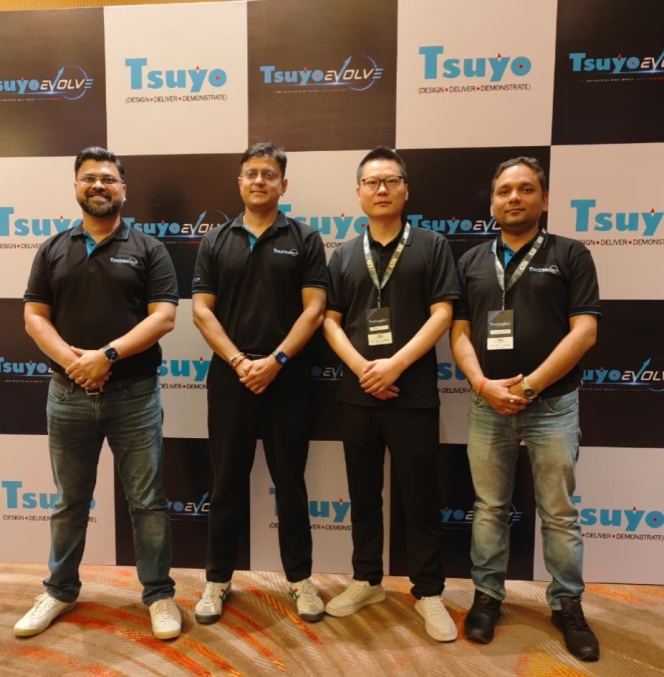
Tsuyo Manufacturing has entered into a technical collaboration with Suzhou Lvkon Transmission Technology (LvKON) to develop and manufacture electric drive systems for commercial vehicles in India.
Building on a five-year operational relationship, the partnership combines Tsuyo's domestic manufacturing presence and relationships with vehicle manufacturers with LvKON's engineering expertise in commercial vehicle drivetrains.
As part of its expansion strategy, Tsuyo is advancing plans for a 24-acre manufacturing facility to serve as an integrated platform for electric powertrain engineering, production, testing, and validation. The collaboration focuses on the development and industrialisation of electric motors, transmissions, integrated drive systems and electronic control units for trucks, buses, and other commercial applications.
Under the agreement, LvKON will support Tsuyo across product engineering, design validation, manufacturing processes, testing protocols and aftersales infrastructure to shorten development cycles and scale commercialisation.
Vijay Kumar, Founder and CEO, Tsuyo Manufacturing, said, "LvKON brings established expertise in electric drive systems for new energy commercial vehicles, with capabilities spanning drive motors, transmissions, control systems, and integrated product development. Its experience across commercial vehicle applications provides a valuable technological foundation for addressing the performance, durability, efficiency, and reliability requirements of demanding operating environments. With LvKON's technology and industrialisation support, the aim is to establish world-class capabilities in electric drive systems and create a scalable foundation for developing and supplying next-generation solutions for India's commercial mobility sector."
Eric, Director of International Sales at LvKON, said, "For the Indian electric commercial vehicle market, LVKON believes that its development potential is enormous. Based on the rapid development of the current Indian market, LvKON also hopes to play an important role in this rapid development process. We have a very professional technical team that can respond quickly to the differentiated needs of the Indian market and efficiently complete customised design and production work. Once again, I would like to express my affirmation of the long-term development of the Indian market. Let us grow together and work together to support the development of the Indian commercial vehicle market."
Hexpol To Acquire 80% Stake In Turkish Compounder Symplast For Euro 54 Mln
- By MT News
- October 22, 2026
Hexpol, the Swedish polymer group, has agreed to acquire an 80 percent stake in Symplast A.Ş., a Turkish manufacturer of thermoplastic elastomer compounds, for Euro 54 million on a cash- and debt-free basis.
The deal will expand Hexpol’s thermoplastic compounding operations and strengthen its presence in Türkiye, where Symplast supplies customers in the automotive, construction, consumer and electronics industries. The acquisition is expected to close by the end of the first quarter of 2027, subject to customary closing conditions, including competition authority approval.
Symplast, headquartered in İzmir, was founded in 2013 by four shareholders: Selahattin Dülger, Ali Rıza Kır, Yaşar Kurtuluş and Fahri Tolga Sarıkahya. The company has annual sales of about Euro 34 million and employs 135 people.
Its operations include a manufacturing facility, headquarters and research and development centre in İzmir, a semi-finished materials facility in Poti, Georgia, and a sales office in Germany. The İzmir site has available capacity and room for expansion within its existing footprint.
Symplast makes engineered thermoplastic elastomers for applications including automotive weather seals, window and door systems, construction membranes, consumer products, cable sheathing and connectors. Its in-house research and laboratory capabilities support the development of formulations tailored to customers’ requirements.
Sarıkahya and Kır will continue to run the business as a subsidiary of Hexpol’s Thermoplastic Compounding division.
“The acquisition of Symplast is another important step in executing the growth strategy for our Thermoplastic Compounding business area. Symplast gives HEXPOL a strong position in Turkey, an attractive and strategically located manufacturing market with a well-developed automotive and construction industry,” says Henrik Elmin CEO and President of HEXPOL.
“Symplast brings strong formulation and application expertise, modern production capabilities and an entrepreneurial organization with a clear focus on customer service. The company is highly complementary to our existing thermoplastic operations and provides an attractive platform for continued growth, both in Turkey and in export markets,” concludes Jan Wikström, President business area HEXPOL Thermoplastic Compounding.
“We are very pleased to have found a long-term industrial owner that shares our commitment to product quality, technical expertise and close customer relationships,” says Selahattin Dülger, Chairman of the Board and one of the founders of Symplast.
“HEXPOL has demonstrated a deep understanding of our business and a clear ambition to invest in its continued development. Becoming part of HEXPOL will give Symplast access to broader technical capabilities, an international customer base and the resources required to accelerate its growth, while preserving the entrepreneurial culture on which the company has been built,” concludes Dülger.
Hexpol said at its Capital Markets Day in November 2025 that it would increase its focus on thermoplastic compounding as a key growth platform. The Symplast acquisition adds a manufacturing presence in Türkiye and access to customers in the domestic market, Europe and neighbouring regions.
The Euro 54 million purchase price will be funded through a combination of bank facilities and cash. Hexpol will have an option to acquire the remaining shares, while the founders will have an option to sell their remaining holdings to the group.
- Mannol
- Euro 7
- European Automobile Manufacturers Association
- American Petroleum Institute
- International Lubricant Standardization and Approval Committee
- Molibden Ultra
- Legend
- Konstantin Gaab
- SCT Vertriebs
Mannol Highlights Role Of Advanced Lubricants For Euro 7 Emissions Standards
- By MT Bureau
- October 21, 2026
German lubricant manufacturer Mannol has stated that the introduction of European Euro 7 emissions regulations will increase the technical demands placed on engine oil durability and exhaust aftertreatment compatibility.
Scheduled to take effect for new vehicle types in categories M1 and N1 starting 29 November 2026, the Euro 7 framework extends regulatory oversight to particulate emissions from braking systems and minimum durability requirements for traction batteries, alongside stricter monitoring of tailpipe emissions over extended vehicle lifespans.
Because the standard mandates compliance over an eight-year or 160,000-kilometre period, the long-term stability of engine components and lubricants becomes critical to preventing deposit accumulation and catalyst fouling.
Mannol notes that specifications established by organizations such as the European Automobile Manufacturers Association, the American Petroleum Institute and the International Lubricant Standardization and Approval Committee provide the technical framework for lubricant selection. low- and mid-SAPS formulations limit sulphated ash, phosphorus and sulphur content to protect particulate filters and catalytic converters, while lower high-temperature high-shear viscosities reduce hydrodynamic friction losses in modern powertrains.
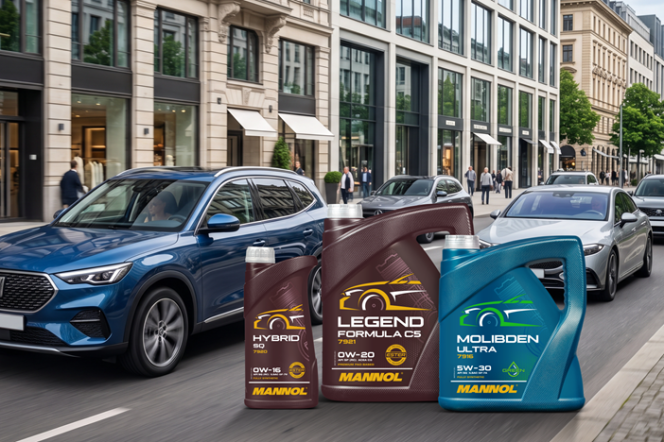
The company offers specialised products within its portfolio, including the Molibden Ultra 5W-30 formulation combining ACEA C2 and C3 with API SQ and ILSAC GF-7A standards, the Legend Formula C5 0W-20 for low-viscosity manufacturer approvals, and the Hybrid SP 0W-16 developed for hybrid powertrains and thermal cycling conditions.
Konstantin Gaab, Managing Director of SCT Vertriebs, said, "From our perspective, Euro 7 is not merely a further development of emissions legislation, but above all a signal that modern vehicles will need to meet increasingly stringent requirements for long-term technical durability. The challenge for the lubricant industry is to further reduce friction losses and, consequently, energy consumption without compromising wear protection or the performance of exhaust aftertreatment systems. Modern performance standards such as ACEA C5, C6 and C7, as well as API SQ and ILSAC GF-7, provide the industry with an important technical foundation. The key will be to translate these requirements into high-performance formulations tailored to specific engine designs. Our existing MANNOL portfolio already supports a range of modern powertrain technologies. At the same time, we regard the continuous development of our lubricants as essential to meeting the future requirements of vehicle manufacturers. Our aim is not simply to respond to regulatory changes, but to understand their technical implications at an early stage and incorporate them into the ongoing development of our product portfolio."
Varroc Engineering, Forsee Power Form JV For Indian EV Battery Market
- By MT Bureau
- October 16, 2026
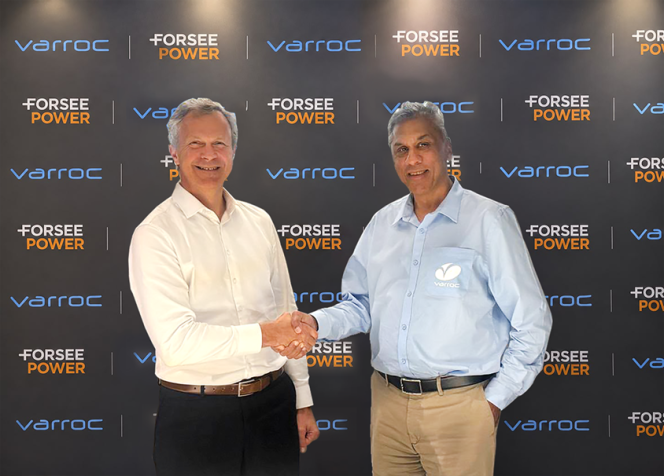
Pune-headquartered automotive component supplier Varroc Engineering and French battery system manufacturer Forsee Power have joined forces to produce electric vehicle battery packs in India.
Under the terms of the transaction, Varroc will acquire a 45 percent equity stake in Forsee Power's Indian subsidiary, Forsee Power India and will assume management and operational control of the entity.
Varroc will also subscribe to Optionally Convertible Redeemable Preference Shares to provide growth capital for the joint venture, subject to regulatory and corporate approvals. The joint venture will initially focus on battery pack development for three-wheeled electric vehicles, before expanding into two-wheelers, light commercial vehicles, buses, trucks and industrial equipment.
The agreement combines Forsee Power's battery system architecture and software with Varroc's component manufacturing, engineering infrastructure and vehicle manufacturer supply relationships across domestic assembly operations.
Arjun Jain, Whole Time Director and CEO – Business I, Varroc, said, "Electric mobility is both evolving and growing rapidly, thus creating new opportunities and new requirements for the automotive industry. Through this evolution we believe OEMs will need partners who can anticipate changes and translate them into reliable, cost-effective solutions at scale. Our partnership with Forsee Power brings together complementary strengths in battery-system technology, automotive engineering, manufacturing and customer relationships. It represents an important step in expanding Varroc’s portfolio to address the evolving needs of our market and the future of mobility. This will further enhance addressable content per electric vehicle in all the segment."
Christophe Gurtner, Chairman and CEO, Forsee Power, said, "With the rapid growth of electric mobility adoption in India, the opportunity is clear and we are ready to scale. Joining forces with Varroc combines our battery technology with local industrial strength and customer access. Three-wheelers are our starting point, with a clear ambition to expand across two-wheeler, commercial and industrial vehicles."
Comments (0)
ADD COMMENT