

Flytta Green Deploys Electric Trucks For Dalmia Cement In Assam
- By MT Bureau
- August 04, 2026
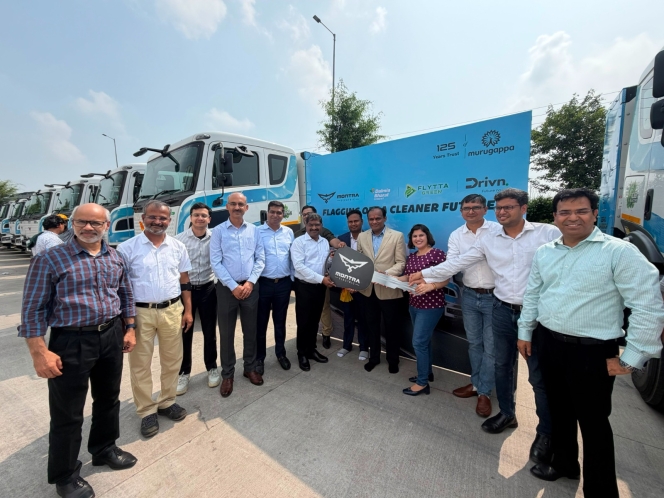
Logistics company Flytta Green has introduced a fleet of heavy-duty electric trucks for Dalmia Cement's clinker transportation operations in Assam. The deployment is being executed in partnership with Drivn, which is providing financing and leasing options for the vehicles.
The initiative follows Flytta Green's introduction of retrofitted electric trucks for Dalmia Cement in October 2025. The company's strategy focuses on deploying new electric trucks with a gross vehicle weight of 55-tonnes and above, alongside developing charging infrastructure and exploring solar power integration for fleet operations.
The initial delivery of 15 trucks, manufactured by Montra Electric, was completed last week. An additional 45 vehicles are scheduled for delivery during August and September.
Flytta Green has received expressions of interest for approximately 1,000 heavy-duty electric trucks, with planned deployments spanning the next 18 months across the cement, mining and metals sectors. The initiative is being managed by Ashwin Dichpally, Chief Operating Officer of Flytta Green.
In collaboration with Drivn, Flytta Green plans to deploy 200 trucks during the current financial year, with financing for subsequent vehicles to be funded by international investors. Deployment operations will prioritise the North-East, East and South-East regions of India.
- ASHOK LEYLAND
- MANAGED MOBILITY
- CONNECTED VEHICLES
- MOBILITY-AS-A-SERVICE
- COMMERCIAL VEHICLES
- ELECTRIC MOBILITY
- PREDICTIVE MAINTENANCE
- FLEET MANAGEMENT
- VEHICLE TELEMATICS
- ARTIFICIAL INTELLIGENCE
Managed Mobility, Connected Vehicles Running On Course
- By Gaurav Nandi
- October 16, 2026
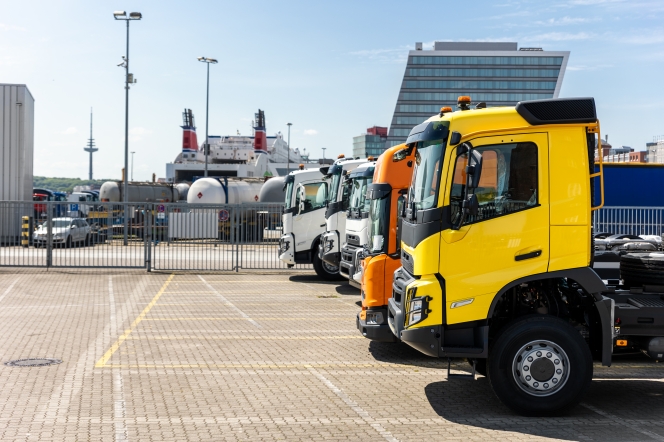
The commercial vehicle industry has predominantly seen full scape ownership by fleet operators as the preferred business model. But as electrification presses on the accelerator and discussion on costs around vehicle maintenance and increasing profitability become core topics, the ownership landscape within the commercial vehicle segment is embracing a new trend of mobility-as-a-service.
Speaking to Motoring Trends in an exclusive interaction, Head Product Portfolio Management and CIDO at Ashok Leyland Vinod Gopinathan noted, “Both business models have existed in the commercial vehicle industry for some time. However, with electrification, we are seeing a growing shift towards managed mobility models, where vehicles are operated or managed by aggregators or OEMs.”
“While this is not an entirely new concept as the internal combustion engine segment have operated both models, electrification is accelerating this transition,” he added.
Government tenders and the increasing interest of major companies in mobility-as-a-service arrangements are contributing to this shift. And in the electric commercial vehicle segment, there is a clear movement away from purely product-based ownership towards integrated mobility platforms.
While the executive expects this trend to continue as electrification expands, he also underscores the trend of connected vehicle technology. Ashok Leyland’s connected vehicle technology has evolved from basic tracking and tracing to real-time monitoring of vehicle performance, productivity and safety.
Now in its fourth generation, the company’s connected vehicle programme supports nearly 250,000 live vehicles with diesel models transmitting approximately 120 parameters and electric vehicles generating substantially more data.
This information helps improve product design, accelerate validation and enhance customer operations through better fuel efficiency, fleet utilisation, vehicle health monitoring, driver performance assessment and driving safety.
Rising above
According to Gopinathan, fleet operators are increasingly willing to pay for connected vehicle technologies as their benefits become measurable through improved fuel efficiency, vehicle uptime and lower operating costs.
“We have witnessed more than a twofold increase in multi-year subscription renewals over approximately the past year with some customers committing to five-year plans,” he stated.
Adoption spans small, medium and large fleets, while growing demand from e-commerce companies, cement manufacturers and load aggregators for greater operational visibility is further accelerating uptake.
The company is leveraging connected vehicle data to reduce total cost of ownership through fuel efficiency monitoring, fuel pilferage detection and driver behaviour analysis.
Its round-the-clock Uptime Solution Centre continuously monitors engine health, gearboxes and after-treatment systems, enabling remote diagnostics, guided troubleshooting and faster service turnaround.
Artificial intelligence-driven predictive maintenance helps identify potential failures before breakdowns, improving fleet uptime and shifting maintenance towards preventive intervention.
“When the system identifies a potential issue, the appropriate response depends on its nature. Some minor issues can be addressed directly by drivers or customers, while others require intervention at a service station. On the diagnostics side, we provide do-it-yourself alerts and guided troubleshooting for issues that customers can resolve independently,” explained Gopinathan.
The company operates a dual connected vehicle business model through its iAlert platform and customised data-sharing solutions. The subscription-based iAlert application provides fleet managers, drivers and owners with real-time insights into fuel efficiency, vehicle health, driving behaviour, safety, fault diagnostics and fuel pilferage.
Its driving score feature helps optimise fleet performance. Additionally, the company supplies vehicle data directly to operators seeking multi-OEM integration, advanced analytics or dedicated command centres, enabling customised fleet monitoring and operational management.
“We are witnessing strong adoption of connected vehicle subscriptions among truck owners, not just mobility-as-a-service operators. While continuous monitoring is integral to service-based mobility models, vehicle owners are independently recognising the benefits of preventive maintenance, do-it-yourself diagnostics and guided troubleshooting,” contended a confident Gopinathan.
He added that the increasing multi-year subscription renewals demonstrate willingness to invest in technologies that improve operational efficiency, minimise breakdowns and reduce ownership costs.
Updating technology
Digitalisation within the larger automobile industry draws into discussion the premise of safety features. “ADAS adoption in India's commercial vehicle industry remains less mature than in passenger cars, where advanced safety features are increasingly standard,” noted the executive.
He added that commercial vehicle applications currently focus on basic technologies such as driver drowsiness detection. However, evolving government regulations with several ADAS features expected to become mandatory from 2027 could accelerate adoption.
He anticipates significant progress over the next four to five years with regulatory compliance driving wider deployment and improvements in commercial vehicle safety.
Nonetheless, India's connected and electric commercial vehicle ecosystem requires improvements in telecommunications coverage, charging infrastructure and domestic battery technology.
“Inconsistent 4G connectivity, particularly in border regions and hilly terrain, continues to constrain seamless vehicle monitoring,” stated Gopinathan.
Commercial EV charging networks also need expansion with Ashok Leyland collaborating with ecosystem partners on infrastructure development. Reducing dependence on external battery technologies through stronger domestic capabilities will be equally important for supporting wider electrification.
Bullish future
Electrification is increasing the importance of connected intelligence as electric commercial vehicles generate substantially more data than conventional diesel vehicles. Ashok Leyland leverages this information for range optimisation, battery thermal management, state-of-charge monitoring and predictive maintenance.
Given the high capital costs and relatively limited adoption of electric commercial vehicles in India, advanced analytics are critical for both vehicle ownership and mobility-as-a-service models.
These capabilities enable deeper operational insights, improved battery performance and greater efficiency as electrification expands.
Alluding to how commercial vehicle manufacturers will differentiate themselves within this growing market, Gopinathan explained, “Commercial vehicle manufacturers will increasingly differentiate themselves through integrated mobility ecosystems combining vehicle efficiency, reliable charging, service support and actionable data analytics by 2030.”
“In per-kilometre mobility-as-a-service models, competitive total cost of ownership will depend on minimising breakdowns, improving uptime and optimising the entire operating value chain,” he added.
The executive also emphasised that converting growing volumes of vehicle data into meaningful insights that improve fleet utilisation and reduce maintenance costs will become a decisive competitive advantage, alongside product performance and service quality.
Jindal Stainless Deploys Electric Trucks For Finished Goods Transportation
- By MT Bureau
- October 15, 2026
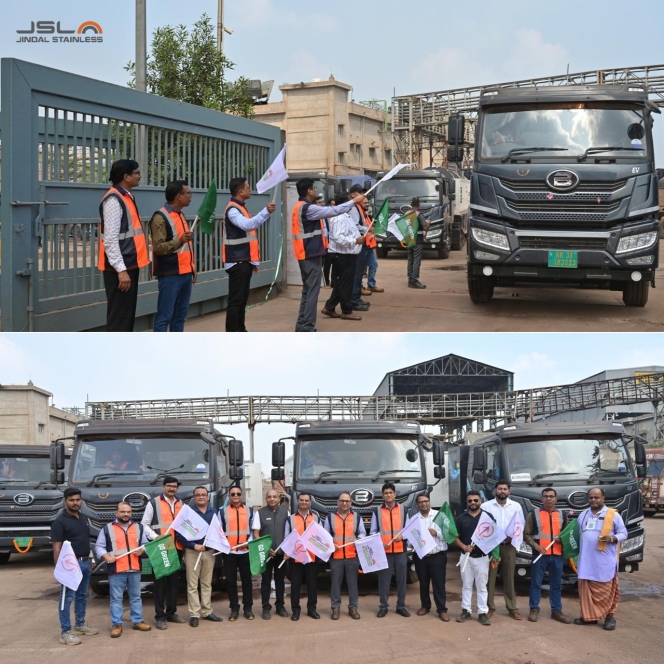
Jindal Stainless, a leading manufacturer of stainless steel, has deployed 10 electric trucks for finished goods transportation, initiating a green logistics programme to reduce transport emissions.
The electric trucks will operate on transport corridors connecting the company's manufacturing facility in Jajpur with distribution hubs in Kharagpur and Kolkata.
The deployment expands Jindal Stainless' adoption of alternative-fuel transport solutions across its regional supply chain. The company currently operates 80 Liquefied Natural Gas trucks to move finished products from its Jajpur and Hisar plants to western India, alongside Compressed Natural Gas vehicles for import cargo transit between Dhamra and Jajpur. In addition, 60 CNG buses provide employee transportation at its primary manufacturing facilities.
Abhyuday Jindal, MD, Jindal Stainless, said, "We believe that responsible manufacturing must extend beyond our plants to the entire value chain, including the way we transport our products. The deployment of electric trucks marks an important milestone in our efforts to decarbonise logistics and integrate lower-emission transportation solutions into our operations. Our approach is focused on adopting practical, scalable solutions that reduce our environmental footprint while maintaining operational efficiency. We will continue to advance such initiatives as part of our commitment to ESG goals."
The combined alternative fuel logistics fleet facilitates the transport of 8,000 to 10,000 tonnes of cargo per month. Based on projected monthly dispatches covering approximately 240,000 kilometres, the mix of electric, LNG and CNG transport options is estimated to reduce logistics emissions by 71 tonnes of carbon dioxide per month, representing a 26 percent reduction compared to conventional diesel haulage.
JCB India Opens 3S Dealership Facility In Ranchi
- By MT Bureau
- October 15, 2026
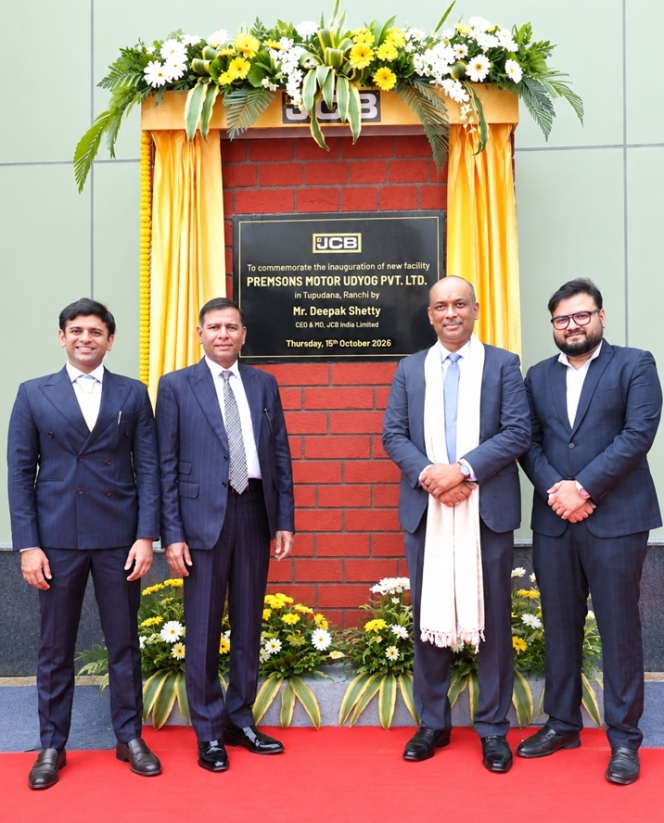
JCB India, a leading construction equipment manufacturer in the country, has inaugurated a 3S dealership facility in Ranchi, operated by Premsons Motor Udyog. The integrated centre will provide sales, service and spare parts support across 15 districts of Jharkhand.
The new facility is spread across 18,000 square feet and houses a four-bay workshop, employing approximately 230 personnel. The site functions as the regional headquarters for the dealership network across districts including Ranchi, East Singhbhum, West Singhbhum, Palamu and Hazaribagh. Operational infrastructure includes a LiveLink Command Centre to track telematics data, machine utilisation and service schedules, along with a rainwater harvesting system for resource management.
Deepak Shetty, CEO & MD, JCB India, said, "Jharkhand is playing an increasingly important role in India’s infrastructure, mining and industrial growth story, creating significant opportunities for the construction equipment sector. We are delighted to inaugurate this new state-of-the-art facility with Premsons Motor Udyog, a valued partner that has consistently demonstrated a strong commitment to customers. This investment reinforces our long-term commitment to the state. It will enable us to further enhance customer engagement, service capabilities and support for Jharkhand’s continued development."
"We are delighted to strengthen our association with Premsons Motor Udyog. It is gratifying to see a family-owned business grow and succeed alongside JCB. This new facility reflects our shared commitment to delivering world-class products, service and support to customers. We look forward to building on this successful partnership and growing together in the years ahead," added Shetty.
The new outlet expands JCB India's dealer footprint across eastern region infrastructure, mining and industrial sectors.
Energy in Motion Opens INR 5 Bln Electric Heavy Vehicle Complex In Pune
- By MT News
- October 14, 2026
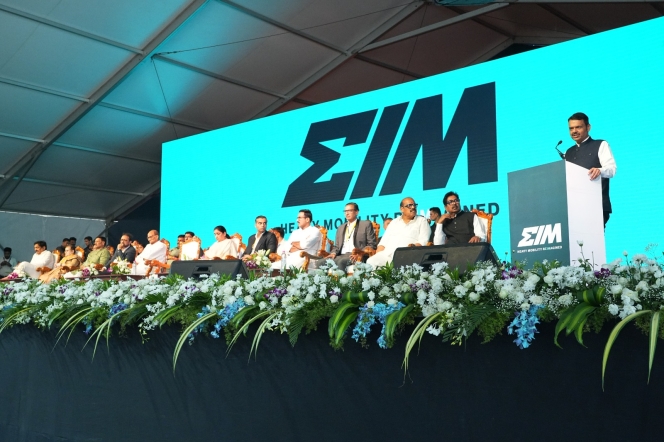
Energy in Motion Ltd has opened an electric heavy commercial vehicle complex in Talegaon, Pune, as part of a planned INR 10 billion investment in Maharashtra, with the first phase representing an investment of INR 5 billion.
The facility, located in Ambi village, brings together an electric heavy commercial vehicle assembly plant, a lithium-ion battery pack assembly factory and an independent battery testing laboratory. The company said the integrated complex has an initial capacity of 5,000 vehicles per shift per year.
The complex was inaugurated on 14 October by Devendra Fadnavis, Maharashtra’s Chief Minister, in the presence of Sharadchandra Pawar, a Rajya Sabha member, and Sunetra Ajit Pawar, the state’s Deputy Chief Minister.
Developed in just over a year after the signing of a memorandum of understanding, the Industry 4.0-enabled facility is expected to create more than 2,000 direct and indirect jobs, as well as opportunities in design, research and development, and information technology.
Energy in Motion is also developing a network of battery-swapping and charging stations along major highways, at ports and in industrial complexes. The company said its megawatt-scale hubs would be able to swap batteries in compatible vehicles in less than seven minutes and provide fast charging for vehicles equipped with the specified DC charging connector.
The company has technology partnerships with BAIC Foton Motor for electric heavy vehicles, Contemporary Amperex Technology Co (CATL) for batteries, and Shanghai Enneagon Energy Technology for robotic battery-swapping systems.
Narendra Murkumbi, Managing Director of Energy in Motion, said the facility had been built with support from the Maharashtra government, technology partners and project hosts RMK Spaces. He also credited the company’s manufacturing team, led by Mahesh Keskar.
Murkumbi said the company’s next priority was to develop a nationwide network of megawatt-scale charging and battery-swapping stations to support the shift from diesel to electric heavy goods transport.

Comments (0)
ADD COMMENT