


The Society for Automotive Fitness & Environment (SAFE), an initiative by India’s automotive industry body SIAM (Society of Indian Automobile Manufacturers), celebrated World Environment Day 2022 with a host of environmentally responsible activities along with automobile dealers, across service stations in India.
SIAM said in a statement that this year’s theme of World Environment Day was “Only One Earth”, with the major focus being on “Living Sustainably in Harmony with Nature”. As natural resources become more and more scarce, sustainable value chains are becoming more and more important for the automotive industry. They are based on the principle of reusing and recycling resources.
SIAM said it emphasises on sustainability and as a responsible organisation, it has been conducting multiple mass awareness campaigns among commuters to drive sustainable development across the industry. The Indian automobile industry is dedicated towards clean and sustainable environment, following the 3R theme Reuse, Recycle and Recover, the industry has taken steps towards the green future, it said.
Some of the special activities that were conducted during the day included a free day-long PUC (pollution under control) check-up for vehicles, followed by issuing of free PUC certificates at the authorised centres. Free saplings were also distributed to customers.
Rajesh Menon, Director General, SIAM, said, “At SIAM, we are involved towards sustainable environment and therefore we stand in solidarity with this year’s World Environment Day”. Sustainability being our prime focus, we will take every measure to move towards a healthy and sustainable world. Contributing to that view, SIAM with its SAFE Initiative, has taken several steps in the direction of spreading awareness about sustainable mobility. Our member’s dealers and their service station are participating in the drive by checking the pollution level in vehicles and providing customers with free PUC and sharing knowledge on proper maintenance of their vehicles. The nationwide campaign helped us in educating the vehicle users and make them aware about the sustainable and green future.”
Several initiatives such as environment related awareness campaigns for kids, creating awareness about dry washing technique for vehicles at dealership level, environment conservation tips for customers, sapling distribution, tree plantation, green processions, awareness rallies, etc. were conducted at the dealership outlets, the release said.
Several manufacturers such as Ashok Leyland Ltd, Bajaj Auto Ltd, Hero MotoCorp Ltd, Honda Motorcycle & Scotter India Pvt Ltd, Hyundai Motor India Ltd, India Yamaha Motor Pvt Ltd, Hyundai Motor India Ltd, Mahindra & Mahindra Ltd, Maruti Suzuki India Ltd, Piaggio Vehicles Pvt Ltd, Renault India Ltd, and Tata Motors participated for the common cause through their dealerships, the release added. (MT)
Jindal Stainless Deploys Electric Trucks For Finished Goods Transportation
- By MT Bureau
- October 15, 2026
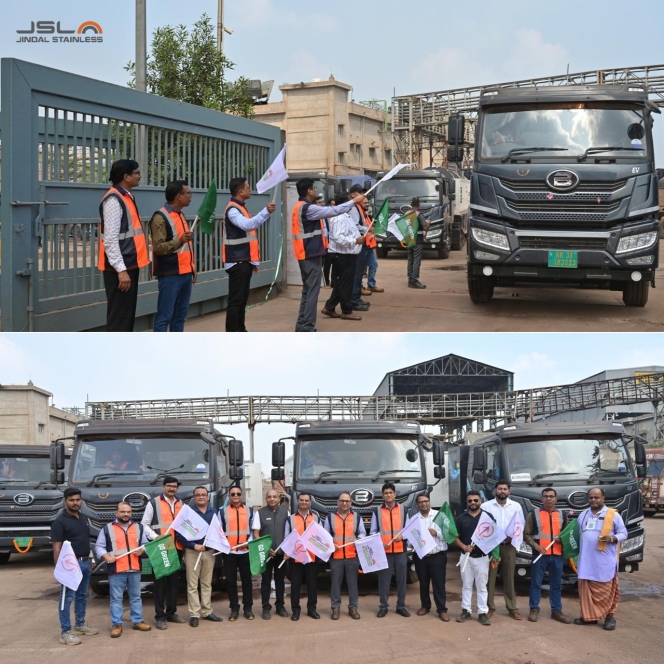
Jindal Stainless, a leading manufacturer of stainless steel, has deployed 10 electric trucks for finished goods transportation, initiating a green logistics programme to reduce transport emissions.
The electric trucks will operate on transport corridors connecting the company's manufacturing facility in Jajpur with distribution hubs in Kharagpur and Kolkata.
The deployment expands Jindal Stainless' adoption of alternative-fuel transport solutions across its regional supply chain. The company currently operates 80 Liquefied Natural Gas trucks to move finished products from its Jajpur and Hisar plants to western India, alongside Compressed Natural Gas vehicles for import cargo transit between Dhamra and Jajpur. In addition, 60 CNG buses provide employee transportation at its primary manufacturing facilities.
Abhyuday Jindal, MD, Jindal Stainless, said, "We believe that responsible manufacturing must extend beyond our plants to the entire value chain, including the way we transport our products. The deployment of electric trucks marks an important milestone in our efforts to decarbonise logistics and integrate lower-emission transportation solutions into our operations. Our approach is focused on adopting practical, scalable solutions that reduce our environmental footprint while maintaining operational efficiency. We will continue to advance such initiatives as part of our commitment to ESG goals."
The combined alternative fuel logistics fleet facilitates the transport of 8,000 to 10,000 tonnes of cargo per month. Based on projected monthly dispatches covering approximately 240,000 kilometres, the mix of electric, LNG and CNG transport options is estimated to reduce logistics emissions by 71 tonnes of carbon dioxide per month, representing a 26 percent reduction compared to conventional diesel haulage.
JCB India Opens 3S Dealership Facility In Ranchi
- By MT Bureau
- October 15, 2026
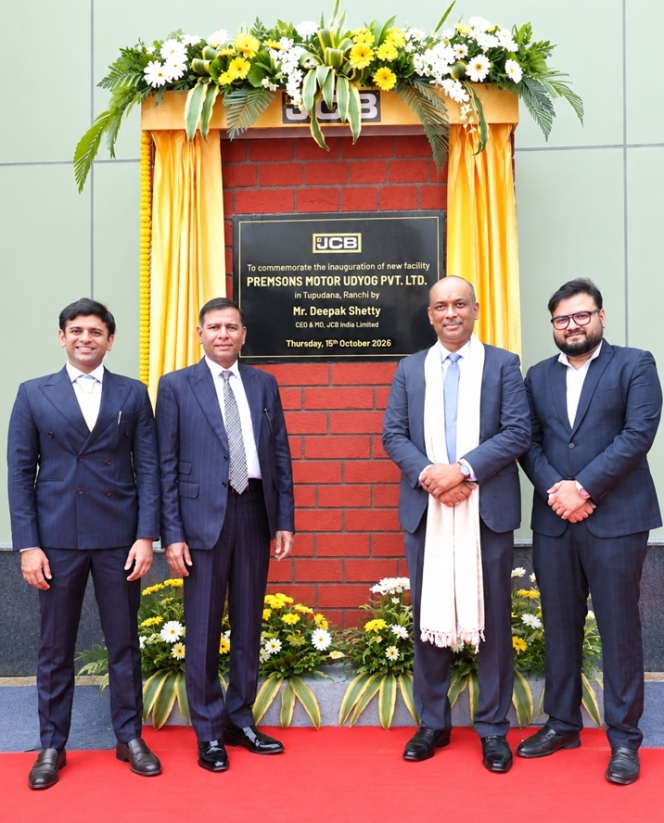
JCB India, a leading construction equipment manufacturer in the country, has inaugurated a 3S dealership facility in Ranchi, operated by Premsons Motor Udyog. The integrated centre will provide sales, service and spare parts support across 15 districts of Jharkhand.
The new facility is spread across 18,000 square feet and houses a four-bay workshop, employing approximately 230 personnel. The site functions as the regional headquarters for the dealership network across districts including Ranchi, East Singhbhum, West Singhbhum, Palamu and Hazaribagh. Operational infrastructure includes a LiveLink Command Centre to track telematics data, machine utilisation and service schedules, along with a rainwater harvesting system for resource management.
Deepak Shetty, CEO & MD, JCB India, said, "Jharkhand is playing an increasingly important role in India’s infrastructure, mining and industrial growth story, creating significant opportunities for the construction equipment sector. We are delighted to inaugurate this new state-of-the-art facility with Premsons Motor Udyog, a valued partner that has consistently demonstrated a strong commitment to customers. This investment reinforces our long-term commitment to the state. It will enable us to further enhance customer engagement, service capabilities and support for Jharkhand’s continued development."
"We are delighted to strengthen our association with Premsons Motor Udyog. It is gratifying to see a family-owned business grow and succeed alongside JCB. This new facility reflects our shared commitment to delivering world-class products, service and support to customers. We look forward to building on this successful partnership and growing together in the years ahead," added Shetty.
The new outlet expands JCB India's dealer footprint across eastern region infrastructure, mining and industrial sectors.
Energy in Motion Opens INR 5 Bln Electric Heavy Vehicle Complex In Pune
- By MT News
- October 14, 2026
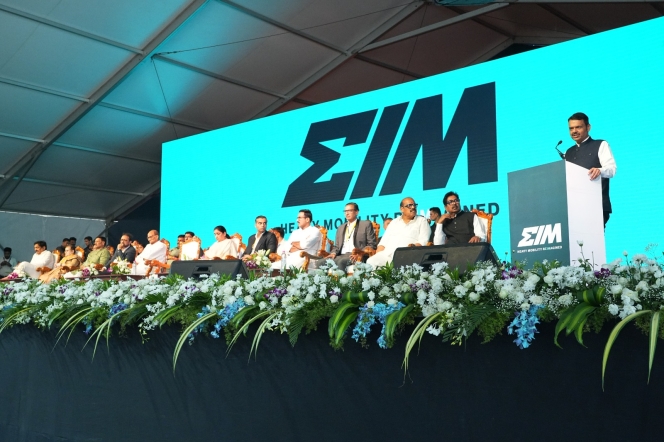
Energy in Motion Ltd has opened an electric heavy commercial vehicle complex in Talegaon, Pune, as part of a planned INR 10 billion investment in Maharashtra, with the first phase representing an investment of INR 5 billion.
The facility, located in Ambi village, brings together an electric heavy commercial vehicle assembly plant, a lithium-ion battery pack assembly factory and an independent battery testing laboratory. The company said the integrated complex has an initial capacity of 5,000 vehicles per shift per year.
The complex was inaugurated on 14 October by Devendra Fadnavis, Maharashtra’s Chief Minister, in the presence of Sharadchandra Pawar, a Rajya Sabha member, and Sunetra Ajit Pawar, the state’s Deputy Chief Minister.
Developed in just over a year after the signing of a memorandum of understanding, the Industry 4.0-enabled facility is expected to create more than 2,000 direct and indirect jobs, as well as opportunities in design, research and development, and information technology.
Energy in Motion is also developing a network of battery-swapping and charging stations along major highways, at ports and in industrial complexes. The company said its megawatt-scale hubs would be able to swap batteries in compatible vehicles in less than seven minutes and provide fast charging for vehicles equipped with the specified DC charging connector.
The company has technology partnerships with BAIC Foton Motor for electric heavy vehicles, Contemporary Amperex Technology Co (CATL) for batteries, and Shanghai Enneagon Energy Technology for robotic battery-swapping systems.
Narendra Murkumbi, Managing Director of Energy in Motion, said the facility had been built with support from the Maharashtra government, technology partners and project hosts RMK Spaces. He also credited the company’s manufacturing team, led by Mahesh Keskar.
Murkumbi said the company’s next priority was to develop a nationwide network of megawatt-scale charging and battery-swapping stations to support the shift from diesel to electric heavy goods transport.
- Volvo Buses India
- VE Commercial Vehicles
- Volvo 9600
- Maharashtra State Road Transport Corporation
- MSRTC
- Suresh Chettiar
- Pratap Sarnaik
- Dr. Madhav Kusekar
Volvo Buses India Secures Order For 200 Coaches From Maharashtra State Road Transport Corporation
- By MT Bureau
- October 14, 2026
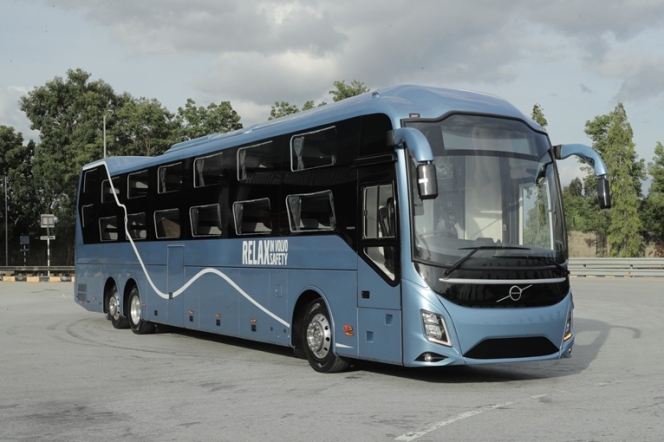
Volvo Buses India, a division of VE Commercial Vehicles, has secured an order for 200 Volvo 9600 coaches from the Maharashtra State Road Transport Corporation (MSRTC). The contract marks the single largest order received by Volvo Buses in India.
The order comprises 170 seating coaches and 30 sleeper coaches, intended to support intercity and interstate routes across the public transportation network in Maharashtra. The seating variant features a 51-seat layout equipped with calf support, while the sleeper variant provides berth arrangements for long-distance overnight travel. Manufactured at Volvo Buses India's facility in Hoskote, Karnataka, the 9600 series coaches integrate vehicle safety platforms, chassis engineering and passenger seating configurations for state transport operations.
Suresh Chettiar, Executive Vice-President of the Bus Division, VE Commercial Vehicles, said, "We sincerely thank the Transport Minister of Maharashtra, Pratap Sarnaik and Dr. Madhav Kusekar, IAS, Managing Director and Vice Chairman, MSRTC, for their continuing trust in Volvo buses. This landmark order reflects our shared commitment to elevating travel and making premium passenger experiences more accessible for the citizens of Maharashtra. We are proud to continue to partner with MSRTC to enhance the state’s public transportation network."
The fleet addition forms part of MSRTC's modernisation plan to upgrade intercity bus services and expand premium transit options across state-operated routes.
Comments (0)
ADD COMMENT