

Tata Motors Crosses 80 Percent Threshold In Iveco Takeover
- By Gaurav Nandi
- October 28, 2026
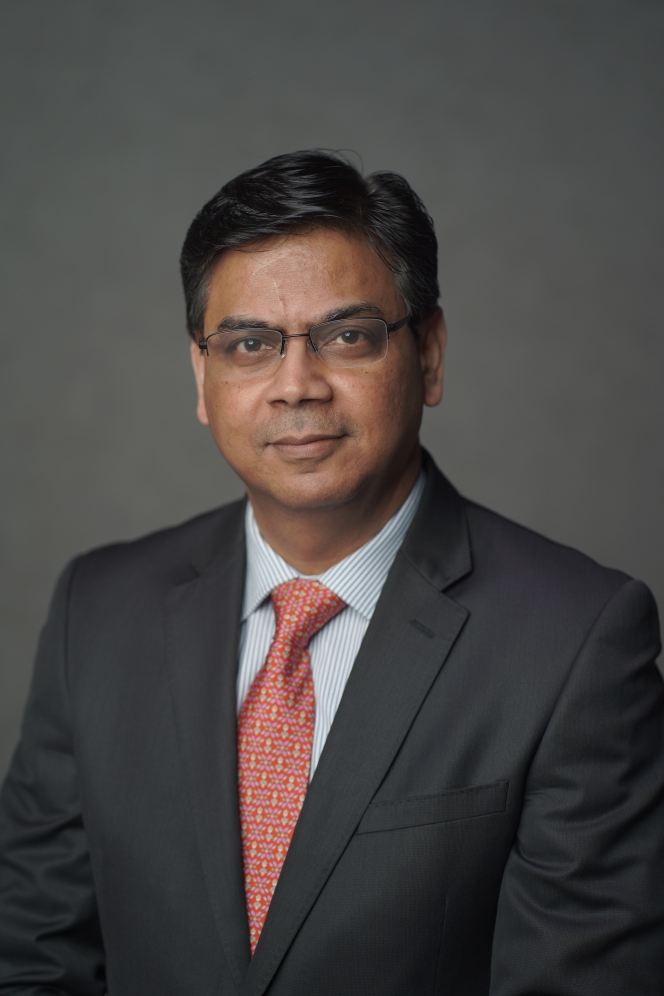
With the revised Euro 14.40-per-share offer securing provisional acceptances covering 87.81 percent of Iveco's common share capital as a key condition for the acquisition, Tata Motors has crossed perhaps the most crucial challenge in the takeover of the Italian commercial vehicle major. As and when the deal reaches finality, the Tata Motors’ subsidiary, TML CV Holdings B.V., would come to hold approximately 89.42 percent of Iveco's common share capital excluding treasury shares.
In a regulatory filing dated October 27, Tata Motors said 238.16 million Iveco common shares had been tendered under the voluntary takeover offer by the October 26 deadline. The shares represent approximately 87.81 percent of Iveco's common share capital covered by the offer.
The provisional results indicate that the revised 80 percent acceptance threshold has been met, subject to confirmation of the results and fulfilment of the remaining offer conditions.
The offer, made through TML CV Holdings B.V., values the tendered shares at approximately Euro 3.43 billion (at the revised price of Eur14.40 per share) including dividends. Tata Motors had initially offered Euro 14.10 per share before increasing the price by Euro 0.30 on 9 October 2026.
The company said the increase was intended to account for a delay of approximately four months in the acquisition process. Tata Motors managing director and chief executive Girish Wagh had described the increase as a goodwill gesture, maintaining that the revised Euro 14.40 offer was the company's best and final proposal.
The latest development follows Tata Motors' confidence expressed during its second-quarter FY27 earnings call that the offer would cross the 80 percent threshold. Management had also said the transaction structure provided a route towards full ownership once the threshold was achieved.
Under the offer timetable disclosed in the filing, payment for shares tendered during the initial acceptance period was scheduled for October 30, subject to the applicable conditions.
The offer period was also scheduled to reopen for five trading days from November 2 to November 6, allowing shareholders who had not tendered their shares during the initial period another opportunity to participate. Payment for shares tendered during this reopened period was scheduled for November 13.
The acquisition covers Iveco's commercial vehicle businesses and excludes its defence business, which is being separated from the group. The transaction is intended to combine Tata Motors' commercial vehicle operations with Iveco's international presence and product portfolio, expanding the Indian manufacturer's reach in global markets.
Export growth
The Iveco transaction was a key topic during Tata Motors' Q2 FY27 earnings call, where management also discussed the company's operating performance and international expansion.
Responding to a question from Motoring Trends on the sustainability of the 177 percent year-on-year increase in commercial vehicle exports during the quarter, Wagh attributed a significant part of the growth to an order secured from Indonesia.
The company expects the Indonesian order to contribute during the current financial year and a substantial part of the following financial year. Management also reported healthy double-digit quarter-on-quarter growth in exports outside Indonesia between the first and second quarters, supported by improvements in sub-Saharan Africa, Nepal and Sri Lanka.
The response indicates that the exceptional year-on-year growth was largely driven by the Indonesian order, although the company also reported an improvement in its other export markets.
The international expansion assumes added significance in the context of the Iveco acquisition, which would broaden Tata Motors' commercial vehicle presence beyond India. However, management did not provide a quantified estimate of the acquisition's future contribution to exports or specify how the combined businesses would affect individual market positions.
Pressure on margins
The management was also questioned about the company's ability to sustain profitability as revenue grew by around 42 percent while EBITDA margins declined by 90 basis points.
Wagh outlined three measures to protect profitability including improving cost efficiencies, particularly in variable costs, controlling expenses and implementing calibrated price increases.
He added that the company was seeking to balance cost recovery with the need to protect demand momentum, while maintaining EBITDA margins above 10 percent in line with its commitment to the market.
The response comes against a backdrop of rising commodity costs, which management said continued to put pressure on the business. Tata Motors has been using a combination of pricing actions and internal cost measures to absorb these increases without fully passing the burden on to customers.
EV profitability
The profitability outlook for electric commercial vehicles, following reported growth of around 2.4 times in electric commercial vehicle volumes during Q2 FY27, was also raised during the call.
Asked when Tata Motors expected its electric truck and bus business to achieve profitability compared with diesel vehicles, Wagh said it evaluates profitability at the individual-model level and was satisfied with the progress of its electric vehicle business.
Rather than providing a specific profitability timeline, he highlighted the company’s focus on pricing, accelerating total cost of ownership parity for customers and offering an integrated ecosystem solution.
The top executive noted that the approach went beyond the vehicle itself to support the transition from internal combustion engine vehicles to electric alternatives. He did not specify when electric commercial vehicles would achieve profitability parity with their diesel counterparts.
Q2 earnings
Wagh said the company had delivered another quarter of strong financial performance supported by disciplined execution, operational agility and a continued focus on profitable growth.
Standalone revenue for the quarter rose 42 percent year-on-year to INR 239.3 billion, the company's highest-ever revenue for a second quarter. EBITDA increased 31 percent to INR 28.06 billion, while the EBITDA margin stood at 11.7 percent, unchanged sequentially but down 90 basis points from a year earlier.
Operating leverage, disciplined pricing actions and cost-efficiency measures partially offset the impact of commodity inflation.
The EBIT margin declined 50 basis points year-on-year to 9.7 percent. Profit before tax and exceptional items increased 51 percent to INR 26.6 billion, while profit after tax rose 310 percent to INR 21.38 billion. The sharp increase in net profit reflected a lower comparison base following an investment impairment recognised in the second quarter of fiscal 2026.
Strong operating performance and working capital management generated free cash flow of INR 46.06 billion during the quarter, taking first-half fiscal 2027 free cash flow to INR 57.21 billion.
Net cash for the domestic business stood at INR 113.48 billion as of September 30, 2026. Return on capital employed in the automotive business remained robust at 65 percent.
Consolidated revenue increased 36 percent year-on-year to INR 253.38 billion in the second quarter of fiscal 2027.
EBIT rose 30 percent to INR 27.7 billion, while the EBITDA margin stood at 10.9 percent, down 40 basis points year-on-year but unchanged sequentially. The consolidated EBIT margin was 8.9 percent, an increase of 20 basis points from a year earlier.
Profit before tax and exceptional items rose 423 percent year-on-year to INR 17.8 billion, while profit after tax increased 244 percent to INR 12.53 billion.
The year-on-year increase in profit reflected a lower comparison base following a higher mark-to-market loss on Tata Capital investments recognised in the second quarter of fiscal 2026.
Tata Motors reported consolidated net cash of INR 158.8 crore as of September 30, 2026.
Tata Motors intends to build on the prevailing demand momentum while ensuring supply readiness, Wagh said.
Commodity costs are expected to remain a headwind. The company plans to mitigate the pressure through cost management, operating efficiencies and calibrated pricing actions.
Its priority remains sustainable, profitable growth and long-term value creation for stakeholders.
Tata Motors Partners Turno For Electric Commercial Vehicles Financing
- By MT Bureau
- November 11, 2026
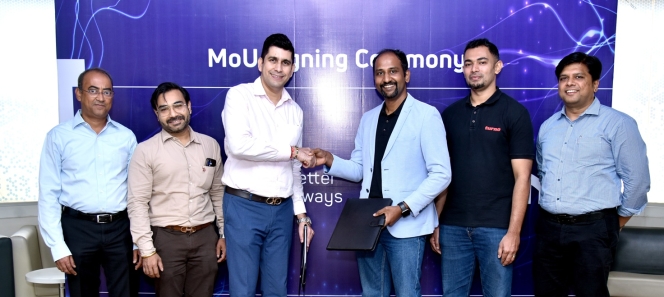
Tata Motors has signed a Memorandum of Understanding with Finzo EV Solutions, operating as Turno, to provide financing structures and buyback guarantees for its electric small commercial vehicles and pickups range.
Under the agreement, customers purchasing models across the Ace Pro EV, Ace EV 1000 and Intra EV Pickup lineups will gain access to loan disbursements, repayment schedules and a 25 percent assured buyback guarantee.
The partnership utilises Turno's battery intelligence and lifecycle management systems to establish vehicle residual values and resale processes. The offering complements Tata Motors' commercial vehicle infrastructure, which includes access to more than 25,000 public chargers across 150 cities, 200 dedicated electric vehicle support centers, its Fleet Edge connected platform and its Sampoorna Seva 2.0 lifecycle care program.
Varun Nair, Director, Turno, said, "At Turno, our mission is to accelerate the shift towards green, zero-emission mobility across India by making the EV ownership journey simpler and more rewarding. As electric commercial mobility gains momentum, customers need greater clarity and assurance around the value of their vehicle over its lifecycle. Our partnership with Tata Motors brings together customized financing and assured buyback support to address these needs and make the transition to electric mobility easier. By leveraging our expertise in battery intelligence and EV lifecycle management, along with our assured buyback programme, we are building greater certainty around the ownership and resale journey of electric commercial vehicles."
Pinaki Haldar, Vice-President and Business Head of SCVPU, Tata Motors, said, "Tata Motors is committed to democratising clean mobility and accelerating India’s transition towards sustainable last-mile logistics. While our e-SCVPU range is engineered to deliver superior performance, reliability, and operating economics, true adoption scales when vehicle ownership becomes simple, predictable, and worry-free. Our partnership with Turno strengthens our EV ecosystem by offering end-to-end ownership support to customers. By removing financing hurdles and safeguarding long-term resale value, we are empowering customers across the country to switch to zero-emission mobility with greater confidence."
CASE Construction Equipment Inaugurates New Facility In Faridabad To Boost NCR Operations
- By MT Bureau
- November 04, 2026
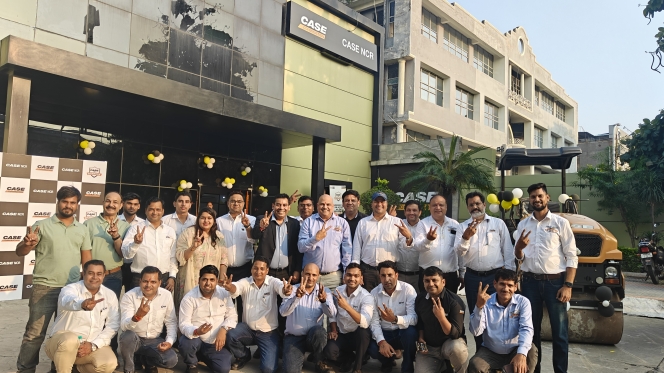
CASE Construction Equipment, a brand of CNH, has inaugurated new premises in Faridabad within the National Capital Region (NCR) to expand its customer support and service infrastructure.
The 6,000 sqft facility features double the parts storage capacity of the previous setup, a workshop capable of servicing 10 to 12 machines simultaneously and a dedicated equipment display area showcasing four CASE machine models.
The facility will serve customers across northern India, supporting parts availability and machine maintenance operations. During the inauguration event, which was attended by approximately 40 customers, the company completed two machine handovers and three parts invoicing transactions.
CASE has maintained operations in Faridabad since 2018, when it opened its first company-owned, company-operated showroom in India in the city.
Ravindra Ashtekar, Head of Network Development, CASE Construction Equipment, said, "NCR is an important market for construction equipment, with demand shaped by ongoing infrastructure development and a diverse range of customer requirements. Strengthening our presence in the region is therefore an important part of our efforts to remain accessible to customers and provide dependable support. The new premises bring together enhanced parts storage, workshop capacity and a dedicated machine display area, enabling us to further strengthen our service capabilities and customer engagement."
JBM Electric Vehicles Launches ECOLIFE e12 City Bus in Singapore
- By MT Bureau
- November 04, 2026
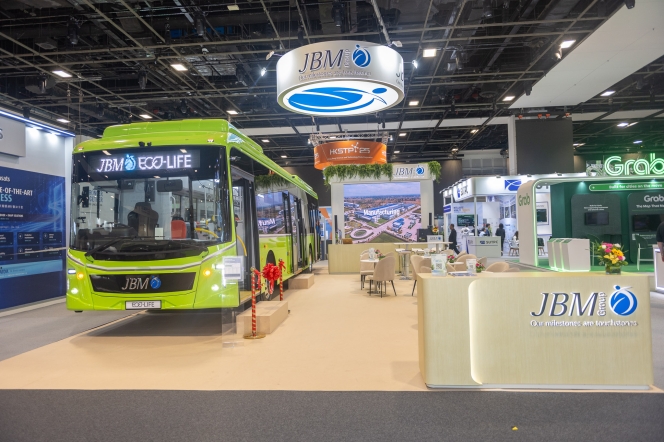
JBM Electric Vehicles has launched its all-electric city bus, the ECOLIFE e12, at Singapore Urban Mobility Week 2026. The vehicle was unveiled by Dr Shilpak Ambule, High Commissioner of India to the Republic of Singapore, alongside Nishant Arya, Chairman of JBM Electric Vehicles. The launch marks the first introduction of an electric bus in Singapore by an Indian manufacturer.
The ECOLIFE e12 features an aluminium monocoque body structure and incorporates an Intelligent Transport System compliant with Singapore regulatory standards. The vehicle is equipped with telematics for vehicle health monitoring, an Advanced Driver-Assistance System (ADAS), forward collision warning systems, lane departure warnings, pedestrian and cyclist collision detection, blind-spot monitoring, driver drowsiness detection, a 360-degree camera and a fire detection and suppression system.
To support its regional operations, JBM Electric Vehicles has established its Asia-Pacific headquarters in Singapore to handle sales, marketing, aftersales and operational activities. The company maintains an annual production capacity of 20,000 buses at its manufacturing facility in India and holds an order book of 10,000 electric buses for global deployment over the next two years.
Nishant Arya, Chairman of JBM Electric Vehicles, said, "Our mission is to decarbonize public transport by creating new and sustainable global benchmarks. At JBM EV, we believe that the future of green mobility lies in creating vehicles that seamlessly blend innovation, sustainability and user-centric design. Our electric mobility solutions are not just about reducing carbon footprints, they are about elevating the quality of life for individuals and communities by making transportation smarter, safer, and more accessible. We believe in the power of partnerships and collaboration to continuously improve, listening to the needs of our customers to develop solutions to address their pain points. We constantly evolve to provide new ideas and solutions in the e-mobility world. We invest to better support our customers by thinking global and acting local in meeting the challenges of today and tomorrow."
- Automotive Skills Development Council
- ASDC
- Daimler India Commercial Vehicles
- driver training
- CSR
- Vinkesh Gulati
- Torsten Schmidt
ASDC Partners Daimler India Commercial Vehicles Partner To Train 240 Heavy Commercial Vehicle Drivers
- By MT Bureau
- November 04, 2026
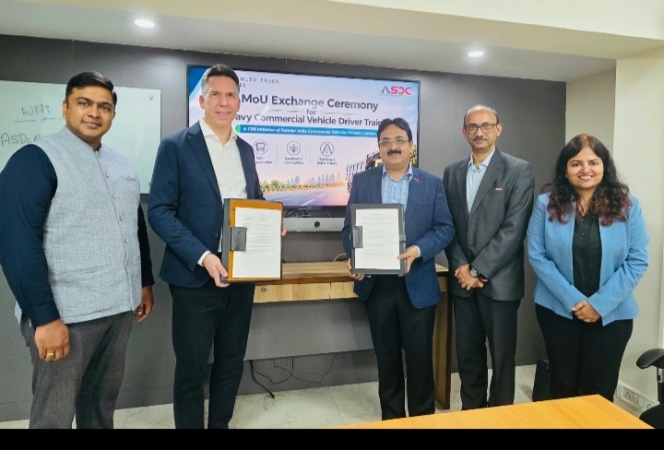
Automotive Skills Development Council (ASDC) has partnered with Daimler India Commercial Vehicles to launch a corporate social responsibility (CSR) initiative aimed at training and certifying 240 Heavy Commercial Vehicle drivers across Assam, Maharashtra, Jharkhand and Andhra Pradesh.
The programme focuses on expanding the pool of commercial vehicle drivers, improving road safety standards, and providing employment opportunities for candidates.
Under the implementation agreement, 60 candidates in each of the four states will participate in a residential training programme featuring classroom instruction, practical driving and simulator learning.
Daimler India Commercial Vehicles is providing training, residential facilities, meals, licensing support, assessments, certification, insurance and impact studies. ASDC will oversee industry linkages and placement support for certified drivers, alongside conducting three months of post-placement follow-up to track employment retention rates.
Vinkesh Gulati, Chairperson, ASDC, said, "Skilled commercial vehicle drivers are essential to India’s logistics network and economic growth. Skilling for road safety must be an integral part of their preparation, equipping drivers with defensive driving techniques, an understanding of traffic rules and the ability to handle heavy vehicles responsibly. Through this partnership with Daimler India Commercial Vehicles, we aim to prepare 240 young people for professional driving careers by combining practical training, recognised certification and employment assistance. Our goal is to create livelihood opportunities while developing competent, safety-conscious drivers who contribute to safer roads for everyone."
Torsten Schmidt, Managing Director and CEO, Daimler India Commercial Vehicles, said, "At DICV, we believe drivers are the backbone of India's economy, keeping goods moving and communities connected across the country. As the transport sector evolves, professionally trained, safety-conscious drivers are more important than ever. Through this initiative with ASDC, we are investing in skills that not only improve employability but also foster a culture of responsible driving and road safety. By equipping aspiring drivers with the right knowledge, practical expertise and a safety mindset, we are helping build a stronger logistics ecosystem while contributing to safer roads and a more resilient nation."
Comments (0)
ADD COMMENT