

- Royal Academy of Engineering
- Princess Royal Silver Medal
- Dr Ian Campbell
- Breathe Battery Technologies
- Dr Liucheng Guo
- TG0
- Professor Robert THomson
- Heriot-Watt University
- Luke Logan
- Volvo Cars
- OPPO
- Polestar
- Professor Ricardo Fernando Martinez-Botas
- Imperial College London
Breathe Battery Tech's Dr Ian Campbell Amongst The Princess Royal Silver Medal Recipient From UK's Royal Academy Of Engineering
- By MT Bureau
- June 29, 2026
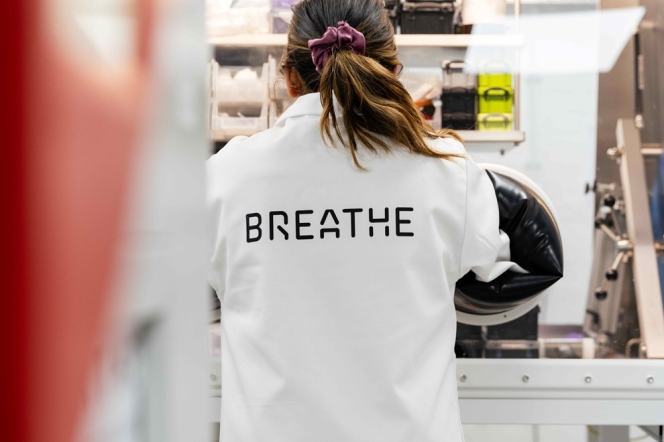
The Royal Academy of Engineering, the United Kingdom's national academy of engineering, is set to honour three engineers for their breakthrough innovations in different fields with The Princess Royal Silver Medal in London on 8 July 2026.
The medal celebrates contributions to UK engineering by individuals at the early to mid-career stage that result in market exploitation. The recipients for 2026 are Dr Ian Campbell, Co-Founder of Breathe Battery Technologies, Dr Liucheng Guo, Co-Founder & Chief Technical Officer of TG0 and Professor Robert Thomson, Professor of Photonics at Heriot-Watt University.
Luke Logan, Chair of the Academy’s Awards Committee, said, “This year’s winners of The Princess Royal Silver Medal have each pushed the boundaries of engineering. Through their research and innovative ideas, they have supported the UK in being a leader in engineering and sustainability, making significant contributions to our national economy through inspiring entrepreneurship and collaboration.”
Dr Campbell Co-Founded Breathe Battery Technologies to improve battery charging processes. The company developed software that simulates battery function to provide insight into electrochemistry, enabling manufacturers to optimise charging and design without hardware modifications.
“I am deeply honoured and humbled to receive the Princess Royal Silver Medal. Climate change and air pollution continue to threaten health and livelihoods worldwide. By combining battery physics simulation with materials libraries built in industrial-scale labs, we can screen millions of potential designs and rapidly optimise the most promising candidates using advanced software. This capability is helping to bring cleaner, quieter, healthier and more affordable cars, trucks and energy storage systems to market faster,” said Dr Campbell.
Founded in 2019 as a spin-out from Imperial College London, Breathe Battery Technologies has now grown to operate the largest battery testing facility in London and has raised more than USD 33 million in funding. It counts the likes of Volvo Cars, OPPO and Polestar amongst its early backers.
Professor Ricardo Fernando Martinez-Botas, Head of the Department of Mechanical Engineering, Imperial College London, said, “Ian’s success in commercialising world-class research from Imperial College London exemplifies how UK academic excellence can translate into real-world impact. His contributions are not only advancing the UK’s position at the forefront of the international battery technology race but helping to shape the future of cleaner transport.”
Dr Guo developed ‘AI for Sensing’ technology for electronic products, which replaces mechanical buttons and sensors with touch-sensitive surfaces powered by embedded AI. The system detects pressure, location, direction and movement of touch.
“I am deeply honoured to receive the Princess Royal Silver Medal. This recognition reflects not only my own journey, but also the dedication of my co-founder Ming, the TG0 team, investors, collaborators and mentors. I believe engineering has a vital role to play in shaping a resilient and sustainable future, creating technologies that are not only intelligent, but also accessible, energy-efficient and beneficial to society,” said Dr Guo.
Professor Robert Thomson is recognised for his work in photonics, specifically the use of lasers and optical fibres to capture information from space.
- Porsche AG
- Sportwagenschmiede 35
- Rimac
- Bugatti Rimac
- MHP
- Michael Leiters
- Porsche Engineering
- Porsche Digital
- Porsche Technologies
Porsche Unveils Sportwagenschmiede 35 Strategy Targeting EUR 45 Billion In Revenue
- By MT Bureau
- October 19, 2026
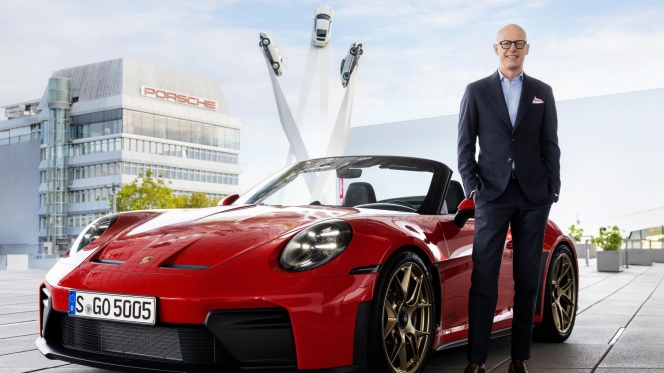
German premium luxury car brand Porsche AG has presented its medium-term corporate strategy, named Sportwagenschmiede 35, at its Capital Markets Day at the Weissach Development Centre. The strategy outlines operational restructuring, portfolio expansion and financial targets aimed at lowering the manufacturer's break-even point to below 200,000 vehicles annually.
The plan prioritises value creation over volume expansion by shifting the product lineup further toward high-margin vehicle segments. Porsche plans to reduce its overall model variant count by 20 percent while increasing the share of D and E segment vehicles in its portfolio by 45 percent.
The strategy includes plans for a mid-engined super sports car platform positioned above the 911 range, alongside potential additions to its SUV lineup. Product releases will include all-electric 718 Boxster and Cayman models scheduled for full-year market support in 2028, as well as a B-segment SUV featuring combustion and plug-in hybrid powertrains planned for production in 2028. Porsche is also expanding its individualisation operations under its Sonderwunsch programme, targeting a sixfold increase in customisation revenue.
Operationally, Porsche plans to lower development costs by up to 20 percent through modular development processes and shorter project timelines, while merging Porsche Engineering and Porsche Digital into a unified entity named Porsche Technologies. The company aims to reduce production personnel costs by up to 30 percent, cut sales and distribution expenses by 20 percent by restructuring its sales regions from five to four, and reduce material costs across new vehicle projects by 10 percent.
Management positions will be reduced by 40 percent, alongside an overall workforce reduction of 25 to 30 percent across direct and indirect functions. These measures follow existing agreements that include a reduction of 9,000 positions, alongside divested equity stakes in Rimac, Bugatti Rimac and MHP, as well as the planned closure of cell and e-bike development units.
Porsche has established its financial targets with the medium-term Group operating return on sales between 10 and 15 percent, with an Automotive net cash flow margin target of 9 to 12 percent. In the long term, Porsche targets a 15 percent operating return on sales and a 12 percent net cash flow margin, backed by projected Group revenue of EUR 41 billion to 45 billion.
Michael Leiters, Chairman of the Executive Board, Porsche AG, said, "We are pursuing a clear plan with our strategy Sportwagenschmiede '35. The ultimate goal is to further strengthen our unique sports car brand – across all model lines and with new, highly desirable models in particularly high-margin segments. Our strategy will lay the groundwork to make Porsche significantly more efficient, productive and profitable in three phases. At the moment, the main focus is on reducing costs and making the company more financially robust. We have already achieved some important milestones. Our strategy focuses very much on our medium-term ambition so that the measures and the associated results take effect as early as possible. The term 'Sportwagenschmiede' was deliberately chosen because it captures everything Porsche aims to stand for in the future: our aspiration to offer the sportiest vehicles in every segment, but also craftsmanship, down-to-earth thinking and entrepreneurial, business-focused action. Our goal is to be attractive to all stakeholders: our customers, our workforce, our partners and our investors."
- Honda India Foundation
- Honda Group
- Honda CB350
- Priyank Kharge
- Seemant Kumar Singh
- Karthik Reddy
- Prabhu Nagaraj
- Vishal Saxena
- Honda Motorcycle and Scooter India
Honda India Foundation Deploys 20 Emergency Response Vehicles For Bengaluru Traffic Police
- By MT Bureau
- October 18, 2026
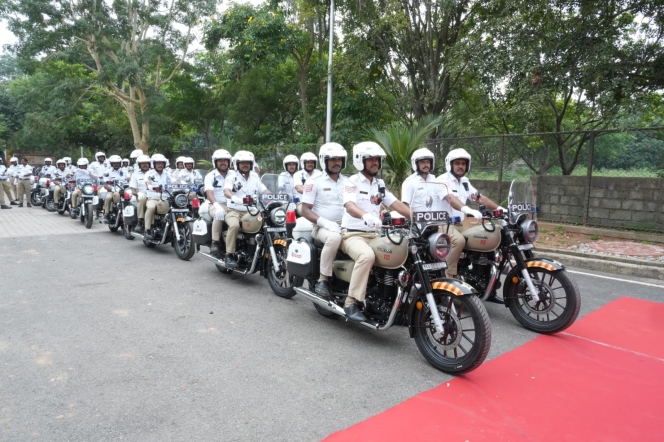
Honda India Foundation, the corporate social responsibility (CSR) arm of Honda group companies in India, has handed over 20 Emergency Response Vehicles to the Bengaluru Traffic Police to support traffic management, emergency response and field operations across the city.
The fleet consists of 20 modified Honda CB350 motorcycles equipped with dual-tone sirens, public address systems, LED emergency lights, display boards, windscreens and storage compartments for police operations. This deployment adds to the 50 Quick Response Team vehicles provided by the foundation to Bengaluru police in October 2025, bringing the total number of modified vehicles supplied to Karnataka police authorities to 70 units.
The handover forms part of the foundation's initiative under which 835 Emergency Response Vehicles have been deployed across multiple Indian states since August 2025.
Alongside the vehicle handover, Honda India Foundation signed a Memorandum of Agreement with the Bengaluru Traffic Police to establish a Traffic Training Park aimed at providing road safety education to road users. Groundbreaking for the facility was completed during the event, where the foundation also launched its road safety programme based on education, engineering, enforcement, and emergency care.
The ceremony was attended by Priyank Kharge, Minister for Home, Information Technology and Biotechnology, and E-Governance, Government of Karnataka, Seemant Kumar Singh, Commissioner of Police, Bengaluru City, Karthik Reddy, Joint Commissioner of Police (Traffic), Bengaluru City, Prabhu Nagaraj, Operating Officer for Corporate Affairs at Honda Motorcycle and Scooter India and Vishal Saxena, Operating Officer for the Narasapura Plant at Honda Motorcycle and Scooter India.
Caterham Adds Yorkshire-Based Caterham Turn 7 To Retail Network
- By MT Bureau
- October 17, 2026
Caterham has expanded its official UK retailer network by appointing Yorkshire-based Caterham Turn 7. The father-and-son team of Jim and Callum McDougall founded the business, which has built a strong reputation within the Caterham community as an independent pre-owned specialist and service centre. The Seven runs deep in the McDougall family, with Jim having helped establish the concept behind the Caterham Academy and Callum having worked as a Sales Executive for Caterham at the original Town End showroom.
Beyond its established pre-owned operation, the North Yorkshire facility will now offer the complete Seven range, along with official parts, workshop servicing and aftersales support. This appointment strengthens Caterham's presence in the region and formalises a longstanding relationship with a business already deeply embedded in the brand's culture.
Christian Gorton, Global Head of Sales at Caterham Cars, said, “We are thrilled to welcome Caterham Turn 7 to our official UK retailer network. Callum, Jim, Carl and the team are already integral, highly respected members of the Caterham community, having built a brilliant reputation as an independent specialist in Yorkshire. Their lifelong passion for the Seven, motorsport ties and technical knowledge make this appointment a natural evolution. Expanding our official footprint in the North East ensures our growing community of drivers will receive exceptional service and support.”
Callum McDougall, Director of Turn 7, said, “It is great to be back working with Caterham again after nearly 13 years of being an independent specialist. Our team and our facility have been growing steadily over the last five years along with our fantastic community of Seven owners. Becoming the official sales and service centre for the area will give us the ability to provide even better services to our customers, with more products and backing by Caterham themselves. I've watched Caterham change a lot over the 16 years I have been in the industry, and I am really pleased to say that it looks like they are in a really good place right now, with some exciting new products on the horizon. We are all very excited to be joining the official retailer network and helping to drive, maintain and support the future of the Seven and its owners.”
Intangles Study Exposes Risky Driving Behaviour Across 598 Indian School Buses
- By MT Bureau
- October 16, 2026
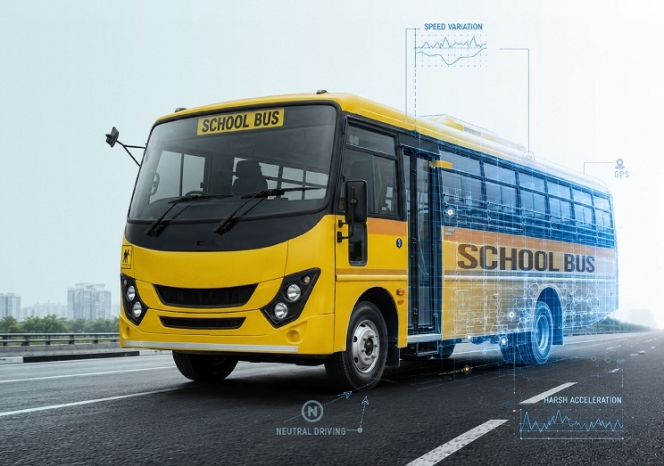
A recent study by Intangles, a global AI-powered prescriptive analytics firm focused on commercial fleets and mobility analytics, examined school bus safety across India and found that one in five of the vehicles analysed had recorded at least one over-speeding incident. The research covered 598 school buses in 61 cities over a six-month period during 2026, forming part of the company’s Interesting Angles Episode 2 report titled Beyond the Rulebook. More than 75,000 flagged driving events were assessed across four behaviours: over-speeding, hard braking, harsh acceleration and coasting.
Regional contrasts proved striking. In Delhi, four out of five buses analysed logged over-speeding incidents, compared with the national ratio of one in five. Maharashtra also raised concerns, with harsh acceleration events occurring at six times the national average. The report further identified 116 buses that triggered over-speeding alerts every two to three days, averaging roughly 79 kmph during those instances, well above prescribed limits. Such findings underscore the value of continuous driving behaviour monitoring alongside mandatory speed governors and standard GPS tracking.
Hard braking proved the most common flagged behaviour, representing 81.5 percent of all safety events. Each bus averaged 126 flagged events over six months, including about 103 hard braking incidents, or nearly one every two school days. The study described a ‘Bell Effect’, where hard braking rose sharply between 7 AM and 8 AM across regions, coinciding with the morning commute. While no direct cause was established, the pattern suggests operational pressures such as congestion, tight schedules and the race to reach school on time may contribute.
Comparisons between school and city buses revealed sharp differences. Harsh acceleration stood at 4.6 percent versus 1.8 percent, hard braking at 81.5 percent versus 38.9 percent and coasting at 2.9 percent versus 0.4 percent, amounting to fourfold, threefold and ninefold gaps, respectively. In Maharashtra, harsh acceleration made up 30 percent of flagged events against a 5 percent national average, while Pune recorded 42 percent compared with Mumbai’s 15 percent, indicating that congestion alone may not explain aggressive acceleration.
The findings arrive as school transportation safety rules evolve. Maharashtra’s July 2026 regulations introduce seat belts, CCTV, live video access, GPS tracking, panic buttons, digital attendance and state monitoring integration. Nationally, Advanced Driver Assistance Systems are being phased into new buses and trucks between 2026 and 2028. Yet with older vehicles still operating, the study stresses strengthening safety practices within existing fleets.
Intangles maintains that driving behaviour monitoring, real-world trip data, cameras and structured driver coaching can help schools and operators spot unsafe patterns and take corrective action. Integrating these tools with existing requirements may improve accountability and visibility in daily school transportation. The analysis used proprietary algorithms to assess event frequency, timing and geography, and its findings reflect observed behaviour within the study sample.
Anup Patil, CEO, Intangles, said, "School bus safety is often measured by whether a vehicle meets prescribed regulations, from speed governors and GPS tracking to onboard safety equipment. But compliance does not necessarily tell us how safely a child is being driven. Our analysis found recurring instances of speeding and hard braking across school buses, with some of these behaviours occurring repeatedly during routine journeys. What is equally important is understanding the conditions in which these incidents occur.”
Vikram Melapudi, Chief AI Scientist, Intangles, said, “Schools and safety officers need greater visibility into real world driving behaviour so they can identify recurring risks, address unsafe practices and strengthen driver accountability. The focus must shift from simply checking whether a bus is compliant to continuously assessing how safely it is being operated."
Comments (0)
ADD COMMENT