

Euro NCAP 2026 Tests Reward Reintroduction Of Physical Driving Controls
- By MT Bureau
- October 13, 2026
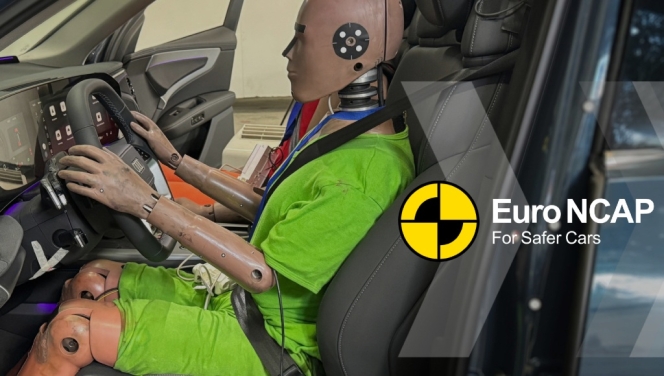
Global vehicle safety assessment organisation Euro NCAP has released its latest testing results under 2026 evaluation protocols, highlighting a growing industry trend toward reintroducing physical buttons and switches for core driving functions. The update comes as European safety testing increasingly penalises reliance on central touchscreen interfaces for primary controls.
Under Euro NCAP's 2026 Safe Driving protocols, primary vehicle controls – including direction indicators, windscreen wipers, hazard lights, horn and emergency call buttons – must be accessible via physical controls rather than buried within touchscreen menus.
In the latest assessments, the Audi Q7 achieved a 90 percent score for driving controls, including a 100 percent rating for primary driving tasks, while the Kia EV2 also received high marks for ergonomic physical switchgear. Both vehicles secured 5-star overall safety ratings.
Conversely, Chinese manufacturer XPENG scored 20 percent for primary driving controls on its X9 MPV due to touchscreen menu dependence, despite obtaining a 5-star overall rating supported by crash avoidance and post-crash safety performance. Comparative testing across 2026 models showed European manufacturers generally scoring higher for physical switchgear, with the BMW iX3 scoring 100 percent and the CUPRA Raval scoring 80 percent, compared to lower scores for the ZEEKR 7GT at 20 percent and the Leapmotor B05 at 0 percent.
Dr. Aled Williams, Programme Director at Euro NCAP, said, "Euro NCAP is continually monitoring market trends, and the move toward placing as many driving controls within a car’s touchscreen system is one that has concerned us just as much as it has annoyed consumers. It is clear in these results that the XPENG adheres to the mantra that everything must be included in the touchscreen, despite overwhelmingly negative feedback by European car buyers. We applaud Audi and Kia for taking a more common-sense approach. Our latest protocols reward the intelligent use of physical buttons and controls, as this can reduce driver distraction, and both Audi’s new Q7 and Kia’s EV2 do an excellent job of keeping safety simple. Other manufacturers, including XPENG, would do well to follow this strategy."
The latest round of evaluations also awarded 5-star safety ratings to the BYD SHARK pickup truck under 2025-adapted protocols and a 4-star rating to the Mazda 2 Hybrid, carried over from the platform's Toyota Yaris architecture.
BendPak Turns Eight-Arm Lift Concept Into Reality With OctaFlex 12DPS
- By MT Bureau
- October 31, 2026
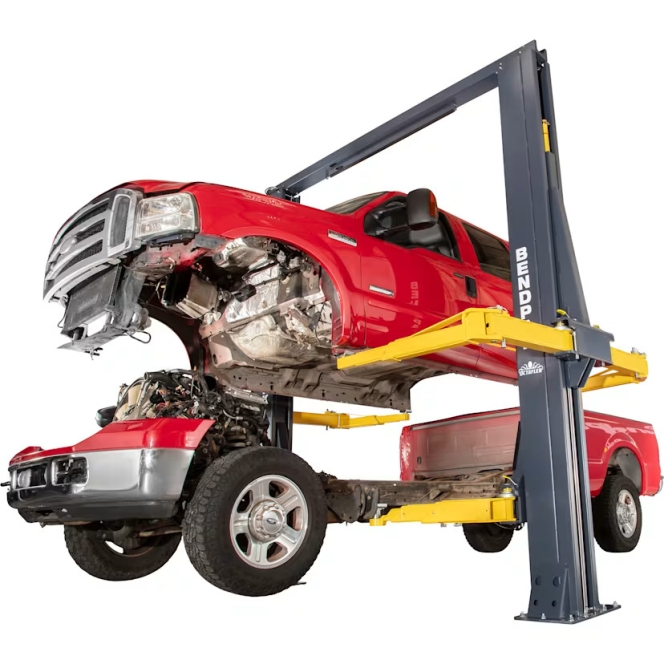
BendPak has launched the OctaFlex Series, turning its eight-arm car lift concept into production reality. The two-post lift aims to improve bay productivity, technician ergonomics and operational precision, making cab-off repairs, EV battery replacement and other demanding tasks efficient enough to pay for itself. The OctaFlex 12DPS is now shipping and will appear at the SEMA Show from 3–6 November in Upper South Hall Booth #36129.
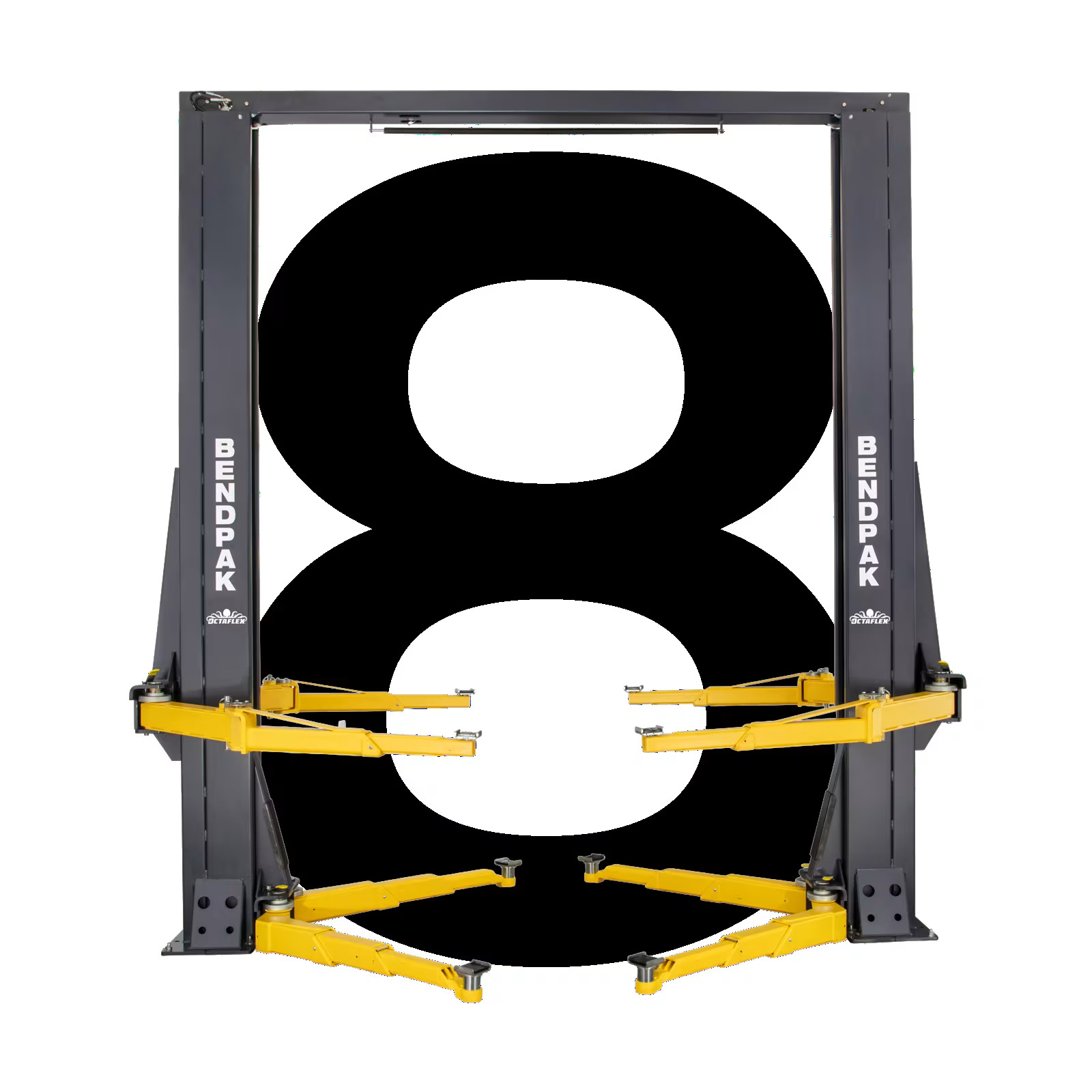
After introducing the concept in 2024, BendPak spent two years refining it through customer feedback and lab testing. The OctaFlex 12DPS pairs a traditional 12,000-pound-capacity two-post lift with an integrated 6,000-pound lift-assist system, described as an industry first. Four primary arms support the vehicle while four secondary arms raise, lower or hold cabs, drivetrains, EV batteries, suspension assemblies and other heavy components without extra equipment, helpers or bays. The auxiliary arms move out of the way when not needed, allowing standard two-post operation.
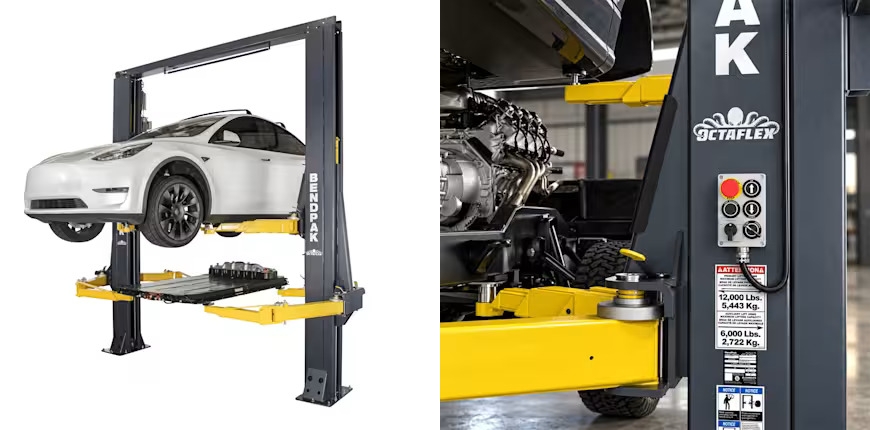
The patent-pending series also features a magnetic pendant controller with two-speed controls, letting technicians stand back from the columns for better visibility. Each set of arms operates independently at normal or slow speed, supporting the fine alignment needed for EV battery installation or single-handed cab and chassis removal.
Dave’s Auto Center in Centerville, Utah, services trucks nationwide and performs multiple cab-offs daily across 25 bays. Owner Dave Bell said the installed OctaFlex saves hours, easing cab removal and allowing chassis work while the cab is airborne. He called it significantly more efficient than completing the cab-off before remaining repairs.
BendPak says shops save an average of two hours per cab-off. A bay pulling 20 cabs monthly at a USD 150 hourly rate could add USD 6,000 monthly, or USD 72,000 annually. Customers can calculate returns by visiting the OctaFlex page on the company website. Savings also come from eliminating a second technician and completing work in one bay instead of two.
Because OctaFlex holds chassis and cab, technicians stand comfortably with everything at eye level, improving ergonomics and eliminating manual lifting of heavy components. The lift features BendPak’s Automatic Swing Arm Restraint System with a 360-degree grip and 10 times traditional holding power. It is third-party tested and ALI Certified as model EV12DPS.
Jeff Kritzer, President and CEO, BendPak, said, “As dealers and independent repair shops continue to struggle with an ageing and shrinking technician workforce, they also face surging demand for labour-intensive tasks like cab-off repairs and EV service. OctaFlex eases the pressure by helping technicians handle complex jobs independently with greater efficiency and less physical strain, maximising throughput and profit potential.”
- Skoda Auto Volkswagen India
- SAVWIPL
- Automotive Research Association of India
- ARAI
- Bharat NCAP
- H D Kumaraswamy
- Piyush Arora
- Global NCAP
- Dr Reji Mathai
Skoda Auto Volkswagen India Partners ARAI To Expand Crash Testing Infrastructure In Pune
- By MT Bureau
- October 30, 2026
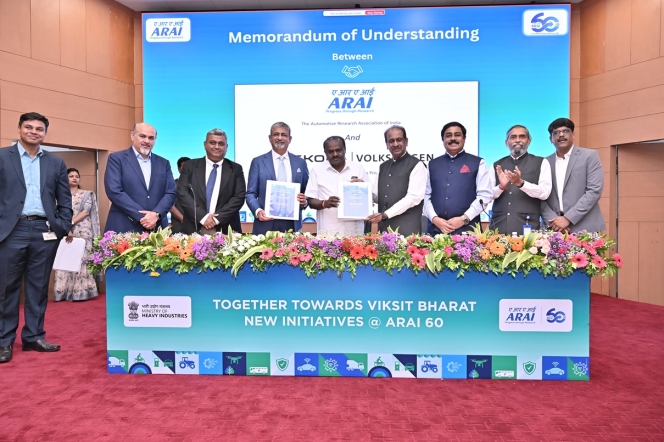
Skoda Auto Volkswagen India (SAVWIPL) and the Automotive Research Association of India (ARAI) have signed a Memorandum of Understanding (MoU) to expand vehicle safety and crash testing infrastructure in Chakan, Pune.
Under the agreement, SAVWIPL will transfer a land parcel adjacent to its Chakan car manufacturing plant to ARAI. The site will be used by ARAI to construct an advanced crash test facility for future mobility vehicles, covering both battery electric vehicle (BEV) and internal combustion engine (ICE) models. The facility will expand domestic validation capacity for electric vehicles, support faster implementation of Bharat NCAP requirements and enable testing needed for international export markets.
H D Kumaraswamy, Union Minister of Heavy Industries and Steel, Government of India, said, "Expanding local R&D and safety testing infrastructure is essential as India's automotive sector advances. This initiative between ARAI and Škoda Auto Volkswagen India strengthens domestic testing capacity for electric vehicles and safety standards. By establishing this facility in Chakan, we are supporting the faster implementation of future Bharat NCAP requirements, helping address India-specific road safety challenges. It will also strengthen the capabilities of OEMs in India to develop vehicles that meet stringent export market requirements."
Piyush Arora, MD & CEO, Skoda Auto Volkswagen India, said, "Vehicle safety and local engineering capability are central to our operations in India. When ARAI required land for a specialised crash test facility adjacent to our Chakan plant, we adjusted our future expansion layout to support their request. As the company whose INDIA 2.0 vehicles were the first India-made cars to achieve 5-star Global NCAP ratings for both Adult and Child Occupant Protection, we have always believed that raising safety standards benefits the entire industry. This strategic partnership will help accelerate the development of safer vehicles in India by shortening EV development timelines, strengthening Bharat NCAP testing, and expanding the country's overall automotive engineering capabilities."
Dr Reji Mathai, Director, ARAI, said, "The future of mobility will be defined not only by innovation but also by the strength of the ecosystem that enables safe, sustainable, and globally competitive vehicle development. This MoU represents a strategic milestone in India’s automotive testing and safety infrastructure. As vehicle technologies evolve rapidly, the need for advanced validation, crashworthiness assessment, and regulatory compliance capabilities will continue to grow. We view this partnership as an important step towards building world-class capabilities that will serve the mobility sector for decades to come."
- Rajendra Petkar
- Tata Motors
- Tata Technologies
- ARAI
- Automotive Research Association of India
- SIAM
- Society of Indian Automobile Manufacturers
Tata Motors’ President & CTO Rajendra Petkar To Step Down
- By MT Bureau
- October 30, 2026
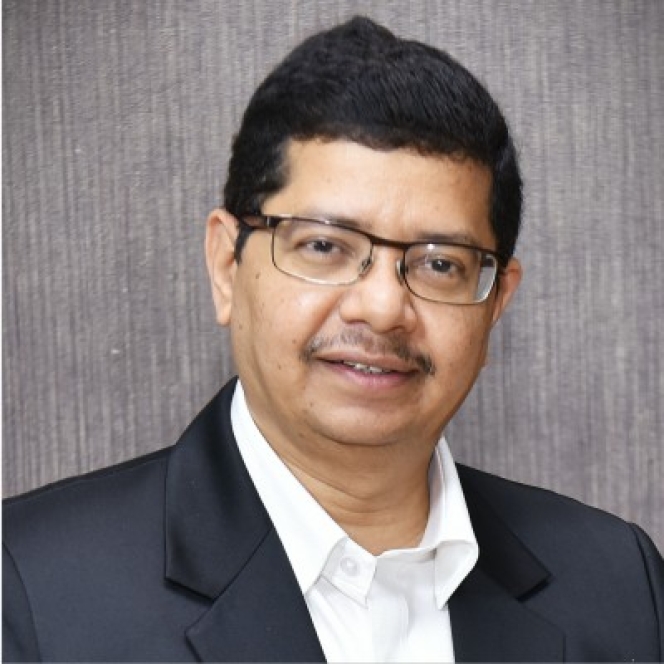
Rajendra Petkar, President and long-time Head of Engineering at Tata Motors, is to step down after an illustrious career of nearly four decades, according to media reports.
Petkar has rich experience in vehicle engineering and technology development across passenger cars and commercial vehicles. He has played a key role in reshaping the latest product portfolio at Tata Motors as he drove technological transitions managing Emerging Mobility & Technology Strategy at the automaker.
In his tenure as President and Chief Technology Officer of Tata Motors, Petkar managed an engineering division of over 5,000 personnel spanning technical centres in India, the United Kingdom and Italy.
Petkar led the introduction of battery electric vehicle platforms, the commercialisation of hydrogen fuel cell buses and the initial deployment of hydrogen internal combustion engine (ICE) trucks. Before re-joining Tata Motors, Petkar was deployed from Tata Technologies to Tata Motors between October 1999 and September 2015.
Beyond his corporate roles at Tata Motors, Petkar served as President of the Automotive Research Association of India (ARAI) from 2021 to 2023, Chairman of the Sustainable Mobility Group at the Society of Indian Automobile Manufacturers (SIAM), and Member of the National Automotive Board, alongside holding positions as an Independent Director across multiple corporate boards.
- Hyundai Motor India
- HMIL
- Hyundai Innovation Challenge 2026
- ZER01NE
- Hyundai Motor India Engineering
- HMIE
- Pulse Energy
- Novus Hi-tech
- CraftifAI
- AmpereHour
- Enmovil
- GoComet
- Haulog Technologies
- Syook
- Unbox Robotics
- Motiv AI
- AMI Technologies
- Dasham Labs
- AltMat
- Simlioncis
- Ravity
- EmpFly Services
- Tarun Garg
Hyundai Motor India Shortlists 16 Startups Under Inaugural Hyundai Innovation Challenge 2026
- By MT Bureau
- October 30, 2026
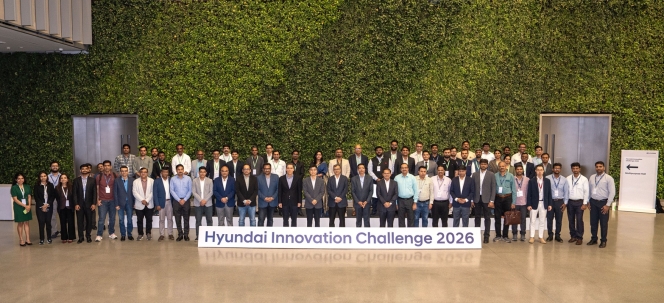
Hyundai Motor India (HMIL), one of the leading passenger vehicle manufacturers, has concluded the Hyundai Innovation Challenge 2026, shortlisting 16 startups from a pool of 980 applications nationwide to explore technology collaborations and commercial engagements.
Supported by Hyundai Motor Group’s open innovation platform ZER01NE, the challenge was launched in April 2026 across 15 thematic areas, including electrification, smart mobility, connectivity, Advanced Driver Assistance Systems (ADAS), artificial intelligence, customer experience and vehicle technologies.
The 16 shortlisted firms presented their solutions to executive teams from HMIL and Hyundai Motor India Engineering (HMIE) during the Grand Pitch Day on 29 October 2026.
The shortlisted startups comprise Pulse Energy, Novus Hi-tech, CraftifAI, AmpereHour, Enmovil, GoComet, Haulog Technologies, Syook, Unbox Robotics, Motiv AI, AMI Technologies, Dasham Labs, AltMat, Simlioncis, Ravity and EmpFly Services.
As a next step, HMIL and HMIE will evaluate opportunities to engage with the selected entities through paid Proofs-of-Concept, technology validation programs, and pilot implementations to assess the commercial viability of their solutions.
Tarun Garg, MD & CEO of Hyundai Motor India, said, "The Hyundai Innovation Challenge 2026 reflects our belief that the future of mobility will be driven by collaboration between established industry leaders and innovative startups. The enthusiastic participation from startups demonstrates the tremendous entrepreneurial talent and technological capability that exists in India. Through this initiative, we have discovered innovative solutions and established meaningful relationships that can contribute to shaping smarter, safer, and more sustainable mobility experiences. We remain committed to supporting the startup ecosystem and transforming promising ideas into impactful solutions for customers and society."
Comments (0)
ADD COMMENT