

India's Auto Retail Sector Shows Modest Growth in April 2025, Fuelled by Rural Demand
- By MT Bureau
- May 05, 2025

The Federation of Automobile Dealers Associations (FADA) today released its April 2025 vehicle retail data, revealing a moderate overall growth of 3 percent YoY.
The two-wheeler segment emerged as the primary growth driver, registering a 2.25 percent increase in retail sales compared to April 2024 and a significant 11.84 percent MoM growth. FADA attributes this positive momentum to strong rural demand. However, the sector continues to face headwinds in the form of high financing costs and the pricing impact of OBD-2B emission norms.
The tractor segment demonstrated robust growth, with a 7.5 percent increase in retail sales year-on-year. This strong performance likely reflects the positive sentiment stemming from a strong Rabi harvest, which typically boosts agricultural activity and consequently, tractor demand.
In contrast to the strong performance of two-wheelers and tractors, the passenger vehicle segment experienced a modest 1.55 percent YoY growth, while witnessing a slight dip of 0.19 percent on MoM basis. The auto retail body attributes that deep discounts are prevalent in the market and while the demand for SUVs remains strong, the entry-level segment continues to exhibit sluggishness. FADA also noted that the PV inventory levels are currently around 50 days, significantly higher than their advocated norm of 21 days.
The commercial vehicle segment faced a contraction, with retail sales declining by 1.05 percent YoY and 4.44 percent on MoM basis. FADA suggests that recent price hikes by OEMs and flat freight rates are negatively impacting sales. Within the CV segment, the Small Commercial Vehicle category saw weak demand, while the bus segment remains steady.
Looking ahead to May 2025, FADA anticipates a positive outlook, primarily driven by the strong conclusion of the Rabi harvest. The expectation of a normal monsoon further strengthens this positive sentiment, suggesting continued momentum in rural demand which could positively influence vehicle sales across various segments.
In a significant development, FADA has begun releasing fuel-wise vehicle retail market share data across all key categories. This new initiative aims to provide stakeholders with a granular understanding of evolving energy preferences and the impact of regulatory influences on India's automotive ecosystem.
C S Vigneshwar, President, FADA, said, “The new financial year began on a measured note as overall retails in April managed to grow by 3 percent YoY. All categories except CV closed in the green, with 2W, 3W, PV and Trac up 2.25 percent, 24.5 percent, 1.5 percent and 7.5 percent respectively, while CVs declined by 1 percent. With the tariff war paused, stock markets staged a sharp pullback – alleviating investor concerns – and customers thus leveraged Chaitra Navratri, Akshay Tritiya, Bengali New Year, Baisakhi and Vishu to complete purchases, helping April end on a positive note.”
| Category | Apr '25 | Apr '24 | Change (in units) | Change (in %) | Mar '25 | Change (in %) |
| YoY | YoY | MoM | ||||
| Two-wheeler | 1,686,774 | 1,649,591 | 37,183 | 2.25% | 1,508,232 | 11.84% |
| Three-wheeler | 99,766 | 80,127 | 19,639 | 24.51% | 99,376 | 0.39% |
| E-Rickshaw (P) | 39,528 | 31,811 | 7,717 | 24.26% | 36,097 | 9.50% |
| E-Rickshaw with Cart (G) | 7,463 | 4,215 | 3,248 | 77.06% | 7,222 | 3.34% |
| Three-wheeler (Goods) | 10,312 | 9,080 | 1,232 | 13.57% | 11,001 | -6.26% |
| Three-wheeler (Passenger) | 42,321 | 34,959 | 7,362 | 21.06% | 44,971 | -5.89% |
| Three-wheeler (Personal) | 142 | 62 | 80 | 129.03% | 85 | 67.06% |
| Passenger Vehicle | 349,939 | 344,594 | 5,345 | 1.55% | 350,603 | -0.19% |
| Tractor | 60,915 | 56,635 | 4,280 | 7.56% | 74,013 | -17.70% |
| Commercial Vehicle | 90,558 | 91,516 | -958 | -1.05% | 94,764 | -4.44% |
| LCV | 46,751 | 47,267 | -516 | -1.09% | 52,380 | -10.75% |
| MCV | 7,638 | 6,776 | 862 | 12.72% | 7,200 | 6.08% |
| HCV | 31,657 | 32,590 | -933 | -2.86% | 29,436 | 7.55% |
| Others | 4,512 | 4,883 | -371 | -7.60% | 5,748 | -21.50% |
| Total | 2,287,952 | 2,222,463 | 65,489 | 2.95% | 2,126,988 | 7.57% |
Cummins India Appoints Gbile Adewunmi As Managing Director
- By MT Bureau
- October 08, 2026

Cummins India has announced the appointment of Gbile Adewunmi as Managing Director and India Regional Leader, effective 1 November 2026. Adewunmi will assume the position alongside his current role as leader of Industrial Markets within Power Systems, where he will continue to direct business operations for the division.
In his current role as Vice-President, Power Systems Industrial Markets, Adewunmi oversees customer and partner operations across industrial segments, including mining. His work in the division has focused on hybrid-electric retrofit systems, mining technologies, and power solutions aimed at operational efficiency and emissions reduction.
Jenny Bush, President of Power Systems, Cummins, said, “Gbile is a respected global leader with deep experience across Cummins and a strong track record of delivering customer-focused growth and business performance. His enterprise perspective, ability to build high-performing teams and commitment to our customers make him exceptionally well positioned to lead Cummins India Limited and the India region while continuing to advance our Industrial Markets strategy.”
Adewunmi said, “I am honoured to take on this expanded role and to work alongside the talented teams across Cummins India, the India region and Industrial Markets. “India is a critical market for Cummins, and I look forward to partnering with our employees, customers and stakeholders to build on our strong foundation and continue powering a more prosperous world.”
Birla Carbon To Showcase Conductive Carbon Portfolio At Battery Show North America 2026
- By MT Bureau
- October 08, 2026

Birla Carbon is pushing deeper into speciality materials, positioning a suite of conductive carbon solutions aimed at tough applications that include next-generation batteries and other high-value conductive uses.
Within battery electrodes, conductive carbon creates the electron pathways that keep performance steady. Selecting the correct conductive additive can translate into quicker charging, stronger high-rate capability and a longer cycle life, while also making battery manufacturing more efficient. At The Battery Show North America 2026, Birla Carbon will put this portfolio on display. The event runs 12–15 October at Huntington Place in Detroit, Michigan, with the company located at Booth 3029.
Showcased products will include Conductex i conductive carbon black grades, Nanocyl carbon nanotubes and blend formulations combining carbon black with CNTs, all built for a broad spread of conductive applications. They offer high purity, leading conductivity and consistent dispersibility, while Conductex i grades additionally cut solvent and energy use during electrode production, bringing down customer costs. The additives address industry priorities such as charge acceptance, battery capacity, dry coating and solid-state, helping manufacturers keep pace with rising demands without giving up quality, consistency or dependable supply.
Shashank Awasthi, President, Speciality Materials, Birla Carbon, said, “Electrification is creating new performance demands across the materials value chain, and advanced carbon materials have an important role to play in meeting them. At Birla Carbon, we are combining our expertise in carbon materials with an expanding specialty portfolio to help customers address these evolving requirements. Established lithium-ion battery manufacturers need to showcase supply chain resilience, extended cycle life and ever-increasing fast charging requirements, which Birla Carbon’s portfolio enables. Next-generation cell technologies, like LMFP, sodium-ion, solid-state and metal-air, are rapidly improving by incorporating ConductexTM i carbon blacks and NanocylTM carbon nanotubes into their formulations.”
- FORVIA
- Anand Group
- Gabriel India
- Faurecia ANand Seating India
- Jaisal Singh
- Anjali Singh
- Martin Fischer
FORVIA, Anand Group Form JV For Automotive Seating In India
- By MT Bureau
- October 07, 2026
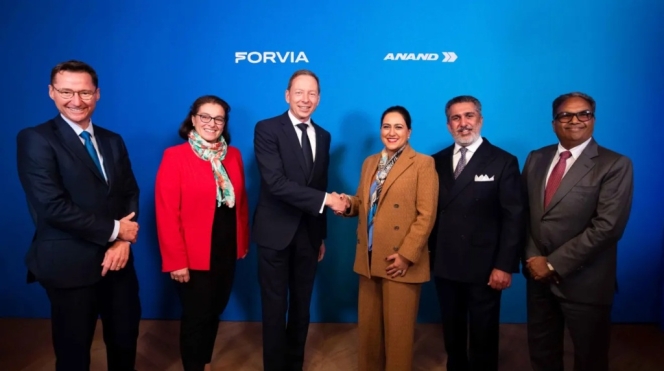
Automotive tier 1 suppliers FORVIA and Anand Group have established a new joint venture to manufacture seat frames and complete seats for the Indian automotive market.
The new entity, named Faurecia Anand Seating India, will be controlled by FORVIA with a 50 percent plus one share stake, while Gabriel India, Anand Group’s flagship listed firm, will hold 50 percent less one share.
The partnership aims to combine FORVIA’s seating technologies and engineering portfolio with Anand Group’s operational network and customer relationships with domestic automotive manufacturers.
The JV aims for a 10 percent market share in India over the next five years as part of its regional expansion strategy. The collaboration expands on an existing relationship between the two companies that began in 1991 in the clean mobility segment.
The joint venture will utilise localised manufacturing footprints to support supply chain, industrial and talent capabilities for supply contracts across Indian vehicle manufacturers.
Jaisal Singh, Vice-Chairman, Anand Group, said, "This partnership is a natural extension of Gabriel India’s transformation into a broader mobility solutions enterprise. As vehicle systems become more integrated and technology-intensive, the ability to participate across a wider spectrum of the automotive value chain assumes strategic importance. The venture strengthens our portfolio with a globally proven capability, while reinforcing our commitment to building scalable, technology-led businesses that create enduring value."
Anjali Singh, Executive Chairperson, Anand Group and Gabriel India, said, "At Anand, we have always believed that long-term relevance is built through thoughtful partnerships, technological excellence, and a deep understanding of customer needs. This venture strengthens our longstanding partnership with FORVIA, building on complementary strengths and a shared commitment to innovation. By bringing together FORVIA’s global expertise and Gabriel India’s strong market presence, it creates a platform that is both strategically significant and future-ready."
Martin Fischer, CEO, FORVIA, said, "When we unveiled our IGNITE strategy earlier this year, we highlighted India as a key growth driver for FORVIA. Following the award of our first complete-seat program a few months ago, today’s agreement marks another important milestone in our development in the country. Building on our long-standing relationship with Anand Group, the joint venture will help accelerate FORVIA Seating’s growth in India."
Faiz Ahmad Succeeds Kumar Prabhas As New CEO Of Hinduja Tech
- By MT Bureau
- October 06, 2026
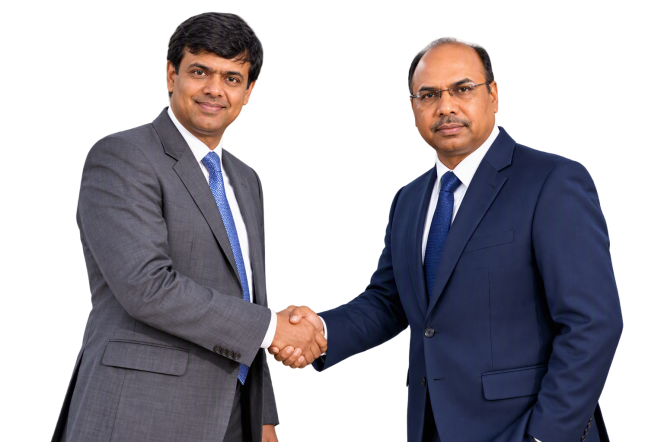
Hinduja Tech, the mobility-focused engineering and R&D technology subsidiary of Ashok Leyland, has announced the appointment of Faiz Ahmad as Chief Executive Officer, effective 1 November 2026.
The appointment follows the retirement of current Chief Executive Officer Kumar Prabhas, who concludes nine years in the role on 31 October 2026.
Ahmad has been part of the Hinduja Group ecosystem for nearly two decades and currently serves as Chief Operating Officer and Head of Vehicle Engineering & Development. During his tenure with the company, he has overseen operational functions, capability building and vehicle development units. Prabhas and Ahmad will execute a transition process throughout October.
During his nine years leading Hinduja Tech, Prabhas managed the company's international expansion, service portfolio diversification and the acquisitions of engineering firms DSD and Tecosim.
Dheeraj G. Hinduja said, “I would like to express my sincere appreciation to Kumar Prabhas for his dedicated leadership and valuable contribution to Hinduja Tech over the past nine years. His vision, commitment, and leadership have been instrumental in shaping the company's growth journey and building a strong foundation for the future. We thank him for his invaluable service and wish him a joyful, healthy, and fulfilling retirement."
"Faiz has been an integral part of our journey and embodies the values, customer focus, and innovative spirit that define Hinduja Tech. His deep industry knowledge, strategic perspective, and proven leadership capabilities make him exceptionally well-positioned to lead the organization into its next phase of growth. We are confident that under his leadership, Hinduja Tech will continue to strengthen its market position, deepen customer relationships, and accelerate innovation across its global operations," added Hinduja.
Faiz Ahmad said, “I am honoured to be entrusted with the responsibility of leading Hinduja Tech at this exciting stage of its growth journey. We have a strong foundation, talented teams, trusted customer relationships, and significant opportunities ahead. I look forward to working closely with our employees, customers, and partners to build on our successes, drive innovation, and deliver sustainable value for all stakeholders.”


Comments (0)
ADD COMMENT