

- Kiwi General Insurance
- WestBridge Capital
- Neelesh Garg
- Tata AIG General Insurance
- Saurav Jaiswal
- motor insurance
Kiwi General Insurance Enters India With Motor Insurance Sector
- By MT Bureau
- June 06, 2026

Kiwi General Insurance, a digital-native non-life insurer, has officially commenced operations in India's non-life insurance market. Backed by private equity firm WestBridge Capital, which holds approximately a 70 percent stake, the company begins its rollout targeting the private car motor insurance segment.
Co-founded by industry veterans Neelesh Garg (Former MD & CEO of Tata AIG General Insurance) and Saurav Jaiswal, Kiwi received its regulatory certificate of registration from the IRDAI in March 2026
The company is operating under the brand philosophy ‘Your Peace, Our Policy,’ the insurer aims to leverage a completely in-house, proprietary technology stack and AI to dismantle legacy pain points, targeting a gross written premium (GWP) of INR 2 billion to INR 3 billion in FY2027.
Kiwi General Insurance’s core operating model signals a structural shift away from traditional asset-based pricing toward personalised customer pricing, allowing it to reward safer drivers with lower premiums.
By starting with motor insurance – a mass product category historically tied to low consumer trust and complex claim friction – Kiwi said it has engineered its product ecosystem directly around minimising the anxiety associated with repair cycles and policy updates.
To address the hesitation consumers face when deciding whether to file an insurance claim, Kiwi has introduced several proprietary features designed to eliminate out-of-pocket stress and administrative delays:
- Super NCB (No Claim Bonus): Protects a customer's accumulated renewal discounts if they file a claim. Instead of resetting to zero, the driver drops only one level down on the bonus scale. The architecture allows policyholders to earn up to 40 percent higher discounts than standard market NCB structures.
- Flexi Repair: Allows policyholders to digitally ‘bank’ minor aesthetic or physical damages from minor incidents over time, later combining them into a single, comprehensive claim. This shields the customer from paying a compulsory deductible for multiple separate micro-claims, allowing them to wait until a complete workshop repair event is worthwhile.
- InstaCash: Provides instant cash support transferred directly to the customer’s bank account on the exact day their vehicle is checked into a workshop for repairs, removing the burden of managing upfront out-of-pocket expenses.
- ‘PayFirst’ Outside-Network Experience: If a customer prefers to utilise a trusted vehicle repair shop that falls entirely outside of Kiwi’s extensive cashless garage network, the PayFirst protocol triggers an instant digital payout directly to the user to maintain total freedom of choice.
Kiwi's simplified operating architecture extends across its hybrid distribution networks to empower its field partners and independent agents for same-day digital onboarding for new distributors, instant premium reconciliation & real-time performance dashboards and shared, interactive claim trackers that provide single-point ownership, completely removing internal communication bottlenecks between the client, agent and repair facility.
Neelesh Garg said, “The insurance industry has long been shaped by legacy processes that create customer apprehension. Our goal is to rebuild it from first principles using technology, data, and disciplined execution. We are focused on making insurance simple, fast and consistent. With Kiwi, we are building an institution that customers and partners can truly rely on.”
Saurav Jaiswal, Managing Director & CEO, Kiwi General Insurance, added, “Indian consumers have a real trust deficit in insurance. If someone has to make a claim, they are already having a bad day. We are building Kiwi to get them through it as fast as possible. Customers today expect clarity, speed, and reliability, especially in moments that matter. From instant policy issuance and real-time claim tracking to faster decisions and single-point ownership, every element is designed to reduce ambiguity.”
Image credit: Pexels Mikhail Nilov
- FORVIA
- Anand Group
- Gabriel India
- Faurecia ANand Seating India
- Jaisal Singh
- Anjali Singh
- Martin Fischer
FORVIA, Anand Group Form JV For Automotive Seating In India
- By MT Bureau
- October 07, 2026
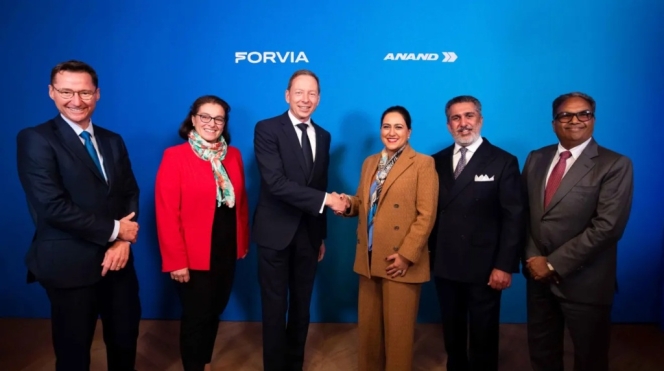
Automotive tier 1 suppliers FORVIA and Anand Group have established a new joint venture to manufacture seat frames and complete seats for the Indian automotive market.
The new entity, named Faurecia Anand Seating India, will be controlled by FORVIA with a 50 percent plus one share stake, while Gabriel India, Anand Group’s flagship listed firm, will hold 50 percent less one share.
The partnership aims to combine FORVIA’s seating technologies and engineering portfolio with Anand Group’s operational network and customer relationships with domestic automotive manufacturers.
The JV aims for a 10 percent market share in India over the next five years as part of its regional expansion strategy. The collaboration expands on an existing relationship between the two companies that began in 1991 in the clean mobility segment.
The joint venture will utilise localised manufacturing footprints to support supply chain, industrial and talent capabilities for supply contracts across Indian vehicle manufacturers.
Jaisal Singh, Vice-Chairman, Anand Group, said, "This partnership is a natural extension of Gabriel India’s transformation into a broader mobility solutions enterprise. As vehicle systems become more integrated and technology-intensive, the ability to participate across a wider spectrum of the automotive value chain assumes strategic importance. The venture strengthens our portfolio with a globally proven capability, while reinforcing our commitment to building scalable, technology-led businesses that create enduring value."
Anjali Singh, Executive Chairperson, Anand Group and Gabriel India, said, "At Anand, we have always believed that long-term relevance is built through thoughtful partnerships, technological excellence, and a deep understanding of customer needs. This venture strengthens our longstanding partnership with FORVIA, building on complementary strengths and a shared commitment to innovation. By bringing together FORVIA’s global expertise and Gabriel India’s strong market presence, it creates a platform that is both strategically significant and future-ready."
Martin Fischer, CEO, FORVIA, said, "When we unveiled our IGNITE strategy earlier this year, we highlighted India as a key growth driver for FORVIA. Following the award of our first complete-seat program a few months ago, today’s agreement marks another important milestone in our development in the country. Building on our long-standing relationship with Anand Group, the joint venture will help accelerate FORVIA Seating’s growth in India."
Faiz Ahmad Succeeds Kumar Prabhas As New CEO Of Hinduja Tech
- By MT Bureau
- October 06, 2026
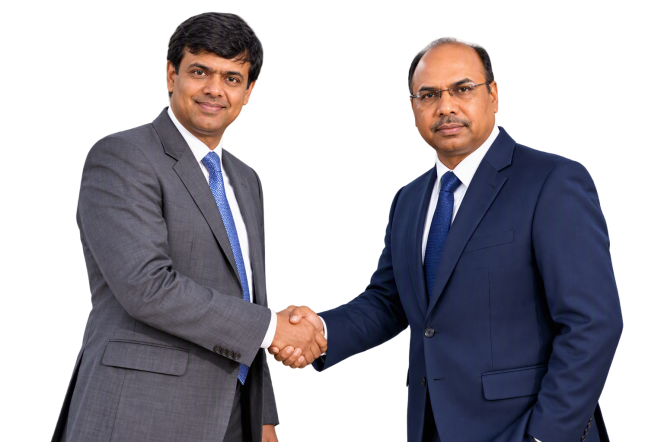
Hinduja Tech, the mobility-focused engineering and R&D technology subsidiary of Ashok Leyland, has announced the appointment of Faiz Ahmad as Chief Executive Officer, effective 1 November 2026.
The appointment follows the retirement of current Chief Executive Officer Kumar Prabhas, who concludes nine years in the role on 31 October 2026.
Ahmad has been part of the Hinduja Group ecosystem for nearly two decades and currently serves as Chief Operating Officer and Head of Vehicle Engineering & Development. During his tenure with the company, he has overseen operational functions, capability building and vehicle development units. Prabhas and Ahmad will execute a transition process throughout October.
During his nine years leading Hinduja Tech, Prabhas managed the company's international expansion, service portfolio diversification and the acquisitions of engineering firms DSD and Tecosim.
Dheeraj G. Hinduja said, “I would like to express my sincere appreciation to Kumar Prabhas for his dedicated leadership and valuable contribution to Hinduja Tech over the past nine years. His vision, commitment, and leadership have been instrumental in shaping the company's growth journey and building a strong foundation for the future. We thank him for his invaluable service and wish him a joyful, healthy, and fulfilling retirement."
"Faiz has been an integral part of our journey and embodies the values, customer focus, and innovative spirit that define Hinduja Tech. His deep industry knowledge, strategic perspective, and proven leadership capabilities make him exceptionally well-positioned to lead the organization into its next phase of growth. We are confident that under his leadership, Hinduja Tech will continue to strengthen its market position, deepen customer relationships, and accelerate innovation across its global operations," added Hinduja.
Faiz Ahmad said, “I am honoured to be entrusted with the responsibility of leading Hinduja Tech at this exciting stage of its growth journey. We have a strong foundation, talented teams, trusted customer relationships, and significant opportunities ahead. I look forward to working closely with our employees, customers, and partners to build on our successes, drive innovation, and deliver sustainable value for all stakeholders.”
Prabhakar Atla Succeeds Balaji Viswanathan As New CEO Of ALTEN India
- By MT Bureau
- October 06, 2026
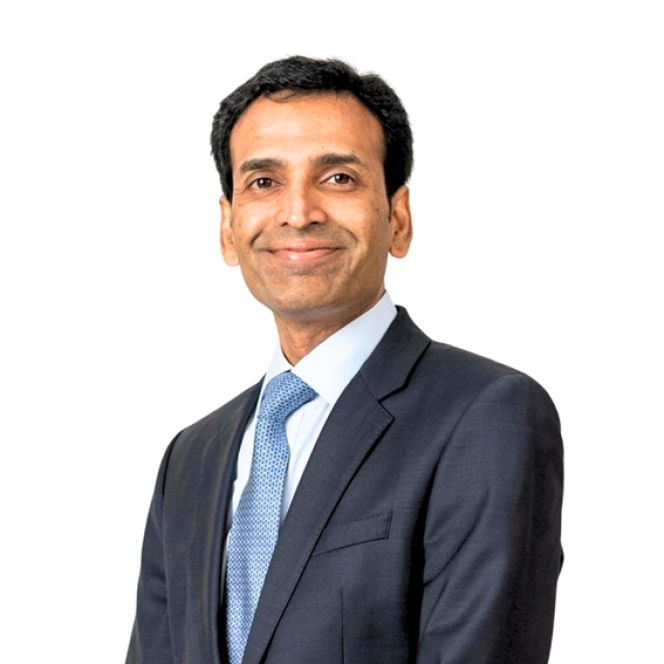
ALTEN India, a global engineering and technology consulting group, has appointed Prabhakar Atla as its new Chief Executive Officer, effective 5 October 2026. He previously served as President and Chief Operating Officer at Cyient, succeeds Balaji Viswanathan as head of the company's Indian operations.
Atla brings three decades of industry experience to the role, having led global operations and business units across sectors including aerospace, communications, rail, energy and semiconductors. His previous assignments include roles in Europe, India, the United States, Japan, and Australia, as well as serving as President and Chief Financial Officer at Cyient prior to his appointment as Chief Operating Officer.
Pascal Amore, Group EVP, Head of APAC, ALTEN, said, "Prabhakar's depth of experience in engineering, IT and technology services, and his track record of leading large global organisations through transformation, make him the right leader for ALTEN next chapter in India. India is core to the ambitions of our 2030 strategic plan, and I am confident Prabhakar will strengthen our organisation, develop new capabilities and accelerate our growth across the country."
Prabhakar Atla said, "I am honoured to join ALTEN and lead its talented teams in India. ALTEN India has grown into a strategic capability hub for the Group, with deep engineering expertise and trusted client relationships. My ambition is clear: enable and empower India as the engine of ALTEN Group's transformation, powered by deep sector expertise, AI-led engineering and faster innovation for our clients."
The company currently employs more than 8,500 personnel across 13 centres in eight Indian cities. The unit provides engineering, digital transformation, semiconductor and artificial intelligence solutions to clients in the automotive, aerospace, defence, telecommunications, consumer technology, manufacturing, and life sciences sectors.
- AIC Pinnacle
- National Automotive Test Tracks
- NATRAX
- EKA
- Dr Avinash Thakur
- Dr Manish Jaiswal
- Dr Sudhir Mehta
- startup
AIC Pinnacle Partners NATRAX To Support Automotive And EV Startups
- By MT Bureau
- October 06, 2026
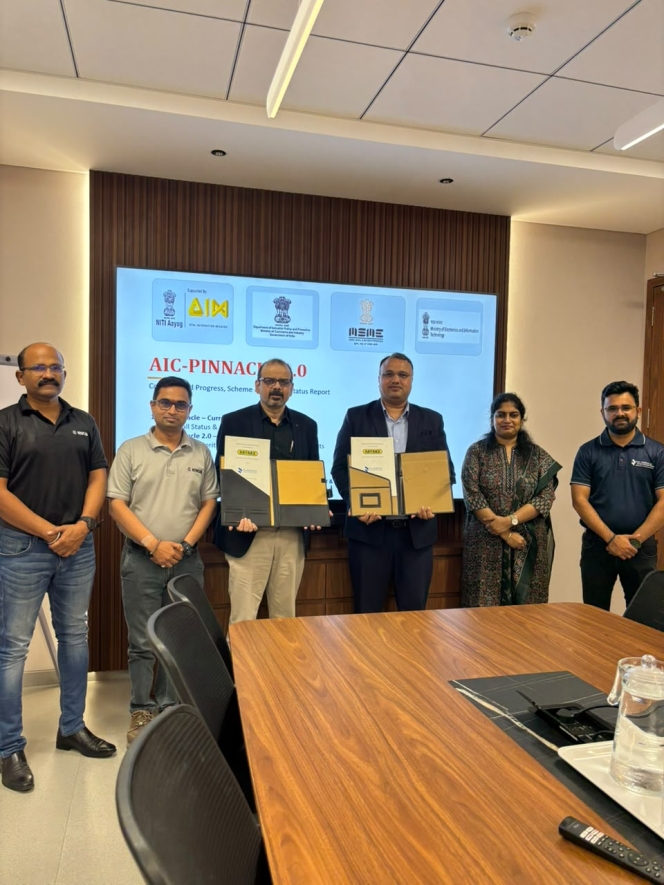
AIC Pinnacle Entrepreneurship Forum and the National Automotive Test Tracks (NATRAX) have signed a memorandum of understanding to support startups in the automotive, electric vehicle and connected mobility sectors.
The agreement was executed at EKA's vehicle manufacturing facility in Chakan by Dr Avinash Thakur, CEO, AIC Pinnacle and Dr Manish Jaiswal, Director, NATRAX.
The collaboration combines AIC Pinnacle’s business incubation and mentoring programs with the testing and certification infrastructure at NATRAX. The partnership aims to assist startups in progressing from prototypes to validated commercial products. Immediate initiatives include organising a startup hackathon and granting select cohort members access to the NATRAX testing tracks near Pithampur, Madhya Pradesh.
The signing event included representatives from EKA Mobility, AIC Pinnacle and NATRAX, such as EKA Mobility Chief Product Officer Zoeb Altafhussain Karampurwala, Chief Engineers Kaustubh Vasant Joshi and Pankaj Shivrudrappa Munoli, and R&D Team Lead Swapnil Anil Tambe, alongside AIC Pinnacle Senior Manager Shadab Hussain and NATRAX Group Lead Tulika Mazumdar.
"The partnership with NATRAX opens an important bridge between startups and the automotive testing and validation ecosystem. Our objective is to help promising innovations move beyond the incubation stage and gain access to the technical, industry and testing support required to develop market-ready solutions," said Dr. Thakur.
Dr Manish Jaiswal said the partnership would create opportunities for startups and innovators to access relevant testing, validation and ecosystem capabilities. "Such partnerships can contribute to accelerating the development and adoption of emerging mobility technologies," he said.
Dr Sudhir Mehta, Founder and Chairman, Pinnacle Industries and Group Companies, said, "Electric mobility will remain a key focus area for AIC Pinnacle in the coming period. This MoU strengthens that vision by giving startups direct access to the industry, strategic partners, academic institutions and government agencies they need to scale."
The initiative will establish networks between early-stage companies, industrial firms, academic institutions, and government agencies across Maharashtra and Madhya Pradesh. AIC Pinnacle operates as a non-profit incubator supported by NITI Aayog's Atal Innovation Mission, while NATRAX operates testing and certification facilities in Central India.



Comments (0)
ADD COMMENT