

Kordsa Displays Next-Gen Composite Technologies At JEC World 2026
- By MT Bureau
- March 13, 2026
Kordsa, a subsidiary of Sabancı Holding, presented its advanced material technologies to a global audience at the JEC World 2026 trade show in Paris. The company featured its latest breakthroughs in composite technologies tailored for the aviation, energy and automotive sectors. The event also served as a platform for Kordsa to communicate its sustainable growth strategy and technological transformation to an international network of stakeholders.
Held from 10 to 12 March 2026, JEC World is recognised as the premier global event for the composites industry. By convening the entire value chain, the exhibition enabled Kordsa to prominently display its expanding role and expertise in composite materials. The company’s presence was reinforced by its international subsidiaries, including US-based Fabric Development, Inc., Textile Products, Inc. and Axiom Materials, Inc., alongside Italy’s Microtex Composites Srl., demonstrating a unified approach shaped by evolving market demands.
Among the key innovations showcased were Ceramic Matrix Composite (CMC) technologies, carbon-reinforced prepregs, thermoplastic automotive interior components and structural body parts. These solutions are engineered to deliver high performance and reduced weight while simultaneously boosting production efficiency and minimising carbon footprint. For the aviation and energy industries, the company highlighted advanced composites designed to meet stringent demands for high-temperature resistance, durability and operational reliability.
Ergun Hepvar, CEO, Kordsa, said, “JEC World is one of the most important global meeting points in the field of composite technologies. On this platform, which brings together the entire value chain of the industry, we have the opportunity to closely observe both the current state of technologies and the trends that will shape the future. This year, we clearly saw that solutions focused on sustainability, lightweighting, high performance and production efficiency are becoming increasingly decisive. At the same time, we witnessed a transformation in customer expectations towards more integrated, agile and sustainable solutions. As Kordsa, we will continue to be an active part of this transformation and to develop value-creating solutions together with our customers.”
Emphasising that Kordsa differentiates itself in composite technologies by offering an end-to-end integrated structure, from R&D and serial production to supply chain and certification processes, Hepvar further added, “The increasing demand for advanced material solutions further strengthens our position in composites. We position composite technologies as one of our two strategic focus areas in Kordsa’s future. In this field, we adopt an approach that expands technological depth, product diversity and application areas simultaneously. Composite technologies stand out as a core area shaping both Kordsa’s present and future. Our goal is to deepen our capabilities here, build a structure that generates higher added value, differentiates itself and grows together with its customers.”
Sona Comstar, DENSO Form Joint Ventures For Electric Powertrain Systems In India
- By MT Bureau
- July 22, 2026
Sona BLW Precision Forgings has signed definitive agreements with DENSO Corporation to establish two joint ventures aimed at developing, manufacturing and marketing electric and hybrid powertrain systems.
The partnership involves two strategic joint ventures tailored to different vehicle segments. The first joint venture focuses on high-voltage liquid-cooled traction inverters, traction motors and generators for passenger vehicles and commercial vehicles, with DENSO holding a 51 percent equity stake and management control and Sona Comstar holding 49 percent.
The second joint venture targets air-cooled traction inverters, traction motors, generators and e-axles for two-wheelers and three-wheelers, where Sona Comstar retains a 51 percent stake and management control and DENSO acquires 49 percent through a subsidiary structure.
Vivek Vikram Singh, MD and Group CEO, Sona Comstar, said, “We have always believed that the future of mobility will be defined by companies that continuously invest in innovation, product development and industrialization of advanced technologies. This partnership marks an historic milestone in Sona Comstar’s journey as a mobility technology company and reflects the capabilities we have built across advanced electric powertrain systems over the years. DENSO is a company we have immense respect for, as they have been at the forefront of automotive innovation globally for decades with deep expertise in electrification technologies. We are honored and delighted to partner with DENSO to bring together the complementary strengths of both companies and build advanced electric and hybrid powertrain solutions for four-wheelers and larger vehicle applications. This partnership will also accelerate the growth of our existing electric powertrain business for two and three-wheelers by strengthening our capabilities across the powertrain value chain and enabling us to serve a broader set of customers.”
Tsuneo Maebara, Head of Powertrain Systems Business Group, DENSO Corporation, said, “The electrification of mobility represents a major transformation that will continue to evolve in response to the diverse needs of customers and society across the world. India, in particular, is an important region where diverse forms of mobility coexist and electrification is advancing at significant scale. Sona Comstar is a mobility technology company with a global business presence, serving a broad range of customers, and having boldly transformed itself alongside the rapid evolution of the mobility market – from conventional vehicle technologies to solutions for both two- and three-wheelers and passenger electric vehicles. Through this partnership, we will bring together the respective strengths that both companies have built over the years to provide electrification solutions that address the diverse needs of customers in India. By harnessing new competitive strengths created through synergies across the two companies’ products, technologies and business foundations, DENSO will further advance and accelerate its electrification business. We will also build on the outcomes achieved in India to deliver value that meets a broader range of customer needs in the future.”
JSW Looks To Acquire Majority Stake In Volkswagen India
- By MT Bureau
- July 22, 2026

Mumbai-headquartered JSW Group looks to double down on its ambition to become a formidable player in the Indian automotive industry with plans to acquire a majority stake in Volkswagen for its operations in the country, says a Bloomberg report.
It is no secret that despite investing billions in India, Volkswagen has been struggling to find a strong foothold in the country and has been aiming to attain a 3-5 percent market share without much success.
In FY2026, passenger vehicle sales in India touched 4.64 million units. During the same period, Volkswagen India and Skoda Auto India sold a total of 37,576 units and 75,556 units, respectively, translating to a combined market share of 2.5 percent.
The report further stated that the partners are in advanced discussions, wherein JSW will pick up a significant stake in Skoda Auto Volkswagen India, with the announcement expected in the coming few weeks.
For the unversed, Volkswagen has been scouting for a suitable partner in India, with previous reports indicating a potential partnership with Mahindra Group and Tata Motors, among others.
Interestingly, JSW Group has been aggressively looking to expand its presence and grab a meaningful share in the Indian automotive industry. It already has a presence in the passenger vehicle segment, being the largest shareholder in JSW MG Group India, in addition to its newly established JSW Motors, with the first model set to be introduced in the next few months.
As per media reports, the European automaker has also scaled down its investment plans from the earlier planned EUR 1 billion to EUR 700 million, as it looks to narrow down losses in the country.
TVS Motor Co Confident Of Outperforming Industry Growth Amid Strong EV And Export Momentum
- By Nilesh Wadhwa
- July 21, 2026
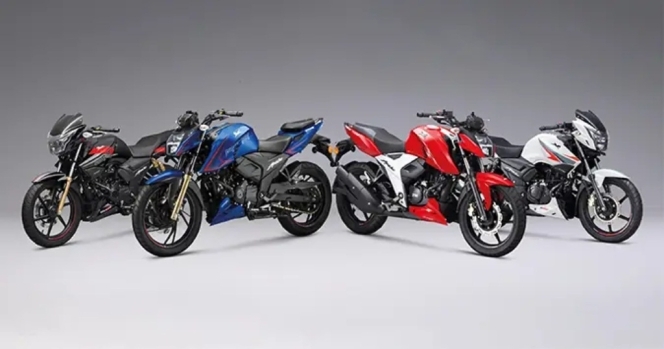
Chennai-headquartered two-wheeler and three-wheeler major TVS Motor Company is optimistic about delivering above-industry growth in the coming quarters, supported by robust structural demand drivers, replacement needs, improving affordability, and accelerating electric vehicle (EV) adoption.
In a post-earnings call, K N Radhakrishnan, Director and Chief Executive Officer, TVS Motor Company, said, “Structural demand drivers, replacement demand, affordability, and continued EV adoption. All these are going to be supportive and I’m pretty confident that TVS will do much better than the industry growth.”
The company continues to see strong momentum in its electric vehicle segment. Following the milestone of crossing one million iQube sales, EV penetration exceeded 10.6 percent in June.
TVS Motor Co’s manufacturing capacity for electric two-wheelers is being scaled from 40,000 units towards more than 50,000 units, while three-wheeler EV capacity is expanding to approximately 30,000 units.
Radhakrishnan sees demand for internal combustion engine (ICE) two-wheelers to remain solid in the domestic market, with the company’s scooter portfolio — including the Jupiter, Ntorq and Scooty ranges — registering robust retail offtake. This has been supported by targeted product upgrades and disciplined inventory management, with dealer stock levels maintained below 30 days.
TVS Apache Crosses 7 Million Sales Milestone, Launches Tu Race Laga Campaign
On the international front, TVS Motor achieved record Q1 sales of 4.68 million units, a 33 percent YoY increase. Growth was driven by a recovery in Africa, expansion in Latin America and strong demand for the HLX series. The company is targeting an increase in total two-wheeler capacity to 8.3 million units.
Despite commodity price volatility and supply chain challenges in April, TVS Motor delivered a healthy operating EBITDA margin of 12.8 percent through strategic price adjustments of approximately 1.5 percent in Q1, ongoing cost optimisation and benefits from scale.
With the festive season approaching in October and November, the company expects sustained momentum across both domestic and international markets, supported by new product introductions and an expanding global footprint.
- Stellantis
- Ram
- Jeep
- Matt VanDyke
- Tim Kuniskis
- Branden Cote
- Bob Broderdorf
- Mercedes-Benz USA
- Aston Martin Lagonda
- Canoo
- AutoNation
- Ford Motor Company
- Shift Digital
- FordDirect
Stellantis Appoints Matt VanDyke As Ram CEO, Brandon Cote As Jeep CEO
- By MT Bureau
- July 21, 2026
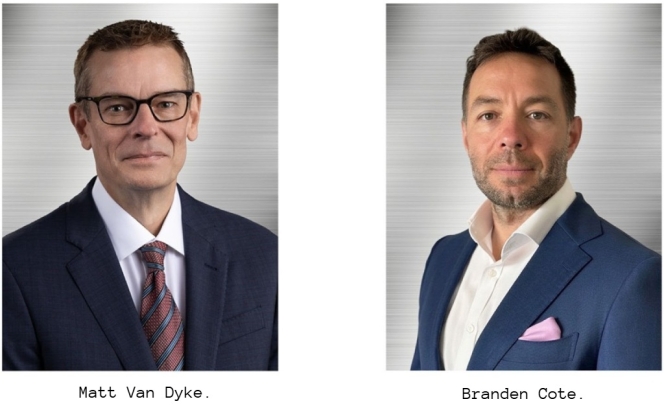
European auto major Stellantis has announced leadership changes for the Ram and Jeep brands. Matt VanDyke has been appointed CEO of the Ram brand, effective 20 July, succeeding Tim Kuniskis. Branden Cote has been named CEO of the Jeep brand, effective 3 August, succeeding Bob Broderdorf, who is taking medical leave and will assume a new role upon his return. Both executives will report to Tim Kuniskis, Head of American Brands, North America Marketing and Retail strategy, Stellantis North America.
VanDyke joins Ram following roles as President of Shift Digital, CEO of FordDirect and leadership positions at Ford Motor Company. Cote joins Jeep with industry experience across OEM and dealer retail operations, including roles with AutoNation, Aston Martin Lagonda, Canoo and Mercedes-Benz USA.
Tim Kuniskis, said, “Matt and Branden are proven leaders who will build on our successes and take these iconic American brands to the next level. Their skills and deep industry experience align with our simple – but very important – customer-centric objective: to provide people with the brands and products they love and trust. I also want to thank Bob Broderdorf for his exceptional leadership of Jeep. Bob is a dedicated and valued colleague, and a friend to many across the Company. I look forward to continuing our work together when he takes on his new role.”
Comments (0)
ADD COMMENT