

Mahindra Outlines Ambitious EV Strategy, Capacity Expansion Following Robust FY2026 Results
- By Nilesh Wadhwa
- May 05, 2026
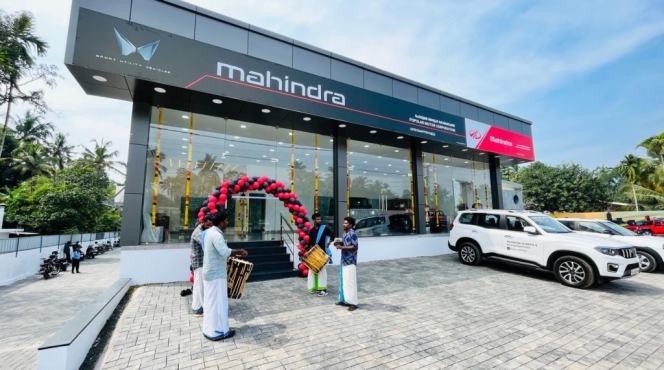
Mumbai-headquartered automotive major Mahindra & Mahindra (M&M) has signalled a bold new chapter in its global expansion, detailing plans for electric vehicle (EV) exports and significant production scaling following a ‘defining year’ of financial growth.
The Mumbai-based conglomerate reported a stellar performance for FY2026, with consolidated Profit After Tax (PAT) reaching INR 170.99 billion, a 35 percent increase over the previous year. Consolidated revenue for the year surged 25 percent to reach INR 1,986 billion, 25 percent YoY.
During the year, the company reported sales of 1.11 million units, up 19 percent, while tractor sales grew by 24 percent at 526,403 units.
Central to the company’s future is a phased entry into international EV markets. Rajesh Jejurikar, Executive Director & CEO (Auto and Farm Sector), told Motoring Trends, that Mahindra has planned a disciplined roadmap for global expansion.
"For exports, we would look at right-hand-drive markets in the world first. If we succeed there, then we will look at left-hand-drive markets". The company expects to begin seeing Mahindra EVs in a couple of new countries within the next 18 months.
Addressing potential competition from new Free Trade Agreements (FTAs), Dr Anish Shah, Group CEO & MD, Mahindra & Mahindra remains confident. He acknowledged that the government has structured FTAs to encourage local manufacturing. "We have already seen a lot of competition in the auto industry already and all the top players are here as well. FTA doesn’t change anything from that standpoint. It is important to emphasise that the government has done it (FTAs) very well to make sure that other players continue to make in India as well for the Indian market and to be able to export from around India. In that sense, they (automakers) have it set up well, and that should benefit the Indian government," Shah remarked.
New product launches & Capacity enhancement
Furthermore, the Mahindra management acknowledges that there has been a gap between demand and supply, especially for its new range of electric vehicles, which is why it is ramping up and unlocking capacities to meet the consumer demand.
It has already enhanced its SUV ICE capacity from 54,000 units per month to 56,500 units per month at the end of FY2026, with plans to scale it up to 60,000 units.
Similarly, for battery electric vehicles, it has enhanced the capacity from 5,000 units a month at the end of FY2025, to 8,000 units per month by 31, March 2026.
Furthermore, to support the potential EV uptick growth, Mahindra is aggressively expanding its manufacturing footprint. The company is in the process of land acquisition for its Nagpur facility, which is intended to eventually take capacity up to 500,000 units per annum.
Going forward, it has revised its earlier plans to launch 4 new ICE SUVs and 3 new electric vehicles by 2031, to 10 new ICE SUVs and 6 new BEVs by 2031. This includes 1 new mid-cycle enhancement and 9 new SUV nameplates in the ICE category.
In the EV segment, Mahindra is targeting an 18-20 percent penetration rate over a five-year period. Monthly production for the popular XEV 9S model is slated to rise from 6,000 to 8,000 units this year, with plans to reach a total EV capacity of 12,000 to 14,000 units per month as they enter FY2028.
When questioned on how Mahindra will compete with new entrants, Jejurikar pointed to ‘design and the tech’ as primary differentiators. He highlighted their unique seven-seater EV offerings and long-range capabilities (450-500+ km) as key advantages that ‘reduce charging rate’ anxiety for customers.
Market Leadership and Financial Resilience
The company’s traditional strongholds continue to dominate the Indian market. Mahindra remains No. 1 in SUVs with a revenue market share of 25.3 percent, No. 1 in Light Commercial Vehicles (LCVs) and No. 1 in Tractors with a 43.6 percent market share.
"FY26 has been a defining year marked by strong execution and breakthrough performance," said Dr Anish Shah. He emphasised that the Group is ‘well poised to accelerate in these uncertain times,’ supported by a strong balance sheet and a net cash generation exceeding INR 1,600 billion.
FY2027 outlook
Despite global ‘geopolitical headwinds,’ the company maintains a disciplined approach to capital allocation, focusing on high-growth ‘Growth Gems’ and exiting non-performing international farm businesses to ensure a 20.1 percent Return on Equity (RoE).
It expects FY2027 to see the tractor sales to grow in mid-single digits, while SUVs will see mid to high teen growth. Mahindra's aim is to focus on ramping up manufacturing capacity to meet volume growth aspirations.
On the LCV (upto 3.5-tonne segment), where Mahindra holds the lion’s or 52 percent market share, it expects the industry growth volumes to come in high single digits.
SAEINDIA to Host Asia Pacific Automotive Engineering Conference In New Delhi
- By MT Bureau
- October 23, 2026
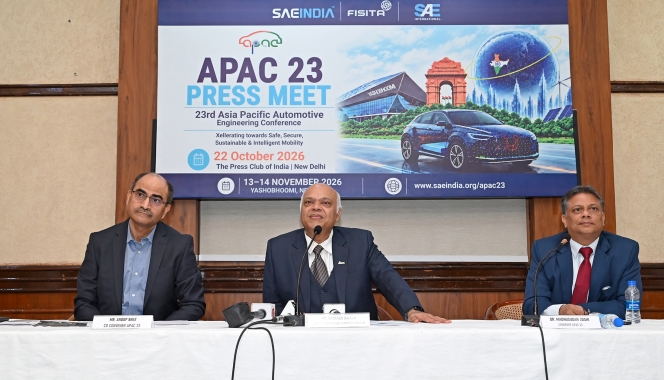
SAEINDIA is set to host the 23rd Asia Pacific Automotive Engineering Conference (APAC 23) from 13 to 14 November 2026 at the Yashobhoomi Convention Centre in New Delhi.
The event, held under the theme ‘Xellerating towards Safe, Secure, Sustainable & Intelligent Mobility,’ returns to India for the second time following a 15-year interval. The conference will convene more than 1,000 delegates and 500 mobility experts representing vehicle manufacturers, component suppliers, technology firms, research organisations and regulatory bodies across 11 countries in the Asia-Pacific region.
The agenda comprises 150 technical presentations and 80 exhibitors covering subject areas such as powertrains, automated driving, cybersecurity, software-defined vehicles, vehicle dynamics, advanced materials and regulatory standards.
The venue features an exposition hall, a technology theatre for product demonstrations, and the TechHive platform designed to connect mobility start-up ventures with industry leaders, technology experts, and investors.
“APAC 23 represents an important opportunity for India to engage with the Asia-Pacific mobility engineering community at a time when our industry is undergoing fundamental transformation. By bringing together industry, academia, researchers, innovators and policymakers, we aim to create meaningful conversations and collaborations that can contribute to safer, smarter and more sustainable mobility,” said Saurabh Dalela, President of SAEINDIA.
Anoop Bhat, Co-Convenor, APAC 23, said, “The scale and diversity of APAC 23 have been designed to create an environment where engineering knowledge, technology innovation and business opportunities come together. From technical presentations and the exposition to TechHive and the Technology Theatre, participants will have multiple opportunities to discover technologies, exchange ideas and build collaborations across the mobility ecosystem.”
Bosch Reorganises German Operations And Mobility Division Into Separate Subsidiaries
- By MT Bureau
- October 23, 2026
Global technology company Bosch has announced a restructuring of its corporate framework in Germany, transferring the activities of its Mobility business sector and central service units into legal entities.
Under the plan, the Mobility division alongside Bosch Digital, Global Business Services and Global Real Estate will operate as wholly-owned limited liability subsidiaries within the Bosch Group from 1 August 2027.
The transition aligns the Mobility sector with the structure already utilised across the group's Industrial Technology, Consumer Goods, and Energy and Building Technology divisions. Following the reorganisation, Robert Bosch GmbH will function primarily as corporate headquarters and central research operations, with approximately 62,500 associate employment contracts in Germany transferring to the subsidiaries.
The Mobility division remains the largest business unit within the group, generating EUR 55.8 billion in sales revenue in 2025, accounting for 60 percent of group sales.
Dr. Christian Fischer, Chairman of the Board of Management, Robert Bosch GmbH, said, "We are operating in an increasingly challenging environment across our markets. New competitors, particularly from Asia, are intensifying the competitive pressure. For us at Bosch the implication is that we need to bring innovations to market even faster, substantially simplify structures and processes, and accelerate our overall pace to keep up. The goal is to sustainably increase the profitability of the Bosch Group as a whole so that we can continue to fund technological breakthroughs from our internal resources. With the planned reorganisation of our corporate structure, we are creating the conditions that will allow each operating unit to unfold its full potential – with greater entrepreneurial freedom, short decision-making paths, and closer customer focus. It will also mean that our internal service units can contribute more significantly to the performance of our operating units, offering competitive and first-class services. One thing is clear: all legal entities will remain an integral part of the Bosch Group, irrespective of their new legal form."
Dr. Markus Heyn, Deputy Chairman of the Board of Management, Robert Bosch GmbH and Chairman of the Mobility business sector, said, "We’re starting from a position of strength. But to defend our lead in the long term, we must consistently realign with new customer requirements, markets, and the competition. Going forward, we’ll be able to take an even more customer-centric approach, act more powerfully as one team, and shape change faster in one of the world’s most demanding industries. Our ambition is to continue setting the pace for the automotive industry. That requires speed, clarity, and business resolve – and we have all three."
FORVIA, Great Wall Motor Establish Global Strategic Cooperation Framework
- By MT Bureau
- October 23, 2026
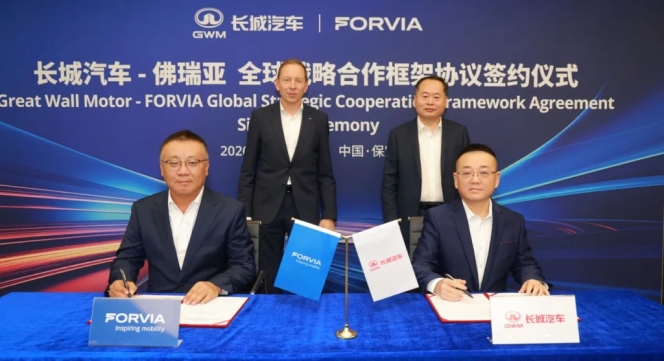
FORVIA and Great Wall Motor (GWM) have signed a global strategic cooperation agreement to expand their partnership beyond China into international markets.
The agreement encompasses collaboration across technological innovation, industrial operations, supply chain management, sustainability and workforce development. Under the framework, FORVIA will leverage its technology portfolio and manufacturing footprint across seating, clean mobility, electronics and lighting to support Great Wall Motor's international expansion. The partnership focuses on deploying localised production models and supply chain infrastructure across automotive markets globally.
Martin Fischer, CEO, FORVIA, said, "Chinese automakers are becoming major global players and are reshaping competitive dynamics across the industry. As they expand internationally, success will increasingly depend on the ability to combine local innovation with global execution. This is where FORVIA brings distinctive value. By combining Great Wall Motor’s growth ambitions with FORVIA’s technology leadership, industrial footprint and local-for-local execution model, we are creating a platform for long-term growth and innovation across the world's key automotive markets."
Zhao Guoqing, COO and Chief Supply Chain Officer, Great Wall Motor, said, "Globalisation is at the core of Great Wall Motor's strategy. We are continuously advancing our ecosystem-driven globalization and comprehensively strengthening our global operations and localised service capabilities. Having a partner that both understands the Chinese market and brings global industrial footprint and technology depth is essential to Great Wall Motor's global development. FORVIA has deep expertise across seating, clean mobility, electronics and lighting, and its ability to combine global footprint with local operations aligns closely with Great Wall Motor's development needs. We look forward to building on this agreement as a starting point to achieve deeper win-win cooperation in technology innovation, supply chain synergy and global market expansion."
ATA Appoints Mark Colson As Next President & CEO
- By MT Bureau
- October 23, 2026
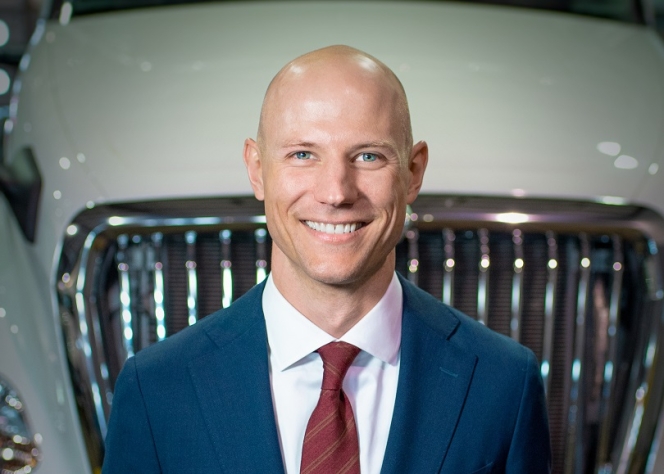
The American Trucking Associations (ATA) has named Mark Colson as its next President and CEO, with his appointment taking effect on 1 December 2026. Colson will become the 10th leader to hold the position since the organisation was founded in 1933.
Colson brings more than two decades of experience as a trucking association leader and advocate for motor carriers and industry professionals. He is expected to draw on that background to build lasting coalitions, recognise the contributions of trucking workers and unite the industry around a cause promoting the highest standards of professionalism.
Since 2019, Colson has led the Alabama Trucking Association as President and CEO, engaging with policymakers in Montgomery and Washington to advance industry priorities and highlight trucking's economic and supply chain significance. Previously, he held several leadership roles at the Business Council of Alabama, including Interim President, Senior Vice President of Governmental Affairs, and Chief of Staff, collaborating closely with the U.S. Chamber of Commerce and the National Association of Manufacturers.
Within the ATA Federation, Colson has served on the Strategic Priorities Committee and the Truck PAC Board of Directors, as well as the American Transportation Research Institute's Research Advisory Committee. In July 2026, his state association peers elected him Vice Chairman of the Trucking Association Executives Council. He also chaired the TAEC task force that produced the seven-point Trucking Resurgence action plan, released in December 2025 to address regulatory gaps exploited by noncompliant carriers and unqualified drivers. Colson is a Huntingdon College graduate, where he was inducted into the Athletic Hall of Fame for football, and holds an MBA from Troy University. He serves on Huntingdon College's Board of Trustees and Executive Committee.
Colson said, "This is a unique moment for ATA to make a renewed commitment to the trucking industry and the professionals who call our industry home. It's a commitment built first on earned trust, a sense of family and purpose, and an unrelenting passion to fight for the issues that matter most to trucking. The values that trucking leaders and professionals hold dear were instilled in me at an early age in my family's second-generation tyre shop, Blow-Out Tire Company, where I grew up changing truck tyres. They have followed me throughout my career fighting for the hard-working men and women throughout our industry, and it is a privilege to continue that fight alongside the team and members of ATA.
"State trucking associations and the dedicated staffs that support them are the boots on the ground when it comes to advancing and defending the trucking industry. It's been an honour to learn from my fellow state executives, and I'm excited to continue working with them to unleash the full strength of the Federation. We are on the verge of a trucking resurgence, but we must keep fighting and advocating as our industry leaders continue to climb out of one of the deepest and longest freight recessions in history. We must meet them where they are, listen to their concerns and do everything we can to help them and their people be successful."
Greg Hodgen, ATA Chairman and CEO of Groendyke Transport, said, "For more than 90 years, ATA's mission has been to give trucking a strong voice in the decisions that shape its future. Mark will build on that foundation, bringing fresh energy and a clear vision for advancing our industry's priorities and delivering even greater value for our members."
Derek Leathers, incoming ATA Chairman and Chairman and CEO of Werner Enterprises, said, "The decisions made in Washington don't stay in Washington. They affect how we operate, how we invest and how we serve our customers every day. Our industry needs a strong, unified voice at the table to make sure policymakers understand those realities and fight for policies that enable trucking to keep America moving."
Chris Maxwell, Chairman of TAEC and President and CEO of the Rhode Island Trucking Association, said, "Few trucking companies operate within the borders of just one state, which is why the ATA Federation matters so much. When bad ideas emerge in one state, they have an impact on motor carriers across the entire country. The partnership between ATA and the state associations is one of our industry's greatest strengths, and Mark understands firsthand what makes it so powerful."
Comments (0)
ADD COMMENT