

Royal Enfield Plans INR 25 Billion Plant In Andhra Pradesh
- By MT Bureau
- May 18, 2026

Chennai-headquartered mid-sized motorcycle major Royal Enfield has announced plans to secure a land parcel for a greenfield manufacturing facility in Tada (Tirupati), Andhra Pradesh.
The company intends to invest approximately INR 25 billion in the expansion project, which will be implemented in phases subject to board approval and market conditions.
At present, the motorcycle manufacturer has a capacity to produce 1.46 million units per year, which is currently operating near full utilisation. This announcement follows an INR 9.58 billion investment made in February 2026 for a brownfield expansion in Cheyyar, Tamil Nadu, which is projected to increase the company's total production capacity to 2 million units annually. In FY2026, Royal Enfield recorded sales of 1.2 million motorcycles.
B. Govindarajan, Managing Director - Eicher Motors, and Chief Executive Officer, Royal Enfield, said, “Royal Enfield's philosophy has always been to stay connected with our community to deliver the best possible products and experiences. We currently operate four world-class manufacturing facilities in Tamil Nadu, with a total projected capacity of 2 million units annually. This investment in Andhra Pradesh will augment that capacity and provide the impetus for our next phase of growth. We are grateful to the Government of Andhra Pradesh for their support and partnership as we strengthen our presence in a state with immense potential. Having already established over 100 retail and service outlets and more than 1,200 direct and indirect employment opportunities, we are proud to contribute to its industrial and economic landscape.”
The company’s existing infrastructure includes four manufacturing bases in Tamil Nadu, alongside seven Completely Knocked Down (CKD) assembly plants located in Bangladesh, Nepal, Brazil, Thailand, Argentina and Colombia. Technical operations are managed through two centres in Bruntingthorpe, UK, and Chennai, India.
- VinFast
- VinFast India
- Vingroup
- Tapan Ghosh
- Anurag Saxena
- V-Creator All Star Summit 2026
- Anurag Saxena
VinFast To Launch 2 New Products Annually In India, Two-Wheeler Offensive Soon
- By Nilesh Wadhwa
- November 22, 2026
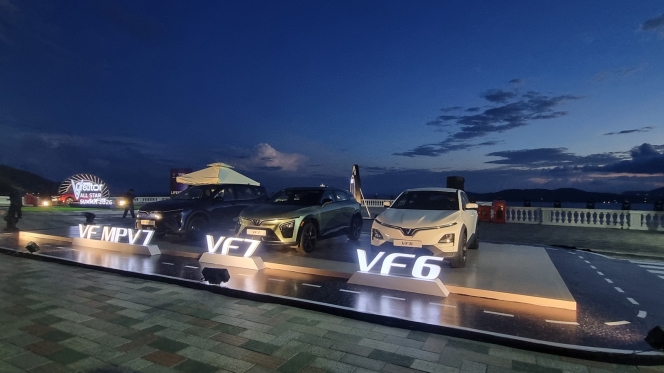
Vietnam-headquartered automotive company VinFast, part of Vingroup, is preparing to strengthen its presence in India with an expansion across electric passenger vehicles and two-wheelers, India-specific product development and manufacturing capacity, as the company looks to capitalise on the country's growing electric mobility market.
Speaking at a recent media roundtable at the sidelines of the V-Creator All Star Summit 2026 in at Vinpearl Resort Nha Trang, Vietnam, Tapan Ghosh, CEO, VinFast Asia, said the company intends to introduce around two new passenger vehicle products annually, while its electric two-wheeler business is expected to enter the market early next year with products developed specifically for Indian customer requirements.
“We don't want to rush. We want to make the foundation very strong,” Ghosh said, emphasising the importance of building the sales, service, charging and customer-support ecosystem alongside product expansion.
Product portfolio and volumes
VinFast has introduced four products in India since beginning retail operations in September last year – the VF6, VF7, MPV7 and Limo Green – spanning personal mobility, family transportation and commercial applications.
Ghosh said registrations had increased from around 300 cars per month during the initial phase to approximately 2,500–3,000 vehicles monthly, based on Vahan data. He attributed the growth to the company's presence across multiple customer segments.
“We have got different products, and we will be keeping on developing products,” he said, adding that the company conducts market research and segment assessments to determine which products would be commercially viable in India.
VinFast plans to introduce approximately two products annually, although the timing and segments will depend on customer demand and the company's assessment of market opportunities.
Electric two-wheelers to be tailored for India
VinFast is preparing a separate manufacturing line for electric two-wheelers at its Indian facility. The company said its two-wheeler manufacturing capability could eventually reach a maximum capacity of one million vehicles annually, although this is not an immediate production target.
Anurag Saxena, Market CEO – 2W, VinFast India, said the company was developing products around Indian road conditions, traffic and customer requirements.
“Indian products would be substantially different in terms of size, space and specifications,” Saxena said, adding that the products would retain elements of the company's global design and engineering expertise while being adapted for the domestic market.
VinFast is targeting a broad range of two-wheeler customers, including families, individual commuters, younger buyers and performance-oriented users. Multiple models are planned, although the company is initially prioritising the scooter segment, which accounts for the majority of the two-wheeler market.
The company expects its Indian electric two-wheeler products to enter the market early next year.
Dealer network and customer ecosystem
VinFast has already identified 34 dealers across 15 states and signed contracts with more than 50 dealers, who are currently being developed for operations.
Saxena said the focus was not only on establishing dealerships but also on training local manpower and creating systems to ensure a consistent customer experience.
The company is also exploring battery swapping alongside other charging solutions for its electric two-wheelers to address range anxiety and different usage requirements.
“VinFast is not evaluating product alone. VinFast is coming up with an ecosystem that addresses the needs and pain points of the customer,” Saxena said.
Manufacturing capacity and investment
The company's existing manufacturing facility in Tamil Nadu has an annual capacity of 50,000 vehicles. VinFast said the facility could initially be scaled up to 100,000 units and subsequently to 150,000 units, depending on demand.
The company has already invested approximately USD 500 million in India and has committed a broader investment of USD 2 billion over a period of years, covering its manufacturing and expansion plans, including two-wheelers.
The existing facility is spread across approximately 450 acres, while VinFast has signed a memorandum of understanding with the Tamil Nadu government for another 500 acres.
Ghosh said the company would progressively expand capacity rather than invest upfront in large volumes. “We are not just going by the target; it is the capacity which is correct. We will see how the customer's response is, and accordingly we will try to move forward,” he said.
Localisation and exports
At present, VinFast has approximately 15 percent localisation for the electric four-wheelers in India and intends to increase this as volumes grow and supplier partnerships develop.
Ghosh said localisation would depend on scale, supplier capabilities and the development of a domestic vendor ecosystem. The company has already begun discussions with suppliers as it looks to build its sourcing base.
Exports from India are also part of the long-term plan. VinFast intends to prioritise the domestic market initially while exploring export opportunities, particularly in right-hand-drive markets, before considering broader export destinations.
The company said it would continue to assess its product portfolio, manufacturing investments and network expansion based on customer response, rather than committing to aggressive volume targets at this stage.
- Society of Indian Automobile Manufacturers
- SIAM
- Ministry of Heavy Industries
- National EV Charging Day
- Readiness for EV Infrastructure Dialogue
- GRID 2026
SIAM Hosts First National EV Charging Day To Address Charging Infrastructure Readiness
- By MT Bureau
- November 21, 2026
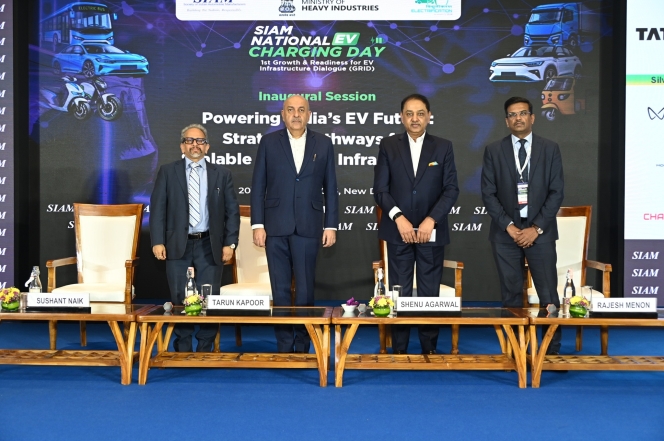
The Society of Indian Automobile Manufacturers (SIAM), with support from the Ministry of Heavy Industries, organised its first National EV Charging Day and the first Growth and Readiness for EV Infrastructure Dialogue (GRID 2026) in New Delhi under its Electrification initiative.
Held under the theme ‘Powering India’s EV Future: Strategic Pathways for Scalable Charging Infrastructure’, the event also marked the launch of the SIAM National EV Charging Day logo and brought together policymakers, government officials, state representatives and industry executives.
H. D. Kumaraswamy, Union Minister, Ministry of Heavy Industries and Ministry of Steel, Government of India, said, “Accessible charging infrastructure is the backbone of electric mobility. We must be clear about how progress is measured. The number of charging stations sanctioned or installed is important, but it cannot be the only measure of success. A charging station must be operational, provide the required capacity, be easy to locate and access, and ensure convenient payments. Infrastructure that remains unavailable does not build confidence among users. Our ambition must extend beyond major metropolitan areas to smaller towns, rural areas, industrial districts, tourism circuits and emerging economic corridors. Let us work together to make India's EV ecosystem accessible, reliable, inclusive and globally competitive.”
Tarun Kapoor, Advisor to Prime Minister of India, Government of India, said, “The launch of SIAM National EV Charging Day marks an important step in recognising the growing significance of charging infrastructure in India's electric mobility transition. As the charging network expands across the country, the focus must remain on reliability, regular maintenance and reasonable tariffs to encourage wider consumer adoption. This will require close collaboration among vehicle manufacturers, charging point operators, Oil Marketing Companies, distribution companies and other stakeholders, alongside infrastructure development for passenger and commercial vehicles, including electric trucks, three-wheelers and buses. Through sustained collaboration, innovation and appropriate policy interventions, India can build a robust, accessible and commercially sustainable EV charging network.”
Sushant Naik, Chairman, SIAM Electric Mobility Group and Global Head Government and Corporate Affairs, Chief Corporate Affairs Officer, Tata Motors, said, “India is at an exciting moment in the electrification journey of the mobility ecosystem. Electric mobility has moved from the margins to mainstream. The focus now must extend beyond EV adoption to charging infrastructure, which will accelerate the EV ecosystem. We are celebrating National EV Charging Day, which marks the beginning of a movement that will power India’s EV future. The opportunity for EV charging is huge, and with greater collaboration between industry, government and infrastructure players, we can build a robust, accessible and sustainable charging ecosystem that will drive India’s electric mobility journey forward.”
Shenu Agarwal, President, SIAM and MD & CEO, Ashok Leyland, said, “India’s mobility story begins with India’s growth story. As the nation moves towards Viksit Bharat, every kilometre driven on a charging supply powered by a greener grid supports decarbonisation and energy security. EV adoption has moved from early adoption to mainstream momentum, with penetration rising from 0.7% in FY20 to 8.2% in FY26. Every new EV on the road creates a new charging need, so infrastructure must move in step with demand. India has the policy direction, clean power base and market momentum. The focus now must be on five key areas—Power, Space, Segments, Platform and Partnerships—to rapidly scale up a dependable charging ecosystem.”
A fireside chat on central policy measures, moderated by Prakash Rao, Co-Chair, SIAM Electric Mobility Group and Head Product Development: Powertrain, COEs and Facilities, Mahindra & Mahindra, reviewed deployment targets and grid readiness.
Dr. Hanif Qureshi, Additional Secretary, Ministry of Heavy Industries, Government of India, said, “The Ministry of Power guidelines stipulate that there should be a car charging station every 25 km on highways and a charging station for buses and trucks every 100 km. We are progressing towards achieving this, and the journey is becoming smoother. In the truck segment many vehicles are deployed in sectors such as mining, steel and ports. Charging infrastructure must also evolve to cater to these requirements as well, alongside strengthening the grid and distribution infrastructure. Charging infrastructure requires coordination between various levels of government, particularly state governments. Under the PM E-DRIVE scheme, about 9,000 chargers are being set up, and approximately INR 9 billion has been sanctioned to various state governments for charging infrastructure. Local bodies and private entities must also coordinate to organise land and connections. In most states, policies have helped in smoothening the journey of identifying sites and providing chargers, making the overall exercise of deploying charging infrastructure more seamless.”
Ravi Dhawan, Director, Ministry of Power, Government of India, said, “What used to be a bottleneck in the distribution sector is now gradually improving. We are transitioning towards better outcomes, and the number of outages and their duration have improved significantly over the last few years. There is continued emphasis on strengthening infrastructure and building the network capacity required at the local level. As electrification increases, distribution companies must prepare for emerging demand and strengthen their infrastructure to support it. The Government of India has recently sanctioned Viability Gap Funding for 92 GWh of energy storage capacity. This is expected to provide significant support to DISCOMs in managing their power requirements. AI-enabled solutions are also being developed to help distribution companies better utilise infrastructure, manage demand and shift peak loads.”
The programme also featured a panel on state-led strategies moderated by Omkar Shaligram, Head – EV Charging and Ecosystem Development, Tata Motors, with participation from Dr. Nidhi Sarohe, Joint Commissioner (Transport), Government of NCT of Delhi; Ravinder Singh, Chief Executive Officer, UPREV, Uttar Pradesh; Sooraj E.M., Guidance Tamil Nadu; Dennis Rajan, Sector Lead, KSEBL, Kerala; and Kulbhushan Kumar, Partner, Grant Thornton. A panel on investments, business models, and partnerships moderated by Ashim Sharma, Partner, NRI India, followed, alongside discussions featuring SIAM Director General Rajesh Menon, SIAM Executive Director (Technical) Atanu Ganguli, Chargezone Founder and Chief Executive Officer Kartikey Hariyani, Statiq Founder and Chief Executive Officer Akshit Bansal, Tata Power Head – EV Charging Virendra Goyal, Bharat Heavy Electricals Ltd. General Manager and Head – New and Renewable Business Sutripto De, Ather Energy Head – Charging Infrastructure Aravind Prasad, and JSW MG Motor India Head – Strategy, EV and Innovation Neha Jain.
Toyota Kirloskar Motor Inks MoU With Varanasi Smart City For Traffic Surveillance
- By MT Bureau
- November 20, 2026
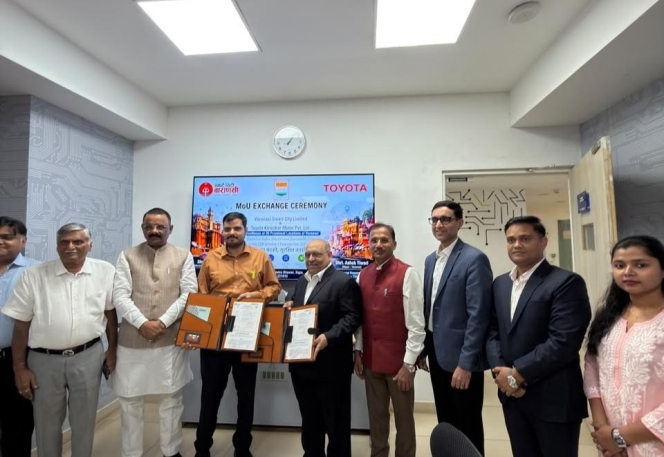
Toyota Kirloskar Motor has signed a Memorandum of Understanding with Varanasi Smart City to supply and install surveillance cameras across 20 traffic junctions linked to the existing traffic management system in Varanasi, Uttar Pradesh.
The agreement includes road safety awareness programmes and aligns with the Ministry of Road Transport and Highways objective to reduce road fatalities and injuries by 50 per cent by 2030.
The deployment targets a 20 to 30 percent rise in traffic rule compliance – covering signals, helmets and lane discipline – alongside a 20 to 30 percent drop in violations including signal jumping, overspeeding and wrong-side driving, plus an increase of over 50 percent in violation detection.
The signing took place in the presence of Varanasi Smart City Chief Executive Officer Shashwat Tripurari, Chief General Manager Amrendra and Toyota Kirloskar Motor Country Head and Executive Vice President for Corporate Affairs Vikram Gulati.
Shashwat Tripurari, CEO, Varanasi Smart City, said, “As a city that welcomes millions of pilgrims and tourists every year, Varanasi needs traffic systems that keep pace with its growth while keeping people safe. This partnership with Toyota Kirloskar Motor will bring technology-enabled monitoring and enforcement to 20 of our busiest junctions, helping us manage traffic more efficiently and respond faster. Combined with awareness efforts among citizens, we are confident this initiative will make our roads safer and more orderly for residents and visitors alike.”
Vikram Gulati said, “At Toyota, road safety is central to our vision of a society with zero road fatalities. Varanasi’s unique character, with its dense mix of pedestrians, vehicles and visitors, calls for solutions that combine technology with awareness. Through this collaboration with Varanasi Smart City Ltd, we aim to support authorities with better monitoring and enforcement tools while encouraging safer road behaviour among citizens. We hope this initiative becomes a model for safer, smarter mobility in cities across India.”
- Idemitsu Lube India Pvt Ltd
- Honda BB Racing
- partner
- Season 3
- Indian Supercross Racing League (ISRL)
- Japanese brands
- Indian
- racing
- lubricant formulations
Idemitsu Lubricants Strengthens Its Motorsport Presence In India With Honda BB Racing
- By MT Bureau
- November 19, 2026
Idemitsu Lube India Pvt Ltd has joined Honda BB Racing as its ‘Powered By’ partner for Season 3 of the Indian Supercross Racing League (ISRL). The partnership brings together two pioneering Japanese brands and an ambitious Indian racing team backed by lubricant formulations tailored to the extreme engine demands of the ISRL competition.
The deal follows Honda Motorcycle & Scooter India’s announcement as title sponsor of the BB Racing team, which will race on the Honda CRF450R and CRF250R in Season 3. With Idemitsu on board, the team carries the same Honda–Idemitsu combination that runs on Asia’s road-racing grids across Moto3, Moto2 and MotoGP. The partnership also adds another global name to the ISRL, as the league grows into a destination for international athletes and partners across the supercross world.
“Idemitsu has over a century of engineering experience and Supercross is one the most demanding tests of an engine and lubrications, making it a natural fit for our brand as we looking to push our boundaries. Our association with Honda BB Racing brings Idemitsu closer to India’s athletes and fans, and we are excited to be part of the team’s journey in Season 3,” mentioned Toshiya Namigishi, MD, Idemitsu Lube India Pvt. Ltd, regarding the development.
Elaborating on the association with Idemitsu Lubricants, Atul Chordia, Team Owner, Honda BB Racing said, “Building a competitive team requires the right partnerships and a shared commitment to excellence. Having Idemitsu Lubricants as our ‘Powered By’ sponsor further strengthens our vision for Honda BB Racing. Idemitsu’s legacy in engineering and lubricants brings valuable expertise to the team, and we look forward to building on this association as we compete at the highest level in Season 3. Partnerships like these are not just important for our team, but also for the continued growth of Supercross and motorsport in India.”
Eeshan Lokhande, Director, Indian Supercross Racing League, further added “Idemitsu’s partnership with an ISRL team for the upcoming season speaks volumes about the direction in which Supercross is heading. This association with Honda BB Racing is a meaningful addition for the league, showcasing how global brands value being part of Indian Supercross. We believe partnerships like this will strengthen the sport’s ecosystem and help establish India as a credible destination for Supercross on the international stage.”
With the auction for Season 3 recently concluded, franchises have locked in their line-ups of international and Indian riders, and the focus now shifts to the track. Honda BB Racing, powered by Idemitsu, will be among the six franchises looking to make an early statement when the season gets underway this December.
Comments (0)
ADD COMMENT