

VE Commercial Vehicles Digitalisation Drive Offers Smart Gains For Customers
- By Nilesh Wadhwa
- September 04, 2025
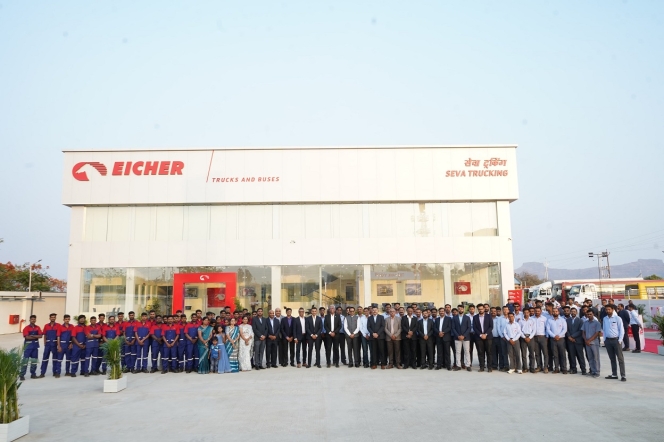
The Gurgaon-headquartered commercial vehicle major looks beyond just selling trucks and buses. The company’s focus on digitalisation and aftersales, it believes, is what the new-age customers need.
In the high-stakes world of commercial transportation, time is money – quite literally. Every hour a truck is off the road can mean missed deliveries, idle drivers, delayed shipments and unhappy customers. In India’s competitive commercial vehicle (CV) industry, the ability to minimise downtime and maximise uptime has become a critical differentiator for automakers.
For VE Commercial Vehicles, this principle has been elevated into a business philosophy. Over the past few years, the company has invested heavily in digital tools, predictive maintenance capabilities and an expanded service footprint to ensure that customers’ vehicles are running at peak performance for as many hours of the year as possible.
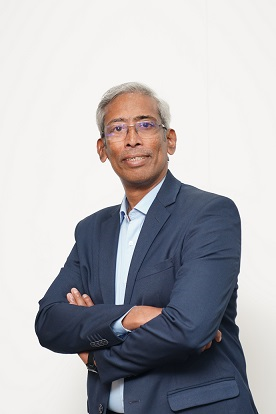
In an exclusive interaction with Motoring Trends, Ramesh Rajagopalan, EVP - Customer Service, Retail Excellence & Network Development, at VECV, shared his team’s work spans a network of over a thousand service points, a nationwide telematics backbone and a growing portfolio of uptime initiatives that integrate technology, training and process discipline.
Building a network
VECV’s current footprint exceeds 1,100 outlets across India, with an average of 10–12 new additions each month. This network covers the full range of commercial vehicles – from heavy-duty trucks and buses to light and small commercial vehicles.
The company’s growth is not limited to conventional CV outlets. The small commercial vehicle (SCV) network, particularly for electric models, is being built almost from scratch.
 Rajagopalan revealed that the company is “working towards creating a network of exclusive dealerships for the newly launched Eicher Pro X, designed to deliver a premium, digitally enabled customer experience. These born-digital outlets will function as one-stop destinations offering advanced product customisation, EV-ready infrastructure and seamless access to connected services. With a focus on uptime, personalisation and convenience, the Pro X dealerships will redefine commercial vehicle retail by offering a car-like, modern environment tailored to the evolving needs of today’s fleet operators.”
“The starting point for us was to identify where we’re missing out – the ‘white spots’, where customers are already buying trucks and buses, but we aren’t present. The East and Northeast were clear gaps. We also looked at the service side: customers expect to have the nearest touchpoint for any service need, parts availability anywhere and 24x7 breakdown support,” he said.
These expectations are complicated by India’s rapidly evolving road infrastructure. With new expressways and freight corridors coming online, VECV has had to rethink its physical network, sometimes relocating facilities, other times adding new ones to stay close to high-traffic routes.
Telematics as the backbone of service planning
The decision to equip 100 percent of VECV’s BS6 vehicles with telematics was a strategic move made early in the transition to the stricter emission norms. The company shared that the BS6 trucks are far more electronically complex, with multiple sensors feeding real-time data on performance, emissions and potential faults.
Rajagopalan explained, “In BS6, any sensor failure that risks an emissions breach triggers a limp-home mode. That’s standard globally. But it can disrupt a customer’s operations if not handled quickly. We saw early on that predictive algorithms could identify error-code patterns that lead to breakdowns, allowing us to intervene before the vehicle stops.”
One example is AdBlue misuse – diluting diesel exhaust fluid with water, which can cause the vehicle to derate. Through telematics, VECV can detect the signs and remotely guide drivers on corrective steps, often via a quick video call.
This predictive maintenance model categorises alerts into three groups:
- Stop Now – requiring immediate action to prevent damage.
- Do It Yourself – where drivers can resolve the issue with guided support.
- Visit Soon – logged into the system so any VECV workshop can address it at the next scheduled service.
Measuring each minute
Digitalisation doesn’t stop at the vehicle. Every VECV workshop uses tablets to track a vehicle from the moment it enters the workshop, through job card creation, repair start and completion, invoicing and gate-out. Customers can see their vehicle’s status in real-time on display boards.
This transparency is more than cosmetic; it drives accountability. Every morning, operational teams review any vehicle that missed its promised delivery time, escalating cases that need additional support.
A recent initiative even monitors waiting times before work begins. If a loaded truck sits for more than an hour, the central control centre calls the dealer to find out why and get it moving. “For our customers, every minute is money. We can’t afford bottlenecks,” revealed Rajagopalan.
Retention in telematics
A common challenge in connected services is renewal beyond the complimentary period. VECV includes two years of telematics subscription with every vehicle and has kept renewal costs at about INR 6,000 annually.
In the early days, renewal rates were low. But targeted engagement – including onboarding every customer on the My Eicher app at delivery, monthly operating review meetings with large fleets and customised reports – has pushed renewal rates among big operators to 80–85 percent.
For smaller operators, overall renewal rates are about 35 percent, but with over 350,000 connected vehicles on Indian roads, the base is significant. VECV also addresses multi-device fatigue – where customers were earlier forced to install separate tracking units for clients or state mandates, by offering API integration, allowing its data to feed into external systems and avoiding duplicate hardware.
Perhaps the most distinctive element of VECV’s service model is its Uptime Centre, located at the company’s manufacturing plant. This facility operates 24x7, staffed with technical experts who can remotely diagnose issues, advise on repairs and escalate complex cases to R&D or manufacturing engineers.
If a problem can’t be resolved remotely within a couple of hours, specialist engineers, or what the company calls ‘flying doctors’, are dispatched to the vehicle location. The Uptime Centre also monitors parts queries, workshop performance and telematics alerts, ensuring that field teams have expert backup at all times.
Parts availability
Downtime isn’t just about repairs, but it is also about parts. To address this, VECV has identified 250 high-demand parts and mandated that every workshop keeps them in stock. If any of these parts is unavailable and not supplied within 24 hours, it is provided free of charge.
This guarantee is part of a broader spare parts strategy that includes decentralised stocking, demand forecasting based on telematics data and close coordination between dealers and the central supply chain.
With trucks and buses running more kilometres per year than ever – e-commerce trucks and long-distance buses reaching 200,000 km annually – service demand is growing even as reliability and service intervals improve.
To meet this, VECV has:
- 70 workshops operating round-the-clock, 365 days a year.
- Nearly 300 workshops running extended hours or double shifts.
- Training programmes to upskill technicians for faster, more accurate repairs.
- Investments in better workshop tools and equipment to boost productivity.
Dealers as partners in performance
Rajagopalan believes dealer capability is as important as infrastructure: “Today’s customers don’t tolerate delays. Delivery commitments that were acceptable in a week are now expected in hours. That pressure flows through the entire supply chain.”
VECV has put process discipline and transparency at the core of dealer operations. Every dealer is connected to the central system, with KPIs on breakdown response time, parts availability and repair turnaround. These metrics are published internally, creating healthy competition among regions to be ‘best-in-class.’
Rajagopalan shared his five strategic priorities or key focus areas –
- Service Capacity Expansion – adding workshops, increasing working hours and boosting throughput per facility.
- Competency Development – continuous technician training for faster, first-time-right repairs.
- Parts Availability – maintaining high stock levels of critical components, backed by guarantees.
- Predictive Maintenance Evolution – extending analytics beyond sensor data to wear-and-tear parts like clutches and brakes.
- Telematics Insights – leveraging connected data for deeper operational recommendations to customers.
While much of VECV’s work is grounded in engineering and technology, Rajagopalan emphasises that the company’s philosophy is human-centred. “Our uptime promise is non-negotiable. Every innovation, whether digital or operational, is aimed at keeping our customers’ wheels turning. That’s how they earn and that’s how we build trust,” he said.
From a strategic perspective, VECV’s approach reflects an industry-wide shift. The CV market is no longer just about selling hardware; it’s about selling an ecosystem of services, digital capabilities and operational support – and backing it up with the speed and reliability that today’s logistics-driven economy demands.
Eicher Motors Reports INR 55.15 Billion Net Profit For FY2026
- By MT Bureau
- May 22, 2026

Eicher Motors, one of the leading manufacturers of two-wheelers and commercial vehicles, has announced its financial results for Q4 FY2026 and FY2026.
During Q4 FY2026, Royal Enfield sold 313,811 motorcycles, up 12 percent YoY, while VE Commercial Vehicles (VECV) reported sales of 33,976 units, as against 28,675 units a year ago. The company reported INR 60.8 billion revenue, up 16 percent YoY, EBITDA of INR 15.14 billion, up 20 percent YoY and net profit of INR 15.20, up 12 percent YoY for Q4 FY2026.
For FY2026, Royal Enfield reported its highest-ever annual sales, surpassing 1.2 million units, up 22 percent YoY, which includes 1.10 million units in the domestic market, up 23 percent YoY.
The revenue came at INR 234 billion, up 24 percent YoY, EBITDA at INR 57.8 billion, up 23 percent YoY and profit after tax of INR 55.15 billion, up 17 percent YoY.
B. Govindarajan, Managing Director - Eicher Motors and CEO, Royal Enfield, said, “FY2026 has been an exceptional year for Eicher Motors and Royal Enfield, marked by strong growth, record volumes, and a continued focus on our global ambitions during our 125th anniversary. We achieved over one million motorcycle sales for the second consecutive year and recorded our best-ever festive season, with record volumes in both domestic and international markets. We also marked a major milestone in April ‘26 with our entry into the electric mobility space via the launch of the Flying Flea C6. International business remains a key priority as we steadily deepen our presence in markets like Brazil. This year, we also took the brand into new cultural spaces - ranging from gaming collaborations to marquee community rides - that strengthen our global identity. To power our next phase of growth, we have committed to significant investments, including the brownfield capacity expansion at Cheyyar with INR 9.58 billion and our strategic expansion plan at Tada in Andhra Pradesh, both aimed at building future-ready capacity to support our long-term projected growth.”
B Srinivas. Managing Director and Chief Executive Officer, VECV, said, “Crossing the milestone of 1,00,000 vehicles in a year is a significant achievement for VECV and reflects the trust our customers have placed in our products and solutions. This milestone also fulfills a key part of the original vision set at the inception of the Volvo–Eicher joint venture, underscoring the strength and long-term strategic direction of our partnership. During the year, VECV launched several innovative solutions in the rapidly evolving Indian CV Industry -including the Eicher Pro X Small Truck for city distribution, 12 m Eicher electric intercity coach, electric Tarmac Buses and the Volvo FM LNG Road Train specially designed for long haul logistics. As we move forward, we remain committed to driving the next phase of growth through innovation, sustainability, and deeper customer engagement.”
- REPS
- Road Energy Production System
- Alfons Huber
- Justin Karnbach
- Jens Maier
- Elisabeth Zehetner
- Austria
- International Association of Ports and Harbors
- Hamburg Porth Authority
- Hamburger Container Service
- road traffic
REPS Secures $23.6 Million Funding To Convert Road Traffic Into Clean Electricity
- By MT Bureau
- May 22, 2026
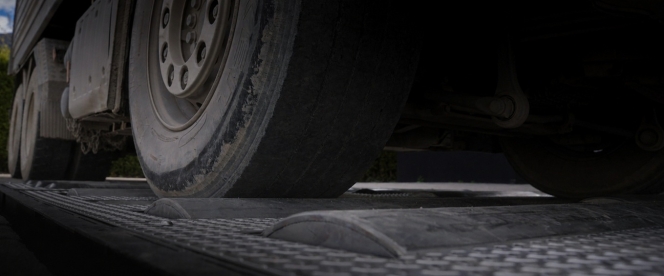
Austrian cleantech startup REPS has raised USD 23.6 million in an equity financing round to scale its patented Road Energy Production System. The technology integrates into existing road infrastructure to capture kinetic energy from moving vehicles and convert it into electricity.
The system is designed to install directly into road surfaces without disrupting traffic flow. It targets high-traffic locations where vehicles naturally slow down, brake or experience forces from slopes, such as ports, logistics hubs and industrial sites.
According to the company, the mechanical energy lost through traffic could theoretically address around 5 percent of global electricity demand. The technology features a converter built on a permanent magnetic bearing combined with electromagnetic induction, which operates without conventional mechanical friction and conventional wear.
REPS has been running its first commercial system at the Port of Hamburg since November 2025. Over a 6-month period, more than 115,000 trucks crossed the system, generating over 6,700 kWh of electricity under real traffic conditions. Following the deployment, the company has engaged with over 90 parties across the port industry in Europe, the Middle East, Asia and North America.
Internal projections suggest that installing 230 systems on public roads across the Port of Hamburg could generate 10 GWh of electricity annually, offsetting nearly 10 percent of the CO2 emissions caused by port traffic.
Alfons Huber, Founder and CEO, REPS, said, “Roads are everywhere. Traffic is everywhere. What was previously wasted energy can now be transformed into clean electricity through REPS. We spent six years developing the technology. Now the scaling phase begins. The strong demand from ports and logistics operators worldwide confirms the need for our solution, and with this financing round we can now scale at the speed required by the energy transition.”
Justin Karnbach, CEO, Hamburger Container Service, added, "The installation at our facility demonstrates the potential of REPS: where vehicles have to brake anyway, clean energy is recovered and can be used directly where we need it. Without any interference with traffic and without additional space."
Jens Maier, CEO, Hamburg Port Authority (HPA) and President of the International Association of Ports and Harbors, noted, “We can't wait to see REPS in action - not just in the Port of Hamburg, but throughout the city and far beyond, all over the world. The Port of Hamburg aims to achieve climate neutrality by 2040. HPA actively supports this ambition by implementing innovative technologies. REPS is a future-orientated technology that generates electricity from previously unused energy sources, making a significant contribution toward achieving climate neutrality. With its high volume of truck movements and its role as a central logistics hub, the Port of Hamburg offers ideal conditions to test technologies like REPS under real-world conditions.”
Elisabeth Zehetner, State Secretary for Energy, Startups and Tourism, Austria, said, “Start-ups are no longer a side topic, they are the innovation lab of our economy. This is where technologies like REPS from Austria are created. REPS is innovation made in Austria and showcases what our founders are capable of: they don’t just make small adjustments; they transform entire systems. A road becomes a power plant, and existing infrastructure becomes a building block for a sustainable future. Our role in politics is clear: we must ensure that start-ups find the right framework conditions in Austria. With the Start-up Umbrella Fund, we aim to make sure that innovation is financed, developed, and scaled here in Austria and Europe instead of eventually returning to us as an import from the U.S. or Asia”
LTM To Acquire Randstad’s Tech and Consulting Business
- By MT Bureau
- May 22, 2026
LTM, an AI-centric global technology services company and part of the Larsen & Toubro Group, has issued an offer to acquire Randstad’s Technology and Consulting Services business across France, Germany, Belgium, Luxembourg and Australia.
The transaction represents more than USD 500 million (EUR 469 million) in annual revenue and is intended to scale domain-driven solutions and AI services within these regions.
The proposed acquisition will expand LTM’s market presence in the aerospace, defence, automotive, utilities and banking and financial services (BFS) sectors. The integration is expected to bring localised domain expertise and regional capabilities in digital engineering, cybersecurity and the Internet of Things (IoT). These operations will be supported by onshore and nearshore delivery centres located in Romania and Portugal.
The transaction is part of a broader collaboration between the two companies. This includes a five-year IT services partnership to drive AI-enabled transformation for Randstad’s Global Capability Center in India, alongside a strategic talent Managed Services Provider (MSP) agreement to support LTM’s expanding workforce.
The acquisition will be executed through LTM’s wholly owned subsidiary, LTIMindtree UK and remains subject to regulatory approvals and customary closing conditions.
Venu Lambu, CEO & MD, LTM, said, “The proposed agreement is aligned with our five-year strategy to build a more resilient, diversified, balanced portfolio. By combining our global AI-centric capabilities with local context and industry depth, this acquisition would strengthen our ability to deliver compliant, domain-driven AI services and sovereign solutions in markets that are strategically important to us. This 360°partnership with Randstad would be a key step forward in our growth journey.”
Sander van ‘t Noordende, CEO, Randstad, added, “The proposed agreement marks a deliberate step in our Partner For Talent strategy. By partnering with LTM, we would ensure our clients continue to receive world-class services while we streamline our portfolio to invest in growth segments and digital marketplaces that offer the most scale and value. We are equally excited to partner with LTM in India, where their AI expertise will be instrumental in evolving our digital capabilities.”
- Stellantis
- Antonio Filosa
- FaSTLAne 2030
- Jeep
- Ram
- Peugeot
- FIAT
- Chrysler
- Dodge
- Citroen
- Opel
- Alfa Romeo
- DS
- Lancia
- Maserati
- STLA
- Leapmotor International
- Dongfeng
- Tata Motors
- Jaguar Land Rover
Stellantis’ Targets EUR 60 Billion Investment, 60 New Launches By 2030 Under FaSTLane 2030 Strategy
- By MT Bureau
- May 21, 2026
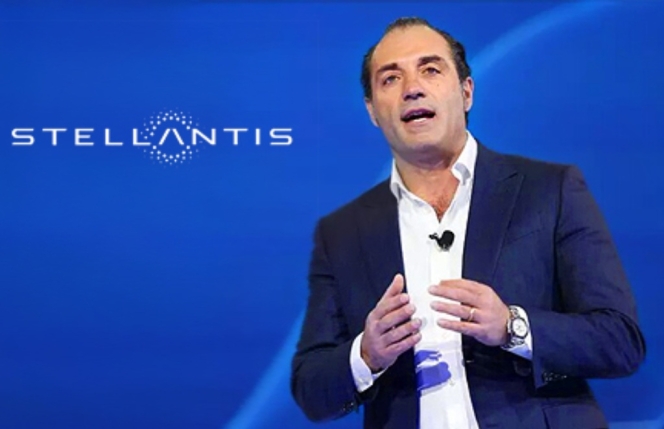
European auto major Stellantis has unveiled its FaSTLAne 2030 strategy, which will see it invest around EUR 60 billion over the course of the next five years.
The aim is to accelerate growth and profit, prioritising customer centrality and capital allocation across its global regions and brands.
Antonio Filosa, CEO, Stellantis, said, “FaSTLAne 2030 is the result of months of disciplined work across the Company and is designed to drive long-term profitable growth. With the customer at the centre of everything we do, the plan will deliver our purpose – ‘to move people with brands and products they love and trust’ – powered by our unique combination of strengths.”
The strategy focuses on an overhaul of the brand portfolio to improve capital efficiency, leading to more than 60 vehicle launches and 50 refreshes by 2030. The company will direct 70 percent of its product investments towards its four global brands – Jeep, Ram, Peugeot and FIAT – and its commercial vehicle unit, Pro One.
Its regional brands, including Chrysler, Dodge, Citroen, Opel and Alfa Romeo, will share global assets, while DS and Lancia will be managed as specialty brands. Maserati will add two vehicles to its lineup.
Filosa noted, “Every brand in Stellantis will play a clear role in delivering our FaSTLAne 2030 commitments.”
Stellantis will allocate over EUR 24 billion to global platforms, powertrains and technologies, including the new STLA One architecture. By 2030, half of its annual volumes will be produced on three global platforms. The company will also deploy its software and autonomous driving architectures – STLA Brain, STLA SmartCockpit, and STLA AutoDrive – starting in 2027.
The plan incorporates new and expanded corporate partnerships to access markets and share manufacturing capacity.
Through Leapmotor International, Stellantis will share capacity at its Madrid and Zaragoza plants in Spain. A joint venture with Dongfeng will produce Peugeot and Jeep models for China, while a European joint venture with Dongfeng will handle distribution and capacity sharing at the Rennes plant in France.
Stellantis is also working with Tata Motors to improve supply chain synergies in the Asia-Pacific, Middle East, Africa and South America regions, and will explore technology collaboration with Jaguar Land Rover in the United States.
Manufacturing capacity utilisation will be adjusted across regions, with European capacity expected to decrease by more than 800,000 units to raise utilisation from 60 percent to 80 percent by 2030. US capacity utilisation is also projected to reach 80 percent by 2030.
To improve execution, Stellantis aims to reduce vehicle development cycles to 24 months and implement a Value Creation Program to cut annual costs by EUR 6 billion by 2028.
“The success of FaSTLAne 2030 is built upon the great talent and strong commitment of our Stellantis team. We will execute as one team, hands-on, to deliver incremental, profitable growth for the benefit of all our stakeholders,” added Filosa.
Regional targets under the plan include 25 percent revenue growth in North America, supported by 11 vehicles. Enlarged Europe targets 15 percent revenue growth, featuring a new generation of electric vehicles built at the Pomigliano d'Arco plant in Italy. South America aims for 10 percent revenue growth via a pickup offensive, while the Middle East and Africa targets 40 percent revenue growth through local manufacturing. The Asia-Pacific region will focus on asset-light growth to support export requirements.
Comments (0)
ADD COMMENT