

AIFI Positions India As Forging Powerhouse At IFC 2025
- By MT Bureau
- October 14, 2025
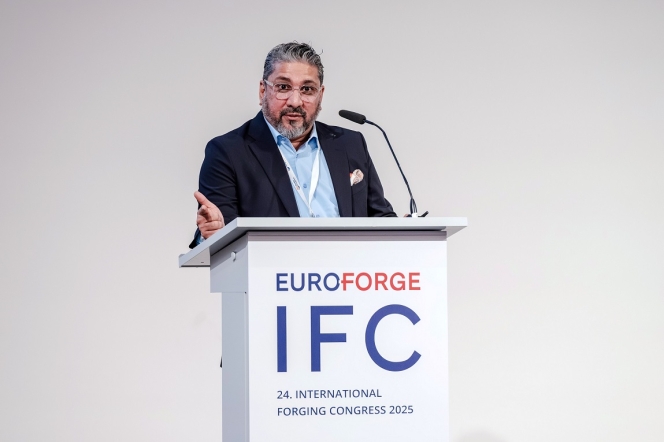
The Association of Indian Forging Industry (AIFI) showcased India's industrial sector at the 24th International Forging Congress (IFC 2025) in Frankfurt, Germany.
Yash J Munot, AIFI President, delivered a keynote presentation on India's manufacturing capabilities, technological advancements and vision for global partnerships. He highlighted India's status as the world's second-largest producer of forgings and its position in the global supply chain.
In his address, ‘Forging India’s Future – Partnering with the World,’ he discussed India’s journey of modernisation, global integration and sustainable growth.
"India has transformed from being a land of opportunity to a land of action. The forging industry stands as a true reflection of this transformation, built on the pillars of scale, skill and sustainability and ready to co-author the future of global manufacturing. We have evolved from a labour-intensive past to a capital-intensive, technology-driven present, powered by significant investments in Industry 4.0, AI, automation and smart manufacturing practices. In an era shaped by geopolitical shifts, fluctuating material costs and the global call for sustainability, India’s forging industry offers reliability, quality and resilience. We are not here merely as suppliers, but as partners and collaborators, committed to forging a stronger, more innovative and sustainable industrial future for the world,” he said.
India’s forging industry produces 2.9 million metric tonnes annually, with an installed capacity of 4.8 million MT, representing investments worth USD 3.8 billion. The sector employs over 300,000 people. It supplies components to sectors including automotive, railways, aerospace, defence, construction equipment and engineering. Around 30 percent of total production is exported to Europe, North America and Asia.
The industry has adopted Industry 4.0 technologies such as automation, artificial intelligence, digital simulation and data analytics. The focus on energy-efficient furnaces and circular manufacturing reflects the sector’s commitment to environmental responsibility.
Munot highlighted the upcoming Forging Simulation Centre in Pune, designed to help small and medium enterprises (SMEs) improve productivity and minimise environmental impact through digital technologies.
He also announced the 4th edition of Forgetech India, AIFI’s biennial exhibition and conference, scheduled for October 2026.
Hyundai Motor India Inaugurates New Pune Manufacturing Plant
- By MT Bureau
- October 14, 2026
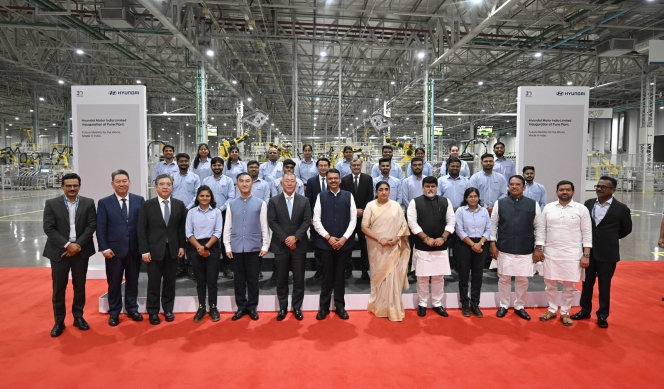
Hyundai Motor India, one of the leading passenger vehicle manufacturers, has formally inaugurated its manufacturing plant in Talegaon, Pune.
The Chief Minister of Maharashtra Devendra Fadnavis, accompanied by Hyundai Motor Group Executive Chair Euisun Chung and Hyundai Motor India Managing Director and Chief Executive Officer Tarun Garg inaugurated the new facility.
The plant operates with an installed annual production capacity of 170,000 units, which the company plans to scale to 320,000 units by 2030 through a phased investment of up to INR 110 billion.
Combined with Hyundai's Chennai facility, total manufacturing capacity in India for the company will reach approximately 1.14 million units annually by 2030. The Talegaon facility incorporates artificial intelligence (AI) quality control systems, automated assembly platforms and an engine plant producing 150,000 units per year. To support plant operations, 55 supplier partners have invested nearly INR 46 billion in the state.
"The inauguration of Hyundai Motor India's Pune plant and the company's achievement of 4 million cumulative passenger vehicle exports reflect India's growing strength as a global automotive manufacturing hub. Hyundai's continued investments in advanced manufacturing technologies, innovation, localization and skill development will contribute significantly to economic growth, employment generation and development of a robust automotive ecosystem in Maharashtra. We welcome Hyundai's long-term commitment to the state and the nation. The Government of Maharashtra shall extend our full support to Hyundai's future growth journey," said Devendra Fadnavis.
Euisun Chung said, "India remains one of Hyundai's most important and strategic markets globally. The inauguration of the Pune plant reflects our long-term commitment to India's growth and our confidence in its bright future. HMIL’s milestone of 4 million cumulative vehicle exports demonstrates the global competitiveness of Indian manufacturing and highlights India's growing role within Hyundai Motor Group's worldwide operations."
Tarun Garg, MD and CEO, Hyundai Motor India, said, "The inauguration of our Pune plant marks the beginning of HMIL’s next chapter of growth in India. We will invest INR 110 billion in phases at this facility. Beyond expanding manufacturing capacity, the facility will drive industrial development, innovation and employment generation in the region. Supporting this vision is a strong regional supplier ecosystem, with 55 supplier partners having already invested nearly INR 46 billion in the state. Together with tier-II vendors, the ecosystem has created more than 18,000 employment opportunities in Maharashtra, reinforcing the region’s emergence as a key automotive manufacturing hub. As we celebrate 30 years in India, we remain committed to creating long-term value for our customers, partners and communities. We sincerely thank the Government of Maharashtra, under the leadership of Chief Minister Devendra Fadnavis and the Government of India, for fostering a progressive ecosystem that continues to strengthen manufacturing, investment and economic growth in India."
The ceremony also marked Hyundai Motor India's milestone of 4 million cumulative passenger vehicle exports from India since 1999, alongside domestic sales approaching 10 million units. The Venue model produced at the Pune facility will be exported to more than 35 countries as part of the company's global supply chain strategy.
Six Sense Mobility Opens Noida Electronics Plant, Targets INR 5 Billion Revenue
- By MT Bureau
- October 14, 2026
Automotive technology firm Six Sense Mobility has opened its first manufacturing facility in Noida, Uttar Pradesh, following an investment of over INR 150 million. The launch coincides with the company's fourth anniversary and supports a target revenue of INR 5 billion backed by an INR 1.6 billion order book.
The company, supported by IIT Delhi and funded by Piper Serica and investor Ashish Kacholia, currently supplies automotive devices to markets in India and Europe. Six Sense Mobility plans to expand operations into North America and Southeast Asia, while tripling its workforce over the next two years by adding approximately 300 engineering and manufacturing positions.
The new 40,000-square-foot plant features integrated electronics manufacturing and assembly capabilities with an annual installed capacity exceeding one million units. The facility brings hardware development, firmware engineering, software integration and serial assembly under one roof to manufacture connected-vehicle electronics, vehicle-to-everything (V2X) communication devices, radar systems, and advanced driver assistance systems (ADAS).
Sumit Roy, Co-Founder 7 CEO, Six Sense Mobility, said, "Four years ago, we set out to build automotive electronics with full control over the hardware and software. This facility gives us the capacity to support larger customer programmes and take technologies like V2X from the lab into vehicles at scale. Designing and manufacturing them here in India is our contribution to Make in India and the journey toward Viksit Bharat".
Vimag Labs Commences Manufacturing In Jhajjar, Outlines INR 500 Million Investment Plan
- By MT Bureau
- October 13, 2026
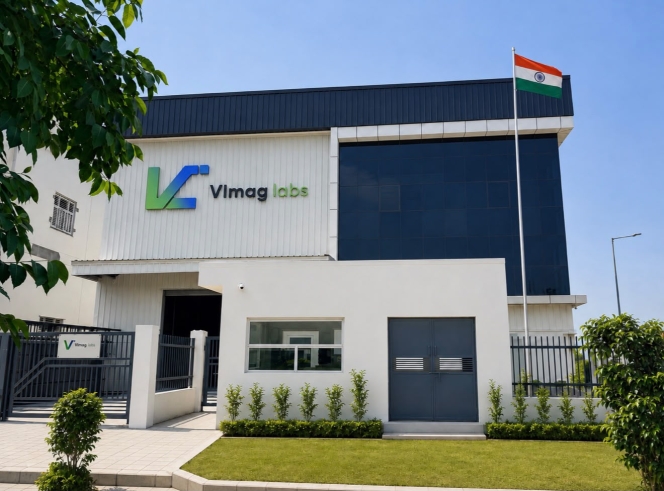
Electric propulsion technology startup Vimag Labs has commenced operations at its first manufacturing plant in Met City, Jhajjar, Haryana, and completed its initial export shipment of motor and control systems.
The opening marks the start of a phased manufacturing build-out across India, with the company planning to deploy approximately INR 500 million in capital as customer programs scale.
The 10,000-square-foot facility, which can expand to 20,000 square feet, manufactures motor and control systems, including Vimag's magnet-free motor technology. The plant features digitally connected production lines, automated assembly systems and testing infrastructure for mid-power systems.
The initial layout is structured to scale toward a monthly capacity of up to 10,000 motor and control units. Vimag plans to expand production into high-power systems of 570 kW and above as customer programs mature.
Manish Seth, Co-Founder & CEO, Vimag Labs, said, "The commencement of manufacturing marks an important transition for Vimag from technology development and validation into industrialisation and serial production. Jhajjar is the first step in a broader manufacturing build-out. We are currently planning around INR 500 million of investment, to be deployed in phases as customer programmes, traction and product requirements develop. The scale and timing of investment will evolve with demand as we build capacity and deepen our manufacturing base. The first production batch has already been exported from Jhajjar, demonstrating that the facility has moved into commercial manufacturing."
"Our initial focus is on scaling mid-power motor and control systems for commercial programmes. As customer programmes mature, we plan to extend manufacturing into high-power systems of 570 kW and above and deepen partnerships across India for manufacturing, supply chain, tooling and industrialisation. Our long-term goal is to build a globally competitive production base in India for domestic and international customers," added Seth.
Vimag Labs recently secured USD 5 million in Series A funding round led by Accel, with participation from Chakra Growth Fund and Thinkuvate. The company has executed a manufacturing agreement with Jendamark to support production scaling and acquired an exclusive United States technology licensing agreement for a bidirectional high-voltage inverter platform operating at up to 1,000 volts. The manufacturing expansion is projected to generate between 100 and 150 direct and indirect jobs across engineering, assembly, quality control, and supply chain operations.
JM Frictech India Invests INR 500 Million For 4th Manufacturing Facility In Chandigarh
- By MT Bureau
- October 09, 2026
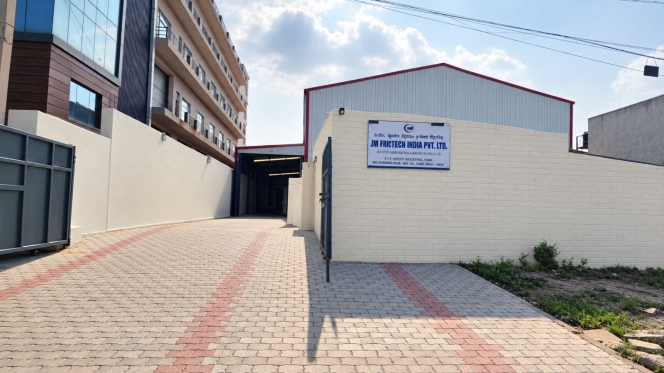
Auto component manufacturer JM Frictech India has invested around INR 500 million to establish its fourth manufacturing facility in Chandigarh. The investment expands the company's production footprint and logistics operations across Northern India.
The facility is being commissioned in phases, with initial operations dedicated to warehousing and distribution logistics.
Established in 2008 as a joint venture between NTC Engineering India and South Korea’s Jinmyung Frictech Company, the company produces approximately 12 million friction discs annually. The addition of the Chandigarh plant expands the company's manufacturing footprint to four facilities across India, supporting its strategy to localize components for agricultural and industrial off-highway equipment.
JM Frictech India plans to scale manufacturing activities at the site to achieve full operational capability within the next 6-8 months. The facility is structured to supply friction systems, wet brakes, wet clutches, hydraulic actuation systems, transmission aggregates and hydrostatic transmission components to original equipment manufacturers in the tractor, construction equipment and off-highway sectors.
E. Madhavan, Managing Director of JM Frictech India, said, "The investment in Chandigarh is an important part of our expansion strategy. It will strengthen our manufacturing presence in North India and enable us to be closer to our customers while creating capacity for future growth."
Comments (0)
ADD COMMENT