

Audi Launches Q9 SUV As New Flagship At EUR 108,400
- By MT Bureau
- July 29, 2026
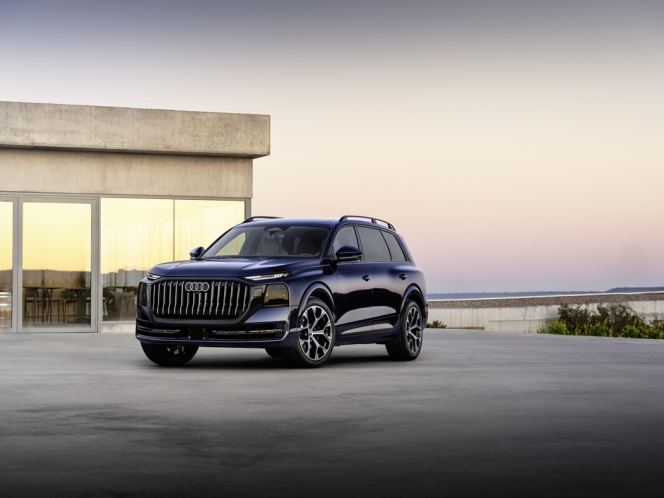
German luxury carmaker Audi has introduced the Q9, a full-size SUV that serves as the top-tier model in its lineup. Measuring 5.31 metres long, 2.21 metres wide and 1.81 metres tall with a 3.14-metre wheelbase, the vehicle is the largest SUV produced by the brand to date.
Order books open in Germany at the end of July 2026, with European deliveries scheduled to begin in the fourth quarter. Prices start at EUR 108,400 for the 220 kW TDI model.
The Q9 expands the upper end of Audi's product line, incorporating curved digital OLED rear light panels, power-adjustable second-row seats, automatic doors and a panoramic sunroof measuring over 1.5 square metres.
Gernot Dollner, Chief Executive Officer, Audi, said, "The Audi Q9 is the new flagship of the Audi portfolio. With our first large full-size SUV, we are elevating our brand’s premium positioning. In the future, ‘Vorsprung durch Technik’ will increasingly be defined by the in-car experience – because cars are much more than just a means of transportation. For many of our customers, they are becoming mobile living spaces. That is exactly what the Audi Q9 represents as the new flagship of our portfolio. Premium materials, individual electric seats in the second row, and automatic doors underscore our commitment to quality in the interior. When combined with the latest driver assist systems and a holistic user experience, it becomes clear where we are taking the Audi brand."
The Q9 is offered in 6-seat and 7-seat configurations. The seven-seat layout features a 35/30/35 split second row with Isofix mounting points across all three seats, alongside a power-folding third row. The six-seat option replaces the middle row with individual power-adjustable seats.
It includes automatic doors with obstacle detection sensors and soft-close mechanisms. Front sports seats feature power adjustments, with heating, ventilation and massage functions available on upgraded trims.
Cabin electronics centre on the curved MMI panoramic display, combining a 12.3-inch instrument cluster and a 14.5-inch central touch display. A 12.3-inch front passenger display with a display privacy filter is fitted as standard. The system operates on Android Automotive OS with integrated third-party applications, the Audi voice assistant and ChatGPT integration. The SUV come with a 22-speaker Bang & Olufsen sound system delivering 1,360 watts, incorporating headrest speakers and seat-mounted tactile actuators.
The exterior features an upright Singleframe grille, offered in an advanced line trim with vertical slats or an S line trim with an open grille design and updated bumpers. Wheel options range from 20 to 23 inches.
The rear illumination uses curved digital OLED panels constructed with 0.1-millimetre glass substrates across six individual panels. The system integrates communication lighting that projects hazard symbols to surrounding traffic and projects turn signal indicators directly onto the road surface at night.
At launch, the Q9 will be available with a 220 kW V6 diesel engine in Germany, while a 180 kW version will also be offered in selected European markets. The 220 kW version delivers 630 Nm of torque, while the 180 kW diesel engine delivers 500 Nm.
Both the engines use an MHEV plus system, comprising a powertrain generator refined for the Q9, a belt alternator starter and a lithium iron phosphate battery.
An adaptive air suspension system comes standard, offering up to 90 millimetres of height adjustment. Driving assistance features include hands-free partial automated driving under the Adaptive Driving Assistant Plus framework at speeds up to 130 kmph on approved highways, supported by an eye-tracking camera on the steering column. Emergency Assist capabilities include automated lane-changing to the road shoulder if driver inactivity is detected.
Mahindra XUV 3XO ZNG Secures 5-Star Bharat NCAP Safety Rating
- By MT Bureau
- November 09, 2026
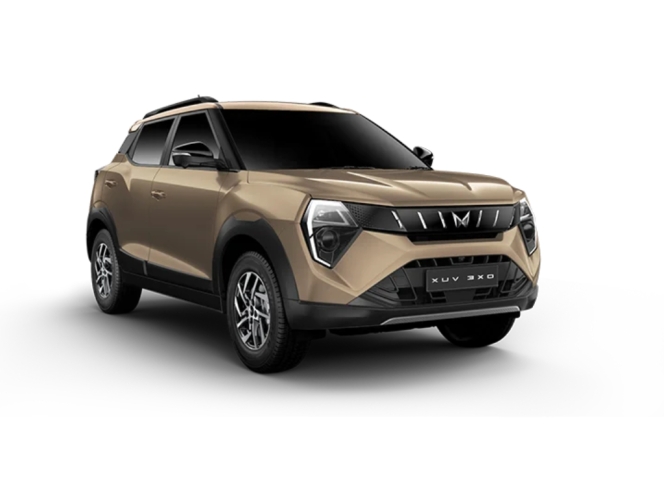
Mumbai-headquartered automotive major Mahindra & Mahindra has announced that its XUV 3XO ZNG has achieved a 5-star safety rating under the Bharat New Car Assessment Programme (Bharat NCAP), making it the first sub-compact CNG vehicle in India to receive the score.
The compact SUV recorded 29.36 out of 32 points for Adult Occupant Protection and 45 out of 49 points for Child Occupant Protection. The model features 35 standard safety items, including six airbags, Electronic Stability Control and ISOFIX child-seat mounts.
Safety provisions specific to the CNG system include an integrated gas-leak detection mechanism that switches the fuel source to petrol mode if a leak occurs. The c-SUV features an underfloor twin-cylinder tank layout that maintains a flat boot floor and 270 litres of cargo space. Power output stands at 82 kW with 200 Nm of torque across petrol and CNG modes, alongside a certified fuel efficiency rating of 24.7 km/kg.
Dr Velusamy R, President of the Automotive Business, Mahindra Group, said, "At Mahindra, safety is a fundamental commitment that guides every stage of vehicle development. The XUV 3XO ZNG was engineered to excel across every aspect of the ownership experience, delivering ‘zero compromise’ in space, technology, performance and driving experience. Its robust architecture is engineered to provide high levels of occupant protection and peace of mind on every journey. The 5- star Bharat NCAP rating is a testament to our engineering excellence and reinforces the XUV 3XO ZNG's position as an SUV that excels across every dimension.”
- MAHINDRA & MAHINDRA
- SUV
- ELECTRIC VEHICLES
- LCV
- AUTOMOTIVE INDUSTRY
- VEHICLE LAUNCHES
- PRODUCTION CAPACITY
- NU-IQ PLATFORM
- NAGPUR PLANT
- Q2 FY27 RESULTS
- RAJESH JEJURIKAR
- ANISH SHAH
- INDIA
Mahindra Plans Four SUV Launches, One LCV In H1 2027 As It Steps Up Capacity
- By Gaurav Nandi
- November 07, 2026
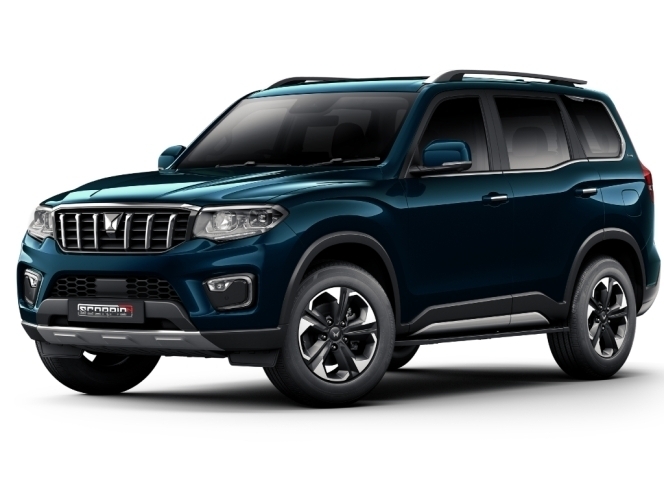
Mahindra and Mahindra is preparing to roll out four new products for its SUV portfolio and one light commercial vehicle in the first half of calendar 2027 as the automaker looks to sustain growth through a pipeline of new models and a significant expansion in production capacity.
The five planned launches will comprise a new product based on the company's new NU-IQ platform, an all-new battery electric vehicle, a lifestyle vehicle and one product refresh alongside a new LCV, informed Executive Director and CEO, Auto and Farm Sectors, Rajesh Jejurikar during the company's Q2 FY27 earnings call.
The product pipeline comes as Mahindra continues to face capacity constraints amid strong demand for its SUV portfolio. The company said it was operating at or above its available production capacity with October production exceeding the monthly capacity it had indicated for the end of September.
Mahindra began FY27 with SUV production capacity of around 64,500 units a month. This is expected to increase to 82,000 units a month by the end of the current financial year followed by 92,000 units in the next financial year. The company is targeting capacity of 132,000 units a month by the exit of FY31 as a new plant comes upstream.
Jejurikar also confirmed that the company was progressing with its Nagpur project. “We are on track for setting up the Nagpur project. We got the parcel of land and work is starting very shortly on that,” he said, adding that the facility would support the rollout of new products according to the schedule presented by the company.
Capacity expansion to support SUV growth
Mahindra reported 26 percent year-on-year growth in SUV volumes in the second quarter, while volumes for the first half increased 20 percent. However, the company said its sales performance continued to be constrained by production capacity.
At the end of September, its monthly capacity was around 61,000 units for internal combustion engine products and 8,000 units for electric vehicles. Jejurikar said the company had produced more than this indicated capacity in October reflecting the strength of demand.
The company maintained its expectation of mid-to-high-teen growth in its SUV business during FY27 with additional capacity expected to support volumes.
The company is also expanding its electric vehicle ecosystem. It had established 49 ultra-fast charging stations covering around 12,000 kilometres of highways with charging facilities available approximately every 200 kilometres on the covered routes. Mahindra and Mahindra plans to increase this network to 215 stations by the end of calendar 2027.
Commodity inflation puts pressure on margins
The expansion and product pipeline come against a backdrop of elevated input costs. The company’s earnings presentation highlighted year-on-year increases of 42 percent in copper prices, 40 percent in rubber and 17 percent in steel.
Despite these cost pressures, Mahindra reported 25 percent growth in revenue and profit after tax in Q2 FY27. Revenue stood at INR 575.53 billion, while PAT was INR 45.88 billion.
Managing Director and Group CEO, Dr Anish Shah, said the company had taken proactive measures to manage inflationary pressures including pricing actions, hedging, product-mix improvements and supplier diversification.
Mahindra had implemented price increases of 5 percent in its auto business and 4 percent in its farm business. Dr Shah indicated that the company expected some margin pressure in Q3, while the outlook for Q4 would depend partly on how commodity prices evolved.
Farm business outlook revised
Mahindra has revised its FY27 tractor industry growth outlook from 5 percent to a flat performance, citing deteriorating rainfall conditions, lower reservoir levels and pressure on farmers’ terms of trade.
Company officials noted that Maharashtra and Karnataka had experienced significant industry contraction with drought conditions affecting demand in these important tractor markets. Higher input costs had also weakened farmers’ purchasing power.
The international farm business continued to face difficult market conditions. Mahindra and Mahindra reported industry contractions of 15 percent in the US, 18 percent in Brazil and 36 percent in Turkey.
It has completed its exit from Sampo’s harvesting business in Finland and Arcon Foundry in Turkey, while the restructuring of its Mitsubishi Agricultural Machinery subsidiary in Japan is expected to be completed by Q4 FY27.
LCV business operating at capacity
Mahindra's LCV business recorded 19 percent volume growth in Q2, while first-half volumes increased 20 percent. The company said it was producing around 30,000 LCVs a month covering its pick-up and Supro ranges and was operating at capacity.
Jejurikar said demand in the LCV industry had strengthened following the GST reduction with monthly industry volumes rising from around 20,000–23,000 units to approximately 30,000 units. The company expects double-digit growth in the LCV industry for the entire FY27.
The planned new LCV launch in the first half of 2027 will add to the company's product pipeline as it works to address capacity constraints.
Mahindra's Q2 performance also reflected growth across its wider businesses. The group reported 25 percent year-on-year growth in PAT, while first-half PAT increased 29 percent.
Quarterly snapshot
The company reported SUV volumes of 183,000 units during the quarter, while its SUV revenue market share stood at 24.3 percent. Total automotive volumes increased 26 percent to 331,000 units.
The automotive business recorded consolidated revenue of INR 377.56 billion representing a 39 percent year-on-year increase. Consolidated PAT rose 55 percent to INR 23.88 billion. Standalone PBIT stood at INR 26.14 billion, up 15 percent, while the standalone PBIT margin was 7.7 percent. Excluding e-SUV CMA, the margin stood at 9.1 percent.
In the electric vehicle segment, the company reported an e-SUV revenue market share of 30.1 percent. Its electric SUV portfolio maintained the number-one position in revenue market share during the first half of FY27.
Mahindra and Mahindra also retained its leadership position in the light commercial vehicle segment below 3.5 tonnes with a market share of 52.3 percent. The figure includes the Bolero Max Pickup 2T variant classified under the 2–3.5-tonne LCV category and Jeeto volumes.
The company reported tractor volumes of 116,027 units during Q2 FY27 compared with 122,936 units in the year-ago quarter, marking a decline of 6 percent. Its tractor market share stood at 41.5 percent. Consolidated farm revenue declined 6 percent to INR 95.72 billion, while PAT fell 9 percent to INR 10.53 billion. Standalone PBIT was INR 14.41 billion with the PBIT margin at 16.8 percent, down 300 basis points.
The company also reported a 37 percent year-on-year increase in combined Q2 FY27 volumes across its commercial vehicle businesses as Mahindra Trucks and Buses Division (MTBD) and SML Mahindra together sold 8,416 units. It was also noted that the company is looking to expand manufacturing capacity for its heavy commercial vehicle range after strong fleet demand for the Blazo i-TRK, launched in August, drove plant utilisation to full capacity.
Across its other businesses, Mahindra Finance reported a 15 percent increase in assets under management, while PAT grew 61 percent. Tech Mahindra's PAT increased 33 percent with its EBIT margin improving to 14.8 percent, up 260 basis points.
Mahindra Lifespaces recorded residential pre-sales of INR 11 billion, up 41 percent, while Mahindra Logistics reported revenue of INR 20.95 billion, an increase of 24 percent with PAT growing threefold.
At the group level, Mahindra's standalone revenue increased 26 percent to INR 442.82 billon, while EBITDA rose 4 percent to INR 67.18 crore. Standalone PAT increased 13 percent to INR 51.02 billion. The company reported a return on equity of 21 percent on an annualised basis and year-to-date earnings per share of INR 89.5.
Universo Ferrari Exhibition Concludes in New Delhi As Brand Announces Retail Expansion In India
- By MT Bureau
- November 06, 2026
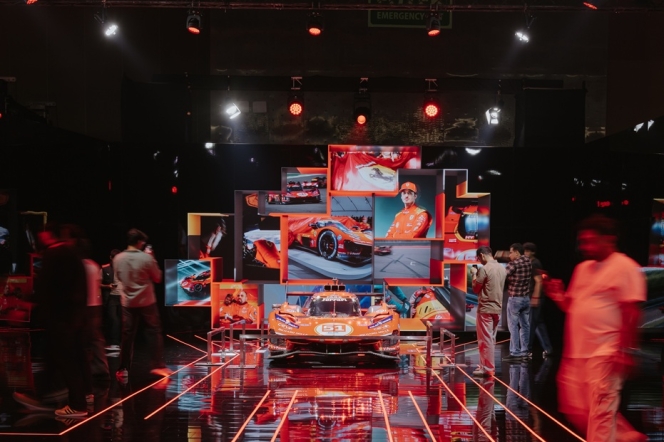
Universo Ferrari India has concluded its two-week exhibition at Yashobhoomi in New Delhi, recording more than 22,000 visitors. The event showcased the automaker's heritage, motorsport involvement, engineering and future product strategy to clients, industry partners and students.
The display featured a range of road cars, including the Ferrari F80, 849 Testarossa Spider, 12Cilindri Spider, Amalfi Spider, Daytona SP3, and F50. Motorsport exhibits included the Scuderia Ferrari SF-26 Formula 1 car, the 499P hypercar, the 296 GT3, and the 296 Challenge. The exhibition also featured Ferrari Luce, the brand's first electric car, alongside heritage models such as the 365 GTB4 and the 612 Scaglietti from the 2008 Magic India Discovery tour, while the Ferrari Hypersail made its debut in Asia. During the event, Ferrari conducted seminars for approximately 1,000 students and held a charity auction supporting Bal Raksha Bharat to assist educational programs.
The event was preceded by a drive featuring 25 Ferraris travelling 1,800 kilometres from Mumbai to New Delhi via Vadodara, Udaipur, Jaipur and Agra.
Ferrari also announced Avelon Luxe as its India-based partner for the Ferrari Hypercar and Ferrari Challenge Middle East series. To support its growth in the market, Ferrari plans to expand its retail footprint in India by opening two new dealerships in Chennai and Ahmedabad by the end of 2026.
Volkswagen Unveils New Virtus With Triangular Geometry-Inspired Styling
- By MT Bureau
- November 06, 2026
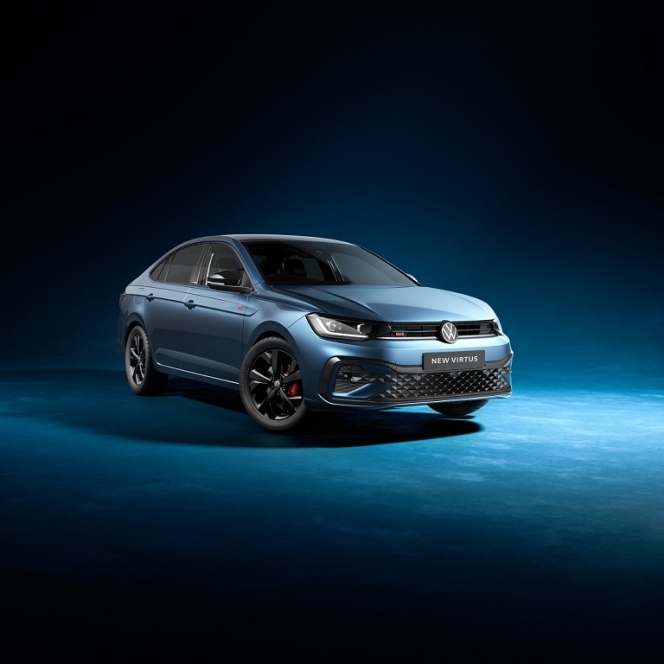
Volkswagen is gearing up to launch the New Virtus, a refreshed take on a sedan that has won over discerning buyers since its June 2022 debut. The model earned its standing as the segment's most loved premium sedan through distinctive styling, German engineering credentials, engaging driving dynamics, a premium experience and a strong safety focus. The new version carries those traits forward while introducing a fresh visual identity.
Beyond transportation, the Virtus holds meaning for Volkswagen customers as a symbol of pride, aspiration and individuality, blending premium ownership with driving thrill. Its road presence, performance and German engineering have made it a source of owner satisfaction. The refreshed styling, drawing on triangular geometry, sharpens the sedan's already distinctive look with greater definition and a contemporary edge.
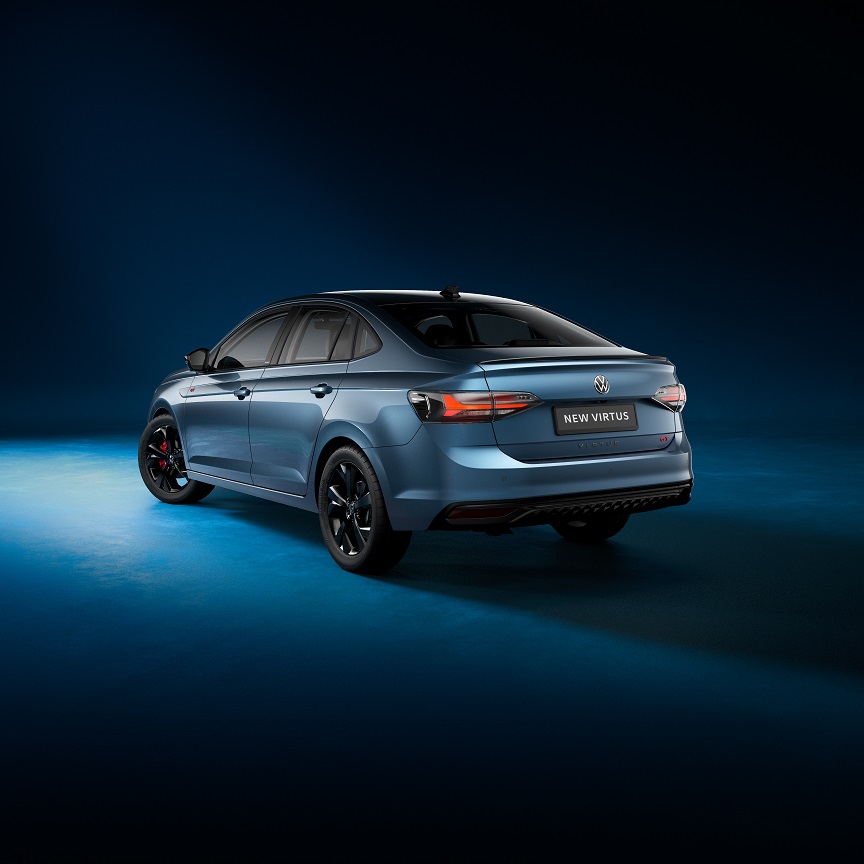
The New Virtus keeps celebrating the joy of driving while remaining faithful to the attributes that built its following. By extending that legacy, Volkswagen aims to preserve what made the sedan a segment favourite while adding a new dimension to its established character.
Nitin Kohli, Brand Director, Volkswagen India, said, “We are excited to introduce the New Virtus to the Indian market. The Virtus has built a strong connect with its discerning set of customers and has clearly established a leading position in its segment as a stylish, sophisticated and performance-oriented sedan offering great driving pleasure. With this facelift, we are building on a much-loved product, bringing a fresh and contemporary character while retaining the qualities that make the Virtus special. We look forward to continuing to bring the joy of driving to our customers with the New Virtus.”


Comments (0)
ADD COMMENT