

- VEHICLE FINANCING
- PASSENGER VEHICLE LOANS
- TWO-WHEELER LOANS
- TRANSUNION CIBIL
- VEHICLE PREMIUMISATION
- EV FINANCING
- NBFCs
- CREDIT GROWTH
- AUTO LOANS
- CONSUMER CREDIT
Vehicle Premiumisation Drives 49 Percent Rise in Passenger Vehicle Loan Sizes: TransUnion CIBIL
- By Gaurav Nandi
- October 29, 2026
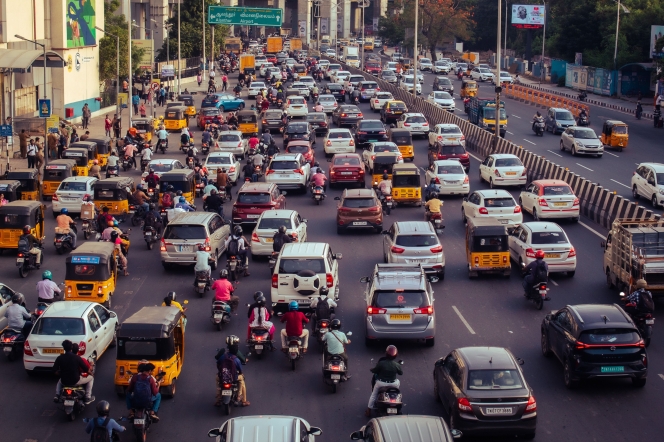
The average passenger vehicle loan ticket size in India has increased by approximately 49 percent over seven years with vehicle price inflation and a shift towards higher-value models both contributing to the rise, according to TransUnion CIBIL.
The increase compares with estimated inflation of 30–31 percent over the same period, indicating that consumers' preference for better-equipped vehicles and a changing vehicle mix have contributed to the growth in financing amounts.
“Of course, there is the premiumisation play which is coming in. The underlying value of the vehicles has also gone up, which has led to this premiumisation that we are seeing beyond the normal inflation rate," said Managing Director Bhavesh Jain during an interaction with Motoring Trends on the sidelines of its presentation of its Shifting Gears 2026: How Credit Drives India's Mobility report.
Jain said the shift in consumer preferences from entry-level cars towards entry-level sport utility vehicles (SUVs) had also contributed to the increase. Higher prices for base-model cars were another factor.
The report found that the outstanding passenger vehicle loan portfolio including used-car financing had expanded 2.6 times since June 2019 to approximately INR 1,110 billion.
The average blended passenger vehicle loan ticket size stood at around INR 820,000, up nearly 50 percent from June 2019.
NBFCs dominate
Non-banking financial companies (NBFCs) account for approximately 73 percent of active two-wheeler loans, up from 63 percent in June 2019. The concentration has raised questions about financing costs and repayment risks for borrowers, particularly in semi-urban and rural markets.
Jain said borrowers could choose between banks and NBFCs with accessibility playing an important role in determining their financing options.
“Today, the consumer has choices. The consumer can choose between any of the lender types,” Jain said, adding that vehicle purchases and financing in semi-urban and rural markets were often facilitated through dealerships.
TransUnion CIBIL said loan portfolio quality had improved across lender categories over the seven-year period.
Two-wheeler loans with payments overdue by more than 90 days accounted for 1.4 percent of the portfolio. However, the executive did not provide a separate comparison of delinquency rates between NBFCs and banks during the discussion.
The report's findings indicate that the two-wheeler financing market has expanded alongside an improvement in borrower credit profiles. The share of new-to-credit customers among two-wheeler loan originations fell from approximately 60 percent in 2019 to 39 percent in the first half of 2026.
Entry point
The declining share of first-time credit borrowers in two-wheeler financing reflects a shift in how younger consumers enter the formal credit system, according to Jain.
Consumer durable loans including phone financing have increasingly become the first credit product for younger borrowers before they move on to vehicle financing.
“Today, consumer durable financing brings in the bulk of new-to-credit borrowers,” Jain said.
He added that consumers often take a consumer durable loan before purchasing a two-wheeler and may return to the same category of financing after acquiring the vehicle.
In metropolitan and urban markets, 68 percent of two-wheeler customers over the preceding three to four years had subsequently taken at least one consumption-related credit product including a consumer durable loan, personal loan or credit card, Jain said.
Although gold loans may also feature in borrowers' credit histories, Jain identified consumer durable and phone financing as the primary entry points for many younger consumers.
The trend suggests that two-wheeler financing is increasingly serving borrowers who already have established relationships with formal lenders rather than acting as their first exposure to credit.
EV financing grows
TransUnion CIBIL said it does not currently have sufficient visibility to distinguish loans for electric vehicles (EVs) from financing for conventional vehicles in its reported two-wheeler and passenger vehicle loan categories.
Jain said banks and NBFCs had introduced programmes focused on EV financing and that the segment was growing. He estimated that electric vehicles accounted for approximately 6–7 percent of two-wheeler sales.
However, the bureau's current data does not separately identify EV loans, preventing it from quantifying the segment's share of vehicle financing or tracking its delinquency trends independently.
Jain said the broader financing figures included both conventional and electric vehicles, noting that approximately six out of 10 two-wheelers and nine out of 10 passenger vehicles purchased in India were financed.
He added that the company would seek greater visibility into EV financing as the segment expands.
The credit bureau also said it could not determine how many financed two-wheelers were being purchased specifically for income generation including use in the gig economy.
Jain said two-wheelers served multiple purposes but the bureau did not have data identifying the end use of individual vehicles.
As vehicle financing expands, the distinction between personal mobility, income-generating use and borrowers' wider credit relationships remains an area where more granular data could help lenders better understand demand and assess financing needs.
Report insights
TransUnion CIBIL recorded 63 lakh two-wheeler loan originations in the first half of 2026, the highest first-half figure since 2019. The company had recorded 69 lakh originations in the six months ended December 2025.
The outstanding portfolio serves approximately 3.3 crore borrowers, nearly twice the number recorded in June 2019.
Borrowers below 30 years accounted for 43 percent of two-wheeler loan originations, while men represented 79 percent of new originations.
The report also found that two-wheeler financing often precedes further borrowing. Approximately two-thirds of customers continued to access credit after taking a two-wheeler loan.
Within three years, 41 percent had taken a consumer durable loan and 21 percent had obtained a personal loan exceeding INR 50,000. The average interval before taking another credit product was 12–18 months.
These findings indicate that two-wheeler borrowers represent a potential customer base for lenders offering additional financial products.
PV financing grows
The passenger vehicle loan portfolio serves approximately 2.5 crore active consumers with the borrower base increasing 1.7 times since June 2019.
Used-car loans accounted for 24 percent of passenger vehicle loan originations. Although originations moderated following an increase in delinquencies in 2024, the segment subsequently improved and remained above earlier levels on an indexed basis.
The report also found that 47 percent of passenger vehicle borrowers held a consumer durable loan, personal loan or credit card when taking vehicle financing. Approximately 7 percent had an existing two-wheeler loan, indicating some overlap between the two borrower segments.
TransUnion CIBIL identified four broad categories of passenger vehicle borrowers including first-time vehicle buyers, repeat buyers, consumers moving towards higher-value cars and borrowers transitioning from two-wheelers to passenger vehicles.
First-time buyers accounted for 37 percent of originations, while repeat passenger vehicle borrowers represented 31 percent. Customers moving towards higher-value cars and those graduating from two-wheelers each accounted for 11 percent.
Credit profiles varied across these groups. Among consumers transitioning from two-wheelers to passenger vehicles, 22 percent belonged to the below-prime segment. By comparison, 19 percent of first-time vehicle buyers were classified as super-prime borrowers.
Delinquency rates also differed by borrower category. Below-prime customers moving from two-wheelers to passenger vehicles recorded a delinquency rate of 4.7 percent compared with approximately 3.5 percent for repeat passenger vehicle borrowers.
The findings highlight the importance of assessing borrowers according to their credit histories and borrowing patterns, rather than relying solely on broad credit score classifications as India's vehicle financing market continues to expand.
Hyundai Verna Scores 5-Star In Bharat NCAP Rating
- By MT Bureau
- November 20, 2026
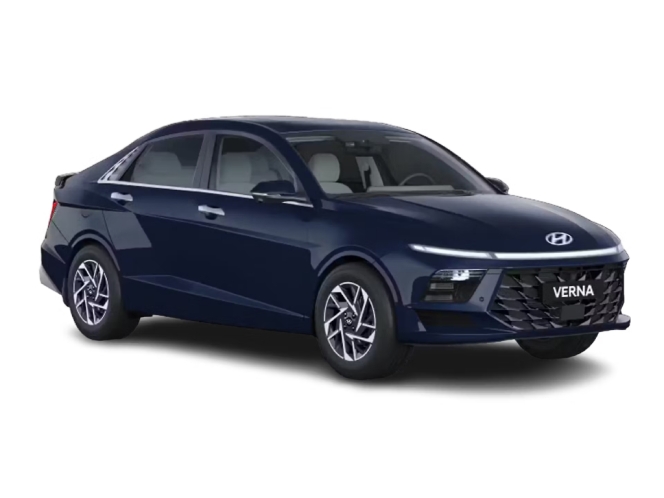
Hyundai Motor India, one of the leading passenger vehicle manufacturers, has announced that the Hyundai Verna has received a 5-star safety rating under the Bharat New Car Assessment Programme (BNCAP) across adult and child occupant protection assessments.
The sedan, introduced in March 2026, becomes the first vehicle in its segment to earn the rating under the programme.
The Verna comes with more than 75 safety features and 35 standard features. Equipment comprises Hyundai SmartSense Level 2 advanced driver assistance systems with 20 functions, seven airbags covering driver, passenger, side, curtain and centre side positions, a dashcam, rain sensing wipers, electronic stability control with vehicle stability management, hill start assist control, anti-lock braking system with electronic brakeforce distribution, all-wheel disc brakes, electronic parking brake with auto hold, blind spot view monitor, surround view monitor, tyre pressure monitoring system, ISOFIX child seat anchors, rear parking sensors and three-point seatbelts with reminders across all seats.
Tarun Garg, MD and CEO, Hyundai Motor India, said, “At Hyundai Motor India, safety remains at the core of our product philosophy. The 5-Star Bharat NCAP rating achieved by the new Hyundai Verna is a testament to our commitment to providing the highest standards of occupant protection and advanced safety technologies to Indian customers. The new Verna delivers an exceptional combination of style, technology, performance and safety. This recognition further strengthens customer confidence in Hyundai's engineering excellence and our vision of making safer mobility accessible to all.”
- WTiCabs
- Ashok Vashist
- Navi Mumbai International Airport
- Noida International Airport
- Open Network for Digital Commerce
- ONDC
WTiCabs Eyes India's Growing Airport Mobility Market
- By Sharad Matade
- November 20, 2026
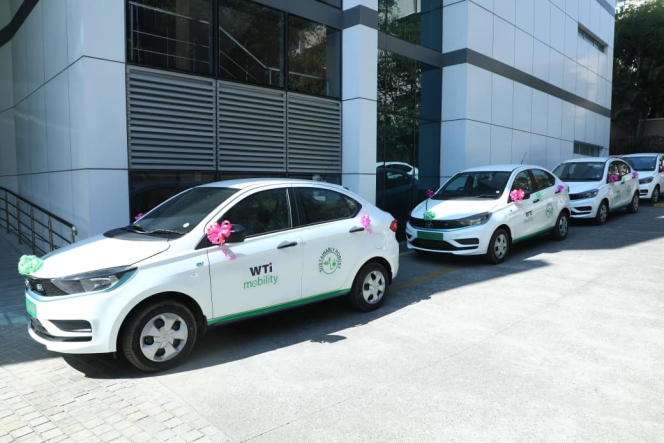
Over the past decade, India's aviation industry has invested a lot in expanding capacity. New terminals, more runways, and new airports are changing how people travel. More passengers are flying, airlines are adding routes, and air travel is reaching more cities. Still, for many, the trip becomes less predictable after leaving the airport.
Finding a reliable cab, dealing with fluctuating fares and negotiating congested pickup areas can take much of the convenience out of flying. This problem becomes more pronounced during peak hours, late-night arrivals, and long-distance airport transfers.
For Ashok Vashist, Founder and CEO of WTiCabs, this disconnect between air travel and ground transportation represents an opportunity to build a more organised mobility business. "Airport mobility in India has improved significantly on the airside. Terminals are larger, faster and better designed. The weak link remains the last 30 to 60 kilometres," says Vashist.
 He argues that the real problem isn't just not having enough vehicles. It's about poor coordination between transport providers, uneven service standards, and no predictable experience for passengers. "The airport journey does not end at the terminal exit. It ends at the passenger's door, and that is where the industry still has the most work to do," he says.
To address this gap, mobility companies need to go beyond the usual taxi-booking model. They should focus on advance reservations, better fleet management, and being accountable for their operations.
Why passengers are moving towards pre-booked transfers
As India's airports are built farther from city centres, ground transportation is becoming a more important part of travel.
Airports like Navi Mumbai International Airport and Noida International Airport will serve big urban areas, but because they are far from city centres, reliable connections matter even more. For people travelling longer distances, not knowing if they’ll find a ride after landing can be a real hassle.
WTiCabs has noticed that customer behaviour is changing, especially among corporate travellers and those booking early-morning, late-night, or outstation trips.
"The shift is clearly visible. Rising traffic brings more first-time and Tier 2 flyers, and more business travellers flying more often. Both groups want the same thing on the ground: certainty about whether the car will be there, what it will cost and who is driving," says Vashist.
The difference between on-demand and pre-booked rides matters more as airport trips get longer and more time-sensitive. "On longer, higher-value trips, passengers are far less willing to gamble on whether a ride will be available," he says.
WTiCabs offers a simple approach: customers book ahead, get confirmation of their car and driver, and know the fare before they travel. This is different from services that match passengers with drivers only when they book.
However, it's easier to promise reliability in airport transport than to actually deliver it. Traffic in Delhi NCR, Mumbai, and Bengaluru can change quickly. Flight delays, early arrivals, changes in pickup spots, and limits on waiting time at airport curbs make things even more complicated.
Vashist puts the consequences into perspective. "A 15-minute delay on a city ride is an inconvenience. On an airport drop, it can mean a missed flight."
WTiCabs responds by using travel time estimates, sending vehicles before scheduled pickups, tracking incoming flights, and keeping backup cars and drivers in busy areas. The goal is to be flexible enough to handle problems before they affect passengers.
Making reliability commercially viable
In airport mobility, service failures can be very costly. If a car is late, a passenger might miss a flight. Last-minute cancellations can also hurt relationships with corporate clients.
Vashist believes the business must therefore be organised around confirmed commitments rather than vehicle availability at a particular moment. "The WTicabs model is built on one principle: the airport trip is a commitment, not a request. Every booking is confirmed with a car and driver in advance, not at the last minute," he says.
The company’s model includes assigning drivers in advance, confirming fares, linking pickups to flight times, and having a 24/7 team to monitor trips. Customers get their car and driver details before the trip, and backup options are ready in case of breakdowns or delays.
The approach draws on WTi's experience in employee transportation, a segment in which punctuality and service-level commitments are central to daily operations. Since 2019, the company has served more than 500 corporate customers across employee transportation, corporate car rentals, airport transfers and outstation travel, according to Vashist.
This experience matters because corporate mobility is about more than just arranging a car. Companies want verified drivers, clear billing, safety measures for employees, and reliable service in every location.
WTiCabs provides fixed fares, GST-compliant invoices, monthly billing, live tracking, SOS features, and dedicated account managers. Companies can also choose electric vehicles if they want to lower their business travel carbon footprint.
The economics behind the fleet
For fleet operators, using vehicles efficiently is just as important as getting bookings. If a car drops someone at the airport and returns empty, it racks up unproductive kilometres and hurts profits.
That’s why WTiCabs combines airport transfers with corporate trips, outstation journeys, and retail demand, instead of running separate fleets for each. Technology helps make this possible. Customers can book through the app, website, or WhatsApp, and corporate clients have a special portal that follows their travel policies. "Technology is what allows WTicabs to keep its promise at scale," says Vashist.
With real-time tracking, passengers and corporate travel teams can see where vehicles are, who the driver is, and when the car will arrive. A central command centre also watches live airport trips and gets alerts if a car is running late.
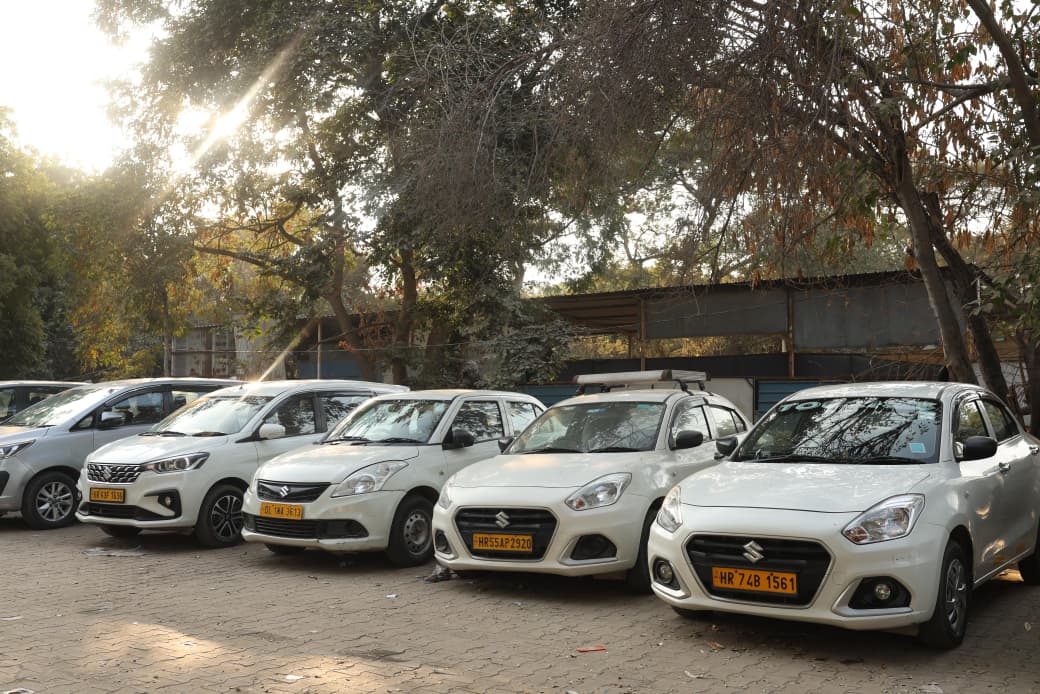 Historical trip data is also used to estimate journey times across different routes and periods of the day. This helps the company position vehicles, allocate drivers and identify opportunities to match airport drop-offs with return pickups. The commercial logic is important in a business where fuel, driver costs, vehicle maintenance and idle time all affect profitability.
Vashist identifies pricing, utilisation and driver retention as the three principal levers for maintaining sustainable margins. "The industry has learnt that the cheapest fare is not a sustainable business if it comes with cancellations and poor service. Customers remember a missed flight far longer than a saving of a hundred rupees," he says.
Rather than compete exclusively on price, the company is looking to balance corporate contracts with retail and leisure bookings. Corporate demand provides a relatively stable weekday base, while individual customers can help absorb available capacity during weekends and peak travel periods. Driver retention is another part of the equation. High turnover can affect service consistency and increase recruitment and training costs. "Drivers who earn steadily and are treated well stay longer, deliver better service and cost less to replace," Vashist explains.
This is a key issue for organised fleet operators, especially as more companies compete for experienced drivers in the mobility sector.
Corporate travel remains the anchor.
App-based aggregators have changed how people book short rides, but WTiCabs sees a different chance with customers who need managed transportation. "The opportunity is significant and still largely unorganised," says Vashist, noting that safety, billing, and vehicle quality standards are still limited in much of India's airport ground transport market.
Corporate travel is still the main focus for the company, thanks to repeat bookings and steady demand. Business tourism, meetings, conferences, premium leisure travel, and family trips are also promising areas.
The requirements vary. Corporate customers need policy compliance, consolidated billing and employee safety. Event organisers may require dozens of vehicles operating to a coordinated schedule. Hotels and travel management companies, meanwhile, need dependable transportation partners that can deliver services under their own brands.
For WTiCabs, the ability to serve a customer across airport transfers, employee transportation, city travel, outstation journeys and car rentals offers an opportunity to build longer-term relationships rather than compete for individual bookings. The premium segment is also gaining importance. Senior travellers, families and business executives are often willing to pay for trained chauffeurs, predictable fares and assistance at pickup points.
So, the company’s strategy isn’t just about doing more airport transfers. It’s about meeting a broader range of corporate and premium mobility needs.
Partnerships could reshape airport connectivity.
The fragmentation of airport transportation is not a problem that individual operators can resolve on their own. Airports, airlines, public transport providers and mobility companies will need to work together if passengers are to experience a more seamless journey. "What is missing is not capacity but coordination. Each player performs its role well in isolation, but the passenger is left to stitch the journey together," says Vashist.
He believes airports should provide clearly marked pickup zones for organised operators and share real-time arrival information. Airlines could offer ground transfers alongside flight reservations, while mobility providers should integrate with airline, airport and travel platforms through open APIs. Airport metro services also need better connections with feeder transportation to make it easier for passengers to combine public transport with cab services. "The goal should be one booking, one payment and one point of accountability for the full door-to-door journey," he says.
Vashist points to frameworks such as the Open Network for Digital Commerce (ONDC) as examples of how interoperability could help create a more integrated mobility environment.
For WTiCabs, partnerships with airports, airlines, hotels and travel management companies could open additional distribution channels. Airlines could offer ground transportation through ticketing or loyalty programmes, while hotels could provide airport transfers under their own brands. Such arrangements could help organised operators secure bookings earlier and improve demand visibility, although their success would depend on commercial agreements and the ability to maintain consistent service standards.
Expansion strategy: Following the airport opportunity
WTiCabs is based in New Delhi, and Delhi NCR is its biggest market. The company now wants to expand in Mumbai, Pune, and Bengaluru, with a special focus on the Mumbai-Pune-Lonavala corridor.
The Mumbai area is especially important because Navi Mumbai International Airport will add another big aviation hub. The growth of Noida International Airport will also create new ground transport needs in the National Capital Region. Outside the big cities, the company is looking at Tier 2 cities where more people are flying, but organised ground transport is still catching up.
But choosing new markets isn’t just about passenger numbers. The company also looks at corporate and industrial demand, intercity travel, driver availability, local rules, and whether vehicles can be used efficiently. "We prefer to enter a market with corporate anchor clients and then build retail demand on top, rather than relying only on discount-led retail growth," says Vashist.
This is a careful way to expand. Building a base of corporate customers before growing retail operations gives a more stable foundation for using the fleet and developing the market.
An increasingly electric and integrated future
Looking ahead, Vashist thinks India's airport mobility market will become more organised, use more electric vehicles, and connect more with the wider travel industry. "Pre-booked transfers will become the default for a large share of business and long-distance airport travel," he says.
Electric vehicles will play a bigger role as charging stations improve at major airports. Linking ground transport with flight bookings could also make advance transfers a regular part of travel planning.
Over the next three to five years, WTiCabs wants to grow in Delhi NCR, Mumbai, Pune, and Bengaluru, enter more fast-growing airport areas, expand corporate and premium services, add more electric vehicles, and build partnerships in the travel industry. But Vashist says that infrastructure and shared standards are just as important as private investment.
"The changes with the greatest impact would be dedicated, well-managed pickup zones for organised operators at every major airport; real-time data sharing between airports, airlines and mobility providers; charging infrastructure at and around airports; and common service standards for safety and reliability," he says.
For India’s mobility industry, the opportunity isn’t just about moving passengers from place to place anymore. It’s about creating a reliable ground transport network to support the growing aviation market.
WTiCabs is aiming for this space, focusing on its experience in corporate mobility, tech-driven fleet management, and pre-booked airport transfers. Whether the company can turn this strategy into a bigger market share will depend on how well it executes, manages its fleet, and how quickly India’s airport transport market becomes more organised.
Aston Martin Names Charlotte Dickson Regional President For APAC And Greater China
- By MT Bureau
- November 19, 2026

British premium luxury car brand Aston Martin has appointed Charlotte Dickson as Regional President for APAC and Greater China. Dickson arrives from McLaren Automotive, where she served as Regional Director for Asia, Japan and China. In her new role, she will direct the company’s commercial strategy across the region, overseeing network performance, brand strategy and multi-functional teams located in Shanghai, Tokyo and other key APAC markets.
Dickson brings extensive luxury automotive experience and a strong understanding of the Asia Pacific region to the position. Her regional knowledge, commercial expertise and customer focus are expected to strengthen Aston Martin’s presence and performance across APAC. She succeeds Carl Bayliss, who has chosen to depart the company after five years to pursue new opportunities.
Andrea Baldi, Chief Commercial Officer, Aston Martin, said, “Charlotte brings extensive luxury automotive experience, deep knowledge of the Asia Pacific region and a strong commercial and customer focus. Her appointment comes at an important time for Aston Martin as we continue to strengthen our presence and performance across APAC. I am delighted to welcome Charlotte to Aston Martin and look forward to working with her as we continue to grow the brand and deliver exceptional experiences for our clients across the region.
“I would also like to thank Carl for his contribution, commitment and dedication to Aston Martin over the past five years. He has played an important role within our commercial leadership team, and we wish him every success for the future.’
Dickson said, “I am delighted to be joining Aston Martin. A brand that represents a unique blend of British heritage, craftsmanship and performance. I am looking forward to working with the team and our partners across the region to build on the brand’s strong foundations and unlock the opportunities ahead.”
Ashok Leyland Reports INR 8.69 Net Profit In Q2 FY2027
- By MT Bureau
- November 15, 2026
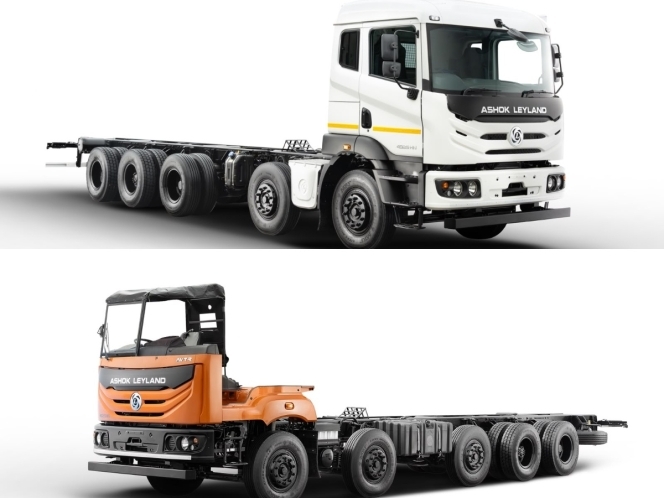
Chennai-headquartered commercial vehicle major Ashok Leyland, the flagship company of the Hinduja Group, has reported its financial results for Q2 FY2027. The company recorded wholesales of 64,677 units, a 32 percent increase from 49,116 units a year ago.
The company’s revenue grew 39 percent to INR 133.64 billion compared with INR 95.88 billion a year ago, EBITDA reached INR 13.50 billion at a margin of 10.1 percent, while profit before tax rose 14 percent to INR 11.87 billion and profit after tax increased 13 percent to INR 8.69 billion. The company ended the quarter with net cash of INR 35.46 billion, up from INR 9.90 billion a year ago.
In the medium and heavy commercial vehicle (MHCV) segment, volumes grew 44 percent YoY to 37,958 units, outpacing industry growth of 39 percent, while truck volumes rose 48 percent to secure a 31.5 percent market share excluding defence.
Light commercial vehicle (LCV) volumes increased 21 percent to 21,371 units, lifting VAHAN market share in addressable segments to 13.6 percent, while export volumes grew 7 percent to 5,102 units. Alongside growth in its defence, power solutions and aftermarket divisions, the company introduced products across the tipper, bus, haulage, and LCV categories and expanded its distribution network.
Dheeraj Hinduja, Chairman, Ashok Leyland, said, “Our record Q2 performance reflects the strength of Ashok Leyland’s business fundamentals, competitive product portfolio and strong customer focus. Our robust balance sheet provides a solid foundation to pursue our long-term growth ambitions. We are encouraged by the promising performance of our international business and continue to strengthen our presence in key export markets. Switch Mobility is also progressing well, with a strong outlook for the electric mobility business. With positive momentum across our businesses, we remain confident of sustaining profitable growth and creating long-term value for our stakeholders.”
Shenu Agarwal, MD and CEO, Ashok Leyland, said, “Our record Q2 performance, coupled with market share gains and fifteen consecutive quarters of double-digit EBITDA margins, reflects our consistent focus on profitable growth. Our strong cash position gives us the financial flexibility to invest in future technologies, innovation and new products, further strengthening our competitiveness. We are further investing in innovative product platforms and world class service processes, which would help us in sustaining our growth momentum.”


Comments (0)
ADD COMMENT