

Audi Unveils The Nuvolari: A 1,001 PS Formula 1-Inspired Hybrid Supercar
- By MT Bureau
- June 05, 2026
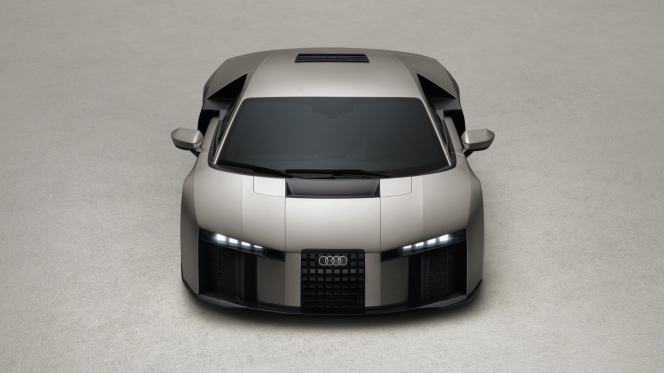
German luxury automotive company Audi has officially introduced the Audi Nuvolari, its first-ever supercar featuring a high-performance hybrid powertrain. The company believes it is destined to become the fastest and most powerful production vehicle in the history of the brand. Production of the vehicle will be strictly limited to 499 units with customer deliveries scheduled to commence in the first half of 2027.
Named after the legendary, fearless pre-war racing driver Tazio Nuvolari, the pre-production prototype represents a monumental shift for the manufacturer. It serves as the pioneering production model to debut Audi’s brand-new, visceral design philosophy.
The technical core of the Audi Nuvolari features a complex hybrid system sporting four distinct drive units that push out a combined maximum system output of 736 kW (1,001 PS).
It uses a mid-mounted 4.0-litre V8 biturbo engine that generates 588 kW (800 hp) and 730 Nm of torque. Heavily derived from motorsports, it revs up to an impressive 10,000 rpm. The engine is further complemented by three axial flux electric motors, which include two oil-cooled axial flux motors on the front axle, outputting up to 2,150 Nm of torque and enabling fully variable torque vectoring. A third electric motor is sandwiched between the mid-mounted engine and the transmission. The system relies on a lithium-ion battery with a gross capacity of 7.3 kWh.
The Audi Nuvolari has a claimed acceleration of zero to 100 kmph in under 2.6 seconds, upto 200 kmph in 6.8 seconds and a top speed exceeding 350 kmph.
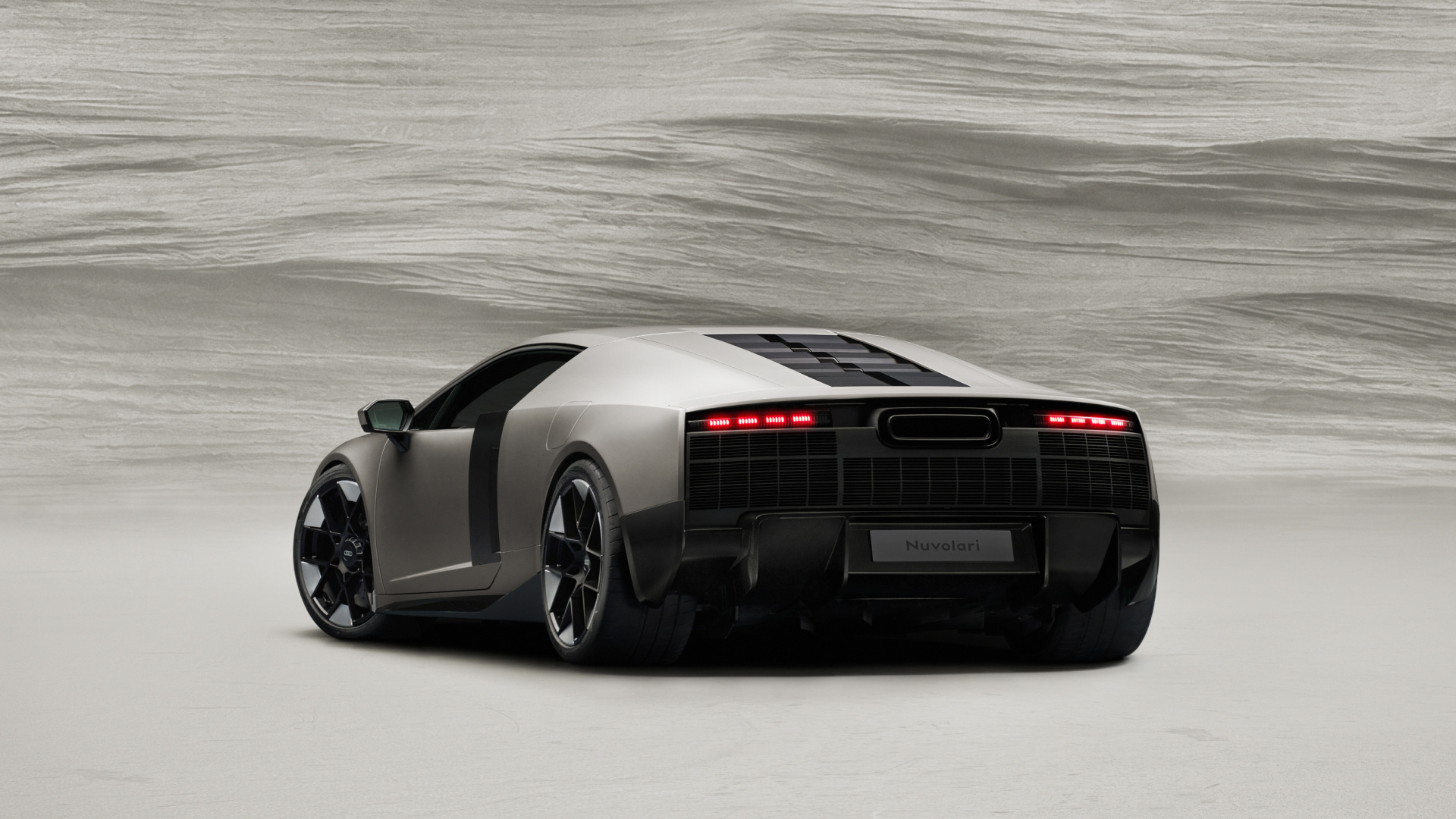
To safely manage extreme velocities, Audi worked closely with its Formula 1 drivers to refine the car's aerodynamics. The vehicle features an S-duct – a vented front end that channels air to increase front-axle downforce while reducing lift – and a deployable adaptive rear wing. The wing automatically morphs through three operational configurations: Closed (minimising drag), Low Downforce (LD) and High Downforce (HD).
In its peak HD setting, the aero package generates more than 400 kg of downforce. Drivers can also manually deploy a steering-wheel-mounted Drag Reduction System (DRS) on straights to lower the wing and bleed off drag.
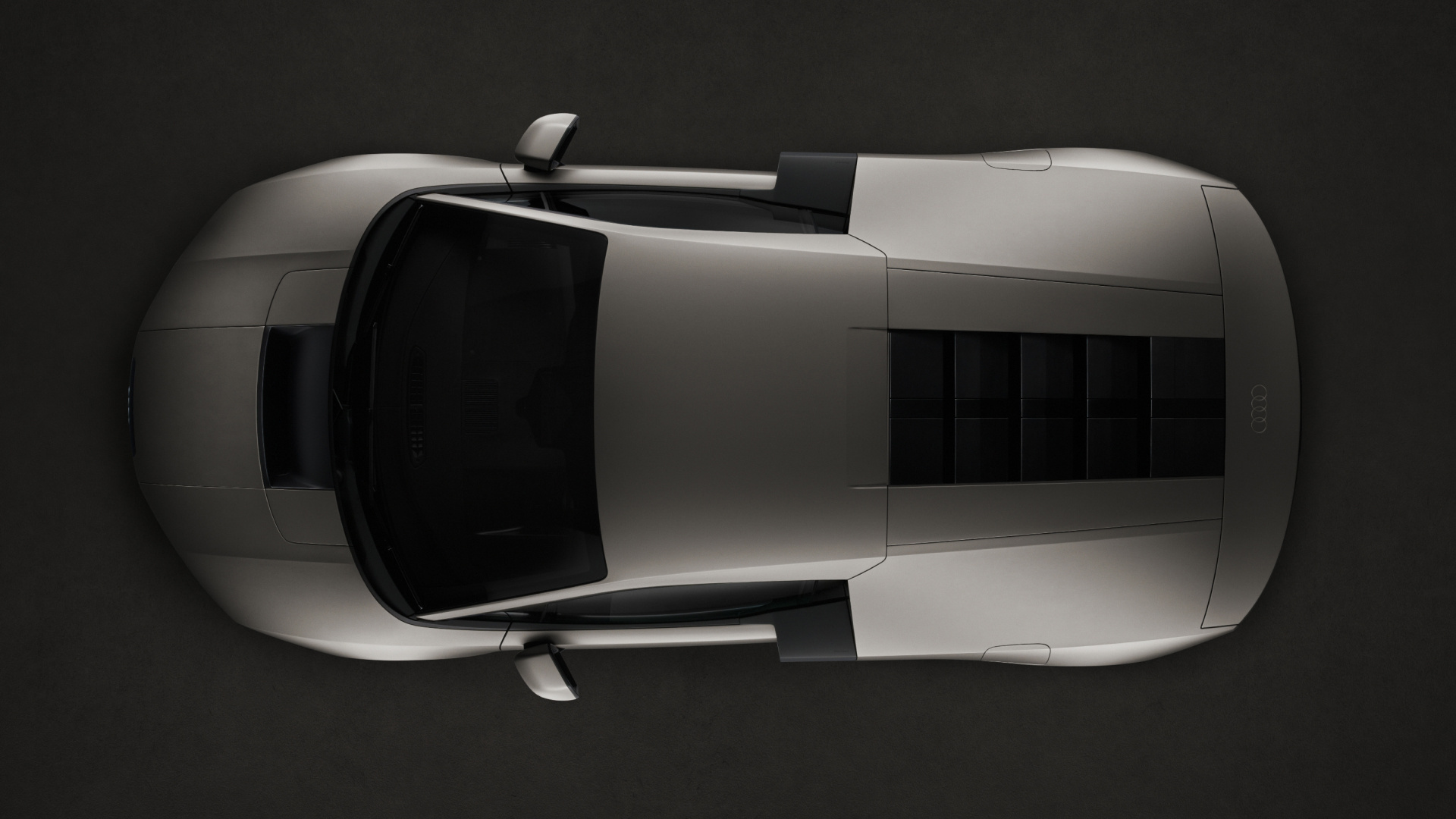
Structurally, the supercar utilises the renowned Audi Space Frame (ASF) technology but pairs it with an all-carbon fibre exterior for the first time in brand history. Virtually all body panels are built using high-tech prepreg autoclave technology to ensure maximum rigidity with minimal mass. Forged centre-lock wheels also make their production debut on this vehicle.
Quattro Predictive Ride
The vehicle premieres quattro predictive ride, an advanced evolution of Audi's signature all-wheel-drive system. Using a highly responsive vehicle state model fed by real-time telemetry (including yaw rate, steering angles and grip levels), the car proactively calculates traction thresholds.
Before a tyres-slip event can occur in a corner, the car seamlessly modulates longitudinal and lateral torque vectoring, tweaks active aero downforce and applies targeted brake interventions to stabilise the chassis.
Through physical rotary dials on the steering wheel, drivers can select from four core modes, plus a dedicated track setting:
- E-Hybrid: For fully electric, emissions-free urban driving.
- Balanced: Prioritises everyday driving comfort, efficiency and baseline performance.
- Dynamic: Optimises throttle response and sharpens cornering precision.
- Dynamic+: Focuses the entire hybrid powertrain on delivering maximum emotional performance.
- Track Mode: Tailors traction control behaviour to specific track environments, allowing drivers to manually step settings across Wet, Dry, Race, or completely Traction Control Off (TC Off).
The Nuvolari employs a motorsport-derived brake-by-wire system with an energy absorption capability of up to 2.8 megawatts. It permits purely electric regeneration up to 0.3 g before seamlessly engaging its hydraulic anchors.
The physical hardware consists of the new Audi Ceramic Pro braking system, utilising Formula 1 long-fibre carbon brake discs and a custom internal cooling design that boosts thermal dissipation by 21 percent over conventional carbon-ceramic brakes. Massive 10-piston fixed calipers clamp down on 420x40 mm discs at the front axle, while 4-piston calipers handle 410x32 mm discs at the rear.
The cockpit layout strips away secondary digital clutter, keeping all vital human-machine interface (HMI) menus directly inside the driver's primary line of sight. The visual identity features anodised aluminium accents and premium lightweight carbon-fibre bucket seats.
The interior is cleverly split into two distinct colour zones: a dark, muted front cabin designed to optimise high-speed driving concentration and a lighter Shadow Dune layout in the rear.
In a historic nod to Audi's rich racing heritage, the colour accents utilised across the digital HMI screens are styled as a direct tribute to the legendary 1930s Auto Union Type C speed-record race cars.
Gernot Dollner, Chairman of the Board of Management, Audi AG, said, “With the Audi Nuvolari, we are accelerating technological progress. It shows what is possible when the focus is on technology, performance, and execution through teamwork – and when we achieve progress together.”
Rouven Mohr, CTO, Audi, added, “With the Audi Nuvolari, our entire team has once again demonstrated its technical expertise, innovative strength, and dedication. This is reflected not only in the vehicle’s performance and its Formula 1-inspired technologies, but also in the ability to transfer innovations quickly and precisely into a production vehicle.”
- Chalmers University of Technology
- Nature Communications
- Albert Skegro
- Changfu Zou
- electric vehicle charging
Chalmers University Study Highlights 20% Battery Life Extension Using Reconfigurable Packs
- By MT Bureau
- October 09, 2026
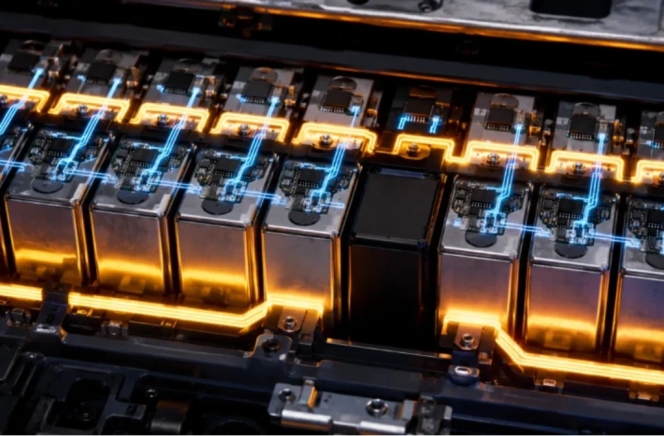
Researchers at Chalmers University of Technology, in collaboration with industry partners, have published a study in Nature Communications demonstrating that reconfigurable battery pack architectures can extend electric vehicle battery operational life by more than 20 percent under specific conditions.
In conventional electric vehicle battery packs, cells are wired in a fixed series configuration, meaning the weakest cell dictates the overall capacity, performance and lifespan of the entire pack. The architecture evaluated by the Chalmers engineering team uses integrated electronic switches and a centralised battery management system to monitor individual cells or cell groups. When a cell experiences accelerated degradation or reduced capacity, the system bypasses the degraded unit while electric current continues to flow through the remaining functional cells.
Albert Skegro, a PhD student at the Department of Electrical Engineering at Chalmers University of Technology, said, "They must all move at the pace of the slowest person and stop when that person stops, regardless of how much energy the others have left. With the architecture we have modelled, the battery can instead bypass the cell that is causing problems and continue using the remaining cells."
Changfu Zou, Professor at the Department of Electrical Engineering at Chalmers, said, "Reconfiguration is not an on-or-off choice. It is a spectrum. Where a manufacturer chooses to position itself on that spectrum determines how much of the potential benefit can be realised."
In a representative modelling scenario featuring an 80 kWh battery pack driven 12,000 kilometres annually over an 18.8-year vehicle lifespan, the reconfigurable system deferred battery replacement by approximately 14 months. The researchers noted that the technology yields the highest performance gains in high-voltage vehicles, including 400-volt and 800-volt electric passenger cars and commercial trucks, where higher cell counts in series increase the statistical probability of individual cell variance.
A techno-economic analysis included in the study determined that implementing cell-level switching hardware increases initial pack production costs by approximately nine per cent based on prototype-scale volumes of 1,000 units. The researchers identified an economic break-even threshold at a 12 percent cost increase, noting that volume manufacturing would lower component costs and increase financial viability for fleet operators and private owners. While prototype applications such as Volvo Cars' SmartCell concept and experimental road vehicles exist, mass-production vehicles using reconfigurable battery packs are yet to enter the commercial market.
Jakson Green Vehicles Adopts Dassault Systèmes 3DEXPERIENCE Platform For EV Engineering
- By MT Bureau
- October 07, 2026

Jakson Green Vehicles has selected Dassault Systèmes’ cloud-based 3DEXPERIENCE platform to manage the design and development of its electric vehicles.
The implementation establishes a collaborative engineering framework to maintain digital continuity across the product development lifecycle. By connecting internal teams and external suppliers, the platform automates workflows, standardises component libraries and manages engineering change requests during early-stage product design. Virtual twin capabilities allow the vehicle manufacturer to conduct virtual validation testing to resolve structural and systems design issues prior to physical manufacturing.
Deepak Thakur, CEO, Jakson Green Vehicles, said, "Using Dassault Systèmes’ 3DEXPERIENCE Platform enables us to apply a collaborative approach and re-engineer our product lifecycle from the ground up. Through this transition from legacy environments to a unified digital thread, it enables strong R&D to achieve twin objectives; accelerated time-to-market and mitigated development costs. This partnership is helping us to transform the early-stage innovation and product design processes."
Deepak NG, Managing Director – India, Dassault Systèmes, said, "As India continues its dynamic growth trajectory, virtual twin technology serves as a powerful catalyst for sustainable innovation, empowering industries to rethink how they design, produce and operate."
The software adoption forms part of Jakson Green Vehicles' plan to build urban zero-emission mobility vehicles and infrastructure across India.
Gelion Signs Battery Assessment Agreement With Leading Automaker
- By MT Bureau
- October 07, 2026
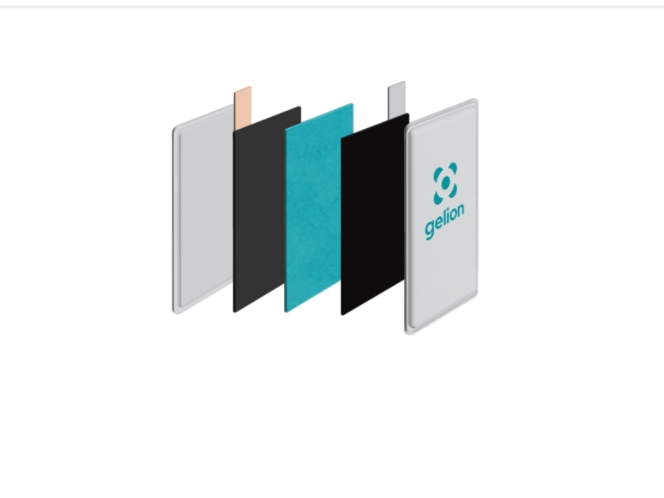
UK-headquartered energy technology company Gelion has entered into a material transfer agreement with a top 15 global automotive original equipment manufacturer to assess its NES cathode platform for future electric vehicle battery applications.
Under the terms of the agreement, Gelion will supply its sulfur-based cathode active material, coated cathodes and liquid electrolyte to the automotive partner. The manufacturer will evaluate the platform in both liquid and solid electrolyte cell configurations, testing compatibility across lithium metal and graphitic anode pathways targeting luxury and mass-market vehicle applications. The technology is designed to serve as a drop-in cathode material capable of integration into existing battery manufacturing lines without re-tooling.
Matt Wood, Chief Executive Officer, Gelion, said, "Our priority markets are commercial & defence drones, EVs and devices. We are honoured to be working with these major global automotive OEMs, and today’s announcement marks further progress towards the adoption of our technology and the generation of commercial revenues via funded programmes and eventually license and royalty revenue in the global EV market, alongside some of the industry’s leading companies."
"The growing engagement from global EV manufacturers reinforces the potential and attractiveness of our NES™ technology. This momentum is also mirrored in our agreements and partnerships across drones and devices, while our work with Tier 1 materials suppliers is advancing the scale-up of our unique, patented battery materials," Wood added.
The agreement expands Gelion’s ongoing industry testing programs with automotive manufacturers, extending the assessment of its sulfur-based cathode platform across liquid and solid battery systems.
- Honda R&D
- Honda Motor Co.
- Taise Corporation
- Taisei Rotec Corporation
- wireless charging
- East Nippon Expressway Company
Honda Develops In-Motion Wireless EV Charging Technology For Public Road Trials In 2027
- By MT Bureau
- October 06, 2026
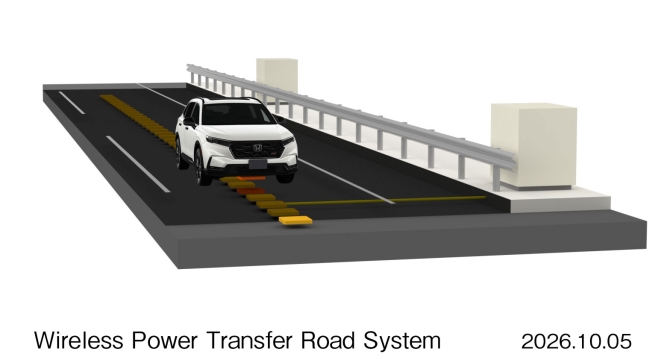
Honda R&D, a subsidiary of Honda Motor Co., has developed underlying technology for a magnetic coupling wireless power transfer road system in partnership with Taisei Corporation and Taisei Rotec Corporation.
The system enables wireless in-motion charging for electric vehicles, including passenger cars and heavy commercial fleets. The partners plan to initiate demonstration testing on public roads starting in FY2027.
The technology integrates high-power-density receiver and transmitter units from Honda with a high-response direct current power supply system from Taisei and road-embedding construction techniques from Taisei Rotec. By supplying power to electric vehicles while in motion, dynamic wireless power transfer reduces the need for stationary charging infrastructure. The initial commercial focus targets logistics and transport operations, where continuous operation offers economic benefits.
The ground assembly embedded in the roadway combines the inverter and coil into a single unit designed to connect via direct current distribution. This design reduces component counts, simplifies wiring and supports installation into existing road surfaces through standard milling methods. The road pavement structures are engineered to withstand continuous traffic loads from vehicles weighing up to 20 tonnes (20,000kg).
Testing conducted at Taisei Group’s T-FIELD facility in Satte verified system stability and structural durability. Starting in late 2026, the companies will build a test roadway at T-FIELD Tamura to evaluate long-term durability under one million wheel-load cycles, measure power transfer efficiency at outputs up to 150 kW and analyse electromagnetic shielding.
The partnership will also join the Tateyama Expressway demonstration project managed by East Nippon Expressway Company starting in 2027.
Comments (0)
ADD COMMENT