

Continental Signs JV with Nisshinbo Holdings for ABS and ESC Manufacturing
- By MT Bureau
- March 10, 2022

Technology company Continental has announced the formation of a joint venture with Japanese firm Nisshinbo Holdings in India. The new JV will localise machining for valve block meant for Continental’s Electronic Brake Systems (EBS) in India. The EBS portfolio includes Electronic Stability Control (ESC) for passenger cars and Anti-lock Brake Systems (ABS) for passenger cars and two-wheelers.
Prashanth Doreswamy, President and CEO, Continental India, said, “The new venture is another example of Continental’s commitment to manufacturing for India, in India. By partnering with Nisshinbo, we are now uniquely positioned to provide the Indian automotive sector with the latest in safety technology, completely manufactured and assembled in India. Nisshinbo and Continental have the right synergies, and we are confident that our expertise will achieve a leadership position in the Indian market as well as in exports.”
Krishan Kohli, Head of Segment, Vehicle Dynamics and Hydraulic Brake Systems, Continental Automotive India said, “Localisation is our key strategy in India. Our completely localised value chain, from R&D to manufacturing and sales, enables us to offer Indian consumers technologies that are better suited and affordable. This is in line with our focus for Vision Zero – a future with zero fatalities, injuries, and crashes, comes close on the heels of us achieving the milestone of 5 million units of Electronic Brake Systems (EBS) production this year at our Gurgaon plant.”
Under the JV, Nisshinbo will provide machining for producing valve block for ABS and ESC units, which later gets assembled into a complete unit at the Gurgaon plant (Continental) with the integration of ECUs that are manufactured in Continental’s plant in Bangalore, the company said in a release.
With this, Continental is further increasing the localised content in EBS production from India. This will enable it to better serve the Indian automotive market, where the demand for EBS is vast and growing, thanks to growing consumer awareness and the efforts of industry and government.
The new joint venture gives Continental additional advantages of an optimised supply chain, ease of doing business, and further improved diversified global market position. The localisation of ABS
manufacturing will also help create opportunities, the release added. (MT)
- Automotive Research Association of India
- ARAI
- COEP Technological University
- COEP
- Advanced Ergonomics and Human Factors Research Centre
- AEHFRC
- Dr Reji Mathai
- Prof. Sunil Bhirud
ARAI and COEP Tech to Establish INR 1 Billion Ergonomics Research Centre In Pune
- By MT Bureau
- October 05, 2026
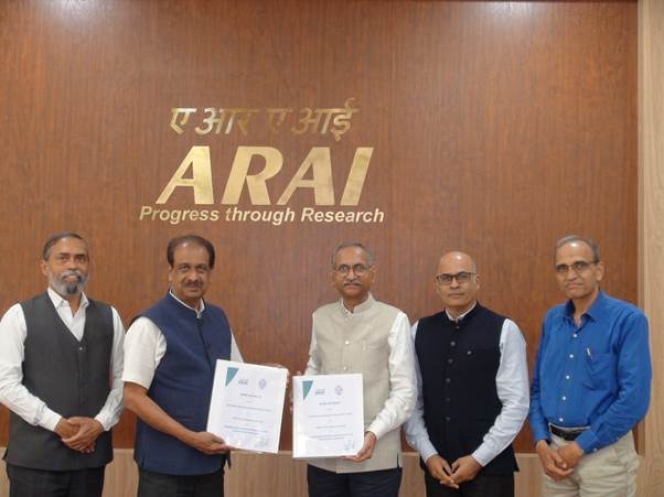
The Automotive Research Association of India (ARAI) and COEP Technological University have signed a Letter of Intent to establish the Advanced Ergonomics and Human Factors Research Centre (AEHFRC) at COEP Tech’s Research and Innovation Park in Chikhali, Pune.
The initiative involves a planned investment of INR 1.05 billion and will function as a national facility focused on developing technologies tailored to the physical metrics of Indian users.
The facility will span approximately 38,000 square feet. The project will be executed in two phases: the first phase, spanning two to three years, will set up laboratories for posture evaluation, seating comfort analysis, human biomechanics and field of vision assessments; the second phase, over four to five years, will complete the full-scale deployment of the centre.
The centre will address sectors including automotive, defence, aerospace, railways, agriculture, industrial equipment, consumer goods and textiles. Key operational objectives include generating Indian anthropometric databases, establishing ergonomics standards, creating usability frameworks and offering training and certification programs.
The partnership will pursue research projects, consultancy assignments, and funding from government bodies, industry partners, and CSR initiatives to translate academic research into industrial applications.
Dr Reji Mathai, Director, ARAI, said, "As technology becomes increasingly human-centric, ergonomics and human factors play a critical role in ensuring safety, usability, and user well-being. Through this partnership with COEP Technological University, ARAI aims to create a national ecosystem that advances research, develops indigenous capabilities, and supports industry in creating products and systems that are better suited to Indian users and operating conditions. We believe the AEHFRC will play a significant role in strengthening India’s capabilities in human-centred design and innovation."
Prof. Sunil Bhirud, Vice-Chancellor of COEP Technological University, said: "COEP Technological University has consistently worked to translate research into societal impact. The proposed AEHFRC, in collaboration with ARAI, will provide a unique platform for interdisciplinary research, innovation, and industry engagement in ergonomics and human factors. We are confident that this initiative will contribute significantly to the development of Indian standards, indigenous technologies, and a skilled workforce capable of addressing national and global challenges."
MathWorks Partners MapmyIndia To Accelerate ADAS Validation For Indian Roads
- By MT Bureau
- October 05, 2026
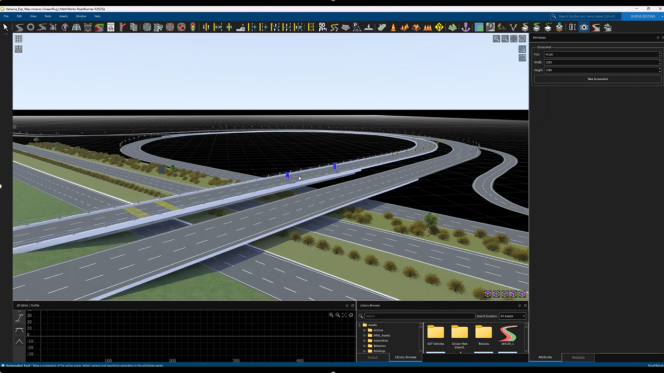
MathWorks and MapmyIndia Mappls have announced a collaboration to support automotive engineering teams developing and validating Advanced Driver Assistance Systems (ADAS) for Indian driving environments.
Under the partnership, MapmyIndia’s high-definition (HD) digital maps have been integrated with MathWorks' software ecosystem, including MATLAB, Simulink and RoadRunner.
The integration enables engineers to construct digital twins of Indian road infrastructure to simulate traffic scenarios and evaluate ADAS controllers within a Model-Based Design framework before physical vehicle testing.
MapmyIndia’s HD maps capture lane-level geometry, traffic controls and localised road features, including speed breakers, potholes and worn lane markings. The dataset addresses engineering challenges associated with Indian traffic environments, such as high-density traffic, variable lane discipline and evolving road layouts.
The combined software workflow links location intelligence data directly into algorithm development and system validation tools, aiming to reduce virtual testing cycles for original equipment manufacturers and tier-one automotive suppliers operating in India.
Sapna Ahuja, President of Automotive Business and Chief Operating Officer, MapmyIndia Mappls, said, "India's roads present some of the world's most complex and dynamic driving environments. Developing ADAS solutions for these conditions requires far more than adapting models built for structured traffic ecosystems. MapmyIndia's HD maps capture the scale and complexity of Indian roads with accuracy and detail — from lane-level geometry and traffic controls to speed breakers, potholes, faded lane markings and other critical localised road attributes. Our collaboration with MathWorks empowers automotive engineers to simulate real Indian driving conditions, validate systems earlier, and accelerate the development of ADAS solutions that are truly built for India."
Vijayalayan R, Senior Manager – Automotive, MathWorks, said, "As automotive teams expand ADAS development for India, virtual validation is becoming essential to evaluate system performance across diverse driving conditions. By integrating MapmyIndia’s HD maps with MATLAB, Simulink, and RoadRunner, engineers can test ADAS algorithms earlier in development, reduce reliance on costly physical testing, and improve system performance before deployment on Indian roads."
- Delta Electronics
- NVIDIA
- NVIDIA Halos
- NVIDIA Hyperion
- NVIDIA DRIVE AGX
- James Tang
- Rishi Dhall
- Level 4 Autonomous
Delta Partners NVIDIA To Develop Level 4 Autonomous Driving Systems
- By MT Bureau
- October 02, 2026
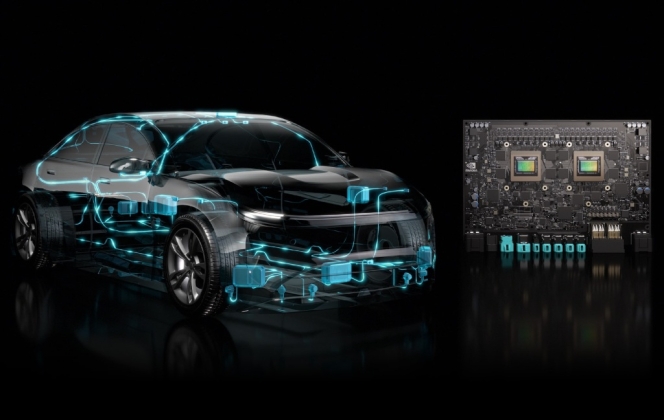
Taiwan-headquartered Delta Electronics has announced a collaboration with NVIDIA aimed at developing autonomous driving systems for next-generation vehicles.
The partnership combines Delta’s automotive energy management, electric powertrain systems and in-vehicle high-performance computing system integration with the NVIDIA Hyperion reference platform and NVIDIA Halos safety system.
NVIDIA Hyperion serves as a sensor and compute architecture for Level 4 autonomous vehicles and robotaxis, utilising dual NVIDIA DRIVE AGX Thor processors to enable production-ready vehicle autonomy.
James Tang, Executive Vice-President of Mobility Business Category, Delta, said, "Autonomous driving requires years of technology development, continuous innovation, and strong system integration. Our commitment to the EV sector began several years ago, developing strong expertise in power electronics and key automotive technologies, and accumulating extensive development experience with world-class automakers. We are honoured that NVIDIA recognises Delta’s automotive expertise and strategic direction. Through this joint endeavour, we will further integrate AI and HPC capabilities into the enhancement of advanced autonomous driving functions, turning next-generation smart vehicles into real-world applications while pursuing new opportunities in the fast-growing smart mobility market."
Rishi Dhall, Vice-President of Automotive, NVIDIA, said, "Level 4 autonomous driving requires powerful in-vehicle computing, a comprehensive sensor architecture and close collaboration across the automotive ecosystem. By combining Delta’s automotive and system integration expertise with NVIDIA Hyperion, we can accelerate the development of safe, intelligent and scalable autonomous driving systems for the next generation of mobility."
Under the agreement, Delta will work alongside NVIDIA’s engineering teams to integrate its system technology into the Hyperion architecture, while leveraging NVIDIA's international network to broaden commercial engagement with global automotive manufacturers.
- Stellantis
- Wavye
- Wave by Vento
- Antonio Filosa
- Alex Kendall
- Adam Jonas
- Morgan Stanley
- Artificial Intelligence
- ADAS Level 2++
- Fiat 500e
- Maserati Grecale
Stellantis And Wayve To Showcase AI Mobility Technology At Wave By Vento 2026
- By MT Bureau
- October 02, 2026
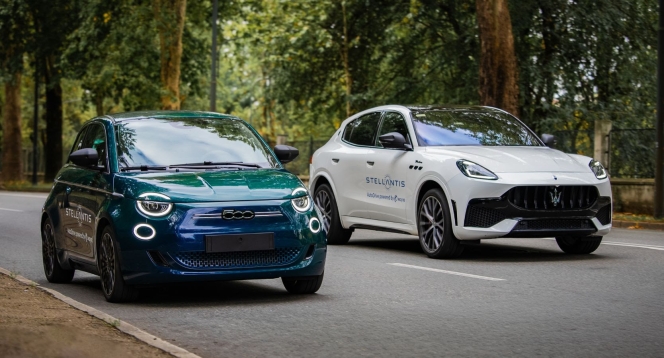
Stellantis and Wayve will participate in the Wave by Vento event in Turin from 7 to 9 October 2026, featuring executive sessions, technical presentations and demonstration rides focused on artificial intelligence in mobility.
A keynote session titled ‘Technology Made for Humans’ will feature Stellantis CEO Antonio Filosa and Wayve Co-Founder and CEO Alex Kendall on 9 October. Moderated by Adam Jonas, global embodied AI and robotics strategist at Morgan Stanley, the discussion will focus on AI-powered mobility and strategic partnerships for technology deployment at scale.
During the event, Stellantis and Wayve will conduct demonstration rides in Fiat 500e and Maserati Grecale development vehicles equipped with the STLA AutoDrive platform powered by Wayve.
The system integrates the Wayve AI Driver to demonstrate hands-free, door-to-door supervised automated driving, categorised as Level 2++, in real-world driving conditions. The integration follows the Jeep Grand Cherokee development vehicle displayed at Stellantis' Investor Day in May, applying the same core AI driving software across three vehicle architectures without model-specific software re-engineering.
Announced in May 2026, the strategic partnership between Stellantis and Wayve focuses on supervised automated driving software for highway and urban environments. Stellantis targets its first commercial product launch using the technology in North America in 2028.
Comments (0)
ADD COMMENT