

- N.A.N GreenMet
- Navin Agarwal
- Vedanta
- N.A.N. MagneTech
- magnet
- Dr. John Ormerod
- Dr. Masato Sagawa
- Dr. Gaurav Shukla
- Neodymium-Iron-Boron
- NdFeB
N.A.N. MagneTech To Establish INR 12.5 Billion Rare Earth Magnet Facility In Andhra Pradesh
- By MT Bureau
- July 23, 2026
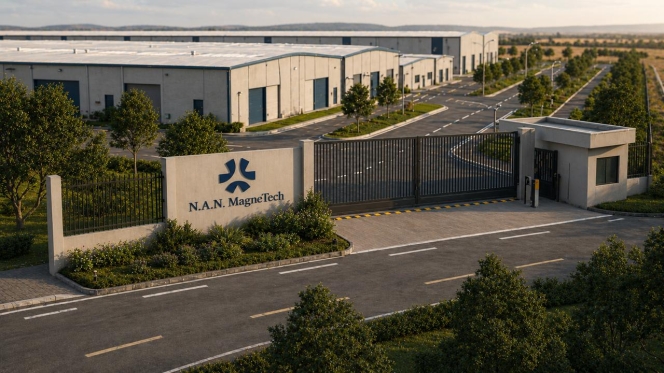
N.A.N. GreenMet, the critical minerals and advanced manufacturing platform founded by Navin Agarwal (Vice Chairman, Vedanta), has launched N.A.N. MagneTech to establish a Neodymium-Iron-Boron (NdFeB) magnet manufacturing facility at the Naidupeta Industrial Park in Andhra Pradesh.
The company has earmarked an investment of INR 12.5 billion in Phase I to build an initial capacity of 1,200 tonnes per annum, with a long-term target of 10,000 tonnes per annum.
It expects commercial production to begin in Q1 2028, generating annual revenues of INR 12 to INR 15 billion. The facility will integrate oxide processing, metal and alloy production, sintered magnet manufacturing and closed-loop recycling.
The project has secured feedstock supply arrangements with an Australian rare earth producer and executed off-take agreements with domestic automotive original equipment manufacturers. Technical development is led by Dr. John Ormerod, Dr. Masato Sagawa and Dr. Gaurav Shukla.
Navin Agarwal, Founder & Chairman, N.A.N. GreenMet, said, “The industries shaping the future will be defined by those who control advanced materials and manufacturing technologies. At N.A.N. GreenMet, we are building a globally competitive industrial enterprise that strengthens India’s manufacturing capabilities in strategically important sectors. N.A.N. MagneTech is an important milestone in that endeavour, bringing world-class technology to establish a domestic rare earth magnet ecosystem that supports the country’s long-term industrial growth”.
Dr. John Ormerod, Chairman of the Technology Board, N.A.N. MagneTech, added, "We are bringing the most advanced Japanese process technology to India, covering the complete oxide-to-magnet ecosystem. Backed by a secured feedstock strategy and closed-loop recycling, this platform is engineered to deliver consistent, world-class quality."
Gelion Signs Battery Assessment Agreement With Leading Automaker
- By MT Bureau
- October 07, 2026
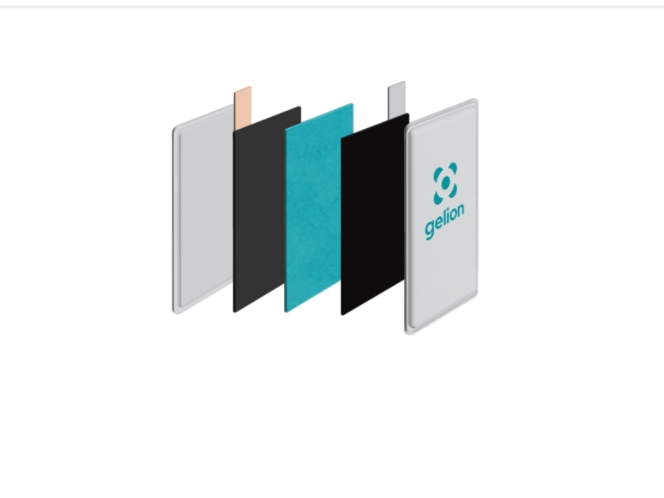
UK-headquartered energy technology company Gelion has entered into a material transfer agreement with a top 15 global automotive original equipment manufacturer to assess its NES cathode platform for future electric vehicle battery applications.
Under the terms of the agreement, Gelion will supply its sulfur-based cathode active material, coated cathodes and liquid electrolyte to the automotive partner. The manufacturer will evaluate the platform in both liquid and solid electrolyte cell configurations, testing compatibility across lithium metal and graphitic anode pathways targeting luxury and mass-market vehicle applications. The technology is designed to serve as a drop-in cathode material capable of integration into existing battery manufacturing lines without re-tooling.
Matt Wood, Chief Executive Officer, Gelion, said, "Our priority markets are commercial & defence drones, EVs and devices. We are honoured to be working with these major global automotive OEMs, and today’s announcement marks further progress towards the adoption of our technology and the generation of commercial revenues via funded programmes and eventually license and royalty revenue in the global EV market, alongside some of the industry’s leading companies."
"The growing engagement from global EV manufacturers reinforces the potential and attractiveness of our NES™ technology. This momentum is also mirrored in our agreements and partnerships across drones and devices, while our work with Tier 1 materials suppliers is advancing the scale-up of our unique, patented battery materials," Wood added.
The agreement expands Gelion’s ongoing industry testing programs with automotive manufacturers, extending the assessment of its sulfur-based cathode platform across liquid and solid battery systems.
- Honda R&D
- Honda Motor Co.
- Taise Corporation
- Taisei Rotec Corporation
- wireless charging
- East Nippon Expressway Company
Honda Develops In-Motion Wireless EV Charging Technology For Public Road Trials In 2027
- By MT Bureau
- October 06, 2026
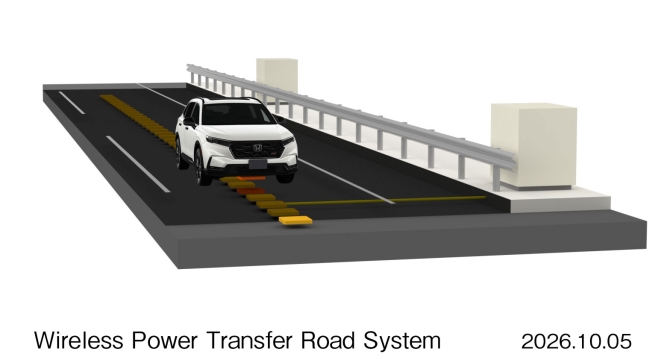
Honda R&D, a subsidiary of Honda Motor Co., has developed underlying technology for a magnetic coupling wireless power transfer road system in partnership with Taisei Corporation and Taisei Rotec Corporation.
The system enables wireless in-motion charging for electric vehicles, including passenger cars and heavy commercial fleets. The partners plan to initiate demonstration testing on public roads starting in FY2027.
The technology integrates high-power-density receiver and transmitter units from Honda with a high-response direct current power supply system from Taisei and road-embedding construction techniques from Taisei Rotec. By supplying power to electric vehicles while in motion, dynamic wireless power transfer reduces the need for stationary charging infrastructure. The initial commercial focus targets logistics and transport operations, where continuous operation offers economic benefits.
The ground assembly embedded in the roadway combines the inverter and coil into a single unit designed to connect via direct current distribution. This design reduces component counts, simplifies wiring and supports installation into existing road surfaces through standard milling methods. The road pavement structures are engineered to withstand continuous traffic loads from vehicles weighing up to 20 tonnes (20,000kg).
Testing conducted at Taisei Group’s T-FIELD facility in Satte verified system stability and structural durability. Starting in late 2026, the companies will build a test roadway at T-FIELD Tamura to evaluate long-term durability under one million wheel-load cycles, measure power transfer efficiency at outputs up to 150 kW and analyse electromagnetic shielding.
The partnership will also join the Tateyama Expressway demonstration project managed by East Nippon Expressway Company starting in 2027.
Skoda Intros Hybrid Tech In Its Lineup With Octavia
- By MT Bureau
- October 06, 2026
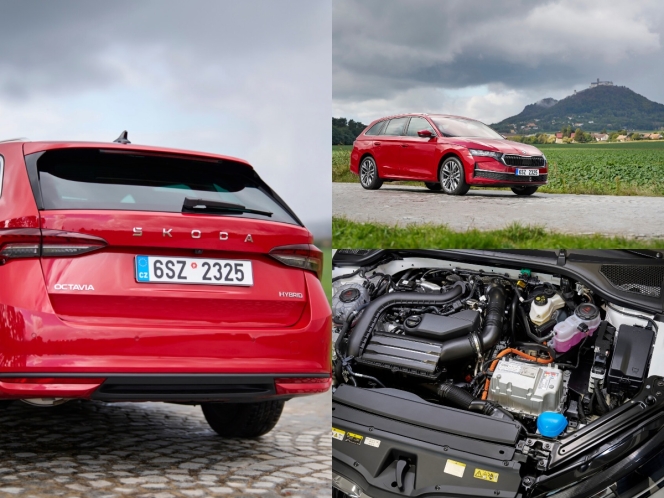
Czech automaker Skoda Auto has expanded its powertrain portfolio with the introduction of a full hybrid powertrain for the Octavia, marking the first time the marque has offered this technology. The new powertrain is available for both hatchback and estate body styles in the Selection and Sportline trim levels.
The new Octavia utilises a series-parallel hybrid setup that combines a 1.5 TSI evo2 petrol engine with two electric motors, a single-speed automatic transmission and an automatic clutch that connects the engine directly to the front axle.
The smaller electric motor functions as a generator and starter, whilst the larger motor drives the front wheels and recovers energy during deceleration. The system automatically selects between all-electric, series hybrid, and parallel hybrid operation depending on speed, driver demand and battery charge levels. Electric mode offers a driving range of approximately two kilometres.
The model is offered in two power outputs: a 100 kW variant using a 96 kW petrol engine and a 125 kW version paired with a 110 kW engine. Both variants share identical electric motors and have an electronically limited top speed of 180 kmph. Energy is stored in a 1.6 kWh battery positioned beneath the rear seats, paired with a 40-litre fuel tank. Boot capacity is rated at 460 litres for the hatchback and 485 litres for the estate. Standard features include a 13-inch infotainment display and a 10-inch digital instrument panel. Orders open in October, with customer deliveries scheduled to begin in December 2026.
Johannes Neft, Chief Development Officer, Skoda Auto, said, "The Octavia is the first Skoda model to feature a full hybrid powertrain. Its series-parallel hybrid system combines a combustion engine with the flexibility of electric driving. Operating fully automatically, the system selects the most efficient drive mode according to the current conditions. The traction battery is recharged while driving by the combustion engine or through energy recuperation. With two output levels available for both the hatchback and estate, the full hybrid adds another technically versatile option to our powertrain portfolio giving customers even greater choice to match their individual needs."
- Automotive Research Association of India
- ARAI
- COEP Technological University
- COEP
- Advanced Ergonomics and Human Factors Research Centre
- AEHFRC
- Dr Reji Mathai
- Prof. Sunil Bhirud
ARAI and COEP Tech to Establish INR 1 Billion Ergonomics Research Centre In Pune
- By MT Bureau
- October 05, 2026
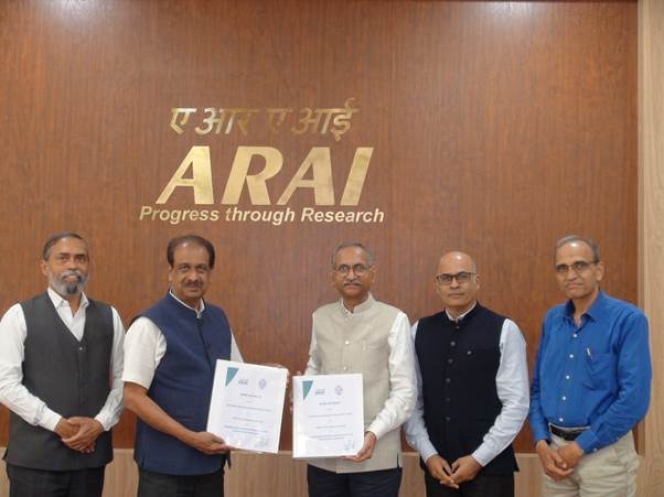
The Automotive Research Association of India (ARAI) and COEP Technological University have signed a Letter of Intent to establish the Advanced Ergonomics and Human Factors Research Centre (AEHFRC) at COEP Tech’s Research and Innovation Park in Chikhali, Pune.
The initiative involves a planned investment of INR 1.05 billion and will function as a national facility focused on developing technologies tailored to the physical metrics of Indian users.
The facility will span approximately 38,000 square feet. The project will be executed in two phases: the first phase, spanning two to three years, will set up laboratories for posture evaluation, seating comfort analysis, human biomechanics and field of vision assessments; the second phase, over four to five years, will complete the full-scale deployment of the centre.
The centre will address sectors including automotive, defence, aerospace, railways, agriculture, industrial equipment, consumer goods and textiles. Key operational objectives include generating Indian anthropometric databases, establishing ergonomics standards, creating usability frameworks and offering training and certification programs.
The partnership will pursue research projects, consultancy assignments, and funding from government bodies, industry partners, and CSR initiatives to translate academic research into industrial applications.
Dr Reji Mathai, Director, ARAI, said, "As technology becomes increasingly human-centric, ergonomics and human factors play a critical role in ensuring safety, usability, and user well-being. Through this partnership with COEP Technological University, ARAI aims to create a national ecosystem that advances research, develops indigenous capabilities, and supports industry in creating products and systems that are better suited to Indian users and operating conditions. We believe the AEHFRC will play a significant role in strengthening India’s capabilities in human-centred design and innovation."
Prof. Sunil Bhirud, Vice-Chancellor of COEP Technological University, said: "COEP Technological University has consistently worked to translate research into societal impact. The proposed AEHFRC, in collaboration with ARAI, will provide a unique platform for interdisciplinary research, innovation, and industry engagement in ergonomics and human factors. We are confident that this initiative will contribute significantly to the development of Indian standards, indigenous technologies, and a skilled workforce capable of addressing national and global challenges."
Comments (0)
ADD COMMENT