

Porsche Partners With AirConsole For In-Car Gaming
- By MT Bureau
- August 28, 2025
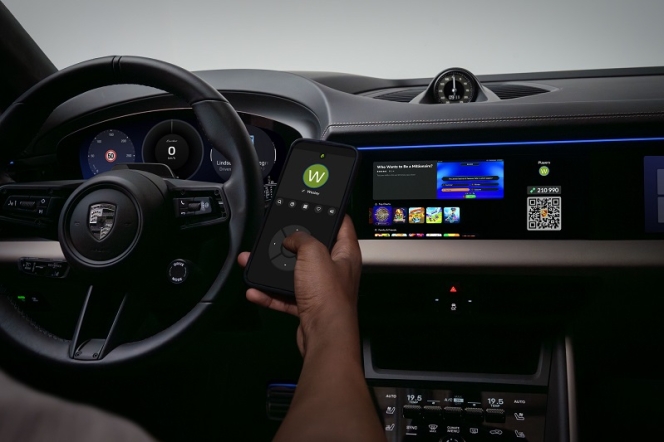
Porsche is set to bring a new level of entertainment to its vehicles through a collaboration with AirConsole, a leading in-car gaming platform. The new Porsche Macan, arriving later this year, will be the first model to feature a curated library of multiplayer games, transforming car rides into a shared entertainment experience.
The integration allows passengers to use their smartphones as controllers to play a variety of games on the vehicle’s infotainment screen. When the car is parked, all passengers, including the driver, can participate. While on the move, gaming is restricted to the front passenger display, ensuring the driver remains focused on the road. The system uses Porsche’s integrated screen privacy features to keep the display safe and distraction-free.
Anthony Cliquot, CEO, AirConsole, said, “Our collaboration with Porsche is a powerful signal of how quickly AirConsole is scaling in the automotive industry. In just two years since launching our in-car platform, we’ve partnered with some of the world’s most respected car brands, now including Porsche. This momentum confirms that gaming has a meaningful place in the future of mobility, and we’re proud to be leading that evolution.”
To access AirConsole, users can simply download the app from the Porsche App Centre. Passengers then connect their smartphones by scanning a QR code on the screen, with no need for additional hardware. The platform supports up to five players, allowing for both collaborative and competitive sessions.
AirConsole specialises in casual, short-session games that are optimised for the in-car environment. The growing catalogue includes popular titles like Who Wants to Be a Millionaire?, Overcooked, and UNO Car Party!, ensuring a wide range of options for passengers.
The AirConsole platform will be available in the new Macan starting at the end of this year, rolling out in all markets where Porsche Connect is offered, with the exception of China.
Jakson Green Vehicles Adopts Dassault Systèmes 3DEXPERIENCE Platform For EV Engineering
- By MT Bureau
- October 07, 2026
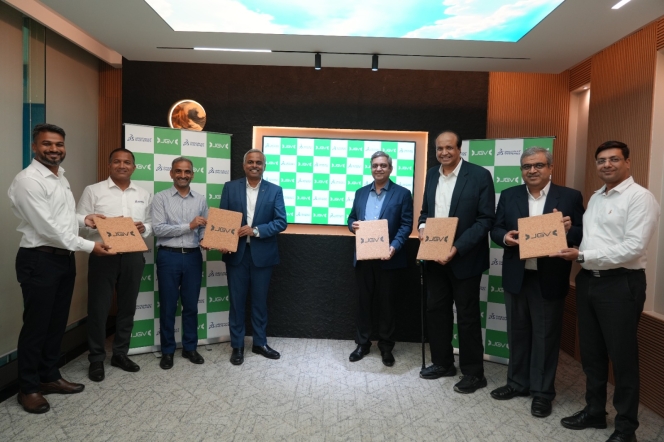
Jakson Green Vehicles has selected Dassault Systèmes’ cloud-based 3DEXPERIENCE platform to manage the design and development of its electric vehicles.
The implementation establishes a collaborative engineering framework to maintain digital continuity across the product development lifecycle. By connecting internal teams and external suppliers, the platform automates workflows, standardises component libraries and manages engineering change requests during early-stage product design. Virtual twin capabilities allow the vehicle manufacturer to conduct virtual validation testing to resolve structural and systems design issues prior to physical manufacturing.
Deepak Thakur, CEO, Jakson Green Vehicles, said, "Using Dassault Systèmes’ 3DEXPERIENCE Platform enables us to apply a collaborative approach and re-engineer our product lifecycle from the ground up. Through this transition from legacy environments to a unified digital thread, it enables strong R&D to achieve twin objectives; accelerated time-to-market and mitigated development costs. This partnership is helping us to transform the early-stage innovation and product design processes."
Deepak NG, Managing Director – India, Dassault Systèmes, said, "As India continues its dynamic growth trajectory, virtual twin technology serves as a powerful catalyst for sustainable innovation, empowering industries to rethink how they design, produce and operate."
The software adoption forms part of Jakson Green Vehicles' plan to build urban zero-emission mobility vehicles and infrastructure across India.
Gelion Signs Battery Assessment Agreement With Leading Automaker
- By MT Bureau
- October 07, 2026
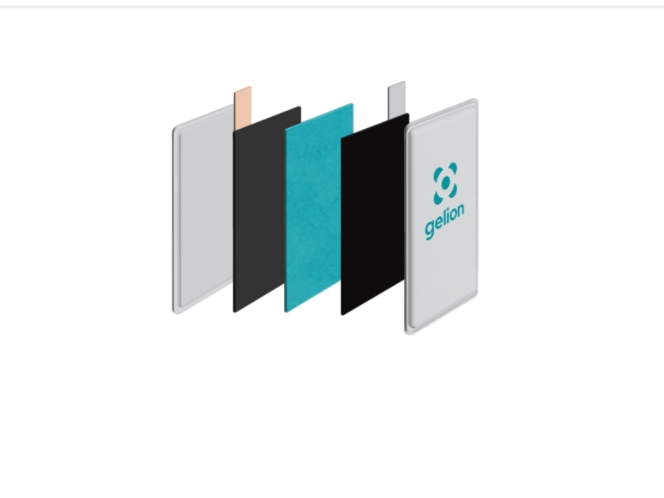
UK-headquartered energy technology company Gelion has entered into a material transfer agreement with a top 15 global automotive original equipment manufacturer to assess its NES cathode platform for future electric vehicle battery applications.
Under the terms of the agreement, Gelion will supply its sulfur-based cathode active material, coated cathodes and liquid electrolyte to the automotive partner. The manufacturer will evaluate the platform in both liquid and solid electrolyte cell configurations, testing compatibility across lithium metal and graphitic anode pathways targeting luxury and mass-market vehicle applications. The technology is designed to serve as a drop-in cathode material capable of integration into existing battery manufacturing lines without re-tooling.
Matt Wood, Chief Executive Officer, Gelion, said, "Our priority markets are commercial & defence drones, EVs and devices. We are honoured to be working with these major global automotive OEMs, and today’s announcement marks further progress towards the adoption of our technology and the generation of commercial revenues via funded programmes and eventually license and royalty revenue in the global EV market, alongside some of the industry’s leading companies."
"The growing engagement from global EV manufacturers reinforces the potential and attractiveness of our NES™ technology. This momentum is also mirrored in our agreements and partnerships across drones and devices, while our work with Tier 1 materials suppliers is advancing the scale-up of our unique, patented battery materials," Wood added.
The agreement expands Gelion’s ongoing industry testing programs with automotive manufacturers, extending the assessment of its sulfur-based cathode platform across liquid and solid battery systems.
- Honda R&D
- Honda Motor Co.
- Taise Corporation
- Taisei Rotec Corporation
- wireless charging
- East Nippon Expressway Company
Honda Develops In-Motion Wireless EV Charging Technology For Public Road Trials In 2027
- By MT Bureau
- October 06, 2026
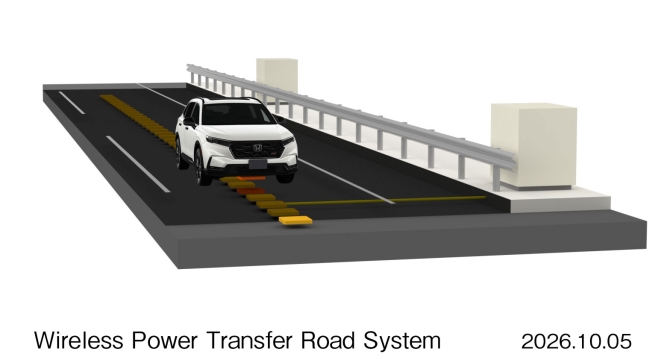
Honda R&D, a subsidiary of Honda Motor Co., has developed underlying technology for a magnetic coupling wireless power transfer road system in partnership with Taisei Corporation and Taisei Rotec Corporation.
The system enables wireless in-motion charging for electric vehicles, including passenger cars and heavy commercial fleets. The partners plan to initiate demonstration testing on public roads starting in FY2027.
The technology integrates high-power-density receiver and transmitter units from Honda with a high-response direct current power supply system from Taisei and road-embedding construction techniques from Taisei Rotec. By supplying power to electric vehicles while in motion, dynamic wireless power transfer reduces the need for stationary charging infrastructure. The initial commercial focus targets logistics and transport operations, where continuous operation offers economic benefits.
The ground assembly embedded in the roadway combines the inverter and coil into a single unit designed to connect via direct current distribution. This design reduces component counts, simplifies wiring and supports installation into existing road surfaces through standard milling methods. The road pavement structures are engineered to withstand continuous traffic loads from vehicles weighing up to 20 tonnes (20,000kg).
Testing conducted at Taisei Group’s T-FIELD facility in Satte verified system stability and structural durability. Starting in late 2026, the companies will build a test roadway at T-FIELD Tamura to evaluate long-term durability under one million wheel-load cycles, measure power transfer efficiency at outputs up to 150 kW and analyse electromagnetic shielding.
The partnership will also join the Tateyama Expressway demonstration project managed by East Nippon Expressway Company starting in 2027.
Skoda Intros Hybrid Tech In Its Lineup With Octavia
- By MT Bureau
- October 06, 2026
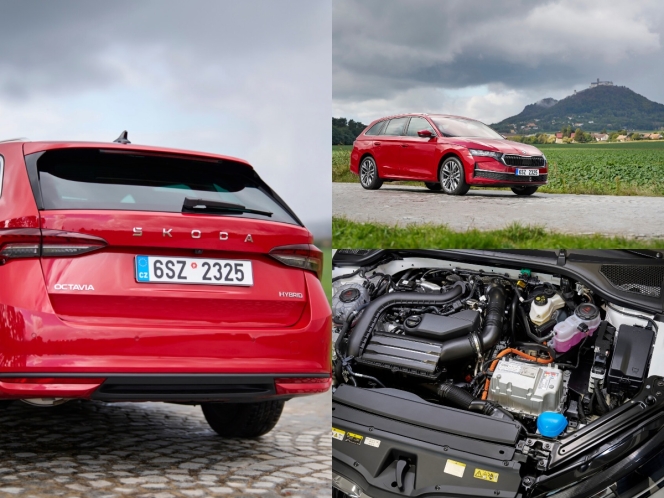
Czech automaker Skoda Auto has expanded its powertrain portfolio with the introduction of a full hybrid powertrain for the Octavia, marking the first time the marque has offered this technology. The new powertrain is available for both hatchback and estate body styles in the Selection and Sportline trim levels.
The new Octavia utilises a series-parallel hybrid setup that combines a 1.5 TSI evo2 petrol engine with two electric motors, a single-speed automatic transmission and an automatic clutch that connects the engine directly to the front axle.
The smaller electric motor functions as a generator and starter, whilst the larger motor drives the front wheels and recovers energy during deceleration. The system automatically selects between all-electric, series hybrid, and parallel hybrid operation depending on speed, driver demand and battery charge levels. Electric mode offers a driving range of approximately two kilometres.
The model is offered in two power outputs: a 100 kW variant using a 96 kW petrol engine and a 125 kW version paired with a 110 kW engine. Both variants share identical electric motors and have an electronically limited top speed of 180 kmph. Energy is stored in a 1.6 kWh battery positioned beneath the rear seats, paired with a 40-litre fuel tank. Boot capacity is rated at 460 litres for the hatchback and 485 litres for the estate. Standard features include a 13-inch infotainment display and a 10-inch digital instrument panel. Orders open in October, with customer deliveries scheduled to begin in December 2026.
Johannes Neft, Chief Development Officer, Skoda Auto, said, "The Octavia is the first Skoda model to feature a full hybrid powertrain. Its series-parallel hybrid system combines a combustion engine with the flexibility of electric driving. Operating fully automatically, the system selects the most efficient drive mode according to the current conditions. The traction battery is recharged while driving by the combustion engine or through energy recuperation. With two output levels available for both the hatchback and estate, the full hybrid adds another technically versatile option to our powertrain portfolio giving customers even greater choice to match their individual needs."
Comments (0)
ADD COMMENT