


Cobot maker Universal Robots (UR) has sold its 50,000th UR cobot today, making a significant milestone in its sales record. The 50,000th cobot came in a special delivery as Jürgen Von Hollen, President of Universal Robots, personally handed over the cobot to VEMA technische Kunststoffteile GmbH and VEMA Werkzeug-und Formenbau GmbH located in Krauchenwies-Göggingen, Germany, at a ceremony held at VEMA.
VEMA’s new collaborative robot will join a fleet of three other UR cobots already deployed in pick and place tasks in end-of-line applications at the company.
Collaborative robots - or cobots – remain the fastest growing segment of industrial automation, projected to grow at a Compound Annual Growth Rate (CAGR) of 30.37% during 2020-2025.
“We have worked very hard in the past 15 years to develop an entirely new market segment with a mission to enable especially small and medium-sized companies to automate tasks they thought were too costly or complex,“ says Von Hollen, emphasizing how UR has created a new global distribution network, a new ecosystem of developers, and ultimately a completely new business model. “As a pioneer in this market, we put a lot of work into creating awareness, influencing standards, and changing customers’ perceptions influenced by their experience of traditional robots.”
Von Hollen noted that VEMA GmbH is a great example of UR’s mission realized, ”VEMA was looking for a cost-effective, flexible, easy-to-use automation solution they could implement, program and manage on their own. They found exactly that in the UR cobot.“
Christian Veser, Managing Director at VEMA GmbH, is thrilled to be the recipient of the milestone cobot and explains how the cobots have enabled the company to add a third shift, now operating around the clock. “We have enhanced our productivity remarkably and also achieved better quality,” he says. “Our employees are freed from ergonomically straining work to focus on quality testing. In navigating COVID-19 challenges, it has also been a great advantage that the cobots don’t need to keep a safety distance or undergo quarantine. They can always work,” says Veser, adding that his company appreciates the cobots so much that they gave them names. (MT)
- Detroit Engineered Products
- DEP
- DEP MeshWorks
- DEP AIWorks Platforms
- IntelliNXT Learning & Technologies
- IntelliNXT
- CAE
- Radha Krishnan
- Karaiadiselvan
DEP and IntelliNXT Partner To Build Computer-Aided Engineering Talent In India
- By MT Bureau
- November 26, 2026
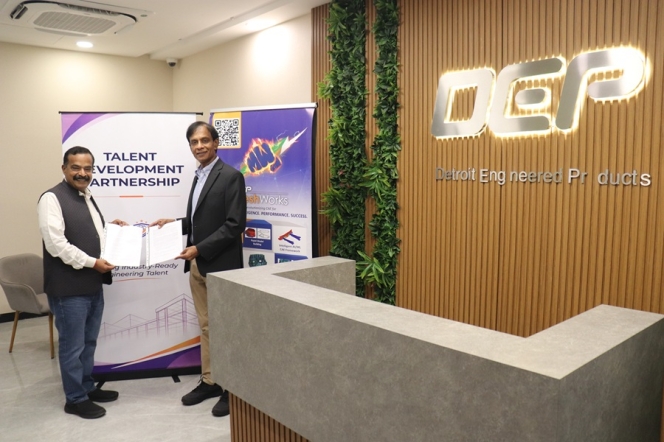
Detroit Engineered Products (DEP), developer of the DEP MeshWorks and DEP AIWorks platforms, has entered into a Talent Development Partnership with IntelliNXT Learning & Technologies (IntelliNXT) to build a pipeline of Computer-Aided Engineering (CAE) talent in India.
As per the agreement, IntelliNXT will design and deliver a training programme in association with DEP to develop participants' skills in CAE and DEP MeshWorks, a platform used by engineering teams to build element models from CAD data, parameterise them, and run optimisation studies.
Delivered through sessions, labs and projects, the curriculum will also introduce engineering workflows enabled by artificial intelligence (AI), an area where DEP AIWorks combines machine learning with simulation to shorten product development cycles. IntelliNXT will assess participants, certify graduates, and coordinate placement activities with DEP by recommending candidates based on assessment performance, streamlining recruitment and onboarding for the software developer.
Radha Krishnan, Founder & President, DEP, said, “Industry-ready engineers are the foundation of every successful CAE adoption. Partnering with IntelliNXT lets us bring DEP MeshWorks to a new generation of engineers in India and build a lasting talent pipeline.”
Karaiadiselvan, Chief Mentor, IntelliNXT Learning & Technologies, said, “Access to DEP MeshWorks lets us train our learners on a tool that industry actually uses, and helps companies find job-ready talent.”
- Hindustan Zinc
- Indian Institute of Technology Madras
- IIT Madras
- zinc-air battery
- Amarendu Prakash
- Praveen Chakravarthy
- Dr. Aravind Kmar Chandiran
- Prof Manu Santhanam
- Prrof. V Kamakoti
- HZL 2.0
Hindustan Zinc, IIT Madras Unveil Three-Wheeler Prototype With 1 kWh Zinc-Air Range Extender
- By MT Bureau
- November 26, 2026
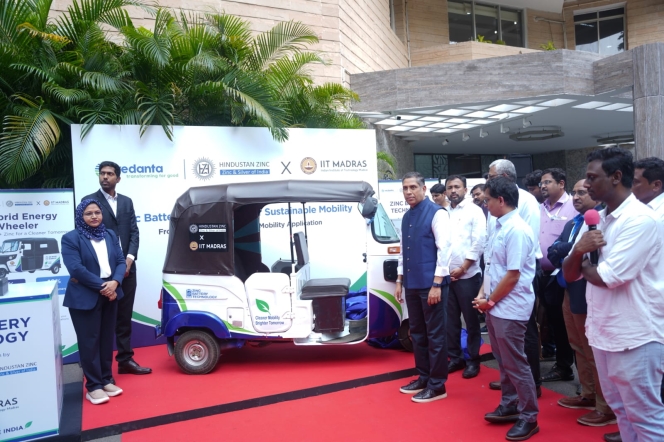
Hindustan Zinc, in collaboration with the Indian Institute of Technology Madras (IIT Madras), has unveiled a three-wheeler prototype fitted with an approximately 1 kWh zinc-air battery acting as a range extender.
The partners presented the prototype during the IIT Madras Energy Summit 2026 in the presence of Praveen Chakravarthy, Member of Parliament (Rajya Sabha), Amarendu Prakash, CEO and Whole-time Director, Hindustan Zinc, IIT Madras Dean (ICSR) Prof. Manu Santhanam and project lead Dr. Aravind Kumar Chandiran from the Department of Chemical Engineering.
Initiated in 2024, the research partnership has progressed from laboratory testing to vehicle demonstration under Hindustan Zinc's HZL 2.0 growth strategy. The vehicle utilises a dual-battery architecture in which the zinc-air unit supplies nearly 10 percent of the vehicle's energy requirements during operation, while a lithium-ion battery handles acceleration and power demands. Operating with a water-based electrolyte, zinc and oxygen from the air, the technology leverages India's zinc reserves to advance energy storage capabilities.
Amarendu Prakash said, “At Hindustan Zinc, we are constantly exploring opportunities to expand the applications of zinc and unlock greater value from this versatile metal. With zinc being abundantly available in India, there is an opportunity to explore indigenous energy storage solutions that can contribute to the vision of Viksit Bharat. Our collaboration with IIT Madras reflects our commitment to translating scientific research into practical applications, creating new demand avenues for zinc and strengthening its role in the global clean energy transition.”
Prof. V. Kamakoti, Director, IIT Madras, said, “Energy is the major focus of discussion globally, be it artificial intelligence, agriculture all the way to advanced manufacturing. Ensuring generation, storage and distribution of energy from different sources, specifically the renewable ones is the most important topic for research, development and commercialisation. Our collaboration with Hindustan Zinc is yet another important effort towards this goal.”
- XPENG
- Next Generation Pilot
- Tesla
- Autonomous Lab
- Paris Motor Show
- XPENG VLA 2.0
- United Nations Economic Commission for Europe
- He Xiaopeng
- Romain Caubet
XPENG Launches Public ADAS Test Rides In Paris Ahead Of 2027 Rollout
- By MT Bureau
- November 24, 2026
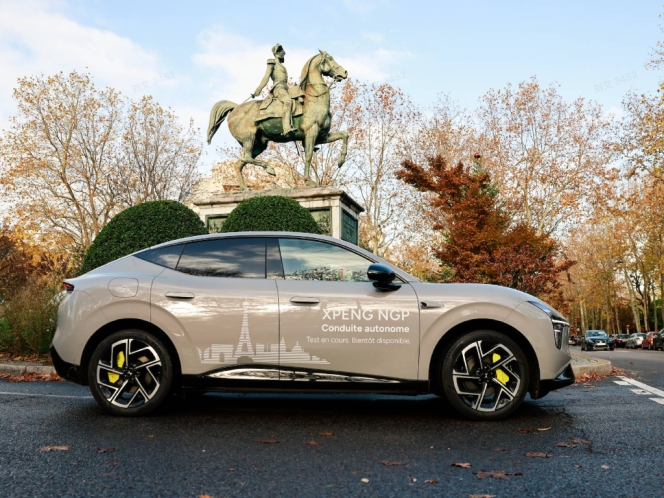
Chinese automotive and technology company XPENG has launched public test rides for its Next Generation Pilot (NGP) driver-assistance system at its retail store at 10 boulevard Gouvion-Saint-Cyr in Paris, becoming the first automaker from China to offer such trials from a retail location in Europe.
Following its participation alongside Tesla in the Autonomous Lab programme at the 2026 Paris Motor Show, the initiative allows customers to book drives in city traffic and intersections while the company conducts testing and localisation ahead of a rollout planned for 2027, subject to regulatory approvals and market readiness.
Powered by XPENG's VLA 2.0 architecture, the NGP system sits within a technology stack that includes Turing AI chips, world foundation models and integrated software and hardware across electric vehicles, robotaxis and robots. Alongside retail demonstrations, the Guangzhou-headquartered automaker participates in automated driving standards as OICA Secretary for the United Nations Economic Commission for Europe (UNECE) TF-ESRI taskforce.
He Xiaopeng, Chairman and CEO, XPENG, said, “Our mission is to bring Physical AI into everyday life and make advanced intelligent driving accessible to users worldwide. At the Paris Motor Show, many people asked when they could experience our technology themselves. Today, we are taking that next step. For us, this is not just about showcasing technology, but about understanding how people experience it in the real world. Backed by our full-stack R&D and continuous localisation efforts, we are committed to listening to European customers, adapting our technology to their needs, and working towards safer, smarter and more seamless mobility experiences. This is what ‘In Europe, For Europe, With Europe’ means to us.”
Romain Caubet, Country Manager, XPENG in France, said, “At the Paris Motor Show, we introduced European audiences to our advanced driving assistance technology through real-world demonstrations. Today, we are bringing that experience closer to customers through our Paris store. Paris offers a unique and challenging urban driving environment, making it an ideal location for people to experience the technology firsthand. We look forward to hearing their feedback as we continue to develop our intelligent driving experience for European customers.”
L&T Technology Services Launches SDVault.ai Toolchain For Software-Defined Vehicles
- By MT Bureau
- November 23, 2026
Bengaluru-headquartered engineering R&D company L&T Technology Services (LTTS) has introduced SDVault.ai, an engineering and assurance toolchain built on its EIOne platform to support automotive original equipment manufacturers and Tier-1 suppliers in developing, integrating and validating software-defined vehicles.
The platform is supported by 15 patent filings and operates across 12 engineering domains spanning requirements, system and electrical/electronic architecture, safety, cybersecurity, process assurance, software and code intelligence, verification, embedded debugging, virtual electronic control unit validation, trace and network analysis, root-cause intelligence and regression and release assurance.
Combining more than 250 artificial intelligence agents with rule-based automation, SDVault.ai connects requirements and architecture with code, tests, failures, actions and release evidence across the V-cycle while keeping engineers in control of decisions, verification and certification.
The platform can be deployed end-to-end or alongside existing toolchains within customer-controlled environments, with pilots demonstrating 30 to 40 per cent capacity for workload absorption and reducing tasks such as ticket triage from approximately four hours to 10 minutes.
Amit Chadha, CEO and MD, L&T Technology Services and NASSCOM Executive Council Member, said, “Software-defined vehicles are dramatically increasing the complexity of automotive engineering. AI can help, but in safety-critical engineering, AI alone is not enough. It requires deterministic engineering, domain knowledge, traceability and engineers firmly in control. SDVault.ai brings these together as Engineering Intelligence across the SDV V-cycle, connecting requirements, architecture, software, verification and evidence. It gives OEMs and Tier-1 suppliers a practical path to engineer more software, validate it with greater confidence and take more vehicle programs to production with the teams they already have.”
Comments (0)
ADD COMMENT