

Ultraviolette Reworks Tesseract E-Scooter With 100V Architecture, Launch Pushed To January 2027
- By MT Bureau
- May 27, 2026
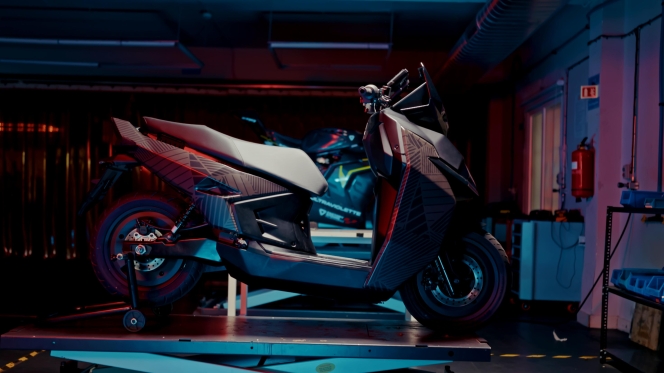
Bengaluru-based electric two-wheeler manufacturer Ultraviolette Automotive has announced a major engineering pivot for its upcoming Tesseract e-scooter, transitioning the vehicle to a new 100V high-voltage powertrain architecture.
This shift, it claims, makes it India’s first electric scooter built on a 100V platform. To accommodate these extensive technical re-engineering cycles and subsequent validation testing, the official commercial launch has now been pushed to January 2027.
The technical overhaul follows a public roadshow across 30 Indian cities, where the company said it gathered direct consumer feedback from prospective buyers. Ultraviolette has received over 70,000 bookings for the Tesseract since its initial conceptual reveal.
The transition from a conventional 60V setup to the 100V platform was driven by the challenge of managing high current flow and exponential heat generation while chasing performance targets. The production-spec Tesseract is equipped with a 15kW peak power electric motor, delivering roughly three times the power output of mainstream electric scooters and mimicking the performance metrics of a 200–250cc combustion engine.
The production-spec Tesseract is scheduled to enter early assembly and tool-up phases by the end of 2026. Production will be handled at the company's upcoming manufacturing plant, which is set to boost Ultraviolette’s localised production capabilities from 60,000 units annually to 150,000 units to support the higher volume requirements of its mass-market scooter line. The company is targeting initial retail distribution and customer deliveries within the first quarter of 2027, with base prices projected to start around INR 145,000 (ex-showroom).
Narayan Subramaniam, CEO and Co-Founder, Ultraviolette, said, “Building the Tesseract has been an incredibly ambitious and challenging journey for us. As we pushed the platform further through development and validation, it became evident that achieving the benchmarks we had set for ourselves required additional engineering and refinement – especially on the ride ergonomics and radical redesign of the battery architecture. While this extends our launch timeline, it ensures that every Tesseract customer receives a scooter that is not only future-ready but embodies the Ultraviolette DNA of performance, technology, and reliability.”
Niraj Rajmohan, CTO and Co-Founder, Ultraviolette, added, “From the very beginning, the vision for the Tesseract was to create a scooter that would redefine benchmarks for the industry. Delivering on the performance and technology promises we made, while staying true to the Ultraviolette DNA, required us to rethink and evolve the platform significantly. The transition to a 100V architecture is a major step in that direction, enabling higher levels of power delivery, load carrying capability, and efficiency. Every engineering decision we have made on the Tesseract has been guided by our commitment to deliver a product that sets a new standard for mobility- in India and globally.”
VinFast Signs Letters of Intent With Over 50 Two-Wheeler Dealers In India
- By MT Bureau
- October 08, 2026
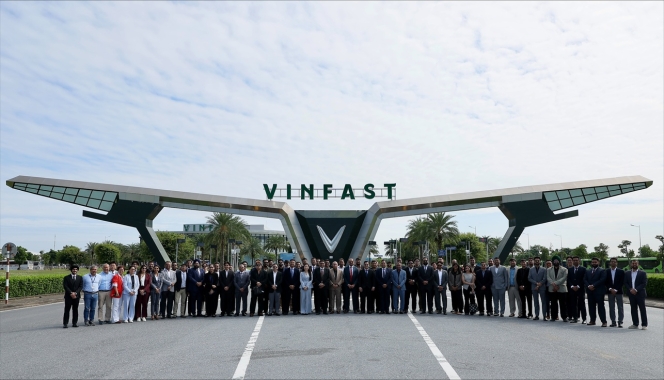
Vietnamese automotive company VinFast has signed Letters of Intent (LoI) with its first group of over 50 e-motorcycle dealer partners in India, establishing a distribution footprint across 15 states and 34 cities. The agreement was finalised at VinFast’s manufacturing facility in Hai Phong, Vietnam, during a delegation visit by Indian retail partners.
As per the terms, VinFast and its retail partners will open showrooms in locations including Delhi NCR, Rajasthan, Punjab, Madhya Pradesh, Chhattisgarh, Uttar Pradesh, Maharashtra, Gujarat, Karnataka, Telangana, Tamil Nadu, Kerala, Andhra Pradesh, West Bengal and Odisha. The initial expansion target focuses on commercial centres with high two-wheeler adoption rates as part of the manufacturer's network setup.
Vo Thi Cam Tu, Managing Director of VinFast E-Scooters Overseas Market, said, "India is one of the most important markets in VinFast's global growth story, and this partnership reflects the scale of ambition we hold for the region. As we expand our presence across markets worldwide, India stands out for its scale, its growing demand for electric mobility, and the opportunity it offers to redefine mobility. This LoI signing demonstrates our long-term commitment to India, as well as our expectations and confidence in the vast scale and potential of the market."
Anurag Saxena, Chief Executive Officer of VinFast India E-Scooters, said, "Partnering with more than 50 dealer partners across 15 states and territories and 34 cities marks the beginning of our journey to bring VinFast e-motorcycles across India. Alongside, we are also building charging infrastructure and strengthening after-sales services to ensure that customers across these locations receive the support they need throughout their ownership journey."
The company entered the Indian market in 2025 with electric car manufacturing and distribution operations. The latest agreement represents VinFast's first dedicated retail network for electric two-wheelers in India, where two-wheeler registrations reached 21.41 million units in fiscal year 2025-2026, with electric models accounting for 6.54 per cent of total sales.
Honda Motorcycle & Scooter India Launches XR300 L A And XR300 Rally Motorcycles At INR 183,000
- By MT Bureau
- October 07, 2026
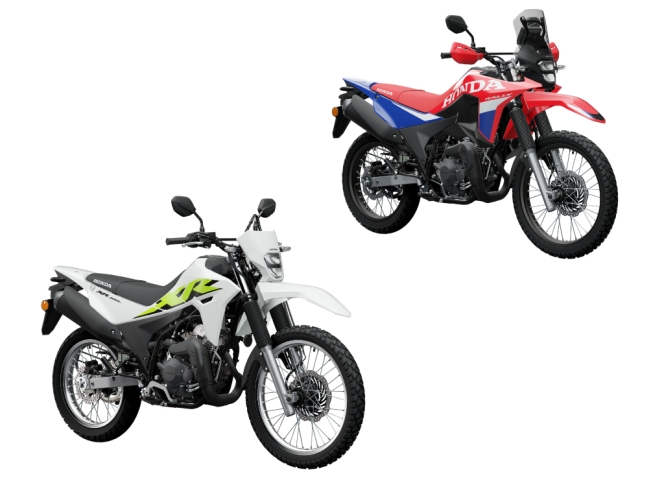
Honda Motorcycle & Scooter India, one of the leading two-wheeler manufacturers in the country, has announced pricing and opened bookings for the Honda XR300 L and Honda XR300 Rally. The announcement follows the initial unveiling of both models in July 2026 as part of the company's product expansion plans.
The XR300 L is priced at INR 183,000 ex-showroom Bengaluru, while the XR300 Rally is priced at INR 208,000 ex-showroom Bengaluru. Effective from 5 October 2026, bookings for both models have opened across the manufacturer's BigWing dealership network and online platform for a reservation amount of INR 5,000.
Both motorcycles are powered by a 293.5cc air-cooled engine equipped with an oil cooler; both variants come with torque control systems, rear suspension setups, front and rear disc brakes, switchable dual-channel ABS and an assist slipper clutch.
The XR300 L is designed for mixed city and off-road use and is offered in Extreme Red and Shasta White colour options. The XR300 Rally features bodywork designed for wind protection during long-distance riding, along with a TFT instrument cluster with smartphone connectivity.
The Rally variant is available in Extreme Red and True Black options. Both models form part of the manufacturer's domestic production initiative for local and export markets.
Triumph Motorcycles Introduces Bonneville T40, T40 Black And T4 Models In India
- By MT Bureau
- October 06, 2026
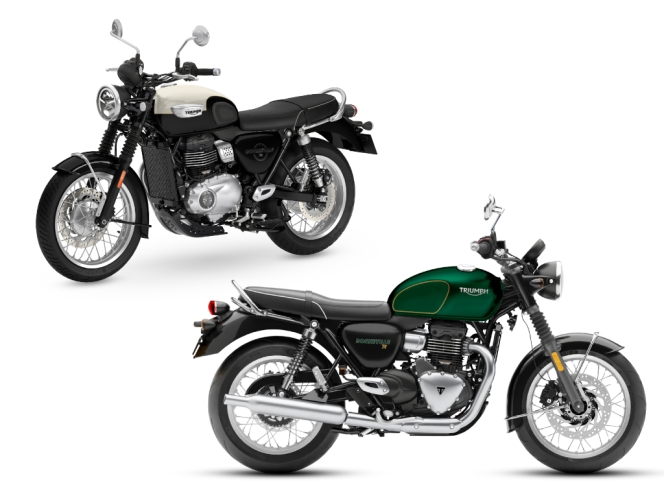
Triumph Motorcycles, one of the leading premium motorcycle manufacturers, has expanded its lineup in India with the launch of the Bonneville T40, T40 Black and T4 models, with pricing starting at INR 279,999 ex-showroom, Delhi, while the latter is priced at INR 254,999 ex-showroom, Delhi.
The new models feature traditional styling elements, including a teardrop fuel tank, round headlight, twin rear shock absorbers and spoked wheels with aluminium rims. The motorcycles are available in two-tone schemes with hand-painted coach lining and peashooter silencers. The bikes offer an accessible ergonomic setup, featuring a low seat height that can be reduced to 770 millimetres with an accessory seat.
All three variants are powered by a 350cc iteration of Triumph's TR Series engine. The engine produces 29 PS of power at 7,000 rpm and 31 Nm of torque at 5,500 rpm, tuned to deliver low-end torque and a distinct exhaust note.
The T40 and T40 Black feature a four-inch circular TFT instrument display with smartphone connectivity, including map navigation, phone and music controls. The models also come equipped with five ride modes, cruise control, cornering ABS and cornering traction control. The Bonneville T4 includes a colour LCD with turn-by-turn navigation, selectable ride modes, and dual-channel ABS.
Steve Sargent, Chief Product Officer, Triumph Motorcycles, said, “The Bonneville is one of the most significant motorcycles in Triumph's history, so introducing a new model carrying that name comes with a responsibility to get it right. From the outset, our ambition was not simply to create a smaller Bonneville, but to create a motorcycle that delivers the style, character and ownership experience riders expect from a genuine Bonneville. Bringing that experience to more riders is strategically important for Triumph, particularly as lower-capacity motorcycle categories continue to grow around the world."
"Working closely with Bajaj, we challenged ourselves to retain the details and qualities that make a Bonneville special, from the proportions and finish to traditional touches such as hand-painted coach lining, while also introducing a level of technology and rider-focused innovation not previously seen in this category. The result is a motorcycle that stays true to the values that have defined the Bonneville for generations while opening the experience to even more riders.” Sargent added.
The company has begun online bookings for the motorcycles starting 7 October 2026. Deliveries for the Bonneville T40 and T40 Black are scheduled to begin in the second week of November 2026, while deliveries for the Bonneville T4 will commence in the second week of January 2027.
Aprilia India Introduces SXR GT Scooter Lineup Starting At INR 109,999
- By MT Bureau
- October 06, 2026
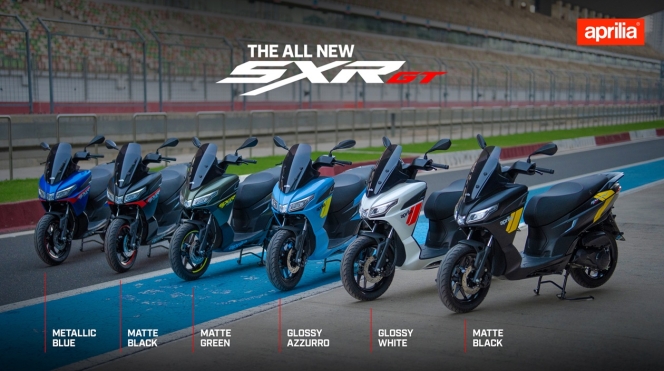
Aprilia India has launched its SXR GT scooter lineup, introducing the SXR GT 125 hp-e and SXR GT 175 hp-e models to expand its product offerings in the country. The SXR GT 125 hp-e is priced at an introductory rate of INR 109,999 ex-showroom, Maharashtra, while the SXR GT 175 hp-e is priced at INR 129,999 ex-showroom, Maharashtra.
The scooters are powered by air-cooled single-cylinder engines. The 124.45 cc engine produces 7.8 kW of power at 7,400 rpm and 10.4 Nm of torque at 6,200 rpm, while the 174.7 cc engine delivers 9.76 kW at 7,200 rpm and 14.14 Nm of torque at 6,000 rpm.
Both scooters feature three valves per cylinder, electronic fuel injection, electric starting, and compliance with BSVI OBD II Stage B regulations and E20 fuel blends. The chassis setup incorporates 14-inch wheels fitted to both models.
Suspension is handled by telescopic front forks and a dual-effect hydraulic shock absorber with five-position adjustability at the rear. Braking relies on a 220 mm front disc brake paired with a 140 mm rear drum brake, with the 125 cc variant utilising a combined braking system and the 175 cc variant employing an anti-lock braking system.
The SXR GT 125 hp-e is available in Matte Black, Glossy Azzurro, and Glossy White colour finishes, while the SXR GT 175 hp-e comes in Metallic Blue, Matte Black and Matte Green. Both models have gone on sale across Aprilia dealerships in India.

Comments (0)
ADD COMMENT