


MT Bureau
Rico Auto Industries Limited, the aftermarket division of the leading integrated supplier of automotive components and assemblies, has introduced a new spoof-proof packaging to contain spurious parts. The company that is involved right from design and development in making dies and moulds, manufactures automotive components in ferrous and aluminium machined castings. In 2017 it entered the aftermarket. Spurious products with almost look alike packaging are costing companies a great deal of money and goodwill.

“We have developed a brand new packaging with a phylogenic effect on the whole box but not on the product. Once the box is opened the consumer can ask the retailer to prove the authenticity by putting a screen on the open Lid of the box. Before retailers use to refuse to open the box as there is a barcode on each box that gets distorted by opening the box, but now there are several measures on the box itself to prove the originality of the product,” Abhishek Kulshrestha, Vice President, Rico Auto Industries, said.
After the introduction of GST in July 2017 Rico was confident about a fair playing field and introduced nine new products. Sales increased from INR 100 million to INR 250 million in about 18 months. The company hopes to close 2019-20 fiscal year at around INR 400-500 million despite the slowdown. On the reason that compelled Rico to go for such a packaging he said, “Our market research made us realize that there are many spurious products in the market with the same brand name; this led us to develop a new spoof-proof packaging for our products.”
“We have a policy of launching new product every quarter either for two-wheelers, three-Wheelers or four-wheelers. This quarter we are launching paper plate & paper clutch assemblies for two-wheelers, next quarter we will be launching a product for four-wheelers and till next FY we are also planning to launch a few products for the commercial vehicles market as well. This modus operandi of launching a new product every quarter has added well to our inventory. As of today we have over 500 products for two-wheelers, 100-plus products for four-wheelers, and over 75 products for three-wheelers,” he said.
Rico will be conducting awareness campaigns throughout the country among the mechanics and distributors. Earlier there were hardly any safety features on the box to differentiate between spurious and original products. “Now there are phylogenic effects on the box, newly developed design screen recognition method and on top of it we have developed an all-new QR code method to safeguard the interest of distributors as well. This gives confidence to our distributors in being the only distributor of ‘Original’ Rico products in their territory,” Kulshrestha said.
Rico is optimistic about the increasing share in the components aftermarket estimated to grow to INR 800 billion by 2025. “This growing aftermarket will help our market share as well. We are growing every year and we expect to reach a turnover of INR 1 billion by the next financial year,” he said.
About the short term and long term plans of Rico, Kulshrestha said, “Our short-term plan is to grow gradually in the market and explore new ideas to increase our sales. We are already running a boost initiative programme for our distributors to encourage them. The response is overwhelming even in the phase of an economic slowdown, if we talk about a long-term plan the vision is as clean as a windscreen, we tend to take Rico Auto Industry - After Market division to the new heights and on a successful path of becoming the pioneers in the industry.” (MT)
Cars24 Records 750 Vehicle Deliveries On Opening Day Of Navratri
- By MT Bureau
- October 12, 2026
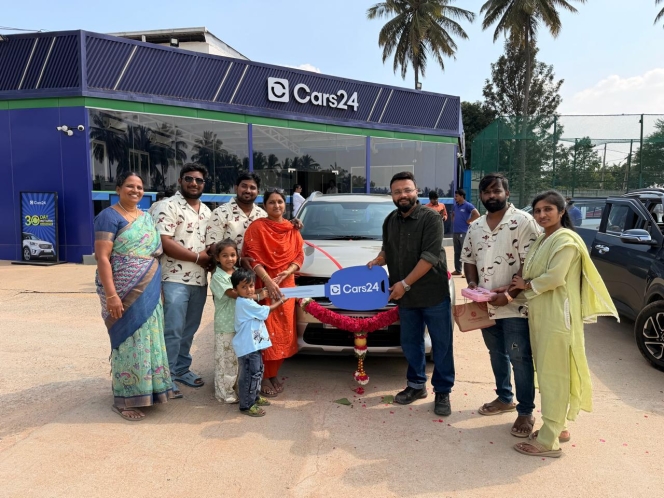
Cars24, a leading used car platform, has announced that it delivered 750 vehicles on 11 October, marking the first day of Navratri. The delivery volume represents a 58 percent increase compared to the same festival date in the previous year and 5x the volume of a standard Sunday transaction level.
Interestingly, first-time buyers accounted for 70 percent of total vehicle deliveries, with buyer ages ranging between 19 and 76 years. The platform recorded over 5 million user sessions on the same day for non-transactional vehicle lifecycle services, including insurance renewals, traffic fine settlements, Pollution Under Control Certificate checks and FASTag recharges.
More than 55 percent of delivered vehicles were processed through financing agreements. Sales registered under rural Regional Transport Offices grew at a faster rate than urban equivalents, accounting for over 40 percent of total vehicle sales, while 28 percent of deliveries expanded into new pin codes, including locations in Bhopal, Karnal, Visakhapatnam and Dehradun.
Petrol remained the primary fuel choice by sales volume, while CNG models achieved the highest growth rate alongside hybrid powertrains. SUVs recorded the highest volume expansion among body styles, led by models including the Tata Nexon and Punch.
Maruti Suzuki India models comprised over 40 percent of total vehicles sold, while automatic transmission variants accounted for one in three sales. Repeat customers generated over two-thirds of the day's platform transactions across sales and vehicle maintenance services.
Vikram Chopra, Founder, Cars24, said, "Navratri is when India brings home a new car, and yesterday 750 families did that with us. But what stayed with me was everything else on the dashboard. People cleared challans, renewed insurance and made sure their car was ready for the season. A car isn’t owned well on the day it’s bought. It’s owned well every year after. More than two-thirds of yesterday’s transactions came from owners who had turned to Cars24 before, and that tells us we’re becoming that place for them."
The sales performance on the opening day of Navratri provides an indicator of consumer demand trends, financing adoption, and regional market penetration across India's automotive sector ahead of Dussehra and Diwali.
Ola Electric Hosts 150 Retail Partners At Initial Dealer Day Event
- By MT Bureau
- October 10, 2026
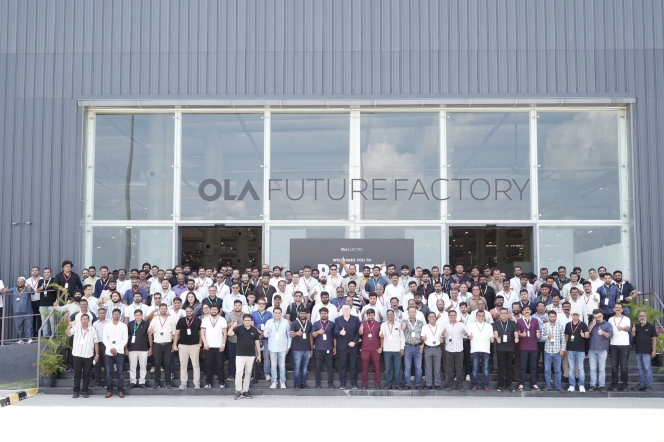
Bengaluru-based electric vehicle maker Ola Electric hosted around 150 dealer partners at its Giga Factory and Future Factory facilities for its inaugural Dealer Day event.
The gathering brought together current and incoming retail partners from across India to inspect manufacturing operations, battery pack assembly lines and motor production facilities, as well as to meet with company executives.
The event follows Ola Electric's decision in August 2026 to transition from an exclusively direct-to-consumer, company-owned store framework – used since 2021 – to a franchise retail model.
Under the revised distribution structure, company-owned locations will function as brand experience centres, while dealer partners manage localised vehicle sales and aftersales service operations supported by the manufacturer's existing user base.
The first tranche of franchise locations opened across seven states, including Rajasthan, Tamil Nadu, Maharashtra, Bihar, Telangana, Uttar Pradesh, and Madhya Pradesh.
To support the network restructuring, Ola Electric appointed former Hyundai Motor India President BVR Subbu as Senior Advisor in August 2026 to oversee partner integration and retail operations.
Trev Mobility To Raise $2 Million For EV Fleet Expansion
- By MT Bureau
- October 07, 2026
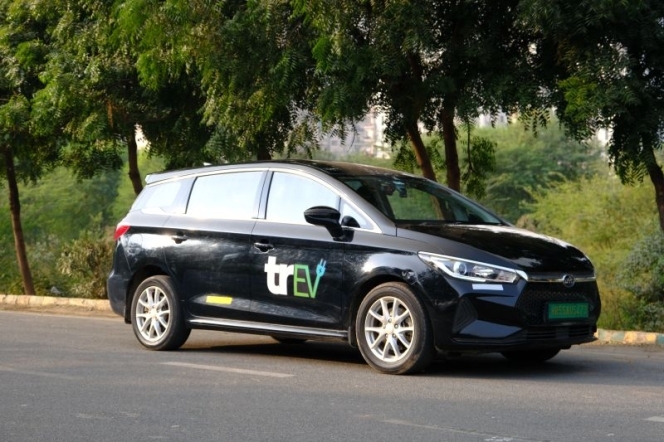
Electric mobility startup Trev Mobility plans to raise USD 2 million in its upcoming funding round to expand its fleet, enter new geographic markets and develop technology and operational infrastructure.
At present, the company operates a fleet of 105 EVs and plans to expand to 300 vehicles by the end of FY2027. The business targets a fleet size of 2,500 electric vehicles by 2031 through expansion across metropolitan regions and selected Tier-2 locations.
Trev Mobility previously raised INR 35 million from service users and reports progress toward PAT positivity at an annualised revenue run rate of approximately INR 150 million.
Naveen Gupta, Founder, Trev Mobility, said, "We have built Trev around a very clear customer need a reliable, premium and professionally managed mobility experience. Having grown from two vehicles to over 100, our next phase is about taking this model to more markets while maintaining the experience that differentiates us. We are looking to raise USD 2 million to accelerate that journey."
The company operates a direct chauffeur model rather than an aggregator structure, leasing approximately 90 percent of its fleet through financial leases while managing vehicle maintenance internally.
Its fleet includes electric models from MG and BYD, while driver safety technology includes artificial intelligence (AI) cameras to monitor driver fatigue, driving style and seatbelt usage. Chauffeurs are employed on fixed salary structures with performance incentives and insurance coverage.
"We are not trying to compete for every ride. There is a distinct segment of customers for whom the quality of the car, chauffeur, safety and overall experience matters significantly. We believe premium electric mobility can become a category, and our focus is on building Trev as a strong player in that space," Gupta added.
Geographic expansion plans target operational launches in Bengaluru and Mumbai through owned operations, alongside asset-light partnerships to support scaling across urban and Tier-2 markets.
Ayvens Outlines 2029 Strategic Plan Targeting Fleet Growth And Efficiency Gains
- By MT Bureau
- October 06, 2026
Ayvens, a global sustainable mobility and fleet management company, has announced its 2029 strategic plan, outlining targets for fleet expansion, operational efficiency improvements and service diversification through 2029.
The company projects growth in its funded fleet of at least 3 percent between 2026 and 2029, alongside a target to lower leased fleet carbon dioxide emissions from 101g/km in 2025 to between 75g/km and 85g/km by 2029.
Under the growth pillar of the strategy, Ayvens plans to expand its retail segment fleet by 15 percent over the 2026–2029 period to reach over 900,000 vehicles, up from 780,000 vehicles in 2026.
The light commercial vehicle segment is targeted to grow by 10 percent to exceed 580,000 vehicles by 2029. To support service margin growth, the company aims to increase insurance and damage cover penetration from 53 percent in 2026 to 56 percent in 2029, while expanding its electric vehicle charging solution, Ayvens Power, across 15 countries.
Operational plans target an improvement in the cost-to-income ratio from approximately 53 per cent in 2026 to around 49 percent in 2029. The company intends to achieve a 30 percent efficiency gain across eight core processes in commercial, finance, and operations functions through artificial intelligence automation.
Furthermore, Ayvens plans to reduce net spend on its EUR 2.6 billion service cost base by approximately 2 percent through sourcing adjustments and cost control measures across its 3.1 million vehicle fleet. IT intensity ratio is projected to drop from approximately 15 percent to around 12 percent.
In the used car leasing market, Ayvens projects a 13 percent compound annual growth rate between 2026 and 2029, aiming for a fleet exceeding 100,000 vehicles. Financial guidance for the 2027–2029 period projects earning assets growth of approximately 10 percent between December 2026 and December 2029.
Annual funding targets include retail deposit net collections of EUR 1 billion to EUR 2 billion, securitisation issuances of EUR 1 billion to EUR 2 billion, and bond issuances of EUR 2 billion to EUR 3 billion.
Philippe de Rovira, CEO, Ayvens, said, “I am pleased to share today Ayvens 2029 strategic plan. As the execution of the PowerUP 2026 plan is about to reach its successful conclusion with the integration of ALD and LeasePlan and the delivery of strong financial results, Ayvens will now enter into a new development phase based on resuming profitable growth and putting operational excellence at the heart of all our processes and actions. The execution of this strategic and financial roadmap will lead to strong value creation for all stakeholders and upgraded financial targets, notably a Return on Tangible Equity in the range of 14 percent to 16 percent. I would like to thank our employees for their unwavering commitment and professionalism to better serve our customers every day.”



Comments (0)
ADD COMMENT