

ZF Inaugurates First ZF Pro Tech Plus Workshop In New Delhi
- By MT Bureau
- February 21, 2025
![ZF [pro]Tech plus](https://motoring-trends.com/uploads/article/664_0_crop_100/zf_protech_key_visual_expert_oe_service_campaign_cmyk_201912.jpg)
German tier 1 supplier ZF Group has inaugurated its India first ZF [pro]Tech plus workshop in New Delhi. The new workshop is part of ZF Aftermarket which has a legacy of over 40 years. The ZF [pro]Tech has been empowering workshops by providing technical knowledge, training and service data of OEMs.
The New Delhi workshop was inaugurated by Markus Wittig, Global Head of Business Line Passenger Car, ZF Aftermarket, and Vijay Khorgade, Head of Business Line Pass Car IMEA. Rolly Chadha, Head of European Motor Works and the owner of this workshop, led the inaugural celebration.
Markus Wittig, said, “I am very pleased with this launch of India’s first ZF [pro]Tech plus workshop. This reiterates our commitment and ambition in the Indian market. With this facility, we will be able to provide unparalleled support to our workshop partners, enhancing their capabilities and ensuring they are well-equipped to meet the evolving demands of the automotive industry in India. It also marks the start of a nationwide roll-out of our workshop concept in India.”
Vijay Khorgade, said, “For India, ZF Aftermarket is setting the benchmark for workshop expectations in terms of technology and quality. By offering technical know-how and training, we enable our partners to deliver exceptional service and support to their customers. As most of us know Indian automotive market is on the cusp of an evolution, and the ZF [pro]Tech plus concept enables workshops to keep pace with the new technologies and advances in mobility, making them relevant and ready for the future.”
Rolly Chadha, added, “We have been associated with ZF Group for several years now. As a legacy distributor, we are aware of the technology and quality ZF Aftermarket represents and we are thrilled to be part of ZF [pro]Tech plus network as the first-ever workshop. The comprehensive support and expertise provided by ZF Group will undoubtedly elevate our service standards and help us better serve our customers.”
Trev Mobility To Raise $2 Million For EV Fleet Expansion
- By MT Bureau
- October 07, 2026
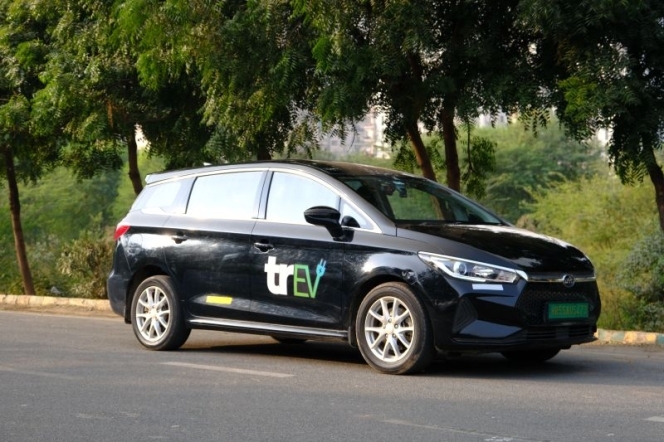
Electric mobility startup Trev Mobility plans to raise USD 2 million in its upcoming funding round to expand its fleet, enter new geographic markets and develop technology and operational infrastructure.
At present, the company operates a fleet of 105 EVs and plans to expand to 300 vehicles by the end of FY2027. The business targets a fleet size of 2,500 electric vehicles by 2031 through expansion across metropolitan regions and selected Tier-2 locations.
Trev Mobility previously raised INR 35 million from service users and reports progress toward PAT positivity at an annualised revenue run rate of approximately INR 150 million.
Naveen Gupta, Founder, Trev Mobility, said, "We have built Trev around a very clear customer need a reliable, premium and professionally managed mobility experience. Having grown from two vehicles to over 100, our next phase is about taking this model to more markets while maintaining the experience that differentiates us. We are looking to raise USD 2 million to accelerate that journey."
The company operates a direct chauffeur model rather than an aggregator structure, leasing approximately 90 percent of its fleet through financial leases while managing vehicle maintenance internally.
Its fleet includes electric models from MG and BYD, while driver safety technology includes artificial intelligence (AI) cameras to monitor driver fatigue, driving style and seatbelt usage. Chauffeurs are employed on fixed salary structures with performance incentives and insurance coverage.
"We are not trying to compete for every ride. There is a distinct segment of customers for whom the quality of the car, chauffeur, safety and overall experience matters significantly. We believe premium electric mobility can become a category, and our focus is on building Trev as a strong player in that space," Gupta added.
Geographic expansion plans target operational launches in Bengaluru and Mumbai through owned operations, alongside asset-light partnerships to support scaling across urban and Tier-2 markets.
Ayvens Outlines 2029 Strategic Plan Targeting Fleet Growth And Efficiency Gains
- By MT Bureau
- October 06, 2026
Ayvens, a global sustainable mobility and fleet management company, has announced its 2029 strategic plan, outlining targets for fleet expansion, operational efficiency improvements and service diversification through 2029.
The company projects growth in its funded fleet of at least 3 percent between 2026 and 2029, alongside a target to lower leased fleet carbon dioxide emissions from 101g/km in 2025 to between 75g/km and 85g/km by 2029.
Under the growth pillar of the strategy, Ayvens plans to expand its retail segment fleet by 15 percent over the 2026–2029 period to reach over 900,000 vehicles, up from 780,000 vehicles in 2026.
The light commercial vehicle segment is targeted to grow by 10 percent to exceed 580,000 vehicles by 2029. To support service margin growth, the company aims to increase insurance and damage cover penetration from 53 percent in 2026 to 56 percent in 2029, while expanding its electric vehicle charging solution, Ayvens Power, across 15 countries.
Operational plans target an improvement in the cost-to-income ratio from approximately 53 per cent in 2026 to around 49 percent in 2029. The company intends to achieve a 30 percent efficiency gain across eight core processes in commercial, finance, and operations functions through artificial intelligence automation.
Furthermore, Ayvens plans to reduce net spend on its EUR 2.6 billion service cost base by approximately 2 percent through sourcing adjustments and cost control measures across its 3.1 million vehicle fleet. IT intensity ratio is projected to drop from approximately 15 percent to around 12 percent.
In the used car leasing market, Ayvens projects a 13 percent compound annual growth rate between 2026 and 2029, aiming for a fleet exceeding 100,000 vehicles. Financial guidance for the 2027–2029 period projects earning assets growth of approximately 10 percent between December 2026 and December 2029.
Annual funding targets include retail deposit net collections of EUR 1 billion to EUR 2 billion, securitisation issuances of EUR 1 billion to EUR 2 billion, and bond issuances of EUR 2 billion to EUR 3 billion.
Philippe de Rovira, CEO, Ayvens, said, “I am pleased to share today Ayvens 2029 strategic plan. As the execution of the PowerUP 2026 plan is about to reach its successful conclusion with the integration of ALD and LeasePlan and the delivery of strong financial results, Ayvens will now enter into a new development phase based on resuming profitable growth and putting operational excellence at the heart of all our processes and actions. The execution of this strategic and financial roadmap will lead to strong value creation for all stakeholders and upgraded financial targets, notably a Return on Tangible Equity in the range of 14 percent to 16 percent. I would like to thank our employees for their unwavering commitment and professionalism to better serve our customers every day.”
- TVS Automobile Solutions
- TVS ASL
- TVS Mobility Group
- myTVS
- CE-Invests
- Crescent Enterprises
- Lingotto
- NAFA Sustainable Finance
- Badr Jafar
- R Dinesh
- Tushar Singhvi
- Ameya Prabhu
myTVS Raises INR 4.25 Billion In Series D Funding Led By CE-Invests
- By MT Bureau
- October 05, 2026
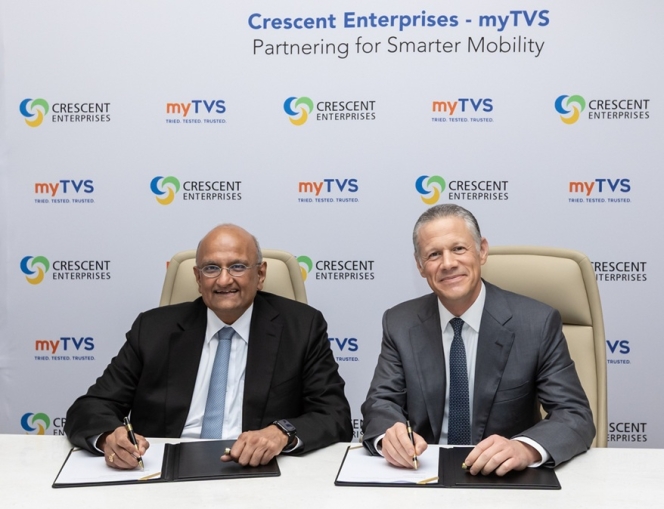
TVS Automobile Solutions (TVS ASL), part of the TVS Mobility Group and owner of the automotive aftermarket brand myTVS, has secured INR 4.25 billion in a Series D funding round led by CE-Invests, the strategic investment arm of UAE-based Crescent Enterprises.
The capital raise will support myTVS’ plans to invest in artificial intelligence (AI) and technology infrastructure to target a 25–35 percent near-term growth rate and prepare for eventual public-market readiness. The partnership also aims to expand the myTVS technology and service model into international markets, focusing initially on the Middle East and North Africa (MENA) region.
The company achieved EBITDA breakeven in FY2026. Prior to this round, myTVS had raised approximately INR 6.90 billion, including INR 2.03 billion from Lingotto in 2022 and INR 4.87 billion from Castrol in 2023. NAFA Sustainable Finance acted as the financial advisor to TVS ASL for the capital raise.
The myTVS platform integrates digital operations with physical service centers, supplying vehicle maintenance, parts, accessories, tyres, batteries, insurance and roadside assistance to retail customers and fleet operators across India.
Badr Jafar, CEO, Crescent Enterprises, said, "Built over generations of trade, enterprise and human connection, the UAE–India relationship is becoming ever more important – not only to both countries, but to economic growth across MENA, Asia and beyond. The strongest economic corridors carry more than capital: they move technology, ideas and operating expertise in both directions. When India’s scale, talent and innovation connect with the UAE’s capital, infrastructure and regional reach, each market becomes a platform for the other’s growth. That reciprocal model creates value far beyond either country and reflects principles that have long shaped Crescent Enterprises’ investment and partnership strategy."
R Dinesh, Director, TVS Automobile Solutions, said, "We are delighted to have CE-Invests as an investor. myTVS has scaled up its technology-led services and parts platform to serve the end customer directly and by working with various corporate partners and vehicle manufacturers in India. This investment is a further proof that this technology-led platform is capable of delivering a similar experience in other markets. This will further enable the company to scale up its operations in India and the MENA region and continue to maintain its profitable growth. This partnership will only further increase its rate of growth, and CE Invests is the perfect partner for the Middle East."
Tushar Singhvi, Deputy CEO and Head of Investments, Crescent Enterprises, said, "myTVS has demonstrated that an integrated, technology-enabled platform can bring meaningful improvements in service quality, transparency and vehicle uptime at scale. This investment fits squarely with CE-Invests’ strategy of backing established, well-governed businesses with strong fundamentals, proven operating models and the potential to expand across the MENA–Asia corridor. Alongside capital, we will bring market insight, commercial relationships and regional execution support to help myTVS establish a strong UAE presence and grow across MENA."
Ameya Prabhu, CEO, NAFA Group and Director at NAFA SF, said, "We are pleased to have advised TVS Automobile Solutions on this strategic capital raise and to have facilitated the partnership with CE-Invests. We believe this provides a strong platform for myTVS to accelerate its growth in India while exploring opportunities for expansion in the MENA region. We congratulate both teams on the successful transaction and look forward to seeing the partnership create significant value in the years ahead."
- Studds Accessories
- Warner Bros. Discovery Global Consumer Products
- Bugs Bunny
- Tweety
- Daffy Duck
- Taz
- Road Runner
- Wile E. Coyote
- Looney Tunes
- Sidhartha Bhushan Khurana
Studds Launches Raider Youth Looney Tunes Edition At INR 1,395
- By MT Bureau
- September 30, 2026
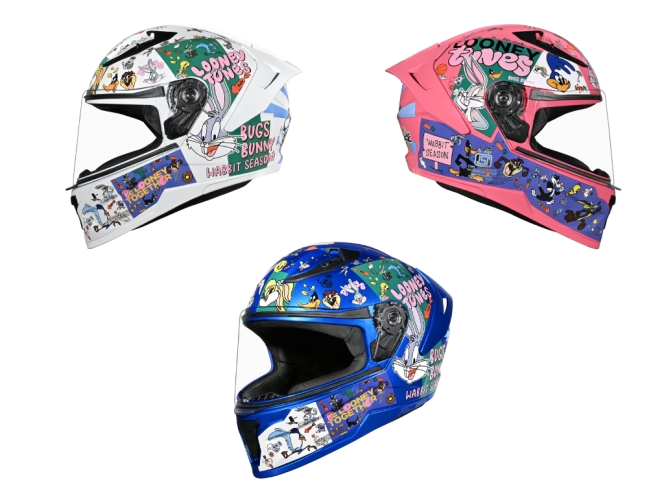
Studds Accessories, a leading two-wheeler helmet manufacturer, has launched the Raider Youth Looney Tunes Edition in collaboration with Warner Bros. Discovery Global Consumer Products at prices starting at INR 1,395.
The helmet features character graphics from the Looney Tunes franchise integrated onto Studds’ full-face youth helmet architecture.
The graphics incorporate characters including Bugs Bunny, Tweety, Daffy Duck, Taz, Road Runner and Wile E. Coyote alongside the Looney Tunes logo across the shell, rear, and chin-bar. The series is produced in six base colours: Blue, Baby Pink, Flame Blue, Pastel Green, White, and Black.
The helmet carries Bureau of Indian Standards (BIS/ISI) certification and is manufactured in XXS (520 mm) and XS (540 mm) sizes.
Sidhartha Bhushan Khurana, Managing Director, Studds Accessories, said, "For young riders and individuals with smaller head sizes, finding a helmet that balances uncompromised full-face safety with expressive design has historically been a challenge in the market. With the Raider Youth Looney Tunes Edition, our intent was to bridge that gap by integrating safety engineering with design philosophy that brings instant joy and nostalgia. This collaboration with Warner Bros. Discovery is not just about adding graphics, it is about making helmets that young riders are genuinely excited to wear every day, and at the same time are safe."
The base Raider Youth model was introduced in August 2026 for riders with smaller head dimensions. The Looney Tunes variant retains the mechanical specifications of the original helmet, including an acrylonitrile butadiene styrene (ABS) shell, expandable polystyrene (EPS) liner, top air exhaust ventilation, scratch-resistant quick-release visor, quick-release chin strap and micro-fibre lining.
Comments (0)
ADD COMMENT