

- VE Commercial Vehicles
- VECV
- Volvo Group
- Eicher Motors
- Jio-bp
- Reliance Industries
- bp
- Jio-bp pulse
- Vinod Aggarwal
- Sarthak Behuria
VECV Partners Jio-bp For EV Charging Infra
- By MT Bureau
- September 04, 2025
VE Commercial Vehicles Limited (VECV), a joint venture between the Volvo Group and Eicher Motors, has inked a Memorandum of Understanding (MoU) with Jio‑bp pulse to expand and streamline charging access for its electric commercial vehicle customers.
As part of the understanding, all Eicher Trucks and Buses’ EV customers will now get seamless access to Jio‑bp’s network of over 6,000 charging points across India.
Jio-bp, the fuel retail joint venture of Reliance Industries and bp, operates under the brand name of Jio-bp pulse in the electric mobility space, which has established itself as one of the largest and fastest growing EV charging networks in India.
The aim of the partnership is to accelerate the adoption of electric commercial vehicles and provide peace-of-mind to customers for charging network anxiety. Under the agreement, VECV has integrated public charging network discoverability directly on the My Eicher fleet management app, which provides CV customers seamless discovery on EV chargers around them.
Vinod Aggarwal, Managing Director and CEO, VECV, said, “The MoU with Jio‑bp pulse represents a major milestone in our journey to electrify trucking in India. By integrating Jio-bp pulse’s extensive charging network into our My Eicher app, we are resolving a critical barrier to electric fleet adoption by facilitating seamless access to high‑power chargers wherever our vehicles operate. The collaboration between VECV and Jio-bp pulse will accelerate the transition to zero‑emission logistics, ensuring our customers can confidently embrace electric mobility at scale.”
Sarthak Behuria, Chairman, Jio-bp, said, “Collaboration between Jio-bp and VECV represents a significant step forward in our vision to transform India’s mobility landscape. Electric mobility is a cornerstone of this transformation, and this partnership plays a pivotal role in electrifying the critical trucking sector and driving EV adoption among fleet operators. Every such alliance brings us closer to realizing the Government’s ambitious goal of widespread electric vehicle adoption across the country.”
Ultraviolette Raises $85 Million To Fuel Global EV Expansion
- By MT Bureau
- September 23, 2026
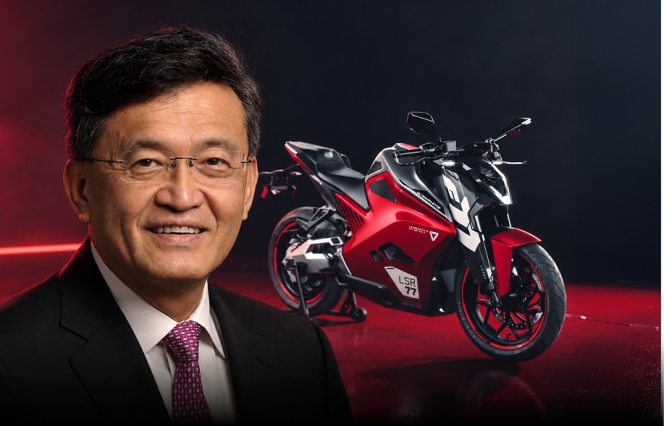
Ultraviolette has secured USD 85 million in a new funding round led by Yali Capital and TDK Ventures, with participation from Walden International Chairman Lip-Bu Tan (who also joins the company as an Advisor), along with existing and long-term investors.
The capital will be used to scale production of the F77 and X-47 models as well as the upcoming Tesseract and Shockwave while supporting development of next-generation global EV platforms. These platforms will leverage Ultraviolette's vertically integrated expertise in battery technology, power electronics, vehicle architecture and intelligent software.
The company aims to enter United States in 2027 and expand across Latin America and South-East Asia. Ultraviolette's technical capabilities span battery architectures from 48V to 400V, positioning it among the few global EV manufacturers with such in-house breadth, enabling platforms tailored to varied performance, range, thermal and packaging needs.
Lip-Bu Tan, Chairman, Walden International said, “What I really like about Ultraviolette is the combination of deep engineering expertise, strong IP and the willingness to take on genuinely difficult problems. They have built the technology from first principles and are focused on creating something that is truly differentiated for the long term.”
Ganapathy Subramaniam, Founding Managing Partner, Yali Capital, said, “India’s shift towards cleaner mobility will increasingly be driven by electric two-wheelers, given the scale of the segment. What attracted us to Ultraviolette is the depth of engineering the team has built in-house; from the battery, powertrain to software and radar and their focus on applying this technology to real rider needs, especially safety. Ultraviolette has taken the F77 from concept to the roads in India and Europe, and brought radar-based safety features into a production two-wheeler with the X-47. With the Tesseract, launching early next year, they will bring this engineering and safety focus to scooters and a much wider set of riders. This combination of deep technology, product focus and ambition gives us strong conviction in Ultraviolette, and we are proud to back them.”
Ravi Jain, Investment Director, TDK Ventures, said, "The adoption of electric two-wheelers can be accelerated by superior products powered by differentiated technology. We continue to believe that Ultraviolette is best positioned to catalyse this transition and build winning products for global markets."
Ultraviolette Founders Narayan Subramaniam & Niraj Rajmohan shared, “This funding round represents an important step in Ultraviolette’s evolution into a global electric mobility company. The conviction demonstrated by Yali Capital, TDK Ventures, Lip-Bu Tan and our long-term investors reinforces our vision of building a design and tech focused global brand out of India. This investment will enable us to scale manufacturing, accelerate the development of our future product platforms and deepen our presence across international markets. Our single-minded focus is about being a global leader in future mobility; electric vehicles that bring together uncompromising performance, future centric design and advanced technology.”
Kolkata Police puts 183 electric motorcycles into ERSS 112 fleet
- By Gaurav Nandi
- September 20, 2026
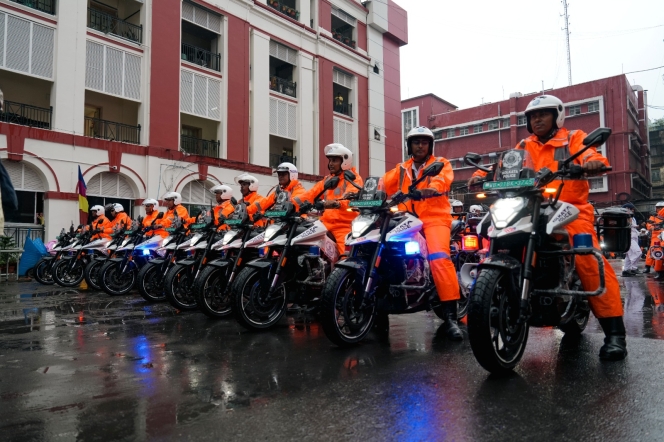
Kolkata Police is expanding its use of electric mobility for frontline operations by inducting 183 Ultraviolette X-47 Skyforce electric motorcycles into its fleet for emergency response and patrolling under the Emergency Response Support System (ERSS) 112.
The deployment, formally handed over at the Lalbazar Police Headquarters on Friday, is among the largest electric motorcycle deployments by the police force.
Of the 183 motorcycles, 60 have already been delivered with the remaining 123 expected to be inducted in phases later this year. The Deputy Commissioner of Police (Traffic), Sambhav Jain, said the pace of induction would also depend on Ultraviolette's manufacturing capacity.
The motorcycles will primarily respond to calls received through the police's dedicated 112 emergency helpline. When there are no emergency calls, they will be used for patrolling.
“There is an emergency response system with a dedicated toll-free helpline. When we receive calls, we will dispatch these motorcycles and they will respond,” the DCP said.
The deployment represents an extension of Kolkata Police's earlier experiment with electric four-wheelers. The force inducted electric cars around two years ago but their integration into the 112 response system was constrained by the availability of charging infrastructure.
According to the DCP, the charging ecosystem has since improved sufficiently to make a broader deployment of electric vehicles feasible.
The change could eventually enable Kolkata Police to bring electric four-wheelers into the emergency-response network as well.
The existing electric four-wheelers are primarily assigned to senior officers who are stationed at offices, where charging facilities are easier to provide.
The increasing availability of charging infrastructure on the road, however, is opening the possibility of using electric vehicles more extensively for field operations.
The force is also asking vehicle manufacturers supplying electric vehicles to provide charging infrastructure as part of the procurement arrangement. It is additionally planning solar-powered charging stations in the near future.
“We also request the companies from whom we are purchasing the vehicles to provide the charging infrastructure. And we are also planning some solar charging stations in the near future,” the DCP said.
The motorcycles supplied by Ultraviolette are X-47 Crossover Skyforce Patrol Variants, configured specifically for police duty. The motorcycles feature an augmented electronics architecture designed to accommodate equipment including sirens, hooters, a public-address system, LED blinkers, microphone and walkie-talkie holders, decals and side panniers.
The company said the motorcycles underwent testing before the handover and have been configured for day-to-day police operations in an urban environment.
The move comes as Kolkata Police seeks to modernise its mobility infrastructure while also addressing the recurring costs associated with conventional vehicles.
At the flagging-off ceremony, Commissioner of Police Ajay Kumar Nand said that the force was examining electric two-wheelers partly in the context of recurring expenditure on fuel and maintenance.
He also highlighted the potential environmental benefits of electric mobility in policing and said the motorcycles would support patrolling, rapid response and community outreach.
The Commissioner said the motorcycles were being introduced initially as an experiment and that the police could consider expanding electric two-wheeler deployment if the programme proves successful.
The monsoon will also provide an immediate real-world test of the vehicles. Nand noted that concerns had been raised about the operation of electric motorcycles during the rainy season, but said the vehicle manufacturer had assured the police that the motorcycle was IP-rated and that its battery packs were fully secured.
The motorcycles have been provided under a CSR initiative of West Bengal Power Development Corporation Limited WBPDCL.
Kolkata support network
The scale of the police deployment has also prompted Ultraviolette to strengthen its local service infrastructure. A company official said that it already operates three dealerships across Kolkata and Howrah and has established a new workshop specifically to support the police fleet.
Additional manpower and specialised technicians have been deployed to service the motorcycles, reflecting the operational requirement of supporting a large fleet that could potentially see significant utilisation across the city.
The police order also comes at the time when the company expands its presence in Kolkata. The official said it sold more than 50 motorcycles in the city in a single month recently and plans to add more showrooms.
For Kolkata Police, however, the significance of the 183-bike induction extends beyond the size of the order. By placing electric motorcycles directly into the 112 emergency-response network, the force is effectively testing whether electric two-wheelers can become part of the everyday operating infrastructure of urban policing and whether the availability of charging and service support can make that transition scalable.
- Mahindra Last Mile Mobility
- The Earthshot Prize 2026
- Prince William
- UDAY NXT
- Rajesh Jejurikar
- Suman Mishra
- Orsted
- Mahila Housing Trust
- AirQo
- Satellites on Fire
- Pula
- the City of Barcelona
- Bhutan
- Indigenous Desert Alliance
- Yellowstone to Yukon Conservation Initiative
- Zero Emission Maritime Buyers Alliance
- Niue Ocean Wide Trust
- PFAS-Free France
- South Korea Zero Waste Movement Network
- Mother Earth Foundation
Mahindra Last Mile Mobility Named Earthshot Prize 2026 Finalist
- By MT Bureau
- September 20, 2026
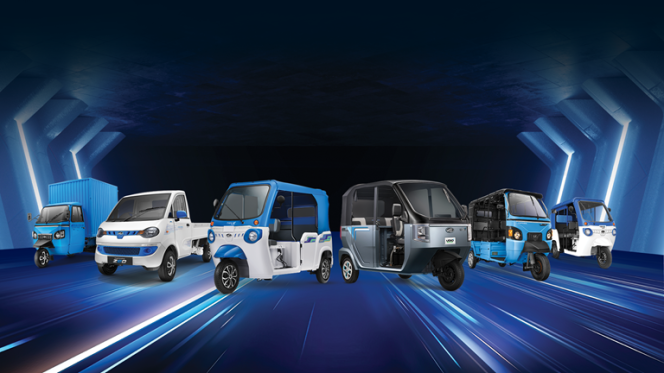
Mahindra Last Mile Mobility has been selected as one of 15 global finalists for The Earthshot Prize 2026, competing in the 'Clean Our Air' category. The company represents the sole automotive manufacturer and the only corporate entity among this year's finalists for the environmental award established by Prince William in 2020.
The selection recognises the deployment of electric three-wheelers and commercial vehicles across India.
Mahindra Last Mile Mobility has distributed more than 400,000 electric vehicles, which have accumulated over 9 billion kilometres of operation. The shift to electric drivetrains has offset approximately 185,000 metric tonnes of carbon dioxide emissions while lowering operating expenditures for commercial drivers, delivery operators, and small businesses. The company also operates support initiatives such as the UDAY NXT programme, providing accidental insurance and financial counselling to vehicle owners.
Rajesh Jejurikar, Executive Director and CEO of the Auto and Farm Sector, Mahindra & Mahindra, said, "Last-mile mobility can deliver environmental and social impact at scale. More than 4 lakh Mahindra electric vehicles on the road today are helping power 4 lakh livelihoods every day. For many of these customers, these vehicles are working assets that support their families and enable micro-entrepreneurship. Being named a Finalist for The Earthshot Prize recognises a model where cleaner mobility, customer prosperity and scale can go together, and strengthens our belief that solutions proven in India can have relevance across other markets."
Suman Mishra, Managing Director and CEO, Mahindra Last Mile Mobility, said, "For us, the impact of electric mobility is visible every day in the lives of the drivers and entrepreneurs who depend on these vehicles for their income. When electric becomes the better economic choice for the customer, cleaner mobility can grow much faster. We are seeing that combination of livelihood impact and environmental benefit at meaningful scale. The Earthshot Prize recognition encourages us to take this model further in India and beyond."
Commenting on the nomination, Prince William noted that Mahindra's operation represents ‘a practical solution that is already working at scale and changing the way people move around their cities.’
The 2026 finalist cohort includes international organisations, municipal bodies and non-profit groups, such as Orsted, Mahila Housing Trust, AirQo, Satellites on Fire, Pula, the City of Barcelona, Bhutan, Indigenous Desert Alliance, Yellowstone to Yukon Conservation Initiative, Zero Emission Maritime Buyers Alliance, Niue Ocean Wide Trust, PFAS-Free France, South Korea Zero Waste Movement Network and Mother Earth Foundation.
Five category winners will receive EUR 1 million each during The Earthshot Prize Summit and Awards ceremony, scheduled to take place in Mumbai on 17 November 2026.
Tata Power, Tata Passenger Electric Mobility Expand Charging Hub Network Across India
- By MT Bureau
- September 10, 2026
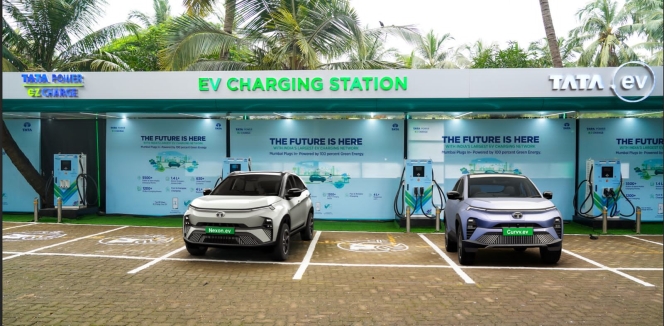
Tata Power and Tata Passenger Electric Mobility have expanded their co-branded charging network across four states, with 10 charging hubs logging over 70,000 charging sessions and 85,000 charging hours.
The infrastructure has delivered 2.7 megawatts of total power capacity, supporting over 7.5 million electric kilometres and offsetting 6,690 tonnes of carbon dioxide emissions.
The network spans Maharashtra, Telangana, Andhra Pradesh and Uttar Pradesh, operating 25 fast chargers and 56 charging guns with hub capacities ranging between 180 kilowatts and 600 kilowatts. The locations include four sites along the Yamuna Expressway between Greater Noida and Agra, three stations along the Hyderabad–Vijayawada corridor, one location on the Bengaluru–Tirupati route and one hub along the Pune–Bengaluru highway. Additional hubs operate within urban zones in Mumbai and Hyderabad.
The facility at The Leela near Mumbai Airport serves as the flagship site, providing 600 kilowatts of capacity across 16 charging guns, comprising six 60-kilowatt and two 120-kilowatt units. The location supports private vehicles, commercial taxis and fleet operations near transit corridors.
The installations form part of Tata Power's total footprint, which includes over 6,700 public and captive charging points, 250,000 home chargers and 1,200 bus chargers across 690 cities. The company aims to operate 10,000 public charging points and 750,000 home chargers by 2030, with hub management integrated into the Tata Power EZ Charge application.
Comments (0)
ADD COMMENT