

Cummins Unveils Advanced HELM Platforms, Hydrogen Fuel System and Natural Gas Engine
- By MT Bureau
- January 18, 2025
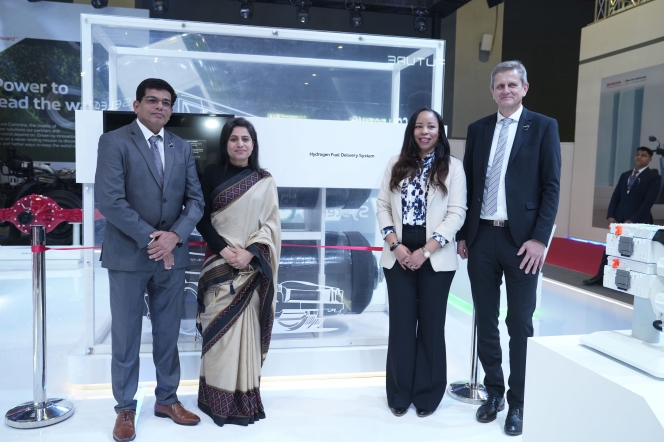
Cummins Group in India (“Cummins”) announced the launch of its next-generation HELM (Higher Efficiency, Lower emissions, Multiple fuels) engine platforms at the Bharat Mobility Global Expo 2025. Key highlights include the high-performance L10 engine, an advanced Hydrogen Fuel Delivery System (FDS) with Type IV on-vehicle storage vessels, and the innovative B6.7N natural gas engine.
These launches, showcased as part of an integrated powertrain concept, reinforce Cummins’ deep understanding of the Indian commercial vehicle market and its dedication to addressing both immediate needs and future environmental challenges.
Cummins HELM engine platforms represent a forward-thinking approach to powertrain technology, focusing on performance, efficiency, and sustainability. Offering fuel-type flexibility, they empower customers to select advanced diesel, natural gas, or hydrogen variants, catering to diverse operational requirements while achieving sustainability objectives.
Designed with a modular approach, the HELM platforms utilise a common base to produce multiple engine versions, each optimised for a specific fuel type. This innovation equips customers to meet evolving environmental regulations without sacrificing operational efficiency.
Next-Generation L10 Engine
Built on the 10-litre HELM platform, the L10 engine is engineered for high performance, supporting faster logistics, improved productivity, and reduced emissions. It complies with current BSVI emissions standards while being ready for future BSVII and Euro 7 regulations. This platform underscores Cummins’ technical expertise in delivering adaptable solutions for India’s dynamic regulatory environment.
Hydrogen Fuel Delivery System (FDS)
The advanced hydrogen FDS incorporates 350-bar and 700-bar fuel delivery systems alongside Type IV on-vehicle storage vessels. This innovation addresses a key challenge in adopting hydrogen-powered commercial vehicles, furthering India’s progress in establishing a robust hydrogen economy.
B6.7N Natural Gas Engine
The B6.7N engine offers diesel-equivalent performance with significantly lower carbon emissions. Designed for heavy-duty vehicles, it supports the adoption of CNG and LNG fuels without compromising on operational costs or reliability. This engine exemplifies Cummins’ commitment to enabling a seamless energy transition for its customers.
Cummins’ innovative offerings at Bharat Mobility Global Expo 2025 highlight its unwavering commitment to driving sustainable mobility solutions and empowering the Indian commercial vehicle industry to navigate the future of clean energy.
Unveiling the new products, Jane Beaman, Vice President – Global On-Highway and Pickup Business, Cummins Inc., said, “Our world is at a pivotal moment in its journey to lower emissions. In line with our Destination Zero™ strategy, we are committed to supporting industry- wide decarbonization through a portfolio of diverse power solutions. The products on display at Bharat Mobility Global Expo are testimony to our ability to deliver advanced low-and-reduced carbon technologies today, while innovating zero carbon solutions for tomorrow. These innovations not only future proof our customers’ businesses but also set the stage for the next era of smarter, cleaner, and integrated power.”
Nitin Jirafe, Managing Director, Tata Cummins Pvt. Ltd., and Head, Engine Business, Cummins India added, “At Cummins we have always believed in designing solutions that not only meet the needs of our customers but also contribute meaningfully to our country’s progress. The products launched today align with transformative Viksit Bharat and Make in India initiatives, while addressing the evolving needs of commercial vehicle industry. Collectively, these offerings will give our customers the power of choice, enabling them to select the right technology for their needs while supporting the economic and environmental aspirations of the nation.”
At its state-of-the-art pavilion in Hall 2, Booth 2, in Bharat Mandapam, Pragati Maidan, New Delhi, Cummins is showcasing the widest array of low and zero emission technologies for the CV industry. The display features advanced engines seamlessly integrated with next-generation components such as aftertreatment systems, automated manual transmission, axles and power electronics, all optimized for high power efficiency. Interactive exhibits at the booth offer insights into Cummins’ advanced technologies and their transformative impact on the transportation ecosystem.
Hexpol To Acquire 80% Stake In Turkish Compounder Symplast For Euro 54 Mln
- By MT News
- October 22, 2026
Hexpol, the Swedish polymer group, has agreed to acquire an 80 percent stake in Symplast A.Ş., a Turkish manufacturer of thermoplastic elastomer compounds, for Euro 54 million on a cash- and debt-free basis.
The deal will expand Hexpol’s thermoplastic compounding operations and strengthen its presence in Türkiye, where Symplast supplies customers in the automotive, construction, consumer and electronics industries. The acquisition is expected to close by the end of the first quarter of 2027, subject to customary closing conditions, including competition authority approval.
Symplast, headquartered in İzmir, was founded in 2013 by four shareholders: Selahattin Dülger, Ali Rıza Kır, Yaşar Kurtuluş and Fahri Tolga Sarıkahya. The company has annual sales of about Euro 34 million and employs 135 people.
Its operations include a manufacturing facility, headquarters and research and development centre in İzmir, a semi-finished materials facility in Poti, Georgia, and a sales office in Germany. The İzmir site has available capacity and room for expansion within its existing footprint.
Symplast makes engineered thermoplastic elastomers for applications including automotive weather seals, window and door systems, construction membranes, consumer products, cable sheathing and connectors. Its in-house research and laboratory capabilities support the development of formulations tailored to customers’ requirements.
Sarıkahya and Kır will continue to run the business as a subsidiary of Hexpol’s Thermoplastic Compounding division.
“The acquisition of Symplast is another important step in executing the growth strategy for our Thermoplastic Compounding business area. Symplast gives HEXPOL a strong position in Turkey, an attractive and strategically located manufacturing market with a well-developed automotive and construction industry,” says Henrik Elmin CEO and President of HEXPOL.
“Symplast brings strong formulation and application expertise, modern production capabilities and an entrepreneurial organization with a clear focus on customer service. The company is highly complementary to our existing thermoplastic operations and provides an attractive platform for continued growth, both in Turkey and in export markets,” concludes Jan Wikström, President business area HEXPOL Thermoplastic Compounding.
“We are very pleased to have found a long-term industrial owner that shares our commitment to product quality, technical expertise and close customer relationships,” says Selahattin Dülger, Chairman of the Board and one of the founders of Symplast.
“HEXPOL has demonstrated a deep understanding of our business and a clear ambition to invest in its continued development. Becoming part of HEXPOL will give Symplast access to broader technical capabilities, an international customer base and the resources required to accelerate its growth, while preserving the entrepreneurial culture on which the company has been built,” concludes Dülger.
Hexpol said at its Capital Markets Day in November 2025 that it would increase its focus on thermoplastic compounding as a key growth platform. The Symplast acquisition adds a manufacturing presence in Türkiye and access to customers in the domestic market, Europe and neighbouring regions.
The Euro 54 million purchase price will be funded through a combination of bank facilities and cash. Hexpol will have an option to acquire the remaining shares, while the founders will have an option to sell their remaining holdings to the group.
- Mannol
- Euro 7
- European Automobile Manufacturers Association
- American Petroleum Institute
- International Lubricant Standardization and Approval Committee
- Molibden Ultra
- Legend
- Konstantin Gaab
- SCT Vertriebs
Mannol Highlights Role Of Advanced Lubricants For Euro 7 Emissions Standards
- By MT Bureau
- October 21, 2026
German lubricant manufacturer Mannol has stated that the introduction of European Euro 7 emissions regulations will increase the technical demands placed on engine oil durability and exhaust aftertreatment compatibility.
Scheduled to take effect for new vehicle types in categories M1 and N1 starting 29 November 2026, the Euro 7 framework extends regulatory oversight to particulate emissions from braking systems and minimum durability requirements for traction batteries, alongside stricter monitoring of tailpipe emissions over extended vehicle lifespans.
Because the standard mandates compliance over an eight-year or 160,000-kilometre period, the long-term stability of engine components and lubricants becomes critical to preventing deposit accumulation and catalyst fouling.
Mannol notes that specifications established by organizations such as the European Automobile Manufacturers Association, the American Petroleum Institute and the International Lubricant Standardization and Approval Committee provide the technical framework for lubricant selection. low- and mid-SAPS formulations limit sulphated ash, phosphorus and sulphur content to protect particulate filters and catalytic converters, while lower high-temperature high-shear viscosities reduce hydrodynamic friction losses in modern powertrains.
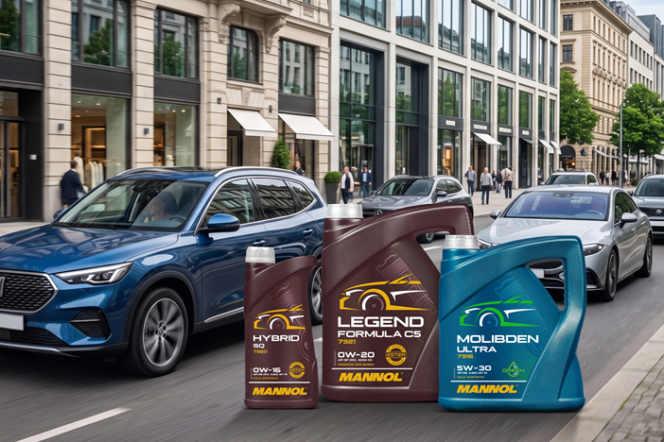
The company offers specialised products within its portfolio, including the Molibden Ultra 5W-30 formulation combining ACEA C2 and C3 with API SQ and ILSAC GF-7A standards, the Legend Formula C5 0W-20 for low-viscosity manufacturer approvals, and the Hybrid SP 0W-16 developed for hybrid powertrains and thermal cycling conditions.
Konstantin Gaab, Managing Director of SCT Vertriebs, said, "From our perspective, Euro 7 is not merely a further development of emissions legislation, but above all a signal that modern vehicles will need to meet increasingly stringent requirements for long-term technical durability. The challenge for the lubricant industry is to further reduce friction losses and, consequently, energy consumption without compromising wear protection or the performance of exhaust aftertreatment systems. Modern performance standards such as ACEA C5, C6 and C7, as well as API SQ and ILSAC GF-7, provide the industry with an important technical foundation. The key will be to translate these requirements into high-performance formulations tailored to specific engine designs. Our existing MANNOL portfolio already supports a range of modern powertrain technologies. At the same time, we regard the continuous development of our lubricants as essential to meeting the future requirements of vehicle manufacturers. Our aim is not simply to respond to regulatory changes, but to understand their technical implications at an early stage and incorporate them into the ongoing development of our product portfolio."
Varroc Engineering, Forsee Power Form JV For Indian EV Battery Market
- By MT Bureau
- October 16, 2026
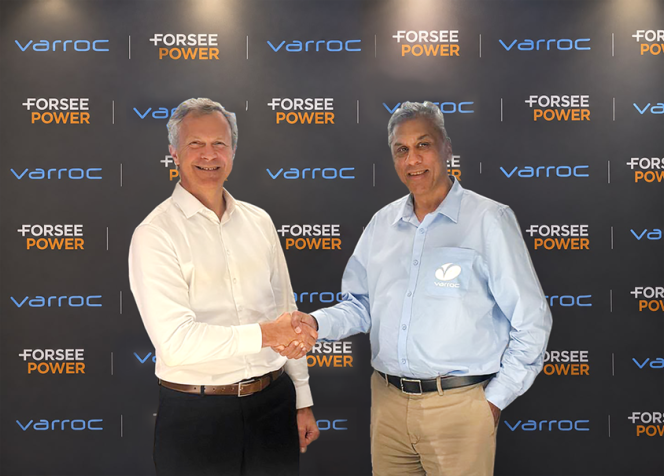
Pune-headquartered automotive component supplier Varroc Engineering and French battery system manufacturer Forsee Power have joined forces to produce electric vehicle battery packs in India.
Under the terms of the transaction, Varroc will acquire a 45 percent equity stake in Forsee Power's Indian subsidiary, Forsee Power India and will assume management and operational control of the entity.
Varroc will also subscribe to Optionally Convertible Redeemable Preference Shares to provide growth capital for the joint venture, subject to regulatory and corporate approvals. The joint venture will initially focus on battery pack development for three-wheeled electric vehicles, before expanding into two-wheelers, light commercial vehicles, buses, trucks and industrial equipment.
The agreement combines Forsee Power's battery system architecture and software with Varroc's component manufacturing, engineering infrastructure and vehicle manufacturer supply relationships across domestic assembly operations.
Arjun Jain, Whole Time Director and CEO – Business I, Varroc, said, "Electric mobility is both evolving and growing rapidly, thus creating new opportunities and new requirements for the automotive industry. Through this evolution we believe OEMs will need partners who can anticipate changes and translate them into reliable, cost-effective solutions at scale. Our partnership with Forsee Power brings together complementary strengths in battery-system technology, automotive engineering, manufacturing and customer relationships. It represents an important step in expanding Varroc’s portfolio to address the evolving needs of our market and the future of mobility. This will further enhance addressable content per electric vehicle in all the segment."
Christophe Gurtner, Chairman and CEO, Forsee Power, said, "With the rapid growth of electric mobility adoption in India, the opportunity is clear and we are ready to scale. Joining forces with Varroc combines our battery technology with local industrial strength and customer access. Three-wheelers are our starting point, with a clear ambition to expand across two-wheeler, commercial and industrial vehicles."
AUMOVIO To Debut MK 120 MAB Brake System At EICMA 2026
- By MT Bureau
- October 14, 2026

German technology company AUMOVIO will showcase a portfolio of braking, rider assistance and connectivity solutions for motorcycles and powersports vehicles at EICMA 2026 in Milan, scheduled from 3 to 8 November 2026.
The company's showcase centres on the launch of the MK 120 MAB brake system, which extends AUMOVIO's braking product line beyond two-wheeled applications. The system is engineered for three-wheeled scooters, side-by-side vehicles, utility terrain vehicles and all-terrain vehicles.
It integrates vehicle stability functions derived from passenger car and motorcycle architectures, including active yaw control and wheel lift mitigation, to assist vehicle control across varied terrain.
In addition to the MK 120 MAB, AUMOVIO will display its Motorcycle ABS 2.3 Base unit featuring an optional inertial measurement unit, alongside the MiniMAB EVO system designed for small-displacement scooters and commuters.
The company's display also features radar sensors for adaptive cruise control and blind-spot detection, digital instrument clusters ranging from 4 to 8.8 inches, a standalone Connected Infotainment Box and automated manual transmission control units.
The hardware, software and electronic systems on display utilise automotive development, cybersecurity and production standards adapted to motorcycle and powersports operational environments.
Comments (0)
ADD COMMENT