

Lumax Reports Net Profit Of INR 540 Million In Q1 FY2026
- By MT Bureau
- August 08, 2025

Tier 1 supplier Lumax Auto Technologies has announced its financial results for Q1 FY2026, showcasing significant growth in revenue and profit. The company reported consolidated revenue of INR 10.26 billion for Q1 FY26, up 36 percent from INR 7.56 billion last year.
This growth was supported by strong performance across its various business segments. The standalone OEM business saw a 5 percent increase in revenue, while the aftermarket segment experienced a 16 percent surge compared to the previous year. The company's subsidiaries (excluding the recently acquired Greenfuel) also contributed significantly, with a 36 percent YoY growth. Including Greenfuel, the growth for the subsidiaries was even more impressive at 59 percent for the quarter.
Lumax Auto Technologies' profitability also saw a healthy increase, with consolidated profit after tax (PAT) jumping 30 percent to INR 540 million in Q1 FY26, up from INR 420 million in the same period last year.
Anmol Jain, Managing Director, Lumax Auto Technologies, said, "We have kicked off the FY2026 with a steady performance both in revenue and profitability which is in line with our internal operating budgets. There have been certain price corrections from customers which has not been realised because of which the margins have seen a slight dip from Q1 of FY25. These corrections have been subsequently received in the current month. In Q2, we should be able to see this gain based upon the spill over from Q1 & in H1, the EBITDA margins will be in alignment with the strategic direction for the current year which is between 14 percent to 15 percent."
The company also highlighted key strategic initiatives during the quarter, including the full acquisition of IAC India, which strengthens its position in the EV interior space. Additionally, the Board of Directors approved the establishment of a branch office in China to explore new business opportunities and the setting up of a new Technology Centre in Bengaluru.
Imperial Auto USA Corp Appoints James Gaylord As MD & CEO
- By MT Bureau
- September 17, 2026

Imperial Auto Industries Limited has appointed James Gaylord as Managing Director & Chief Executive Officer of its subsidiary, Imperial Auto USA Corp. In his new role, Gaylord will lead Imperial Auto’s operations across the Americas and drive the company’s next phase of growth in the region. He will report to Vikram Wagh, Managing Director & CEO, Imperial Auto Industries Limited.
Gaylord's mandate would include expanding Imperial Auto’s presence into new markets across the American region while driving significant revenue growth over the coming years. He will also focus on strengthening the company’s product engineering and new product development capabilities in the Americas, while leading initiatives to localise the supply chain, enhance purchasing capabilities and build strategic partnerships with suppliers to support the company’s regional growth.
With nearly three decades of experience across the automotive and manufacturing sectors, Gaylord brings with him proven expertise in business development, operational excellence, transformation and growth. Prior to joining Imperial Auto, he served as the Global Sales Director at Gentex. He has also held leadership roles at organisations including Johnson Controls, ATI and Tenneco.
JK Tyre Unveils Four New Gen OTR Tyres At Bauma Conexpo India 2026
- By MT Bureau
- September 16, 2026
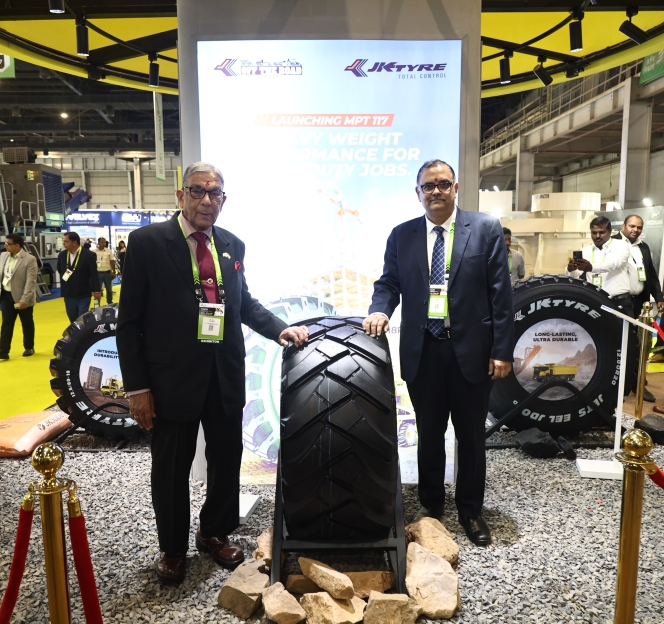
JK Tyre & Industries Ltd launched four new OTR tyres at Bauma Conexpo India 2026. These include the 12.5/80-18 MPT 45 16PR TL for self-loading concrete mixers (SLCM) and backhoe loaders. The 16/70-20 MPT117 14PR TL for SLCM and telehandler applications. The 18-19.5 MPT117 18PR TL for SLCM applications, and the 12.00R20 JDO XD OTR 22PR 156/153F TT for mining tippers. The latest additions further strengthen JK Tyre’s premium OTR portfolio with application-engineered solutions developed for the evolving requirements of India’s construction, infrastructure and mining sectors.
“India’s infrastructure and industrial growth is creating a growing need for high-performance, reliable and application-specific mobility solutions. At JK Tyre, we are committed to developing OTR solutions that address the specific needs of our customers and the demanding conditions in which their equipment operates. Our latest range combines durability, reliability and performance to help customers maximise equipment uptime and operational efficiency. As we continue to strengthen our premium OTR portfolio, we remain committed to delivering solutions that create value for our customers and support the growth of India’s construction, infrastructure and mining sectors,” said Srinivasu Allaphan, Director - Sales & Marketing, JK Tyre & Industries Ltd.
He pointed at the MPT 45 pattern and mentioned that it has been developed to deliver strong traction and stability, making it suitable for SLCMs and backhoe loaders operating across mixed terrain. “The MPT117 pattern has been designed for versatile construction and material-handling operations, offering strong grip, improved durability and reliable performance for SLCMs and telehandlers,” Allaphan explained.
The new products have been developed keeping Indian operating conditions in mind and are designed to help customers maximise machine performance while improving operational efficiency. The focus is on durability, high load-carrying capability and extended service life.
- Sriram Viji
- Automotive Component Manufacturers Association of India
- ACMA< Brakes India
- Anjali Singh
- ANAND Group
- Gabriel India
- Vinnie Mehta
Sriram Viji Appointed President Of ACMA India, Anjali Singh Named President-Designate
- By MT Bureau
- September 04, 2026

The Automotive Component Manufacturers Association of India (ACMA), the apex body representing component manufacturers in the country, has appointed Sriram Viji, Managing Director, Brakes India, as President for the 2026–27 term.
The industry body also named Anjali Singh, Executive Chairperson of ANAND Group and Gabriel India, as President-Designate.
Vinnie Mehta, Director General, ACMA, said, “We are delighted to welcome Mr. Sriram Viji and Mrs. Anjali Singh to their new roles. Their rich industry experience and strategic vision will guide ACMA as the sector navigates geopolitical uncertainty and the evolving mobility landscape. I am confident that their leadership will strengthen our engagement with Government and industry partners to diversify supply chains, improve access to critical raw materials and enhance India’s global competitiveness.”
Sriram Viji, President, ACMA, said, “It is an honour to lead ACMA as India strengthens its position as a trusted partner in global automotive value chains. Our priority is to deepen local capabilities and accelerate investment in advanced technologies, R&D and innovation, while embedding sustainability across the industry. As electric, connected and new-energy mobility create fresh opportunities, we must move beyond adapting to change to shaping it. Together with our members, we will work to position India as a global hub for high-value manufacturing and next-generation mobility solutions.”
MAHLE Starts E-Compressor Production In India
- By MT Bureau
- August 27, 2026
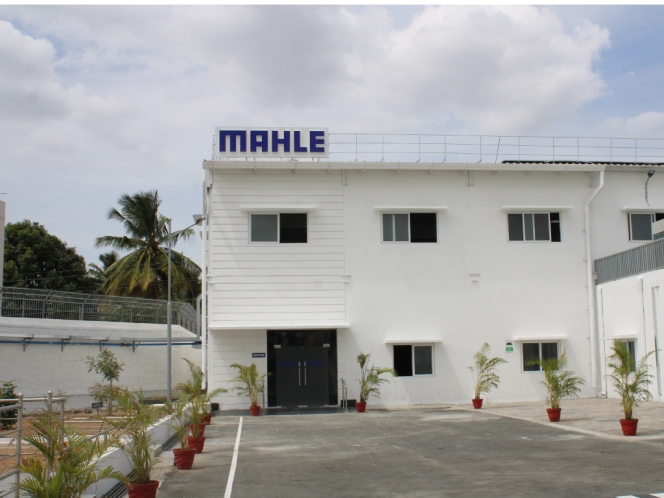
German automotive supplier MAHLE has established an e-compressor production facility in Coimbatore, which it claims makes it the first company to manufacture the component in India.
The German firm has invested EUR 7 million in the site to produce e-compressors, which regulate thermal management, battery life, charging speeds and driving range in electric vehicles.
The production line has a capacity of over 300,000 e-compressors annually to supply domestic and international vehicle manufacturers. The launch creates 50 jobs, aligning with the Indian government's ‘Make in India 2.0’ manufacturing initiative.
The Coimbatore facility already produces starter motors, alternators, controllers and traction motors for two-wheelers and three-wheelers. Following the setup of an R&D facility in 2023 for product validation, MAHLE has outlined plans for women to represent 75 percent of the plant's total workforce by 2027.
The company entered India in 1958 through a piston manufacturing joint venture and now has expanded its operation across 15 locations in the country with 5,900 employees.
Ivan Lenehan, Vice-President, MAHLE Powertrain and Charging, India, China & East Asia, said, “India continues to play an increasingly important role in the global mobility transformation. This facility strengthens our presence in one of the world’s most dynamic automotive markets and reinforces our commitment to sustainable mobility solutions.”
Milind Mhaiskar, MD, MAHLE Electric Drives India, said, “This production facility underscores our focus on localisation and customer-centric innovation. The success of this project reflects the dedication of our teams and our collaborative approach with business partners.”
Comments (0)
ADD COMMENT