

Tenneco Clean Air India Posts INR 6 Billion Profit For FY2026
- By MT Bureau
- June 01, 2026
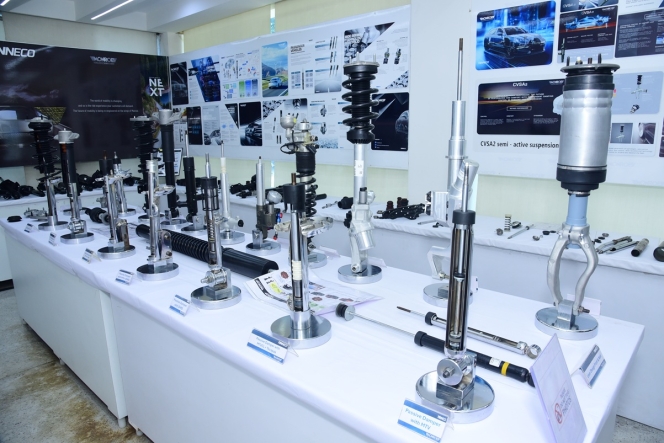
Automotive component manufacturer Tenneco Clean Air India has announced its financial results for the Q4 and FY2026. The company, which supplies emission controls, powertrains and suspension systems to original equipment manufacturers (OEMs), reported a value-added revenue (VAR) increase of 17.5 percent YoY for Q4 and 12.3 percent for the full fiscal year.
The company said it utilises value-added revenue as its primary performance metric to exclude pass-through substrate costs from its operations.
For Q4, value-added revenue reached INR 14,058 million, up from INR 11,963 million in the corresponding quarter of the previous fiscal year. Earnings before interest, taxes, depreciation and amortisation (EBITDA) for the quarter stood at INR 2,573 million, representing an 18.3 percent margin on value-added revenue. Profit after tax (PAT) for Q4 grew 19 percent YoY to INR 1,668 million, yielding an 11.9 percent margin.
For FY2026, total value-added revenue rose to INR 54,040 million compared to INR 48,904 million in FY2025. Full-year EBITDA reached INR 9,255 million, establishing a margin profile of 18.8 percent. Annual profit after tax concluded at INR 6,044 million, equivalent to a 12.3 percent margin, while return on capital employed (ROCE) increased to 94 percent from 57 percent in the prior fiscal year.
The company's revenue streams are divided across two core business segments:
- Clean Air & Powertrain Solutions: Generated INR 6,905 million in Q4 FY2026 and INR 49,180 million for the full fiscal year.
- Advanced Ride Technologies (ART): Generated INR 7,153 million in Q4 FY2026 and INR 24,885 million for the full fiscal year.
The total cumulative lifetime order book, excluding programs already in active commercial production, reached INR 124,000 million as of 31 March 2026. This order volume encompasses the revenue targets set by management for the fiscal year 2028.
During the fiscal year, Tenneco India secured several development contracts across its operating divisions, including the selection of its advanced suspension system for a vehicle platform by an Indian SUV manufacturer.
Additional contracts were signed with a Japanese passenger vehicle manufacturer for emission systems, a European commercial vehicle manufacturer for aftertreatment solutions and an Indian commercial vehicle manufacturer for an engine platform. The company also executed a technology proof-of-concept for a Euro VII emission control layout with a European truck manufacturer and secured a contract for bearing systems with a Japanese passenger car OEM.
To accommodate current order volumes, the company has approved a total capital expenditure allocation of INR 1,400 million. The investment framework funds the construction of two production sites: a greenfield manufacturing plant for Clean Air Systems located in North India, alongside a greenfield facility for Advanced Ride Technologies located in West India.
Arvind Chandra, Whole-Time Director and CEO, Tenneco India, said, “Over the past few years, the team has worked diligently to build a resilient, diversified and execution led business model. This was clearly demonstrated during the quarter and the year under review. Despite geopolitical headwinds since the end of February 2026 and the incremental overheads associated with becoming a listed entity, the team delivered a FY2026 double-digit topline growth at 12 percent and, more importantly, a strong operating performance with the highest-ever EBITDA margin at 18.8 percent. Supported by a strong and expanding order book, we continue to proactively scale our manufacturing capabilities to meet rising customer demand. In addition to the recently announced expansion in Northern India of INR 710 million, we plan to expand our manufacturing presence in Western India with an investment of INR 690 million, leading to a total of INR 1,400 million. These strategic capacity additions position us well to capture incremental growth opportunities, strengthen customer partnerships and support long term value creation. We recently completed a strategic Proof of Concept with a leading European Truck OEM for a Euro VII–compliant Clean Air solution, thereby strengthening capabilities in advanced emission technologies and readiness for future legislations. Also, we were honoured with the Zero-Defect Supplier Award by Toyota in the ART business, underscoring our commitment to operational excellence. In addition, we secured a strategic entry into the engine bearings business at a leading Japanese OEM, due to superior product technology, better quality and longstanding business relationship across other product verticals. Our H2 FY2026 order book addition stands at INR 60,254 million. Combined with the previously announced H1 order book, net of orders currently under production, the incremental lifetime order book reached INR 124,000 million as of March 31, 2026. This robust order book provides strong revenue visibility covering more than 100 percent of FY28 target revenues underpinning a healthy double-digit CAGR trajectory.”
Eastman Auto & Power Appoints Rajesh Jindal As Chief Executive Officer
- By MT Bureau
- October 12, 2026
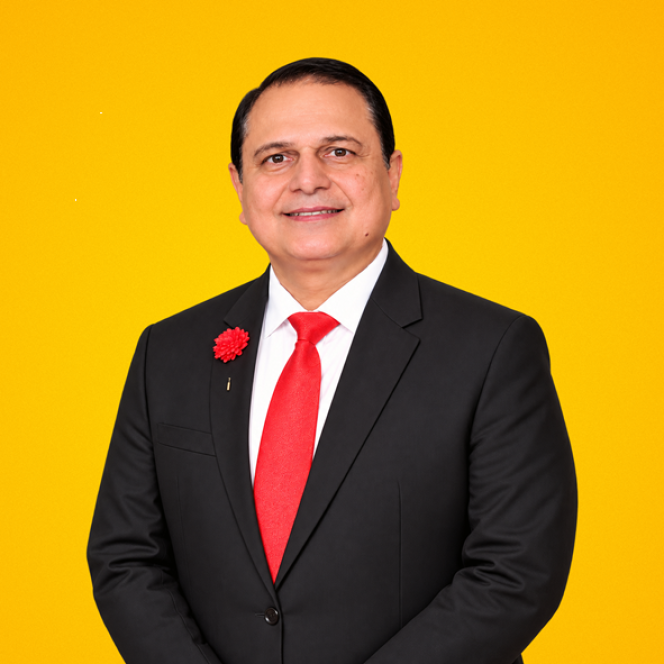
Auto component manufacturer Eastman Auto and Power has appointed Rajesh Jindal as Chief Executive Officer.
He comes with over 34 years of corporate experience spanning sales, marketing and product management, following a 24-year tenure at Amara Raja Energy and Mobility, where he most recently served as Chief Marketing Officer for automotive batteries in India.
Jindal holds a bachelor's degree in mechanical engineering alongside a Master of Business Administration qualification. During his career, he has managed distribution networks, channel partner relations and go-to-market strategies within the energy storage and automotive component sectors.
Shekhar Singal, MD, Eastman Auto and Power, said, "With over 34 years of experience, Jindal has garnered experience in sales, marketing and product development and is well-positioned to accelerate Eastman’s growth journey. As he begins this new chapter at Eastman, we look forward to his leadership in deepening our commitment for delivering sustainable value for our customers, partners, employees and stakeholders - advancing the company's long-term growth aspirations and inspiring the organisation to achieve new milestones together."
Established in 2000, Eastman Auto and Power operates across three business verticals: last-mile electric mobility solutions, residential solar storage systems and energy storage solutions.
The company employs over 3,600 personnel across seven manufacturing plants in India, supported by a distribution network of more than 1,200 direct partners and over 400 original equipment manufacturer clients worldwide.
Kuraray America Showcases GENESTAR PA9T At SAE Thermal Management Symposium
- By MT Bureau
- October 10, 2026
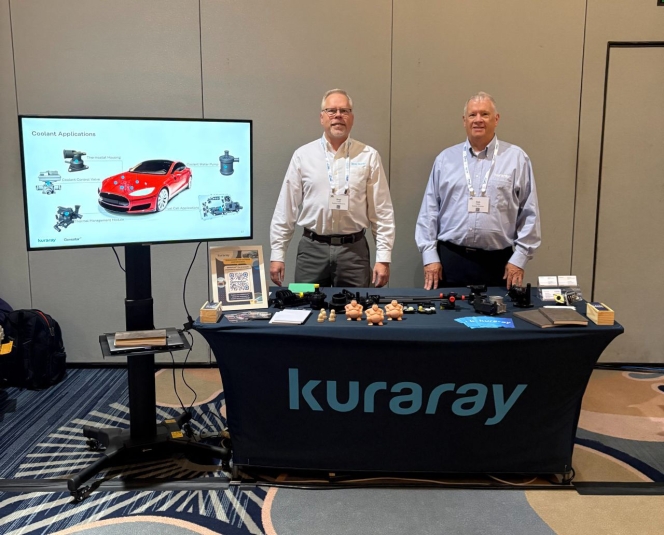
Kuraray America, Inc. (KAI) recently took part in the SAE International Thermal Management Systems Symposium, held on 6–7 October 2026 in Dearborn, Michigan. The event gathered mobility-industry professionals to discuss technologies and emerging challenges in vehicle thermal management. Throughout the two-day symposium, the Kuraray GENESTAR team connected with attendees at Booth #19, sharing insights into high-performance engineering materials.
The team demonstrated how GENESTAR PA9T can meet demanding automotive application requirements. This heat-resistant polyamide engineering plastic was developed by Kuraray using unique monomers, combining low water absorption, high heat resistance, chemical resistance, dimensional precision and excellent moldability. It also offers electrical properties suitable for demanding electrical and electronic applications, including low water absorption, chemical resistance, moldability, insulation performance, thermal resistance and dimensional stability.
These characteristics make GENESTAR relevant for a broad range of electrical, electronic and automotive components. Kuraray lists automotive applications including connectors, relays, insulators and wire harnesses, while GENESTAR materials also serve in sliding, fuel and air-intake systems. The company reports use in automotive gears, bearings, piping and intercooler tanks, and the material is being considered for electric-vehicle applications as well.
The SAE symposium provided a forum for exchanging insights into evolving thermal management technologies. The 2026 programme covered battery and electronics cooling, climate control, alternative refrigerants and vehicle thermal engineering approaches. For Kuraray, participation enabled direct engagement with engineers and industry professionals about how high-performance materials can address increasingly complex automotive design requirements, with GENESTAR PA9T offering a material option where multiple performance demands must be met simultaneously.
- Highway Roop Precision Technologies
- Carlyle
- Chamundi Die Cast
- Mohit Oswal
- Dharmesh Arora
- Yasin Khan
- Amit Jain
- Carlyle India Advisors
Highway Roop Precision Technologies Acquires Chamundi Die Cast
- By MT Bureau
- September 29, 2026
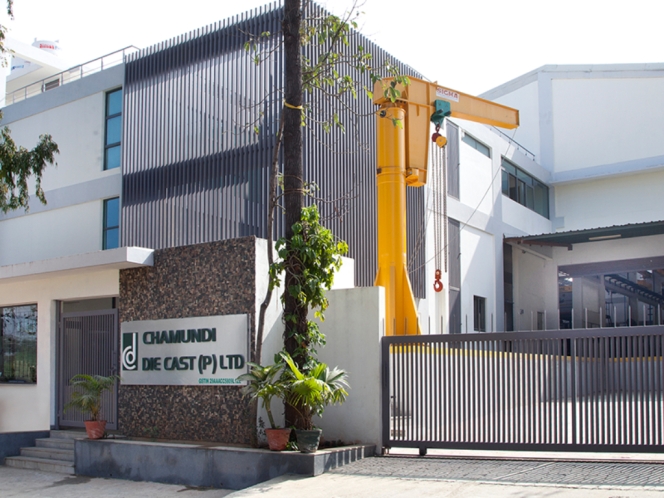
Highway Roop Precision Technologies, a Carlyle-backed manufacturer of precision torque and control components, has completed the acquisition of Chamundi Die Cast, which manufactures complex aluminium die-cast components for automotive and industrial applications.
The transaction adds integrated aluminium die-casting and machining capabilities to Highway Roop's existing forging and precision-machining operations across steering, transmission and powertrain systems.
The acquisition expands Highway Roop’s product portfolio into lightweight vehicle solutions and electric vehicle components, while establishing a manufacturing footprint in South India alongside Chamundi's existing customer base in India, North America and Europe.
At present, Chamundi exports 60 percent of its products to global markets, while domestic business accounts for 40 percent. Interestingly, 98 percent of its business comes from the automotive industry, while the remaining comes from non-automotive sector.
Mohit Oswal, Chairman, Highway Roop, said, “This acquisition is an important milestone in our journey to build Highway Roop into a scaled, diversified precision manufacturing platform anchored in mission-critical torque and control applications. Chamundi’s capabilities and customer relationships complement our existing strengths and strengthen our ability to serve customers across automotive and industrial applications. Together, we are building a stronger platform for the next phase of growth.”
Dharmesh Arora, Group CEO and Director, Highway Roop, said, “Chamundi meaningfully strengthens Highway Roop’s capabilities around our core focus on torque and control applications. Its integrated aluminum die-casting and precision-machining capabilities expand our ability to deliver complex, lightweight engineered solutions across vehicle technologies. Its South India manufacturing base also diversifies our footprint, brings us closer to key customers, and strengthens the resilience of our manufacturing network and supply chain. We are delighted to welcome the Chamundi team to Highway Roop and look forward to building a stronger platform together.”
Yasin Khan, Managing Director, Chamundi, said, “Over four decades, Chamundi has built a strong business anchored in engineering excellence, a committed workforce and long-standing customer relationships. We are pleased to partner with Highway Roop for the next phase of our journey and will continue to hold a stake in the combined entity. Highway Roop’s complementary capabilities and scale will enable us to build on this foundation, deepen our relationships with customers, and create new opportunities for our employees, as we grow together.”
Amit Jain, Partner and Head, Carlyle India Advisors, said, “This transaction reflects Carlyle’s continued commitment to building a scaled, differentiated precision manufacturing platform in India. Highway Roop has established itself as a trusted partner to global OEMs for mission-critical torque and control components, and Chamundi adds complementary capabilities that further strengthen its customer proposition. We remain focused on supporting Highway Roop as it scales its capabilities and builds towards becoming one of India’s leading precision manufacturing companies serving automotive and industrial customers globally.”
Following the completion of the acquisition, Chamundi's leadership will retain an equity stake in the combined entity as part of the integration into Highway Roop's global supply platform.
- Stoneridge
- Uwe Brandeburg
- Natalia Noblet
- Valeo
- DXC Technology
- Continental
- Autoliv
- TRW Automotive
- BlincVision
Stoneridge Appoints Uwe Brandenburg As Global VP Of Engineering & Innovation
- By MT Bureau
- September 25, 2026

American component supplier Stoneridge has appointed Uwe Brandenburg as its Global Vice-President, Engineering and Innovation, effective 2 November 2026. Brandenburg will report to President and Chief Executive Officer Natalia Noblet and join the company’s executive management team.
In his new role, Brandenburg will oversee Stoneridge’s global engineering division, managing product development, technology innovation and product roadmaps across vision systems, safety technology, vehicle intelligence and connectivity platforms for commercial vehicles and off-highway equipment.
Natalia Noblet said, "Uwe is a recognised voice in automotive electronics and engineering leadership, with a proven track record of building world-class engineering teams and delivering breakthrough innovations in ADAS, autonomous driving and software-defined vehicles. His extensive experience bringing next-generation radar, camera, safety electronics and AI-powered platforms to market, combined with his strategic vision and commitment to operational excellence, make him an exceptional addition to our Executive Team. We are excited to leverage his expertise to accelerate Stoneridge’s technology roadmap and strengthen our competitive position in vehicle intelligence and safety.”
Brandenburg comes with over 25 years of experience in Tier 1 automotive electronics, software engineering and vehicle systems. Prior to joining Stoneridge, he served as Chief Technology Officer and Senior Vice-President for Automotive and Manufacturing at DXC Technology.
His previous positions include Global Head of Engineering and Chief Technology Officer for advanced driver assistance systems at Valeo, alongside engineering leadership roles at Continental, Autoliv and TRW Automotive focused on radar, camera and safety electronics systems.
Uwe Brandenburg said, “Stoneridge has a clear technology strategy, a highly talented engineering organisation, and a mission centred on improving safety, reducing emissions and increasing vehicle efficiency for our customers. When cutting-edge technology is paired with the right team and a purpose that truly matters, we have what it takes to create strong value for our customers. I look forward to building on this strong foundation and helping the team deliver the next generation of vision and safety solutions.”
Brandenburg holds a degree in Electrical and Telecommunications Engineering from the University of Applied Sciences Constance and currently serves on the board of directors of BlincVision.
Comments (0)
ADD COMMENT