

- ASHOK LEYLAND
- MANAGED MOBILITY
- CONNECTED VEHICLES
- MOBILITY-AS-A-SERVICE
- COMMERCIAL VEHICLES
- ELECTRIC MOBILITY
- PREDICTIVE MAINTENANCE
- FLEET MANAGEMENT
- VEHICLE TELEMATICS
- ARTIFICIAL INTELLIGENCE
Managed Mobility, Connected Vehicles Running On Course
- By Gaurav Nandi
- October 16, 2026
For representational purpose only
The commercial vehicle industry has predominantly seen full scape ownership by fleet operators as the preferred business model. But as electrification presses on the accelerator and discussion on costs around vehicle maintenance and increasing profitability become core topics, the ownership landscape within the commercial vehicle segment is embracing a new trend of mobility-as-a-service.
Speaking to Motoring Trends in an exclusive interaction, Head Product Portfolio Management and CIDO at Ashok Leyland Vinod Gopinathan noted, “Both business models have existed in the commercial vehicle industry for some time. However, with electrification, we are seeing a growing shift towards managed mobility models, where vehicles are operated or managed by aggregators or OEMs.”
“While this is not an entirely new concept as the internal combustion engine segment have operated both models, electrification is accelerating this transition,” he added.
Government tenders and the increasing interest of major companies in mobility-as-a-service arrangements are contributing to this shift. And in the electric commercial vehicle segment, there is a clear movement away from purely product-based ownership towards integrated mobility platforms.
While the executive expects this trend to continue as electrification expands, he also underscores the trend of connected vehicle technology. Ashok Leyland’s connected vehicle technology has evolved from basic tracking and tracing to real-time monitoring of vehicle performance, productivity and safety.
Now in its fourth generation, the company’s connected vehicle programme supports nearly 250,000 live vehicles with diesel models transmitting approximately 120 parameters and electric vehicles generating substantially more data.
This information helps improve product design, accelerate validation and enhance customer operations through better fuel efficiency, fleet utilisation, vehicle health monitoring, driver performance assessment and driving safety.
Rising above
According to Gopinathan, fleet operators are increasingly willing to pay for connected vehicle technologies as their benefits become measurable through improved fuel efficiency, vehicle uptime and lower operating costs.
“We have witnessed more than a twofold increase in multi-year subscription renewals over approximately the past year with some customers committing to five-year plans,” he stated.
Adoption spans small, medium and large fleets, while growing demand from e-commerce companies, cement manufacturers and load aggregators for greater operational visibility is further accelerating uptake.
The company is leveraging connected vehicle data to reduce total cost of ownership through fuel efficiency monitoring, fuel pilferage detection and driver behaviour analysis.
Its round-the-clock Uptime Solution Centre continuously monitors engine health, gearboxes and after-treatment systems, enabling remote diagnostics, guided troubleshooting and faster service turnaround.
Artificial intelligence-driven predictive maintenance helps identify potential failures before breakdowns, improving fleet uptime and shifting maintenance towards preventive intervention.
“When the system identifies a potential issue, the appropriate response depends on its nature. Some minor issues can be addressed directly by drivers or customers, while others require intervention at a service station. On the diagnostics side, we provide do-it-yourself alerts and guided troubleshooting for issues that customers can resolve independently,” explained Gopinathan.
The company operates a dual connected vehicle business model through its iAlert platform and customised data-sharing solutions. The subscription-based iAlert application provides fleet managers, drivers and owners with real-time insights into fuel efficiency, vehicle health, driving behaviour, safety, fault diagnostics and fuel pilferage.
Its driving score feature helps optimise fleet performance. Additionally, the company supplies vehicle data directly to operators seeking multi-OEM integration, advanced analytics or dedicated command centres, enabling customised fleet monitoring and operational management.
“We are witnessing strong adoption of connected vehicle subscriptions among truck owners, not just mobility-as-a-service operators. While continuous monitoring is integral to service-based mobility models, vehicle owners are independently recognising the benefits of preventive maintenance, do-it-yourself diagnostics and guided troubleshooting,” contended a confident Gopinathan.
He added that the increasing multi-year subscription renewals demonstrate willingness to invest in technologies that improve operational efficiency, minimise breakdowns and reduce ownership costs.
Updating technology
Digitalisation within the larger automobile industry draws into discussion the premise of safety features. “ADAS adoption in India's commercial vehicle industry remains less mature than in passenger cars, where advanced safety features are increasingly standard,” noted the executive.
He added that commercial vehicle applications currently focus on basic technologies such as driver drowsiness detection. However, evolving government regulations with several ADAS features expected to become mandatory from 2027 could accelerate adoption.
He anticipates significant progress over the next four to five years with regulatory compliance driving wider deployment and improvements in commercial vehicle safety.
Nonetheless, India's connected and electric commercial vehicle ecosystem requires improvements in telecommunications coverage, charging infrastructure and domestic battery technology.
“Inconsistent 4G connectivity, particularly in border regions and hilly terrain, continues to constrain seamless vehicle monitoring,” stated Gopinathan.
Commercial EV charging networks also need expansion with Ashok Leyland collaborating with ecosystem partners on infrastructure development. Reducing dependence on external battery technologies through stronger domestic capabilities will be equally important for supporting wider electrification.
Bullish future
Electrification is increasing the importance of connected intelligence as electric commercial vehicles generate substantially more data than conventional diesel vehicles. Ashok Leyland leverages this information for range optimisation, battery thermal management, state-of-charge monitoring and predictive maintenance.
Given the high capital costs and relatively limited adoption of electric commercial vehicles in India, advanced analytics are critical for both vehicle ownership and mobility-as-a-service models.
These capabilities enable deeper operational insights, improved battery performance and greater efficiency as electrification expands.
Alluding to how commercial vehicle manufacturers will differentiate themselves within this growing market, Gopinathan explained, “Commercial vehicle manufacturers will increasingly differentiate themselves through integrated mobility ecosystems combining vehicle efficiency, reliable charging, service support and actionable data analytics by 2030.”
“In per-kilometre mobility-as-a-service models, competitive total cost of ownership will depend on minimising breakdowns, improving uptime and optimising the entire operating value chain,” he added.
The executive also emphasised that converting growing volumes of vehicle data into meaningful insights that improve fleet utilisation and reduce maintenance costs will become a decisive competitive advantage, alongside product performance and service quality.
CASE Construction Equipment Inaugurates New Facility In Faridabad To Boost NCR Operations
- By MT Bureau
- November 04, 2026
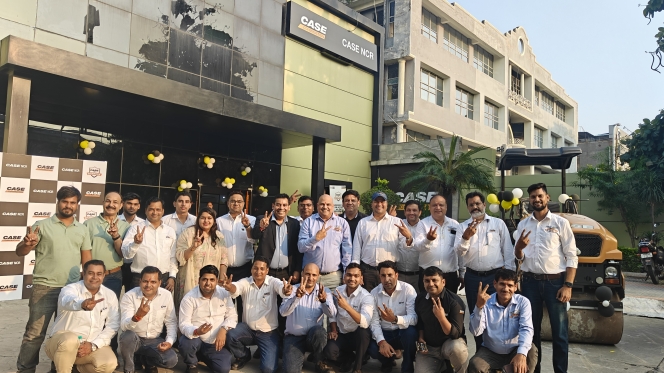
CASE Construction Equipment, a brand of CNH, has inaugurated new premises in Faridabad within the National Capital Region (NCR) to expand its customer support and service infrastructure.
The 6,000 sqft facility features double the parts storage capacity of the previous setup, a workshop capable of servicing 10 to 12 machines simultaneously and a dedicated equipment display area showcasing four CASE machine models.
The facility will serve customers across northern India, supporting parts availability and machine maintenance operations. During the inauguration event, which was attended by approximately 40 customers, the company completed two machine handovers and three parts invoicing transactions.
CASE has maintained operations in Faridabad since 2018, when it opened its first company-owned, company-operated showroom in India in the city.
Ravindra Ashtekar, Head of Network Development, CASE Construction Equipment, said, "NCR is an important market for construction equipment, with demand shaped by ongoing infrastructure development and a diverse range of customer requirements. Strengthening our presence in the region is therefore an important part of our efforts to remain accessible to customers and provide dependable support. The new premises bring together enhanced parts storage, workshop capacity and a dedicated machine display area, enabling us to further strengthen our service capabilities and customer engagement."
JBM Electric Vehicles Launches ECOLIFE e12 City Bus in Singapore
- By MT Bureau
- November 04, 2026
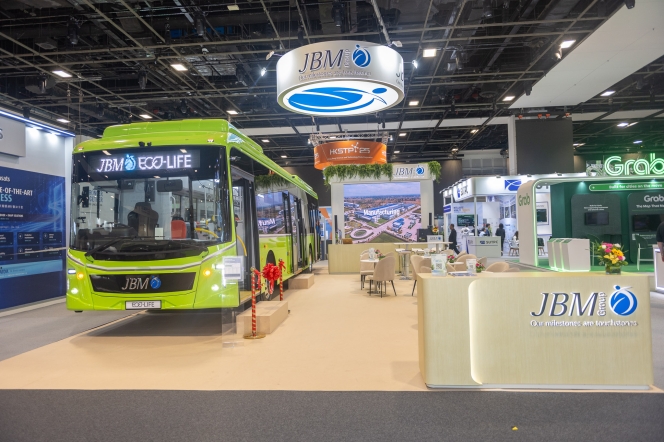
JBM Electric Vehicles has launched its all-electric city bus, the ECOLIFE e12, at Singapore Urban Mobility Week 2026. The vehicle was unveiled by Dr Shilpak Ambule, High Commissioner of India to the Republic of Singapore, alongside Nishant Arya, Chairman of JBM Electric Vehicles. The launch marks the first introduction of an electric bus in Singapore by an Indian manufacturer.
The ECOLIFE e12 features an aluminium monocoque body structure and incorporates an Intelligent Transport System compliant with Singapore regulatory standards. The vehicle is equipped with telematics for vehicle health monitoring, an Advanced Driver-Assistance System (ADAS), forward collision warning systems, lane departure warnings, pedestrian and cyclist collision detection, blind-spot monitoring, driver drowsiness detection, a 360-degree camera and a fire detection and suppression system.
To support its regional operations, JBM Electric Vehicles has established its Asia-Pacific headquarters in Singapore to handle sales, marketing, aftersales and operational activities. The company maintains an annual production capacity of 20,000 buses at its manufacturing facility in India and holds an order book of 10,000 electric buses for global deployment over the next two years.
Nishant Arya, Chairman of JBM Electric Vehicles, said, "Our mission is to decarbonize public transport by creating new and sustainable global benchmarks. At JBM EV, we believe that the future of green mobility lies in creating vehicles that seamlessly blend innovation, sustainability and user-centric design. Our electric mobility solutions are not just about reducing carbon footprints, they are about elevating the quality of life for individuals and communities by making transportation smarter, safer, and more accessible. We believe in the power of partnerships and collaboration to continuously improve, listening to the needs of our customers to develop solutions to address their pain points. We constantly evolve to provide new ideas and solutions in the e-mobility world. We invest to better support our customers by thinking global and acting local in meeting the challenges of today and tomorrow."
- Automotive Skills Development Council
- ASDC
- Daimler India Commercial Vehicles
- driver training
- CSR
- Vinkesh Gulati
- Torsten Schmidt
ASDC Partners Daimler India Commercial Vehicles Partner To Train 240 Heavy Commercial Vehicle Drivers
- By MT Bureau
- November 04, 2026
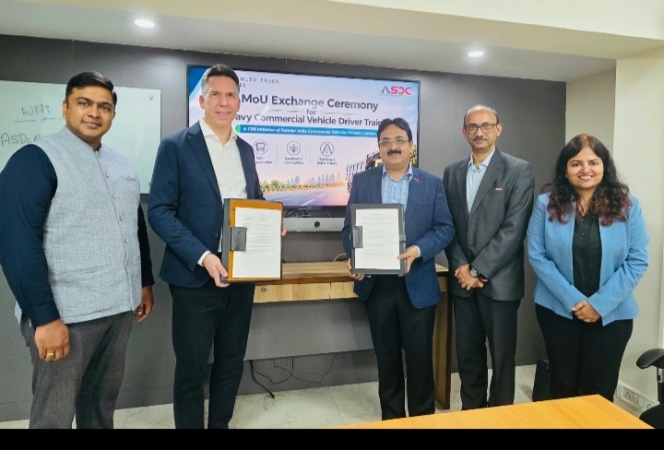
Automotive Skills Development Council (ASDC) has partnered with Daimler India Commercial Vehicles to launch a corporate social responsibility (CSR) initiative aimed at training and certifying 240 Heavy Commercial Vehicle drivers across Assam, Maharashtra, Jharkhand and Andhra Pradesh.
The programme focuses on expanding the pool of commercial vehicle drivers, improving road safety standards, and providing employment opportunities for candidates.
Under the implementation agreement, 60 candidates in each of the four states will participate in a residential training programme featuring classroom instruction, practical driving and simulator learning.
Daimler India Commercial Vehicles is providing training, residential facilities, meals, licensing support, assessments, certification, insurance and impact studies. ASDC will oversee industry linkages and placement support for certified drivers, alongside conducting three months of post-placement follow-up to track employment retention rates.
Vinkesh Gulati, Chairperson, ASDC, said, "Skilled commercial vehicle drivers are essential to India’s logistics network and economic growth. Skilling for road safety must be an integral part of their preparation, equipping drivers with defensive driving techniques, an understanding of traffic rules and the ability to handle heavy vehicles responsibly. Through this partnership with Daimler India Commercial Vehicles, we aim to prepare 240 young people for professional driving careers by combining practical training, recognised certification and employment assistance. Our goal is to create livelihood opportunities while developing competent, safety-conscious drivers who contribute to safer roads for everyone."
Torsten Schmidt, Managing Director and CEO, Daimler India Commercial Vehicles, said, "At DICV, we believe drivers are the backbone of India's economy, keeping goods moving and communities connected across the country. As the transport sector evolves, professionally trained, safety-conscious drivers are more important than ever. Through this initiative with ASDC, we are investing in skills that not only improve employability but also foster a culture of responsible driving and road safety. By equipping aspiring drivers with the right knowledge, practical expertise and a safety mindset, we are helping build a stronger logistics ecosystem while contributing to safer roads and a more resilient nation."
John Deere India Achieves 100,000 Annual Tractor Sales Milestone
- By MT Bureau
- November 03, 2026
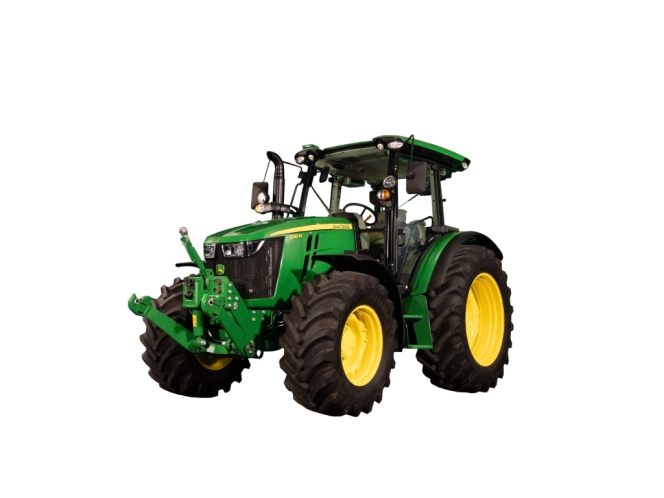
John Deere India has sold over 100,000 tractors in India within a single Deere fiscal year, marking an operational milestone in its domestic business.
The achievement reflects the expansion of farm mechanisation across Indian agriculture and the adoption of the company's equipment across varied agro-climatic conditions and crop applications.
In addition to serving domestic requirements, John Deere's Indian operations act as an export hub, supplying tractors and machinery from India to over 110 countries. The company has maintained an operational presence in India for more than 28 years, supported by tractor manufacturing facilities in Pune and Dewas, engineering and enterprise technology centres in Pune, IT hubs in Pune and Bengaluru, parts distribution centres in Nagpur and Indore, and financial services operations in Pune.
Rajesh Sinha, Managing Director and Country Manager of John Deere India, and Strategic Advisor to the President, Construction & Forestry Worldwide, said, "Selling more than 100,000 tractors in a year is not just a business milestone; it is a reflection of the confidence that Indian farmers and channel partners place in John Deere. We remain committed to supporting farmers with reliable equipment, advanced technology and solutions that help improve productivity, profitability and sustainability."

Comments (0)
ADD COMMENT