

ICRA Projects India Highway Toll Collection Growth to Reach 10-12% In 2027-28
- By MT Bureau
- August 31, 2026
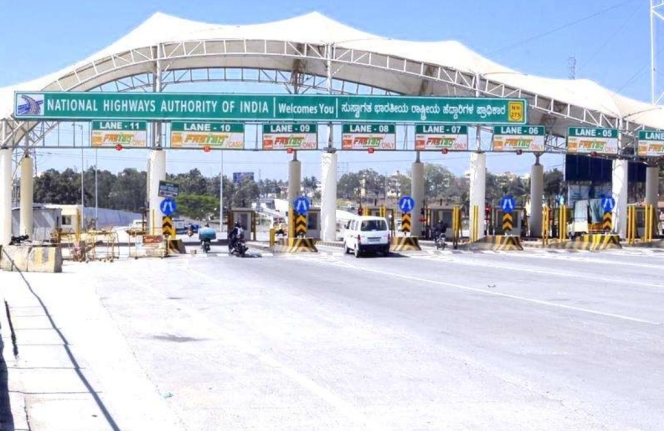
ICRA, a leading rating agency, has released a report stating that toll collection growth on national highways across India is projected to increase between 10 percent and 12 percent in 2027-28, up from an estimated 7 percent to 9 percent in 2026-27.
The projected recovery follows an expansion of 10 percent in 2025-26 and is expected to be supported by toll rate revisions alongside stable traffic growth of 4 percent to 5 percent.
The anticipated rise in toll rates in 2027-28 reflects movements in Wholesale Price Index inflation. Toll rate growth is projected at 6.2 percent to 6.4 percent for newer projects linked to December index figures, and 4.5 percent to 5.5 percent for older projects linked to March figures.
Suprio Banerjee, Co-Group Head, Corporate Ratings at ICRA, said: “Traffic growth on national highways largely moves in line with the gross value added (GVA) of construction, mining and manufacturing (CMM). GVA growth of CMM has increased by a notable 8.1% in 2025-26. Consequently, traffic on national highways witnessed a healthy growth of 6%. Coupled with a toll rate hike, toll collections increased by 10% in 2025-26. ICRA estimates the GVA growth of CMM to remain at 7-8%, which is likely to entail traffic increase of 4.5-5.5% in 2026-27, albeit partly impacted by export-related traffic challenges. This, coupled with a relatively lower toll rate revision of 3.4-4.0%, is likely to moderate toll collections growth in 2026-27. Thereafter, supported by a higher toll rate revision in 2027-28, toll collection growth is expected to increase to 10-12%.”
It further finds that road execution by the Ministry of Road Transport and Highways is expected to remain between 9,000 km and 9,500 km in 2026-27, compared to 9,380 km recorded in 2025-26.
Project execution during the first quarter of 2026-27 was affected by increases in bitumen prices and supply disruptions linked to events in West Asia. While, project awarding activity by the Ministry declined to approximately 7,000 km in 2025-26 from 7,538 km in 2024-25, following focus on land acquisition and environmental clearances prior to project allotment.
Budgetary allocations are expected to increase project awarding to between 8,000 km and 8,500 km in 2026-27.
Engineering, procurement and construction contracts accounted for 65 percent to 70 percent of total project awards in recent years, while hybrid annuity mode contracts represented 25 percent to 30 percent.
ICRA projects the share of hybrid annuity contracts to be between 24 percent and 26 percent in 2026-27, as projects exceeding INR 5 billion are directed toward hybrid annuity or toll models. The Ministry has introduced a revised model concession agreement for build-operate-transfer toll projects, featuring revenue support mechanisms during traffic shortfalls and termination provisions.
Bidding discounts for engineering, procurement and construction projects averaged median levels of -30 percent in 2024-25 and -35 percent in 2025-26, while hybrid annuity projects recorded median discounts of -16 percent and -19 percent over the same period. To address bidding margins, performance security norms were updated in June 2026, alongside plans for bundled highway project allocations.
Banerjee added, “The moderation in road execution is primarily attributable to the sustained slowdown in project awarding activity over the past three years. Consequently, road construction activity slowed down in 2024-25 and 2025-26, and ICRA expects road execution to remain in the range of 9,000-9,500 km in 2026-27. The Ministry’s move to revive the BOT (Toll) road projects through the revised model concession agreement is a welcome step and is expected to support increased private sector participation in the roads sector. However, the extent to which it translates into a meaningful revival in construction activity remains to be seen. Despite stricter bidding norms and the expected bundling of project awards, competition in the sector is unlikely to come down unless project awarding activity picks up materially.”
Hyundai Motor Group To Invest $15.5 Billion In India By 2032
- By MT Bureau
- October 13, 2026
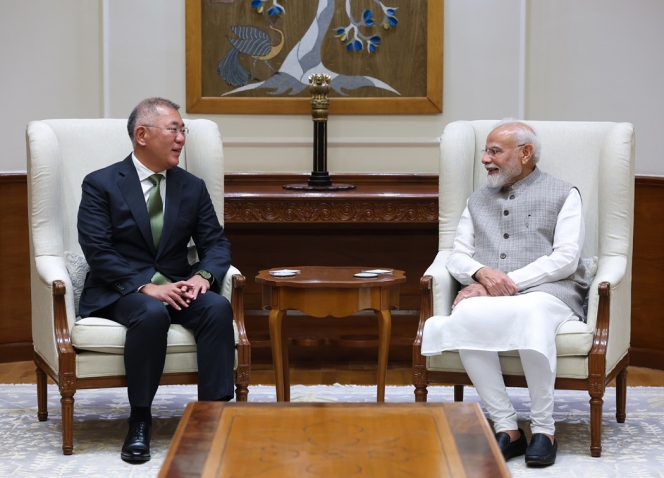
South Korean automotive major Hyundai Motor Group has announced a USD 15.5 billion investment plan for India from 2026 through 2032. The strategy was outlined during a meeting between Indian Prime Minister Narendra Modi and Hyundai Motor Group Executive Chair Euisun Chung at the Prime Minister’s Office in New Delhi.
To execute the 7-year plan, Hyundai Motor Group will establish a dedicated investment entity in India to manage capital allocation across manufacturing expansion, research and development, supply chain localisation and mobility services.
The investment includes an allocation of approximately USD 700 million to expand the Group's Indian R&D centre and build a vehicle testing track facility. Manufacturing expansion will focus on scaling production capacity across Hyundai Motor India and Kia India to support domestic sales and export operations.
At present, the Group maintains an annual production capacity exceeding 1.4 million vehicles in India across Hyundai facilities in Chennai (824,000 units) and Pune (170,000 units), alongside Kia India's Anantapur plant (431,000 units).
The investment strategy also targets local component sourcing, electric vehicle charging infrastructure, specialised vehicle financing, end-of-life vehicle recycling and startup investments across India's automotive sector.
"India remains one of Hyundai Motor Group’s most important and strategic markets globally. The past 30 years have been defined by our commitment to India. This investment reaffirms our commitment to India for the next 30 years and beyond. Through this investment, we will create more employment opportunities and work together with our partners and stakeholders to support India’s continued industrial development," said Chung.
- GreenCell Mobility
- Eversource Capital
- Impact Fund Denmark
- International Finance Corporation
- British International Investment
- Tata Capital
- Devndra Chawla
- Dhanpal Jhaveri
- Lars Bo Bertram
GreenCell Mobility Secures INR 3.3 Billion Investment From Impact Fund Denmark
- By MT Bureau
- October 13, 2026
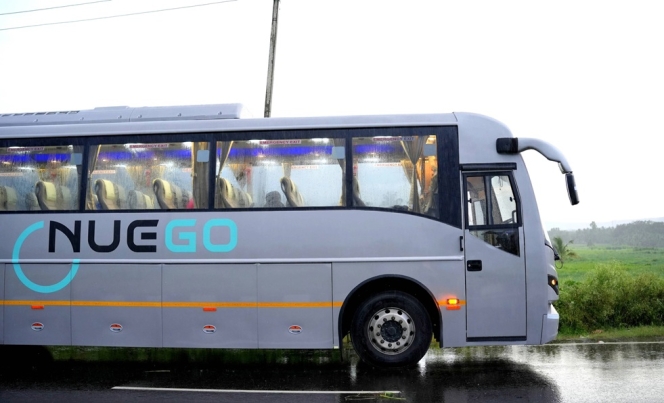
Electric bus operator GreenCell Mobility, a portfolio company of Eversource Capital, has secured an equity investment of INR 3.3 billion from Impact Fund Denmark. The capital will support the deployment of approximately 4,500 electric buses, bringing GreenCell's total fleet to over 5,000 e-buses across 105 cities in India.
The funding supports GreenCell Mobility's expanding order book across intra-city municipal transport and intercity routes. The platform operates as an original equipment manufacturer-agnostic operator, managing bus procurement, depot charging infrastructure and fleet maintenance contracts under public-private partnerships and private operations.
The investment joins existing institutional backers of GreenCell, including the International Finance Corporation, British International Investment and Tata Capital, as the company expands its operational footprint across urban transport corridors in India.
Dhanpal Jhaveri, CEO, Eversource Capital, said, "Electric public mobility is moving from an emerging opportunity to an investable infrastructure asset class in India. GreenCell was created with that conviction – to build the operating capabilities and institutional scale needed to build an enduring business. The equity investment from IFD demonstrates the depth of long-term institutional capital now backing GreenCell Mobility. The next phase is about putting that capital to work with discipline – expanding the business, deepening its capabilities and creating long-term value as India transitions to electric mobility."
Devndra Chawla, MD and CEO, GreenCell Mobility, said, "We welcome IFD as a shareholder and value the continued confidence of Eversource, IFC, BII and Tata Capital as we take GreenCell forward. We have established a strong presence across both intra-city and intercity transportation, with the operating experience to manage increasingly large and complex deployment. Our focus is on executing our order book with rigour, strengthening service delivery and ensuring that the organisation keeps pace with the size and complexity of our operations. This equity investment gives us greater headroom to accelerate our plans while maintaining the standards of reliability, efficiency and customer experience that are fundamental to our business."
Lars Bo Bertram, CEO of Impact Fund Denmark, said, "India is a central market for Impact Fund Denmark. GreenCell is a strong investment opportunity in a rapidly growing market, while also addressing one of India’s major challenges air pollution. Scaling electric transportation can contribute to cleaner cities and accelerate India’s green transition."
Euro NCAP 2026 Tests Reward Reintroduction Of Physical Driving Controls
- By MT Bureau
- October 13, 2026

Global vehicle safety assessment organisation Euro NCAP has released its latest testing results under 2026 evaluation protocols, highlighting a growing industry trend toward reintroducing physical buttons and switches for core driving functions. The update comes as European safety testing increasingly penalises reliance on central touchscreen interfaces for primary controls.
Under Euro NCAP's 2026 Safe Driving protocols, primary vehicle controls – including direction indicators, windscreen wipers, hazard lights, horn and emergency call buttons – must be accessible via physical controls rather than buried within touchscreen menus.
In the latest assessments, the Audi Q7 achieved a 90 percent score for driving controls, including a 100 percent rating for primary driving tasks, while the Kia EV2 also received high marks for ergonomic physical switchgear. Both vehicles secured 5-star overall safety ratings.
Conversely, Chinese manufacturer XPENG scored 20 percent for primary driving controls on its X9 MPV due to touchscreen menu dependence, despite obtaining a 5-star overall rating supported by crash avoidance and post-crash safety performance. Comparative testing across 2026 models showed European manufacturers generally scoring higher for physical switchgear, with the BMW iX3 scoring 100 percent and the CUPRA Raval scoring 80 percent, compared to lower scores for the ZEEKR 7GT at 20 percent and the Leapmotor B05 at 0 percent.
Dr. Aled Williams, Programme Director at Euro NCAP, said, "Euro NCAP is continually monitoring market trends, and the move toward placing as many driving controls within a car’s touchscreen system is one that has concerned us just as much as it has annoyed consumers. It is clear in these results that the XPENG adheres to the mantra that everything must be included in the touchscreen, despite overwhelmingly negative feedback by European car buyers. We applaud Audi and Kia for taking a more common-sense approach. Our latest protocols reward the intelligent use of physical buttons and controls, as this can reduce driver distraction, and both Audi’s new Q7 and Kia’s EV2 do an excellent job of keeping safety simple. Other manufacturers, including XPENG, would do well to follow this strategy."
The latest round of evaluations also awarded 5-star safety ratings to the BYD SHARK pickup truck under 2025-adapted protocols and a 4-star rating to the Mazda 2 Hybrid, carried over from the platform's Toyota Yaris architecture.
- Stellantis
- Tata Motors Passenger Vehicles
- Tata Passenger Electric Mobility
- Fiat India Automobiles
- Shailesh Chandra
- Tianshu Xin
Stellantis, Tata Motors Broaden Partnership For Advanced Vehicle Technology And Product Development
- By MT Bureau
- October 12, 2026
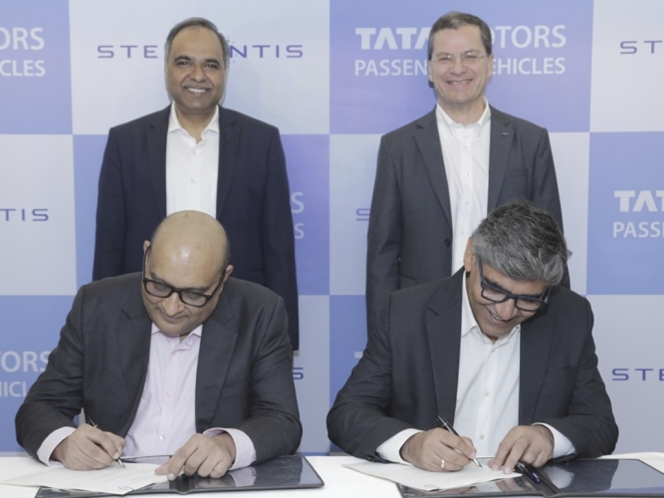
Stellantis India, Tata Motors Passenger Vehicles and Tata Passenger Electric Mobility have signed a definitive agreement expanding their long-standing partnership into vehicle technology and product architecture collaboration. The agreement builds on a Memorandum of Understanding signed in February 2026.
As per the terms, Tata Motors Passenger Vehicles will grant Stellantis access to its vehicle architectures and technology platforms. Stellantis will utilise its engineering resources in India to adapt these architectures for more than 50 international markets. Vehicles developed through the collaboration will be manufactured in India at Fiat India Automobiles, the 50:50 joint venture facility between Tata Motors and Stellantis located in Ranjangaon.
Shailesh Chandra, MD and CEO, Tata Motors Passenger Vehicles, said, "Our partnership with Stellantis has grown steadily over more than two decades, built on mutual trust and complementary strengths. This Agreement marks an important next step, extending our relationship into advanced vehicle technology and architecture, reflecting the strength and competitiveness of TMPV’s capabilities in these areas. We are delighted that Stellantis will leverage them to develop products for global markets. Together, we have an exciting opportunity to combine our respective strengths to create compelling vehicles engineered and made in India for customers in India and around the world."
Tianshu Xin, COO for Stellantis Asia-Pacific Region, said, "Partnerships are central to how Stellantis creates value across Asia-Pacific. By combining Tata Motors' strong capabilities in India with Stellantis' global product development and market reach, this Agreement will help us develop competitive vehicles in India and expand our export potential across international markets. It also reinforces India's growing role as a strategic manufacturing and development hub for Stellantis."
The agreement reinforces India's positioning as an engineering, product development and manufacturing export hub for both multi-national automotive corporations, integrating local supply chain scale with international market distribution networks.
Comments (0)
ADD COMMENT