

Toyota Kirloskar Motor Concludes Environment Month 2026
- By MT Bureau
- August 18, 2026
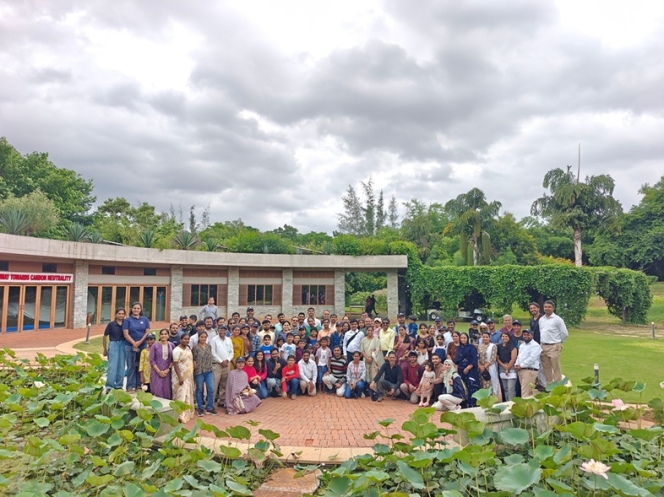
Toyota Kirloskar Motor, one of the leading passenger vehicle manufacturers, has concluded Environment Month 2026, an initiative focused on resource recycling and emissions reductions across its supply chain.
The programme involved over 13,600 workforce members, suppliers, dealership partners and community members under the Toyota Environmental Challenge 2050 framework.
The company recorded a reduction of 3,005-tonnes in carbon dioxide emissions, with internal operations contributing 895 tonnes and supply partners accounting for 2,110 tonnes. Water conservation efforts yielded savings of 16,806 kilolitres across operations and suppliers. Waste reduction measures removed 231 tonnes of material from disposal streams, alongside reductions in plastic and paper usage across the dealership network. In addition, manufacturing updates reduced volatile organic compound emissions by 3.19 grams per square metre, while dealership locations recorded 255 megawatt-hours in electricity savings.
The automaker introduced compressed biogas as a fuel source for cooking facilities, yielding an estimated reduction of 980 tonnes in carbon emissions. Internal programmes included eco-driving sessions for 1,700 employees, community tree planting projects resulting in 89,000 saplings and the ‘Hasiru Santhe’ exhibition showcasing recycling applications such as converting cotton waste into felt and copper scrap into valve components.
B. Padmanabha, Senior Executive Vice-President and Director of Manufacturing, Toyota Kirloskar Motor, said, "Environment Month 2026 demonstrated that sustainability thrives through collective action and shared responsibility across the entire value chain. The measurable outcomes we achieved—from carbon reductions to waste elimination—prove that when employees, families, suppliers, and communities align around environmental commitment, transformation is possible. This month was not just about awareness; it was about embedding circular thinking and resource consciousness into how we operate and live."
The initiative forms part of the automaker's ongoing environmental programmes, including the Toyota Green Wave Project, which monitors plant and animal species at company sites and the Ecozone educational programme for schools.
Ultium Cells To Upgrade US Facility For Prismatic LMR Battery Cell Production
- By MT Bureau
- September 30, 2026
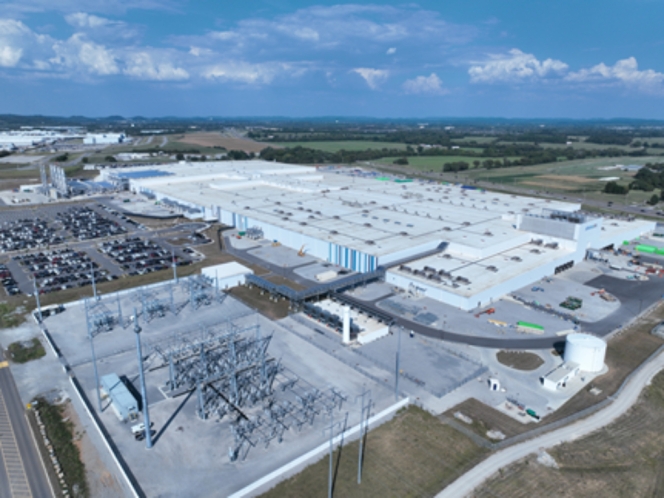
Ultium Cells, the joint venture between General Motors and LG Energy Solution, will upgrade its battery cell manufacturing plant in Spring Hill, Tennessee, United States, to produce lithium manganese rich (LMR) battery cells for General Motors electric vehicles.
The facility is scheduled to begin retooling later this year, with completion expected in 2028. The conversion will enable mass production of prismatic LMR cells, a chemistry which it claims offers up to 33 percent higher energy density than lithium iron phosphate (LFP) at a similar cost profile.
The project will create 500 positions, expanding the plant's existing workforce of 1,200 employees. The upgrade follows the start of LFP cell production for energy storage systems at the facility in June 2026, bringing cumulative investment across both projects to USD 1 billion by 2030.
The modification will allow Ultium Cells to manufacture high-nickel, LFP and LMR chemistries across pouch and prismatic form factors at the Tennessee site, supplying battery cells for General Motors' North American vehicle assembly plants and external stationary storage applications.
Kurt Kelty, Vice-President of Battery and Sustainability, GM, said, “Establishing LMR prismatic cell production at Ultium Cells in Spring Hill is a key step in GM’s strategy to match the right battery technology to customer needs and strengthen our leadership in domestic battery manufacturing and innovation. High-nickel batteries will continue to give customers the highest range in our portfolio, while adding LMR positions us to leapfrog today’s more affordable chemistries and deliver lower costs with better performance. This flexibility allows us to scale efficiently, reach more customers, and support GM’s long-term EV strategy and profitability journey.”
Tennessee Governor Bill Lee said, “Ultium Cells’ continued investment in Spring Hill underscores Tennessee’s role as a hub for advanced manufacturing and technological innovation. I thank Ultium Cells for their commitment to create new, high-quality jobs and to reinforce the strength of Tennessee’s manufacturing economy as we advance toward a future focused on clean, reliable energy.”
Injae Pahk, President, Ultium Cells, said, “This marks Ultium Cells’ second major investment in Spring Hill and reflects the company’s continued growth as a diversified battery cell manufacturer. By evolving production to meet changing market demands, Ultium Cells is reinforcing its long-term position as a key employer and technology leader in the U.S. battery cell sector.”
- Skoda Auto Volkswagen India
- Skoda Slavia
- Andreas Dick
- Skoda Auto
- Piyush Arora
- Ashish Gupta
- Skoda Auto India
Skoda Auto Volkswagen India Commences Production Of New Slavia Sedan At Pune Facility
- By MT Bureau
- September 28, 2026
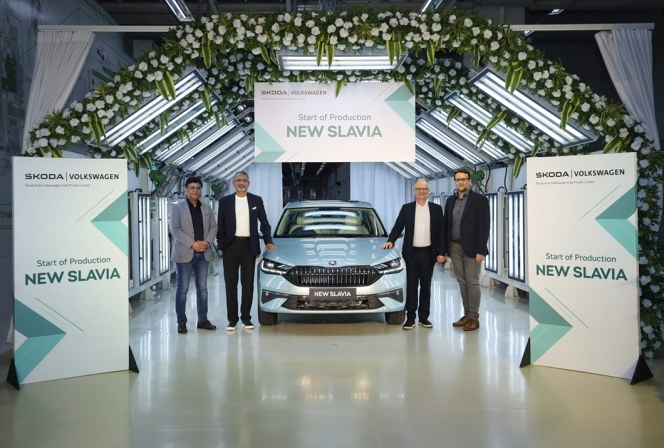
Skoda Auto Volkswagen India, one of the leading passenger vehicle manufacturers, has commenced production of the updated Skoda Slavia sedan at its manufacturing plant in Chakan, Pune, ahead of the festive sales period in India.
The Slavia model line has recorded sales of nearly 80,000 units in India since its initial launch, capturing a segment market share of approximately 30 percent in its segment. The revised version introduces mechanical updates, including an eight-speed torque converter automatic transmission paired with the 1.0-litre TSI petrol engine, alongside a 5-star Global NCAP safety rating. It also gets a rear seat massage function, a 360-degree camera system and an infotainment setup with a Google Cloud-powered artificial intelligence assistant.
Andreas Dick, Skoda Auto Chief Production Officer, said, "India has become an increasingly important production location for Skoda Auto and an integral part of our global manufacturing network. Over the years, we have built strong capabilities here, combining local expertise with Skoda Auto’s global standards for quality, efficiency and engineering. The start of production of the new Slavia is another demonstration of these capabilities and further underlines the strategic importance of India within our global operations. We are confident in the continued development of our Indian manufacturing capabilities and their contribution to Skoda Auto’s international growth."
Piyush Arora, Managing Director & CEO, Skoda Auto Volkswagen India, said, "The start of production of the new Slavia marks an important milestone in our India journey and demonstrates the strength of our development and manufacturing capabilities in the country. The Slavia has developed a strong fan base through its design, driving dynamics, safety and engineering, and the new model builds on these strengths with meaningful enhancements in technology, comfort and convenience. With production now underway in Pune, we look forward to bringing the latest evolution of the Slavia to our customers while continuing to deliver the quality and engineering excellence they expect from a Skoda."
Ashish Gupta, Brand Director, Skoda Auto India, said, “For over 90 years, sedans have been an integral part of our global heritage. The new Slavia proudly carries this legacy forward. With close to 30% segment share, the Slavia has earned the trust of Indian customers. The new Slavia elevates everything customers value about the car, combining timeless design, European engineering and safety, engaging performance, modern technology, and greater comfort. As we begin production of the new Slavia, we reaffirm our commitment to strengthening Skoda’s sedan legacy in India with products that remain fresh, relevant, and aspirational.”
The assembly of the model forms part of Skoda Auto Volkswagen India's manufacturing operations across its two facilities, which possess a total annual production capacity of 315,000 units. The group surpassed two million locally manufactured vehicles in 2025 and has exported over 725,000 units to more than 40 international markets, supported by product development and localisation efforts at its Technology Centre in Pune.
Audi India Commences Local Assembly Of All-New Audi Q3 At Chhatrapati Sambhajinagar
- By MT Bureau
- September 26, 2026
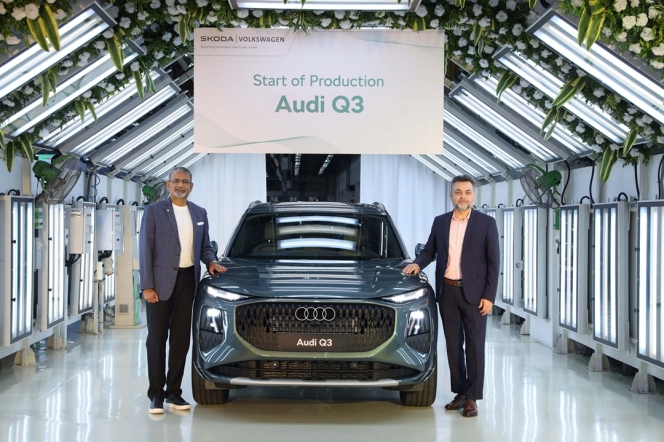
German luxury car brand Audi India has commenced local assembly of the all-new Audi Q3 at the Skoda Auto Volkswagen India (SAVWIPL) plant in Chhatrapati Sambhajinagar ahead of its official market launch on 16 October 2026.
The model is powered by a 2.0-litre petrol engine and features Audi's quattro all-wheel-drive system, combining standard compact SUV proportions with localised production.
Piyush Arora, MD and CEO, Skoda Auto Volkswagen India, said, “The start of production of the all-new Audi Q3 is an important milestone for our Group in India. It reflects the strong capabilities of our Chhatrapati Sambhajinagar facility and our commitment to supporting the growth of our brands in the country. We are proud to produce the latest Audi Q3 in India, with the same high standards of quality, precision and engineering excellence that define Audi globally.”
Balbir Singh Dhillon, Brand Director, Audi India, said, “Today marks a significant day for us as we begin the start of production and take another important step towards the launch of the all-new Audi Q3. The Audi Q3 has been an important gateway to the Audi brand, and this new generation is set to build on that success with its distinctive design, progressive technology and dynamic character. We see the all-new Audi Q3 as a strong catalyst for the next phase of our growth — helping us reach a broader customer base, strengthen our presence and further build the Audi brand in India.”
Bookings for the all-new Audi Q3 have opened across Audi India's official website, the myAudi Connect mobile application and the brand's dealership network in the country.
Creatara Mobility Opens Electric Two-Wheeler Manufacturing Plant In Faridabad
- By MT Bureau
- September 23, 2026
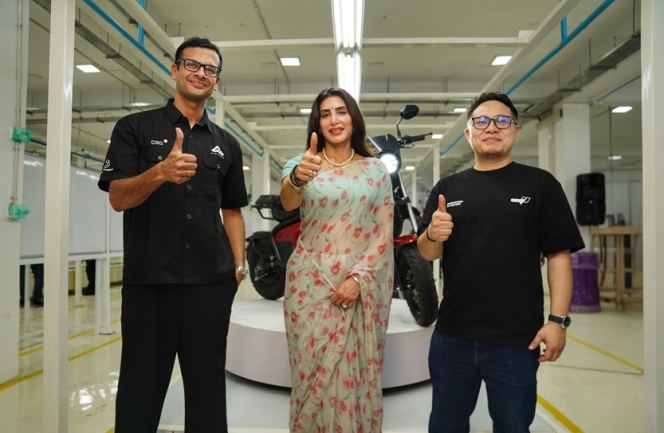
Electric two-wheeler startup Creatara Mobility has inaugurated its initial production facility in Faridabad, Haryana, featuring an installed annual production capacity of 30,000 units. The facility marks the transition from research and development to assembly for the vehicle startup.
Located in the Delhi-NCR, the plant will produce Creatara's IN40 and VM4 electric two-wheeler models for distribution in domestic and export markets. The e-scooter utilise a proprietary platform incorporating an artificial intelligence-ready Vehicle Control Unit alongside portable, swappable battery packs. The manufacturing facility operates using the Japanese 5S organisational method to standardise production processes across assembly, component testing and battery integration.
Vikas Gupta, Founder and CEO, Creatara Mobility, said, "Creatara’s journey has never been about factories first, but about a vision realised step by step. It began with an idea, evolved into a product, proved its potential and achieved certification. Now, that vision is being industrialised and scaled. The path has been deliberate: Build → Validate → Certify → Industrialise → Scale — each stage strengthening the next."
The company first displayed its vehicle prototypes in January 2025 before securing product certifications and establishing supply chain partnerships. Creatara's business model targets young demographics through vehicle customisation options and distinct body designs across its electric crossover segment.
Ringlarei Pamei, Co-Founder, Creatara Mobility, said, "We have built Creatara with disciplined capital. Our focus has never been to spend our way into scale. It has been to create capability at every stage — technology, product, certification, supply chain and now manufacturing. We believe there is tremendous opportunity for companies that can combine ambition with capital discipline and that is the model we want to build at Creatara."
Comments (0)
ADD COMMENT