

Becoming An Ambassador For Hyundai Was Confidence Invoking: Shahrukh Khan
- By 0
- April 05, 2020

 “I began to be part of Hyundai Motor India just when I was becoming an actor in Mumbai. At that time I don’t think there was anything like an ambassadorship or modelling for a car. To be a brand ambassador of Santro at that time was a moment of bigness for me, a great honour as Hyundai was well known in the world. In India the foreign car companies were just coming in so when I was asked to be the ambassador it was very confidence invoking.
I was also a little worried not knowing how it was going to pan out; this was in 1997. An international brand was coming to India with me. I was thinking whether I was good enough to be its ambassador. One never expected that even after 23 years we will be working together. It has been a good journey so far.
Handling Relationships
I listen to her (wife). To be honest, I have had many long associations in branding. I have been very clear that when a brand signs me on, it should be something that would go long-term. It can be long-term only if the brand is doing well. Being a brand ambassador might be fashionable and very cool but I think a brand ambassador cannot help if the product is not good. I speak from experience. I started branding and advertising as far as cinema is concerned for two products. I think I must have been the first person to do it in India on such a large scale.
Unless Hyundai is doing well I have no voice. I have been with them for 23 years because they have been able to do something good with their cars. When people say, “I’ve signed a new brand and am moving on,” I think you don’t move on unless your brand or product is not good enough. I have had discussions with a lot of people who want to bring in fresh blood but your product has to be good. Fresh blood in a brand ambassador can never do anything for a product that’s not doing well; that’s my belief. Unless you bring in something new these shifting and signing of brands is no big deal.
Cars Are Different
I remember when Y S Kim handed me the keys to the car I felt it was very technical. We used to talk about 1.6 litre engines, BHP etc, it was very different. Normally, most of the brands at that time were more lifestyle and fun so when a car came along; I think we did 5 films over 5 days for a long stretch. Everybody was going in for advertising; it was very different. Kim was very sweet. He would give me the keys and land up wherever I went. By the last ad he gave me the keys before going back to Korea saying, “Now you handle it.” Apart from that part the rest of it was very tough. To be honest I didn’t know where it was going.
From Santro To Creta
I tell everybody that I’m a Santro walla. Since I’m now the corporate brand ambassador I talk about Creta also but for me the all-time favourite is Santro; 3-4 years ago I requested the whole office to give me one. The reason for this is because I love the name. I think certain things have a great name and Santro just had one; it had a ring to it. The advertising with ‘Santrowale and Santrowala’ was very nice. Two years ago they made a special one for me
I’ll be honest in saying that I’m not a very big car person. For me cars have always meant more of transportation. Other than an extension of fashion, manhood or macho I have never been a big car fiend. Actually I have about 700 cars (miniature models) like this one in my house. I like these much better. For me it’s never been that I should get one if my friends have it. It’s a misnomer that I have a lot of luxury cars. I just use one car, which I believe should get you from one place to the other.
Liking Hyundai Cars
The finish is very nice and the cars have very clean lines; the inside is also very clean. Creta is robust and straightforward. It doesn’t have too many entanglements, looks basic and uncomplicated but at the same time sporty enough. It looks like an SUV with a minimal look without any clutter. Hyundai is quite minimalistic; the simplicity is a plus point.
I love driving. All the stunts in the films I have done myself with Hyundai cars. Now I don’t drive that much but at night I have to take my kids out for a drive. Of course I love that but there is too much traffic today, even at night. I have come here to Delhi a year and a half ago; wanted to show the kids my old house. I like the manual cars more.
Mobility As A Service
I was told that they are going into sharing and leasing. What I notice is that there was a time when people thought that learning how to drive was essential and necessary but today you don’t really need to learn to drive a car anymore, as sad as it may sound, especially to those who love driving. So how do you get around? I think you are going to utilize these services and it is fantastic for the car manufacturer to start doing this because essentially this business goes back to the people who are making the product. They are in the business of mobility so that is very good. The concept is not just to sell the car anymore but to highlight functionalities of safety, security, cleanliness, etc. It’s also as essential as selling the product. So I find my role getting more into that. As and when new things come in, like the new model Aura, my role would go more towards that. We would have to talk more on all the innovations than just the cars.” (MT)
Ashok Leyland Reports INR 8.69 Net Profit In Q2 FY2027
- By MT Bureau
- November 15, 2026
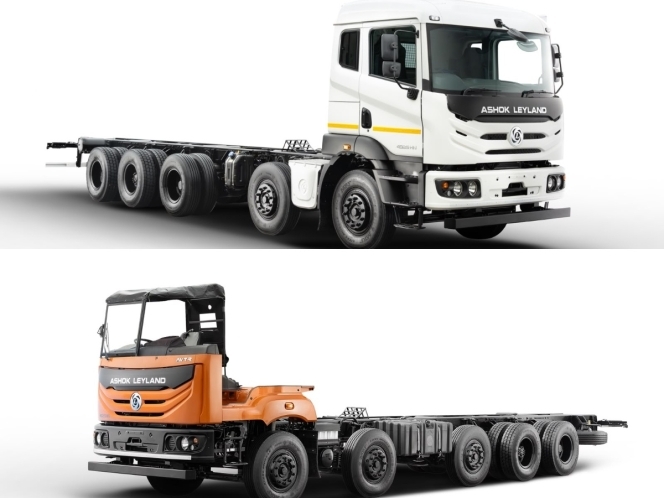
Chennai-headquartered commercial vehicle major Ashok Leyland, the flagship company of the Hinduja Group, has reported its financial results for Q2 FY2027. The company recorded wholesales of 64,677 units, a 32 percent increase from 49,116 units a year ago.
The company’s revenue grew 39 percent to INR 133.64 billion compared with INR 95.88 billion a year ago, EBITDA reached INR 13.50 billion at a margin of 10.1 percent, while profit before tax rose 14 percent to INR 11.87 billion and profit after tax increased 13 percent to INR 8.69 billion. The company ended the quarter with net cash of INR 35.46 billion, up from INR 9.90 billion a year ago.
In the medium and heavy commercial vehicle (MHCV) segment, volumes grew 44 percent YoY to 37,958 units, outpacing industry growth of 39 percent, while truck volumes rose 48 percent to secure a 31.5 percent market share excluding defence.
Light commercial vehicle (LCV) volumes increased 21 percent to 21,371 units, lifting VAHAN market share in addressable segments to 13.6 percent, while export volumes grew 7 percent to 5,102 units. Alongside growth in its defence, power solutions and aftermarket divisions, the company introduced products across the tipper, bus, haulage, and LCV categories and expanded its distribution network.
Dheeraj Hinduja, Chairman, Ashok Leyland, said, “Our record Q2 performance reflects the strength of Ashok Leyland’s business fundamentals, competitive product portfolio and strong customer focus. Our robust balance sheet provides a solid foundation to pursue our long-term growth ambitions. We are encouraged by the promising performance of our international business and continue to strengthen our presence in key export markets. Switch Mobility is also progressing well, with a strong outlook for the electric mobility business. With positive momentum across our businesses, we remain confident of sustaining profitable growth and creating long-term value for our stakeholders.”
Shenu Agarwal, MD and CEO, Ashok Leyland, said, “Our record Q2 performance, coupled with market share gains and fifteen consecutive quarters of double-digit EBITDA margins, reflects our consistent focus on profitable growth. Our strong cash position gives us the financial flexibility to invest in future technologies, innovation and new products, further strengthening our competitiveness. We are further investing in innovative product platforms and world class service processes, which would help us in sustaining our growth momentum.”
- Tata Motors Passenger Vehicles
- Shailesh Chandra
- Dhiman Gupta
- Jaguar Land Rover
- Richard Molyneux
- CNG
- EV
- China
- TATA.CARS
Tata Motors Targets 12-13% PV Growth In FY2027, Plans Major EV Production Ramp-Up
- By Nilesh Wadhwa
- November 13, 2026
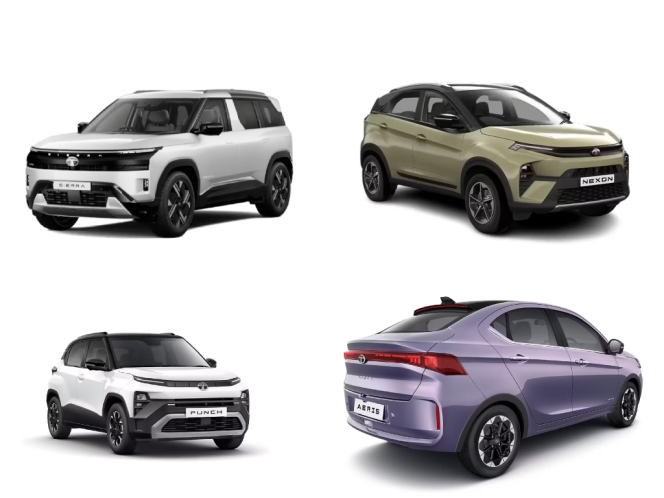
Tata Motors Passenger Vehicles expects to sustain double-digit growth of around 12-13 percent in FY2027, supported by strong demand across its portfolio, increasing penetration of electric vehicles (EVs) and CNG models, and an expanding product line-up. However, the company expects growth to moderate in the second half of the financial year as the industry navigates a high year-on-year base.
Speaking during the company's Q2 FY2027 earnings conference call, Shailesh Chandra, Managing Director, Tata Motors Passenger Vehicles, said the Indian passenger vehicle industry had registered 29 percent YoY growth, with absolute volumes expected to remain strong despite some moderation in growth rates.
Tata Motors recorded its highest-ever quarterly passenger vehicle volumes of approximately 200,000 units during Q2 FY2027, registering 40 percent YoY growth and securing a domestic market share of 14.3 percent. The company also reported market share of 14.8 percent in October 2026, with sales exceeding 75,000 units.
The Tata Punch emerged as the highest-selling passenger vehicle model in the industry during the quarter, while the Punch and Nexon both featured among the top five models. The recently launched Tata Aeris has also received an encouraging market response, adding to the company's growth momentum.
Chandra emphasised that the company's growth was being driven by demand across its portfolio rather than aggressive market-share acquisition. "We are not trying to buy market share; we are just trying to fulfil the demand, which exceeds supply," he said.
Green powertrains are becoming increasingly important to Tata Motors' passenger vehicle business, with EVs and CNG vehicles together accounting for approximately 50 percent of its sales.
The company's EV market share stood at 43 percent despite intensifying competition and the entry of almost all major automotive manufacturers into the segment. Chandra attributed the broader expansion of the EV market to improving product offerings, longer driving ranges, stronger warranty coverage and supportive regulations.
Tata Motors expects EV penetration to increase further as production capacity improves. The company currently has only around 10 days of EV inventory, reflecting demand that continues to outpace supply. Its EV production is expected to increase to nearly 20,000 units over the next two to three months, compared with approximately 9,000 units in the corresponding period of the previous year.
Chandra indicated that capacity constraints had prevented the company from fully capitalising on EV demand, with all manufacturing facilities operating at full capacity. The company estimates that it is currently addressing only around 60-65 percent of the demand-supply gap.
CNG is another significant growth driver. Industry CNG penetration has reached approximately 25 percent, with CNG passenger vehicle volumes growing around 70 percent. Increasing OEM participation, a wider choice of products and the expansion of the CNG refuelling network, which has reached approximately 9,000 stations, are supporting adoption.
Tata Motors has also witnessed its highest-ever quarterly CNG volumes. The company believes the segment has further headroom for growth, although supply constraints remain a limiting factor.
Supply chain remain priorities
With demand continuing to exceed supply in several segments, Tata Motors is focusing on improving production capabilities and addressing supply chain constraints.
The company acknowledged some pressure on semiconductor availability but said it had managed to secure supplies at higher costs without losing production. Supply-side challenges are also being addressed through capacity ramp-ups, particularly for electric vehicles.
Rural markets have emerged as another area of strength. Rural retail sales currently account for approximately 44-45 percent of Tata Motors' passenger vehicle sales, with recent growth in rural markets marginally outpacing urban demand. Chandra attributed this partly to the company's expansion of its reach in these markets.
The company expects the Indian passenger vehicle market to maintain healthy absolute volumes, although the 29 percent industry growth recorded in the second quarter is unlikely to be sustained at the same rate because of the elevated base.
Commodity inflation puts margins under pressure
Despite strong volume growth, profitability remains under pressure from rising commodity prices, foreign exchange movements and supply chain costs.
Tata Motors Passenger Vehicles reported its highest-ever quarterly revenue of approximately INR 204 billion, up 50 percent YoY, while profit before tax was around breakeven. The company also highlighted the impact of commodity inflation, particularly in steel, rubber, copper and precious metals.
Chandra said the company had exercised financial discipline through the first two quarters, absorbing significant cost increases while avoiding large price hikes. It is assessing which commodity cost increases are structural and which could moderate over time.
Dhiman Gupta, CFO, Tata Motors Passenger Vehicles, said approximately 40 percent of the cost impact had been offset through price increases and cost-reduction initiatives, with the balance absorbed through the profit and loss account. The company continues to monitor the situation and has not ruled out further price increases if required.
Chandra indicated that Tata Motors could consider another price hike in Q4 FY2027, depending on the trajectory of input costs. However, the company intends to take a measured approach rather than passing on temporary cost increases through immediate price adjustments.
He also noted that the company did not foresee an immediate discounting environment, given that dealer inventory remained below 30 days.
JLR maintains investment roadmap amid global challenges
Jaguar Land Rover continues to pursue its 5-year investment plan despite a challenging operating environment. Richard Molyneux, Chief Financial Officer, JLR, said the company had revised its FY2027 EBIT margin guidance to 2-3 percent and expected to be marginally cash-positive in the second half of the financial year.
The company is progressing with the production and ramp-up of the Range Rover Electric and Range Rover Sport Electric. The Range Rover GT is expected in early calendar year 2027, followed by the Jaguar Type 01 in FY2028 (calendar year 2027).
Molyneux said the revised guidance factored in the challenges anticipated by the company while maintaining its planned product introduction schedule.
China remains a concern for JLR, reflecting broader challenges faced by Western automotive manufacturers in the market. The company is actively reviewing its China strategy, with a focus on managing dealer inventories and avoiding excessive discounting to protect market positioning.
Demand visibility remains strong
For Tata Motors Passenger Vehicles, the immediate priority is to convert strong demand into sales through improved production capacity, particularly in EVs and CNG vehicles, while managing rising input costs.
Chandra reiterated the company's expectation of 12-13 percent growth in FY2027, with a stronger first half followed by a more moderate second half because of the high comparative base. With EV and CNG adoption gaining momentum, the company expects green powertrains to play an increasingly significant role in its growth strategy.
The ability to ramp up production, manage commodity inflation and maintain pricing discipline will be critical to translating the current demand momentum into sustainable growth and improved profitability.
Tata Motors Passenger Vehicles Reports Q2 FY27 Consolidated Revenue Of INR 969.2 Billion
- By MT Bureau
- November 13, 2026
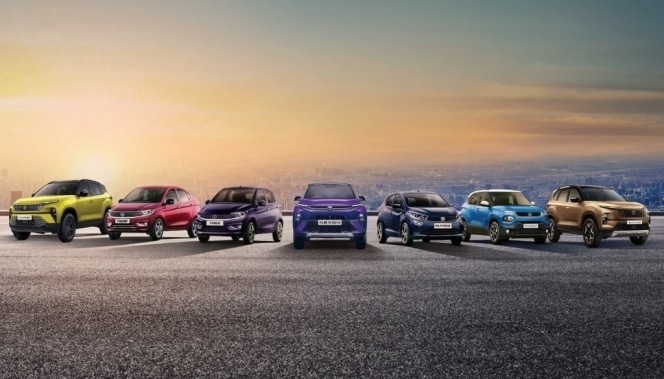
Tata Motors Passenger Vehicles has announced its financial results for Q2 FY2027, reporting consolidated revenue of INR 969.2 billion, representing a 34 percent YoY growth. Consolidated EBITDA reached 6.2 percent with an EBIT margin of 1.1 percent, while profit before tax, before exceptional items, stood at INR 4.03 billion.
During the quarter, the company incurred an exceptional expenditure of INR 67 billion for employee separation costs and asset impairments.
In Q2 FY2027, Tata Motors’ domestic passenger vehicles business recorded its highest quarterly revenue at INR 204.23 billion, up 51 percent YoY, driven by a 40 percent volume growth. Electric vehicle volumes grew 90 percent YoY, pushing alternative powertrains past 50 percent penetration, with electric vehicles accounting for 23 percent and compressed natural gas (CNG) models at 28 percent. The domestic unit registered an EBITDA margin of 4 percent and an EBIT margin of -0.3 percent, affected by commodity costs and foreign exchange pressures, while generating a positive free cash flow of INR 8.25 billion.
Tata Motors-owned British marquee luxury brand Jaguar Land Rover reported revenue of GBP 5.9 billion, a 20.3 percent increase YoY, supported by wholesale volume recovery following cyber incidents in the previous year.
Jaguar Land Rover posted an EBITDA margin of 6.6 percent and an adjusted EBIT margin of 1.1 percent, with a profit before tax and exceptional items of GBP 6 million. During the quarter, Jaguar Land Rover unveiled three luxury electric vehicles – the Range Rover Electric, Range Rover Sport Electric, and the Jaguar Type 01 – built in the United Kingdom, alongside restructuring provisions of GBP 530 million and a free cash outflow of GBP 540 million.
Dhiman Gupta, CFO, Tata Motors Passenger Vehicles, said, “In Q2 FY27 TMPV continued to build on its strong momentum in the domestic business, while JLR delivered resilient volumes despite global market specific challenges and wind-down of previous Jaguar models. However, adverse mix and persistent commodity pressures weighed on margins. Both businesses remain fundamentally strong, and we stay focused on executing our medium-term priorities: driving growth through new launches, accelerating cost reductions and improving cash generation.”
PB Balaji, CEO, Jaguar Land Rover, said, “JLR delivered positive operating profits in the second quarter and first half of the financial year, despite ongoing global challenges. We launched three new products: Range Rover Electric, Range Rover Sport Electric and the show stopping Jaguar Type 01 at a world premiere in New York. With the proposed arrival of Range Rover GT and a new electric Defender product in the new year, we are entering a phase of exciting product launches. This, together with our growth plans for the US and disciplined execution of the Enterprise Missions to reduce our breakeven volumes to 300k units, positions us well to deliver consistent, cash-accretive growth in the coming years. I would like to thank all our people, supply chain and retail partners for their continued support.”
Shailesh Chandra, MD and CEO, Tata Motors Passenger Vehicles, said, “Q2 FY27 was another quarter of strong execution for Tata Motors PV, with record quarterly sales of 200k+ units and industry-beating growth of 40% YoY reflecting robust customer demand across our portfolio. We maintained our leadership in electric mobility, recording industry-beating growth of 90 percent YoY in EV sales. Building on the momentum of our Q1 launches, we further strengthened our portfolio with new launchings including the all-new Tata Aeris. We also unveiled our new customer-facing identity, TATA.CARS, reflecting the evolution of our brand in step with the aspirations of today's Indian car buyer. We registered a Y-o-Y revenue growth of 51 percent and our highest ever quarterly revenues of INR 204 billion in Q2FY27. While steep commodity cost pressures remained a headwind, we responded through calibrated pricing and focused cost actions. Looking ahead, we remain focused on sustaining industry-beating growth, capitalizing on growing EV-penetration, ramping up production capacity and strengthening profitability.”
- Stellantis
- Global Supplier Conference and Awards
- FaSTLAne 2030
- Chrysler
- Dodge
- Jeep
- Ram
- Antonio Filosa
- Monica Genovese
Stellantis Recognises 61 Suppliers At 2026 Global Supplier Conference And Awards
- By MT Bureau
- November 13, 2026
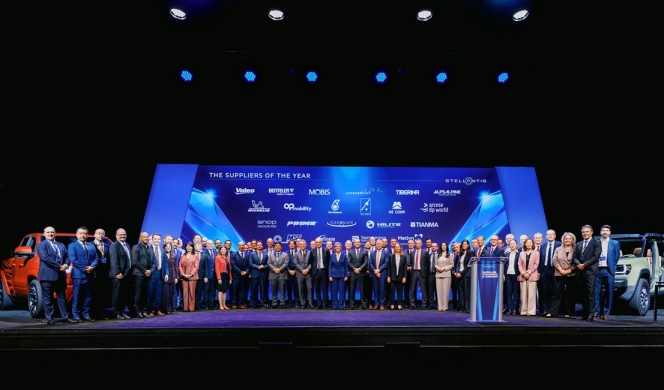
European auto major Stellantis recognised 61 suppliers from around the world on 10 November at its sixth annual Global Supplier Conference and Awards held at the Masonic Temple in Detroit.
During the event, 21 companies were named 2026 Suppliers of the Year, while 40 companies received recognition across categories covering materials, quality, innovation, programme management, corporate social responsibility, carbon reduction and value creation.
The conference brought together more than 1,000 supplier representatives and members of the Stellantis leadership team. Executives outlined priorities around programme launch execution, technologies, supplier engagement in design and quality standards to support the FaSTLAne 2030 strategy, alongside a presentation on Jeep brand strategy and the company's ties to the Chrysler, Dodge, Jeep and Ram brands in Detroit.
A cross-functional Stellantis team selected the recipients based on quality, delivery, innovation, operational and financial metrics, corporate social responsibility and competitiveness.
Antonio Filosa, CEO, Stellantis, said, “Delivering on our strategy requires us to move faster, innovate smarter and execute with excellence. Our suppliers are essential partners in this journey, helping us bring great products to market, strengthen our competitiveness and create greater value for our customers. Congratulations to all this year’s award winners, and thank you to our global supplier community for your partnership and continued commitment.”
Monica Genovese, Chief Purchasing Officer, Stellantis, said, “Strong supplier partnerships are built on trust, performance and continuous improvement. This year’s honourees distinguished themselves through their ability to deliver quality, innovation and value in a dynamic environment. Their performance strengthens our competitiveness and helps us create better outcomes for our customers.”
| 2026 Stellantis Supplier of the Year Award Winners | |||
| AE Corp | Financière SNOP Dunois | Michelin | Petronas |
| Alpine | Flex-N-Gate | Metivo | Prime Wheel |
| Alten | Hilite | MOBIS | Tapfin |
| Arcese DP World | Infineon | MST Steel | Tianma |
| Benteler | Luxshare | OP Mobility | Tiberina |
| Valeo | |||
| Additional Suppliers Recognised in the Supplier of the Year Categories | |||
| Acciona | Brose | Graphicient | Rediion |
| Adient | CATL | Kalyani | Sanai |
| Aisin | CBWEE | Kerry Logistics | Sansera Engineering |
| APL | Constellation | Magna | Sigit |
| APG | Desay | Mann+Hummel | Simoldes |
| Aumovio | DN Automotive | Metaplast | Solstice |
| Autoneum Holding AG | ENGIE | Oakley | Sona Comstar |
| BASF | Gestamp | Orafol | Sylvan |
| Brembo | GFX | Pirelli | TomTom |

Comments (0)
ADD COMMENT