


By T Murrali


Taking much attention to the details to make the car more Indian, Honda Cars India Ltd (HCIL), has come out with its fifth generation Honda City in India. It was first introduced in India in January 1998. Now in its new avatar, the car that was launched recently, has retained its original authentic shape of the sedan while reinventing itself according to the needs and aspirations of its customers across India. Available in three grades V, VX and ZX, the price of the ASEAN NCAP 5-star rated car ranges from INR 10.9lakh to INR 14.65lakh.
Developed at Honda R&D Centre located in Tochigi, Japan following extensive market surveys in India, ASEAN countries and other markets for people’s driving needs and lifestyles, the new car has been introduced in both petrol and diesel, powered by ‘earth dreams technology’ range of BS-VI compliant powertrains.
The 1.5L i-VTEC DOHC petrol engine with VTC delivers 89 kW (121PS) @6600 rpm 145 Nm@1750 rpm torque, with quicker torque increase at lower engine speed. Mated with 6-speed manual transmission and the new 7-speed CVT (Continuously Variable Transmission) the vehicle offers fuel efficiency of 17.8 kmpl and 18.4 kmpl respectively.
Mated with 6-speed manual transmission the 1.5L i-DTEC diesel variant delivers 73 kW [100 PS] @ 3600 rpm power, 200 Nm @1750 rpm torque and fuel economy of 24.1 kmpl. Application of advanced exhaust gas after-treatment system with NSC (NOx Storage Catalyst) and DPF (Diesel Particulate Filter) has been done to meet the challenging target of particulate matter (PM) and nitrogen oxide (NOx) emission in case of diesel engines.
At the launch programme the Chief Engineer, Large Project Leader, Honda Motor Corporation, Satoru Azumi, said, failure was not an option as there was pressure of 1.3billion Indians in his mind. Honda equals City in India but the new Indian customers needed something more. “We decided that the new City should be able to stand out in traffic. Therefore, the design has to have presence. What we have created is an interior space that make the user feel more space than what is actually there. Innovation at Honda is about doing and creating things that are yet to be.”


The inspiration for the new City is ‘Standing on the edge,’ which is designed to stand out in the crowd. The character line with advanced lighting and sharp edge, presence of tyres, low centre of gravity and sleek cabin motion.
Child’s View
The process that the Honda team followed to design the car began with asking six year old children to draw their vision of a car; to their surprise all of them drew sedans. So the team started with recreating the child’s understanding of a car. For the exterior the team was guided by the concept of ‘Standing on the edge.’ The entire body is shaped with the sharp edge character line right from the front to the rear. The sharp horizontal character line on the sides of the car is inspired by Katana blade (a Japanese sword) designed on the concept of cutting edge light. The profile creates its signature presence during day and night as well.
The technique of using a lower and longer trunk for large size category sedan was applied to make the car look even longer, eventually making the City a fusion sedan. This was the ambition of the team. “I am really competing with six year old kids,” Azumi said.
Conceptualised to carry forward its legacy, deliver supremacy and exceed the previous benchmark by offering a superior value proposition to its customers, the new City has been expanded making it the longest and widest sedan in its segment. The car is 4549 mm in length (109mm more than earlier generation) and 1748 mm in width (53 mm more). The height of the new model stands at 1489 mm and wheelbase of 2600 mm.
For the interiors the design team followed Sokai (evacuation in Japanese parlance) concept that makes the surroundings easy to see while driving. It creates a cabin more open while being secure. The focus was to minimise visual noise so that there is no distraction for the driver. The front-hood invisible length has been reduced by 42 percent, improving visibility further.
For The Saree Clad Women
The graceful way of sitting by a saree clad woman is usually cross-legged. As the folds of the saree around the feet should not get crumbled, the design team created more legroom in the rear. In addition, it adopted a scooped out frame for the front seats to create additional space. This helped in increasing the foot space width by 26mm and 31mm in the forward direction. By adopting a new frame for the front seat, the rear seat legroom and knee clearance were expanded. Besides, it optimised the torso angle. Considering the hot and humid weather conditions in India the seats have been given breathable fabric.
Connected Services
To make it contemporary it takes a huge leap in Connected Car Services with Next Generation of Honda Connect available as a standard offering across all grades along with a 5-year free subscription. It is India’s first connected car with Alexa remote capability and is equipped with next-generation Honda connect with Telematics Control Unit (TCU) standard across all grades. It has over 32 features to provide a sense of safety, security, convenience and peace of mind for customers. By giving voice commands to Alexa, the cloud-based voice service from Amazon, customers can use 10 key features of Honda Connect to monitor and control their car from home. Hence, they can remotely access features such as car AC on/ off, door lock/ unlock, check fuel status, locate the car, and status from the car dashboard, for unparalleled comfort and convenience.
The new City comes with full LED headlamps with 9-LED array inline shell, integrated LED DRL, L-shaped LED turn signal and distinct Z- shape 3D wrap-around LED tail lamps with uniform edge light. It also has a one-touch electric sunroof, R-16 diamond-cut alloy wheels and shark fin antenna. In addition to the stylish exterior, its interiors are based on ‘Man Maximum Machine Minimum’ philosophy as it has enhanced knee room and legroom, rear-seat shoulder room, an ergonomically designed cockpit, multiple storage spaces and 506 litres of truck capacity.
 - Copy.jpg)
Safety
To enhance safety the new car has been designed with Advanced Compatibility Engineering (ACE) body for self-protection while mitigating damage to other vehicles in the event of a collision. It offers a host of active and passive advanced safety features like six airbags system, ABS with EBD and brake assist, vehicle stability assist with agile handling assist, hill start assist, Honda lane watch camera, multi-angle rear camera, emergency stop signal, tyre pressure monitoring system, ISOFIX compatible rear side seats with lower anchorages & top tether, and immobilizer with anti-theft alarm.
For the convenience of the users the car is equipped with an advanced smart key system with the walk-away auto-lock feature, remote engine start (in CVT) and keyless window remote operation, fully automatic climate control with max cool, click feel AC dials with red-blue elimination, rear AC vents with charging ports, driver seat height adjuster, LED map and rear reading lamps.
The ergonomically designed and thoughtfully laid instrument panel sports the 20.3 cm advanced touchscreen display audio which connects with Apple Car Play and Android Auto opening new ways of staying social and digital on the drive. The other features include 17.7cm HD full-color TFT meter with multi-function driver information interface with G-meter, digital speed and cruise control display, weblink smart connectivity, eight-speakers premium surround sound system, ambient lighting and LED interior lamps, steering-mounted paddle shifters for CVT.
Gaku Nakanishi, President & CEO, Honda Cars India, said, “Honda City has been our key pillar of business for more than 22 years, being one of the longest-running nameplates in the Indian automotive history. With cumulative sales of more than four million units worldwide, it has provided joy to almost eight lakh customers in India and many more aspiring to own the model. Each generation of the City has raised the bar on design, technology, quality, driving pleasure, comfort & safety, and has come with several industry firsts or segment-first features.”
Rajesh Goel, Sr Vice President & Director, Marketing & Sales, Honda Cars India, said, “City customers have always been very discerning and want a car that is a class above the rest. Hence multiple ‘industry-first’ and ‘best in segment features’ for Styling, Connectivity, Safety and Convenience have been offered as standard from the entry V variant of the All-New City, setting a new benchmark for the segment.”
The new City is available five colour options - radiant red metallic, platinum white pearl, modern steel metallic, lunar silver metallic and golden brown metallic. It comes with three years of unlimited kilometres warranty as a standard benefit to the customer. Additionally, customers can opt for an extended warranty for an additional two years unlimited/limited kilometres for extra peace of mind. The car offers a low cost of maintenance with a service interval of one year/ 10,000km whichever is earlier.
The fifth-generation car also offers a wide array of accessory choices to customers with wireless charger (with smartphone holder), front parking sensor with switch, legroom lamp, trunk spoiler with LED, front & rear bumper protector, Side airbag compatible seat cover, Door visor with chrome among many others. (MT)
Toyota Kirloskar Motor Launches 2026 Fortuner Leader Edition In India
- By MT Bureau
- October 09, 2026
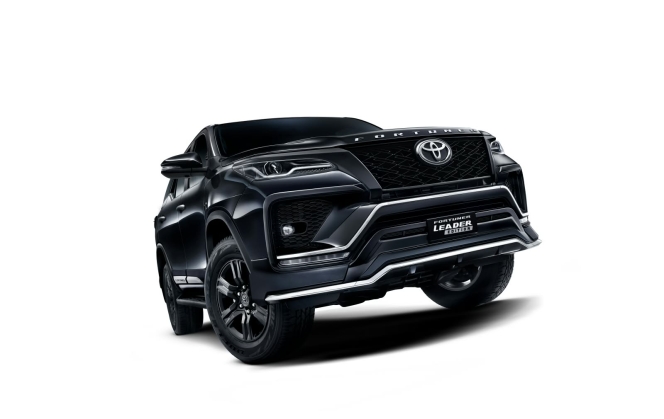
Toyota Kirloskar Motor, one of the leading passenger vehicle manufacturers in the country, has introduced the 2026 Fortuner Leader Edition in India, featuring exterior styling revisions and interior equipment updates.
Bookings for the model open on 12 October 2026 across company dealerships, with ex-showroom prices set at INR 3.65 million for the 4x2 Manual Transmission variant and INR 3.87 million for the 4x2 Automatic Transmission variant.
On the outside, the Leader Edition include the new redesigned front grille design, black rear door garnish, gloss black alloy wheels with matching hub caps, body side mouldings, a hood emblem and a black-finished roof and antenna.
In the cabin, the model features dual-tone black and maroon seat upholstery, matching door trims, ambient lighting and illuminated scuff plates. Additional functional additions comprise auto-folding outside rear-view mirrors and a tyre pressure monitoring system.
Sabari Manohar, Executive Vice-President of Sales-Service-Used Car Business, Toyota Kirloskar Motor, said, "The Fortuner has always represented confidence, capability and a spirit of achievement. With the new Leader Edition of the Fortuner, we are further defining this legacy through exterior enhancements and convenience features that reflect the aspirations of today’s customers. As we continue to align with changing trends, it is our endeavour to continuously evolve the Fortuner experience while staying true to the inherent qualities that have made them iconic. We are confident that the Leader Edition will further strengthen our commitment to delivering ever-better cars and creating Mass Happiness for All."
The model will be offered in three exterior colour options: Super White, Platinum White Pearl and Attitude Black. Toyota offers ownership packages with the vehicle, including a standard three-year or 100,000 km warranty extendable to five years or 220,000 km, 5-years of complimentary roadside assistance, and financing options up to seven years.
Kia India Expands Assured Buyback Scheme Across ICE, Hybrid And EV Portfolio
- By MT Bureau
- October 09, 2026
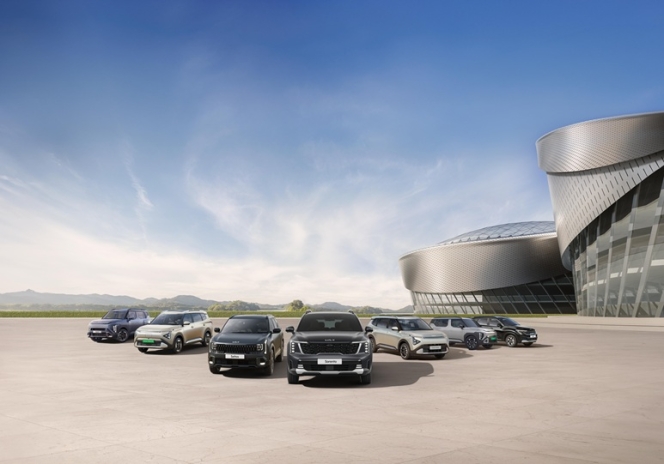
Kia India, one of the leading passenger vehicle manufacturers, has expanded its Assured Buyback Programme to cover internal combustion engine (ICE), hybrid and electric vehicle models.
The programme provides customers with predetermined residual values at the time of purchase to simplify vehicle trade-in and upgrade procedures.
Under the updated terms, eligible internal combustion engine vehicles carry an assured residual value of up to 75 percent after three years, while electric vehicle models offer up to 70 percent over the same timeframe.
The scheme encompasses Kia's product range, including the Sonet, Syros, new Seltos, Carens, Carens Clavis and Sorento across petrol, diesel, CNG, hybrid and electric powertrains.
Atul Sood, Senior Vice-President of Sales and Marketing, Kia India, said, "A vehicle purchase is a long-term decision, and customers increasingly seek greater certainty around future value and upgrade convenience. By expanding our Assured Buyback Programme with industry best resale value of upto 75 percent on ICE and upto 70 percent for EV in 3 years, we are enabling eligible customers to understand their vehicle’s assured residual value at the outset and plan their ownership journey with greater confidence. The initiative reflects our commitment to building enduring customer relationships and delivering consistent value from the first purchase through to the next exchange or upgrade."
The programme offers tenure options of three, four, or five years for ICE models and three or four years for electric vehicles. Annual mileage limits can be set at 10,000 km, 15,000 km or 20,000 km, supporting total usage caps of up to 100,000 km across the contract period. Enrolment is managed through authorised Kia dealerships at the point of vehicle purchase, with guaranteed buyback values executed at the end of the selected tenure subject to contract terms.
Renault Duster Strong Hybrid E-Tech 160 Claims 29 KMPL Fuel Efficiency
- By MT Bureau
- October 09, 2026
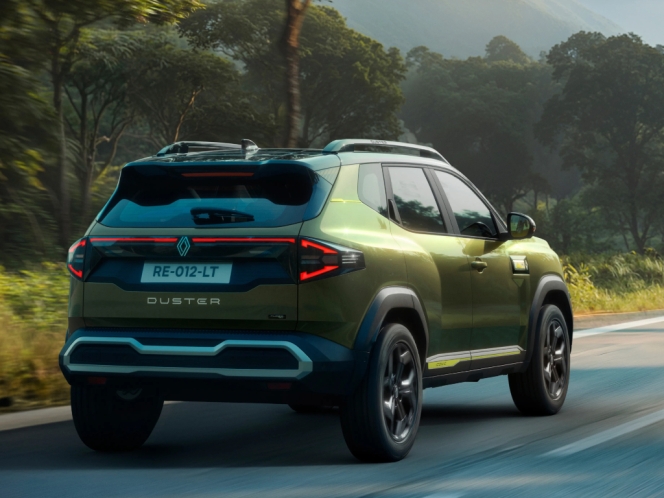
Renault India, one of the leading passenger vehicle manufacturers, has announced that its soon-to-be-launched Renault Duster strong hybrid E-Tech 160 has attained an ARAI-certified fuel efficiency rating of 29 kilometres per litre.
The company has started bookings for the model on 9 October 2026 across its dealership network and website for a booking amount of INR 21,000.
The SUV is powered by a strong-hybrid system combining a 1.8-litre petrol engine, two electric motors and a 1.4 kWh battery, producing a combined output of 160 PS. The system utilises a multi-mode automatic transmission to switch between combustion power, electric drive and energy recovery modes during deceleration. The onboard battery recharges through regenerative braking and engine operation without external charging infrastructure.
Francisco Hidalgo, Vice-President of Sales and Marketing, Renault Group India, said, "Bringing Renault’s proven E-Tech strong-hybrid technology from Europe to India is a significant moment for us. Indian SUV customers should not have to choose between performance and fuel efficiency. With a combined output of 160 PS and an ARAI-certified fuel efficiency of 29 km/litre, the Duster strong hybrid E-Tech 160 brings both together in a versatile SUV, without requiring external charging. For customers considering alternatives to diesel, it offers a compelling new choice for everyday driving. We are pleased to open bookings ahead of its official market debut."
The Duster strong hybrid E-Tech 160 marks the introduction of Renault's E-Tech powertrain technology in India under the company's regional product roadmap. The OEM will conduct the full product reveal and market launch on 17 October 2026.
Jaguar Electric Type 01 Grand Tourer Breaks Cover
- By MT Bureau
- October 07, 2026
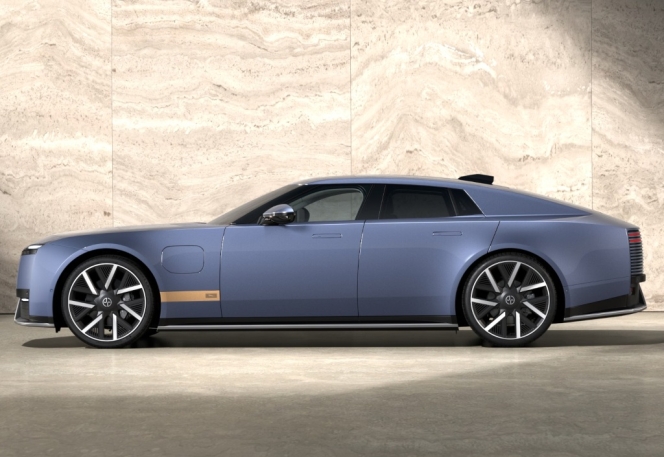
Jaguar has unveiled the Type 01, a four-door electric grand tourer, during a premiere event in New York. The model marks the start of the manufacturer's product architecture overhaul, with customer orders scheduled to open in early 2027 and initial deliveries expected in the second half of that year.
Designed, engineered and built in the United Kingdom, the Type 01 features a low roofline, long bonnet silhouette and aerodynamically focused body panels. Built on the bespoke Jaguar Electric Architecture, the 850-volt system produces over 1,000 PS of power. The electric vehicle provides an estimated 400-mile range under EPA testing standards, with 350kW rapid-charging capabilities adding 200 miles of range in 13 minutes.
During the event, Jaguar named actor Florence Pugh as the brand ambassador for its new product phase. The unveiling at STORIED in West Chelsea included displays detailing the vehicle's production engineering, structural panel development and testing protocols.
Rawdon Glover, Managing Director, Jaguar, said, "From its dramatic design to its captivating drive, Type 01 distils the essence of Jaguar into a luxury grand tourer for a new era. Type 01 is the foundation of this British brand, one that makes no compromise between design and engineering in our quest to create objects of desire, just as it was in the days of the E-type and XJS."
Comments (0)
ADD COMMENT