

Mahindra Drives In ‘Driven By Purpose’ Mobility Solutions
- By 0
- April 05, 2020

As the pioneer of electric mobility in India, the company displayed one of the widest ranges of EVs and related technology solutions, to demonstrate its commitment to be driven by purpose for a cleaner, greener tomorrow.
The company turned the spotlight on its range of EVs and solutions: Funster, ATOM and e-XUV300, e-KUV100, and e-Alfa Mini (Cart Version).

Funster: ‘Play-for-fun’ is the core experience that personifies Funster, which has been conceived as a sports electric vehicle. It enables seamless acceleration, available at the press of the throttle. With its dual electric motors and full-time AWD system, the vehicle offers a class-leading output of 230 kW with a top speed of 200 kmph, clocking 0 to 100 kmph in 5 seconds. Funster is equipped with a high-end 59.1 kWh battery pack, enabling an impressive range of 520 km on a single charge. The techy front end, floating tail lamps, sports-shoe inspired wheel arches and advanced interiors express an active sporty lifestyle as the new norm.
ATOM: Designed to appeal to the emerging new India and transform the face of last mile connectivity, ATOM is a combination of clean, comfortable and smart mobility. Powered by Mahindra’s latest electric drive system, the vehicle has a spacious interior and a monocoque body that offers a safe enclosure for occupants. It also comes equipped with a state of the art 4G connectivity system and aims to revolutionize the way Indians travel.
e-XUV300: An aspirational electric SUV developed as a perfect mobility solution for the environment-conscious customers and the ideal vehicle for those who desire thrilling performance. The vehicle is powered by a powerful motor that gives instant acceleration and at the same time the refinement and quiet drive of an EV. The large battery capacity ensures long range avoiding range anxiety. It has a futuristic design with new features, smart and premium interiors with blue highlights to accentuate the new character of this SUV. Most importantly, the vehicle has been built on a platform that has 5-star safety rating from GNCAP.

e-KUV100: This EV provides the benefits of driving an SUV combined with the unique advantages of an electric vehicle. The vehicle is ideally suited for daily city commutes to schools, offices, malls, etc. It offers peak power output of 40kW, torque of 120 Nm and a range of 147 kms, ensuring that daily commuting is easily covered. Fast charging can extend the range by 80 percent within 60 minutes. Its silent drive, coupled with an automatic transmission, offers a relaxing, fatigue free driving experience in chaotic city traffic. In addition to smartphone connectivity, onboard computers will allow for remote diagnostics, cabin pre-cooling, remote door lock/unlock, location tracking, monitoring of driving pattern and giving updates on the battery status.
The company showcased 2 variants of the Treo - the Lithium-ion battery electric 3-wheeler. The new Treo 3-wheeler features more than 20 new and improved EV components made in-house by Mahindra Electric. It also features an additional range extender that will increase the range by 60-70 km, along with a concept solar roof that can increase the range by another 26 km.
From the modular electric 3-wheeler platform comes another heavy-duty small electric commercial vehicle named Mahindra Treo Zor. This new model will feature best-in-class performance that will be ideal for a range of applications, from vegetable vendors, to e-commerce players. With a best-in-segment storage area, the cargo box of the Treo Zor can be accessed from all three-sides, enhancing its usability and convenience.

e-Alfa Mini (Cart Version): This battery-operated 3-wheeler represents an ideal solution for last-mile delivery. Built on e-Alfa Mini passenger vehicle platform, it boasts of a real-world range of 75-80 km with full load and an optional swappable battery pack. e-Alfa Cargo is just the beginning of the EV offerings for commercial applications from Mahindra.
Mahindra Electric unveiled its design-ready Mahindra Electric Scalable and Modular Architecture 350 (MESMA 350) which is a 350 volt powertrain that has been built from the ground up by the company. MESMA 350 supports motor sizes ranging from 60 kW to 280 kW, dual motor concepts and battery sizes up to 80 kWh. With this new platform, it is gearing up for the greater adoption of EVs that will help bring economies of scale, reduce cost and enable smaller variants/ models to be made in India.

Engines
In the BS-VI range the company displayed mStallion, its range of advanced BSVI-ready turbo gasoline direct injection, TGDi engines. Developed at the state-of-the-art Mahindra Research Valley, the mStallion range of gasoline engines have been designed, engineered, developed and tested to deliver thrilling performance across varied driving and traffic conditions. The mStallion range of engine is future- ready with state-of-the-art technology, which in current form is BSVI stage 1 and stage 2 compliant. This in turn is equivalent to Euro 6 C norms and is fully protected to meet Euro 6 D norms.
The mStallion engines have been built indigenously with support from such experts as Bosch, AVL, and Continental among others. The engines are powered by the TGDi technology and boast of best-in-class performance with the highest torque density. They deliver better fuel efficiency along with significant improvements in Noise-Vibration-Harshness parameters. Besides, they deliver excellent low-end torque and provide power-packed performance.
The company also showcased its new division CERO (Mahindra MSTC Recycling Pvt. Ltd.), India's first organised vehicle recycler. CERO stands for a world of zero waste and zero pollution through automobile recycling and reuse.
Dr Pawan Goenka, Managing Director, Mahindra & Mahindra Ltd, said, “As Mahindra enters its 75th year, our theme of Driven by Purpose will be the pillar on which we develop sustainable mobility solutions for the future. Our focus will not only be on growing our clean business unit through our electric mobility business but also to provide cleaner engines as we approach the implementation of BS-VI norms.”
Rajan Wadhera, President, Automotive Sector, Mahindra & Mahindra Ltd, said, “What gives us a sense of pride today is the display of our new M Stallion BSVI range of gasoline engines, which are truly world class with the highest level of technology. It is fitting that we choose to display these engines at an important industry event like the Auto Expo. I am particularly proud of our new range of BSVI trucks which have had minimal changes and offer a hassle free ownership experience. The launch of our CRUZIO range of buses is another significant step toward making us a full range player in the CV segment.”
Mahesh Babu, CEO, Mahindra Electric, said, “The products displayed at the 2020 Auto Expo clearly demonstrated Mahindra’s commitment to develop and manufacture EV technology in India. They also showcased our strength across a range of EV platforms in both the mass and personal mobility segments. The design-ready MESMA 350 volt powertrain will be made in India for the world.” (MT)
Ashok Leyland Reports INR 8.69 Net Profit In Q2 FY2027
- By MT Bureau
- November 15, 2026
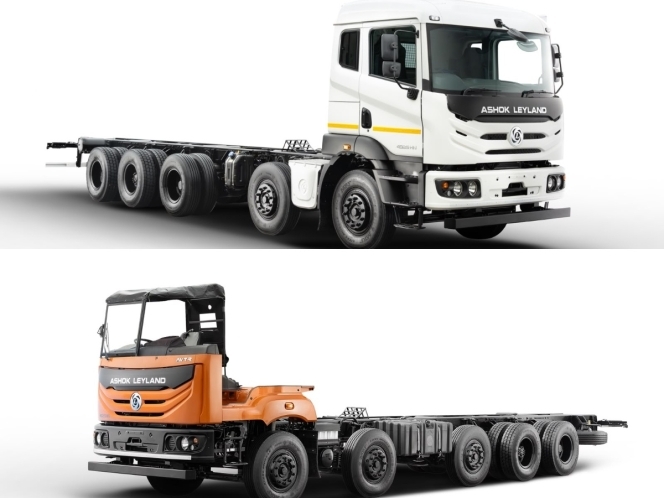
Chennai-headquartered commercial vehicle major Ashok Leyland, the flagship company of the Hinduja Group, has reported its financial results for Q2 FY2027. The company recorded wholesales of 64,677 units, a 32 percent increase from 49,116 units a year ago.
The company’s revenue grew 39 percent to INR 133.64 billion compared with INR 95.88 billion a year ago, EBITDA reached INR 13.50 billion at a margin of 10.1 percent, while profit before tax rose 14 percent to INR 11.87 billion and profit after tax increased 13 percent to INR 8.69 billion. The company ended the quarter with net cash of INR 35.46 billion, up from INR 9.90 billion a year ago.
In the medium and heavy commercial vehicle (MHCV) segment, volumes grew 44 percent YoY to 37,958 units, outpacing industry growth of 39 percent, while truck volumes rose 48 percent to secure a 31.5 percent market share excluding defence.
Light commercial vehicle (LCV) volumes increased 21 percent to 21,371 units, lifting VAHAN market share in addressable segments to 13.6 percent, while export volumes grew 7 percent to 5,102 units. Alongside growth in its defence, power solutions and aftermarket divisions, the company introduced products across the tipper, bus, haulage, and LCV categories and expanded its distribution network.
Dheeraj Hinduja, Chairman, Ashok Leyland, said, “Our record Q2 performance reflects the strength of Ashok Leyland’s business fundamentals, competitive product portfolio and strong customer focus. Our robust balance sheet provides a solid foundation to pursue our long-term growth ambitions. We are encouraged by the promising performance of our international business and continue to strengthen our presence in key export markets. Switch Mobility is also progressing well, with a strong outlook for the electric mobility business. With positive momentum across our businesses, we remain confident of sustaining profitable growth and creating long-term value for our stakeholders.”
Shenu Agarwal, MD and CEO, Ashok Leyland, said, “Our record Q2 performance, coupled with market share gains and fifteen consecutive quarters of double-digit EBITDA margins, reflects our consistent focus on profitable growth. Our strong cash position gives us the financial flexibility to invest in future technologies, innovation and new products, further strengthening our competitiveness. We are further investing in innovative product platforms and world class service processes, which would help us in sustaining our growth momentum.”
- Tata Motors Passenger Vehicles
- Shailesh Chandra
- Dhiman Gupta
- Jaguar Land Rover
- Richard Molyneux
- CNG
- EV
- China
- TATA.CARS
Tata Motors Targets 12-13% PV Growth In FY2027, Plans Major EV Production Ramp-Up
- By Nilesh Wadhwa
- November 13, 2026
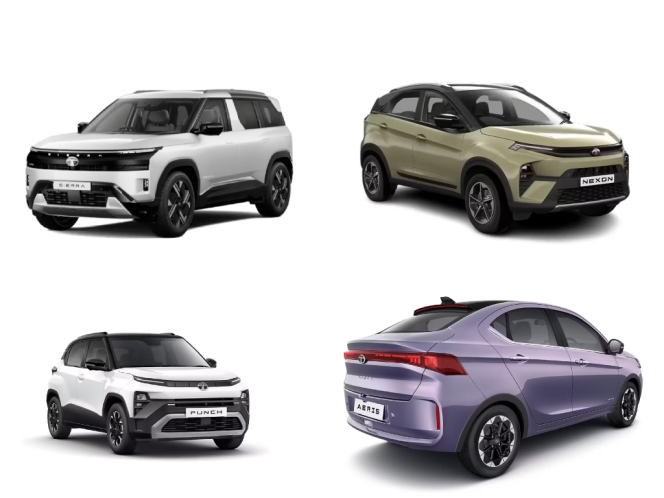
Tata Motors Passenger Vehicles expects to sustain double-digit growth of around 12-13 percent in FY2027, supported by strong demand across its portfolio, increasing penetration of electric vehicles (EVs) and CNG models, and an expanding product line-up. However, the company expects growth to moderate in the second half of the financial year as the industry navigates a high year-on-year base.
Speaking during the company's Q2 FY2027 earnings conference call, Shailesh Chandra, Managing Director, Tata Motors Passenger Vehicles, said the Indian passenger vehicle industry had registered 29 percent YoY growth, with absolute volumes expected to remain strong despite some moderation in growth rates.
Tata Motors recorded its highest-ever quarterly passenger vehicle volumes of approximately 200,000 units during Q2 FY2027, registering 40 percent YoY growth and securing a domestic market share of 14.3 percent. The company also reported market share of 14.8 percent in October 2026, with sales exceeding 75,000 units.
The Tata Punch emerged as the highest-selling passenger vehicle model in the industry during the quarter, while the Punch and Nexon both featured among the top five models. The recently launched Tata Aeris has also received an encouraging market response, adding to the company's growth momentum.
Chandra emphasised that the company's growth was being driven by demand across its portfolio rather than aggressive market-share acquisition. "We are not trying to buy market share; we are just trying to fulfil the demand, which exceeds supply," he said.
Green powertrains are becoming increasingly important to Tata Motors' passenger vehicle business, with EVs and CNG vehicles together accounting for approximately 50 percent of its sales.
The company's EV market share stood at 43 percent despite intensifying competition and the entry of almost all major automotive manufacturers into the segment. Chandra attributed the broader expansion of the EV market to improving product offerings, longer driving ranges, stronger warranty coverage and supportive regulations.
Tata Motors expects EV penetration to increase further as production capacity improves. The company currently has only around 10 days of EV inventory, reflecting demand that continues to outpace supply. Its EV production is expected to increase to nearly 20,000 units over the next two to three months, compared with approximately 9,000 units in the corresponding period of the previous year.
Chandra indicated that capacity constraints had prevented the company from fully capitalising on EV demand, with all manufacturing facilities operating at full capacity. The company estimates that it is currently addressing only around 60-65 percent of the demand-supply gap.
CNG is another significant growth driver. Industry CNG penetration has reached approximately 25 percent, with CNG passenger vehicle volumes growing around 70 percent. Increasing OEM participation, a wider choice of products and the expansion of the CNG refuelling network, which has reached approximately 9,000 stations, are supporting adoption.
Tata Motors has also witnessed its highest-ever quarterly CNG volumes. The company believes the segment has further headroom for growth, although supply constraints remain a limiting factor.
Supply chain remain priorities
With demand continuing to exceed supply in several segments, Tata Motors is focusing on improving production capabilities and addressing supply chain constraints.
The company acknowledged some pressure on semiconductor availability but said it had managed to secure supplies at higher costs without losing production. Supply-side challenges are also being addressed through capacity ramp-ups, particularly for electric vehicles.
Rural markets have emerged as another area of strength. Rural retail sales currently account for approximately 44-45 percent of Tata Motors' passenger vehicle sales, with recent growth in rural markets marginally outpacing urban demand. Chandra attributed this partly to the company's expansion of its reach in these markets.
The company expects the Indian passenger vehicle market to maintain healthy absolute volumes, although the 29 percent industry growth recorded in the second quarter is unlikely to be sustained at the same rate because of the elevated base.
Commodity inflation puts margins under pressure
Despite strong volume growth, profitability remains under pressure from rising commodity prices, foreign exchange movements and supply chain costs.
Tata Motors Passenger Vehicles reported its highest-ever quarterly revenue of approximately INR 204 billion, up 50 percent YoY, while profit before tax was around breakeven. The company also highlighted the impact of commodity inflation, particularly in steel, rubber, copper and precious metals.
Chandra said the company had exercised financial discipline through the first two quarters, absorbing significant cost increases while avoiding large price hikes. It is assessing which commodity cost increases are structural and which could moderate over time.
Dhiman Gupta, CFO, Tata Motors Passenger Vehicles, said approximately 40 percent of the cost impact had been offset through price increases and cost-reduction initiatives, with the balance absorbed through the profit and loss account. The company continues to monitor the situation and has not ruled out further price increases if required.
Chandra indicated that Tata Motors could consider another price hike in Q4 FY2027, depending on the trajectory of input costs. However, the company intends to take a measured approach rather than passing on temporary cost increases through immediate price adjustments.
He also noted that the company did not foresee an immediate discounting environment, given that dealer inventory remained below 30 days.
JLR maintains investment roadmap amid global challenges
Jaguar Land Rover continues to pursue its 5-year investment plan despite a challenging operating environment. Richard Molyneux, Chief Financial Officer, JLR, said the company had revised its FY2027 EBIT margin guidance to 2-3 percent and expected to be marginally cash-positive in the second half of the financial year.
The company is progressing with the production and ramp-up of the Range Rover Electric and Range Rover Sport Electric. The Range Rover GT is expected in early calendar year 2027, followed by the Jaguar Type 01 in FY2028 (calendar year 2027).
Molyneux said the revised guidance factored in the challenges anticipated by the company while maintaining its planned product introduction schedule.
China remains a concern for JLR, reflecting broader challenges faced by Western automotive manufacturers in the market. The company is actively reviewing its China strategy, with a focus on managing dealer inventories and avoiding excessive discounting to protect market positioning.
Demand visibility remains strong
For Tata Motors Passenger Vehicles, the immediate priority is to convert strong demand into sales through improved production capacity, particularly in EVs and CNG vehicles, while managing rising input costs.
Chandra reiterated the company's expectation of 12-13 percent growth in FY2027, with a stronger first half followed by a more moderate second half because of the high comparative base. With EV and CNG adoption gaining momentum, the company expects green powertrains to play an increasingly significant role in its growth strategy.
The ability to ramp up production, manage commodity inflation and maintain pricing discipline will be critical to translating the current demand momentum into sustainable growth and improved profitability.
Tata Motors Passenger Vehicles Reports Q2 FY27 Consolidated Revenue Of INR 969.2 Billion
- By MT Bureau
- November 13, 2026
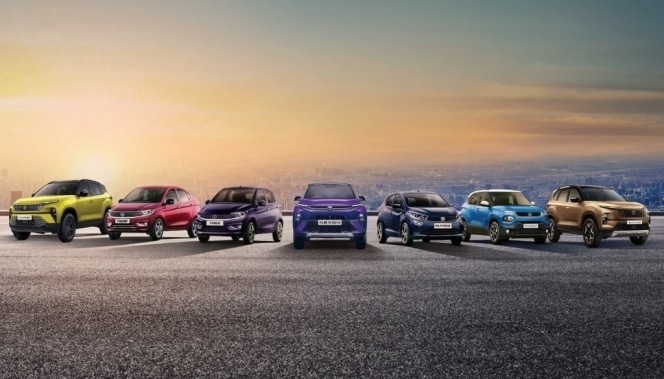
Tata Motors Passenger Vehicles has announced its financial results for Q2 FY2027, reporting consolidated revenue of INR 969.2 billion, representing a 34 percent YoY growth. Consolidated EBITDA reached 6.2 percent with an EBIT margin of 1.1 percent, while profit before tax, before exceptional items, stood at INR 4.03 billion.
During the quarter, the company incurred an exceptional expenditure of INR 67 billion for employee separation costs and asset impairments.
In Q2 FY2027, Tata Motors’ domestic passenger vehicles business recorded its highest quarterly revenue at INR 204.23 billion, up 51 percent YoY, driven by a 40 percent volume growth. Electric vehicle volumes grew 90 percent YoY, pushing alternative powertrains past 50 percent penetration, with electric vehicles accounting for 23 percent and compressed natural gas (CNG) models at 28 percent. The domestic unit registered an EBITDA margin of 4 percent and an EBIT margin of -0.3 percent, affected by commodity costs and foreign exchange pressures, while generating a positive free cash flow of INR 8.25 billion.
Tata Motors-owned British marquee luxury brand Jaguar Land Rover reported revenue of GBP 5.9 billion, a 20.3 percent increase YoY, supported by wholesale volume recovery following cyber incidents in the previous year.
Jaguar Land Rover posted an EBITDA margin of 6.6 percent and an adjusted EBIT margin of 1.1 percent, with a profit before tax and exceptional items of GBP 6 million. During the quarter, Jaguar Land Rover unveiled three luxury electric vehicles – the Range Rover Electric, Range Rover Sport Electric, and the Jaguar Type 01 – built in the United Kingdom, alongside restructuring provisions of GBP 530 million and a free cash outflow of GBP 540 million.
Dhiman Gupta, CFO, Tata Motors Passenger Vehicles, said, “In Q2 FY27 TMPV continued to build on its strong momentum in the domestic business, while JLR delivered resilient volumes despite global market specific challenges and wind-down of previous Jaguar models. However, adverse mix and persistent commodity pressures weighed on margins. Both businesses remain fundamentally strong, and we stay focused on executing our medium-term priorities: driving growth through new launches, accelerating cost reductions and improving cash generation.”
PB Balaji, CEO, Jaguar Land Rover, said, “JLR delivered positive operating profits in the second quarter and first half of the financial year, despite ongoing global challenges. We launched three new products: Range Rover Electric, Range Rover Sport Electric and the show stopping Jaguar Type 01 at a world premiere in New York. With the proposed arrival of Range Rover GT and a new electric Defender product in the new year, we are entering a phase of exciting product launches. This, together with our growth plans for the US and disciplined execution of the Enterprise Missions to reduce our breakeven volumes to 300k units, positions us well to deliver consistent, cash-accretive growth in the coming years. I would like to thank all our people, supply chain and retail partners for their continued support.”
Shailesh Chandra, MD and CEO, Tata Motors Passenger Vehicles, said, “Q2 FY27 was another quarter of strong execution for Tata Motors PV, with record quarterly sales of 200k+ units and industry-beating growth of 40% YoY reflecting robust customer demand across our portfolio. We maintained our leadership in electric mobility, recording industry-beating growth of 90 percent YoY in EV sales. Building on the momentum of our Q1 launches, we further strengthened our portfolio with new launchings including the all-new Tata Aeris. We also unveiled our new customer-facing identity, TATA.CARS, reflecting the evolution of our brand in step with the aspirations of today's Indian car buyer. We registered a Y-o-Y revenue growth of 51 percent and our highest ever quarterly revenues of INR 204 billion in Q2FY27. While steep commodity cost pressures remained a headwind, we responded through calibrated pricing and focused cost actions. Looking ahead, we remain focused on sustaining industry-beating growth, capitalizing on growing EV-penetration, ramping up production capacity and strengthening profitability.”
- Stellantis
- Global Supplier Conference and Awards
- FaSTLAne 2030
- Chrysler
- Dodge
- Jeep
- Ram
- Antonio Filosa
- Monica Genovese
Stellantis Recognises 61 Suppliers At 2026 Global Supplier Conference And Awards
- By MT Bureau
- November 13, 2026
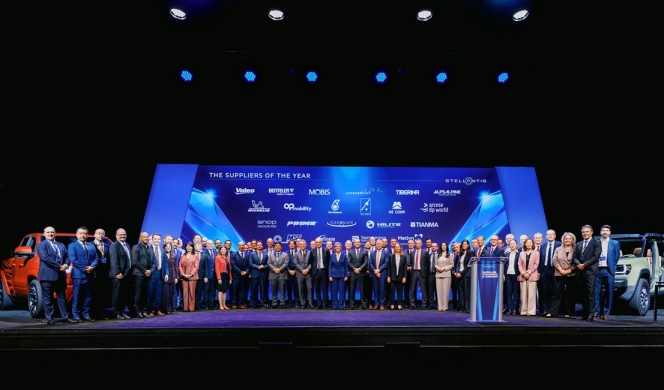
European auto major Stellantis recognised 61 suppliers from around the world on 10 November at its sixth annual Global Supplier Conference and Awards held at the Masonic Temple in Detroit.
During the event, 21 companies were named 2026 Suppliers of the Year, while 40 companies received recognition across categories covering materials, quality, innovation, programme management, corporate social responsibility, carbon reduction and value creation.
The conference brought together more than 1,000 supplier representatives and members of the Stellantis leadership team. Executives outlined priorities around programme launch execution, technologies, supplier engagement in design and quality standards to support the FaSTLAne 2030 strategy, alongside a presentation on Jeep brand strategy and the company's ties to the Chrysler, Dodge, Jeep and Ram brands in Detroit.
A cross-functional Stellantis team selected the recipients based on quality, delivery, innovation, operational and financial metrics, corporate social responsibility and competitiveness.
Antonio Filosa, CEO, Stellantis, said, “Delivering on our strategy requires us to move faster, innovate smarter and execute with excellence. Our suppliers are essential partners in this journey, helping us bring great products to market, strengthen our competitiveness and create greater value for our customers. Congratulations to all this year’s award winners, and thank you to our global supplier community for your partnership and continued commitment.”
Monica Genovese, Chief Purchasing Officer, Stellantis, said, “Strong supplier partnerships are built on trust, performance and continuous improvement. This year’s honourees distinguished themselves through their ability to deliver quality, innovation and value in a dynamic environment. Their performance strengthens our competitiveness and helps us create better outcomes for our customers.”
| 2026 Stellantis Supplier of the Year Award Winners | |||
| AE Corp | Financière SNOP Dunois | Michelin | Petronas |
| Alpine | Flex-N-Gate | Metivo | Prime Wheel |
| Alten | Hilite | MOBIS | Tapfin |
| Arcese DP World | Infineon | MST Steel | Tianma |
| Benteler | Luxshare | OP Mobility | Tiberina |
| Valeo | |||
| Additional Suppliers Recognised in the Supplier of the Year Categories | |||
| Acciona | Brose | Graphicient | Rediion |
| Adient | CATL | Kalyani | Sanai |
| Aisin | CBWEE | Kerry Logistics | Sansera Engineering |
| APL | Constellation | Magna | Sigit |
| APG | Desay | Mann+Hummel | Simoldes |
| Aumovio | DN Automotive | Metaplast | Solstice |
| Autoneum Holding AG | ENGIE | Oakley | Sona Comstar |
| BASF | Gestamp | Orafol | Sylvan |
| Brembo | GFX | Pirelli | TomTom |


Comments (0)
ADD COMMENT