

Skoda Kodiaq RS SUV Sells Out In 6 Minutes In India
- By MT Bureau
- June 23, 2026
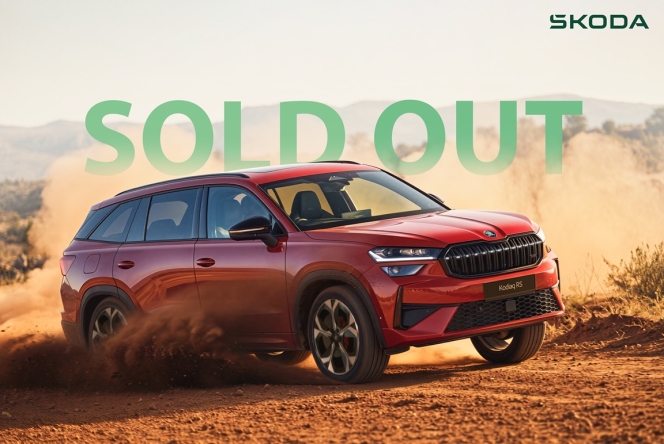
Czech automaker Skoda Auto India has announced that its new Kodiaq RS SUV has sold out within six minutes of its release. The limited run of 50 units was offered as part of the brand’s ‘Surrender’ campaign, marking 125 years of Skoda in motorsport and the 51st anniversary of the RS badge.
This achievement follows the performance of the Octavia RS, which sold out in 20 minutes in 2025.
Ashish Gupta, Brand Director, Skoda Auto India, said: “The RS has stood as a global icon for over half a century, with a passionate following in India for more than two decades. With the ‘Surrender’ campaign, we brought to customers a unique combination of performance and versatility in the Kodiaq RS. We are delighted—though not surprised – to see customers truly ‘surrender’ to its motorsport heritage, 4x4 capability, 7-seat luxury, and its standing as the quickest Skoda in India.”
The Skoda Kodiaq RS is powered by a 2.0 TSI engine producing 195 kW (265 PS) and 400 Nm of torque. It features a 7-speed DSG transmission with all-wheel drive, it can accelerate from zero to 100 kmph in a claimed 6.3 seconds and a top speed of 231 kmph. The vehicles is equipped with a dynamic sound boost, progressive steering and Dynamic Chassis Control Plus (DCC Plus).
The exterior features black accents on the grille, ORVMs, window trims, roof rails and D-pillars. The interior includes black leather upholstery with red stitching. The model is available in four colours: Moon White, Magic Black, Velvet Red and Steel Grey.
Hyundai Unveils India-Spec Bayon Ahead Of 26 October Launch
- By MT Bureau
- October 12, 2026
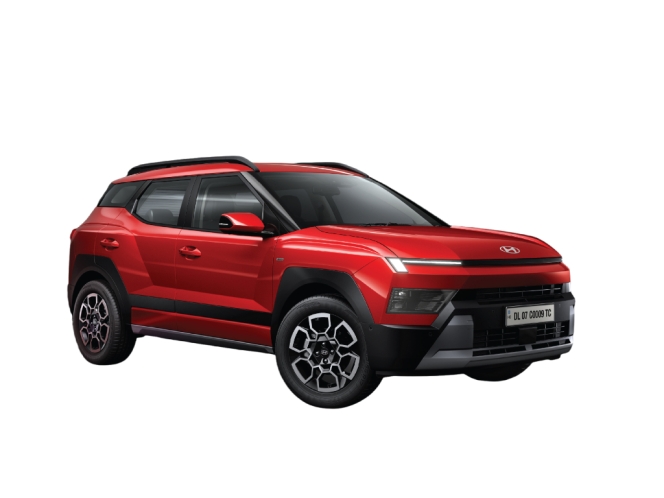
Hyundai Motor India, one of the leading passenger vehicle manufacturers, has revealed the India-spec Hyundai Bayon, with bookings opening across company dealerships and online sales channels ahead of its scheduled launch on 26 October 2026.
The SUV introduces software and connectivity features, including Hyundai Motor India's first generative artificial intelligence (AI) voice assistant incorporating technology from Perplexity and SoundHound AI.
The Bayon is powered by a four-cylinder 1.5-litre MPi petrol engine generating 115 PS of power and 144 Nm of torque. Transmission options include a six-speed manual transmission and an Intelligent Variable Transmission. It also integrates over 70 connected features via the Hyundai Bluelink platform, including remote vehicle controls, smartwatch integration, and location services.
Built on an NVIDIA-accelerated Connected Car Navigation Cockpit, it supports up to 19 over-the-air vehicle controller updates for remote software maintenance and features dual 12.3-inch curved panoramic displays. The infotainment architecture supports a multi-language user interface across 10 regional and two international languages, alongside over 500 offline embedded voice commands across six languages.
Tarun Garg, MD & CEO, Hyundai Motor India, said, "With Hyundai Bayon, we are introducing an Intelligent Utility Vehicle that places technology and convenience at the heart of the customer experience. Guided by the philosophy of ‘Intelligence That Moves,’ Bayon seamlessly integrates Artificial Intelligence, advanced connectivity and software-driven innovation to create a mobility experience that is intuitive, evolving and deeply personalised. Through segment-defining technologies & features such as HMIL's first-ever Generative AI Voice Assistant, NVIDIA-accelerated Connected Car Navigation Cockpit (ccNC), Vehicle Controller Over-the-Air (C-OTA) updates and Hyundai Bluelink connected features, Bayon represents the next generation of intelligent mobility for Indian customers."
- Stellantis
- Alfa Romeo
- Citroën
- DS Automobiles
- FIAT
- Opel
- Peugeot
- Paris Motor Show
- 2 CV
- Multiplay
- STX
- STLA One
- RCZ Vision
- DS F3VER
- Alfa Romeo Cuorerosso
- Gilles Vidal
- Antonio Filosa
- Emanuele Cappellano
- FaSTLAne 2030
Stellantis Unveils 6 Concept Vehicles Ahead Of Paris Motor Show
- By MT Bureau
- October 12, 2026
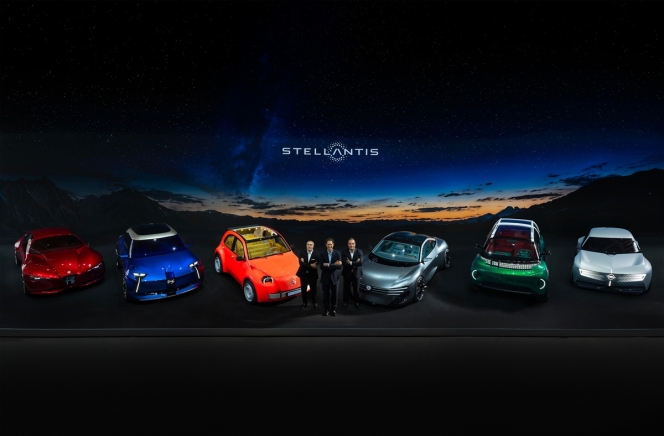
European auto major Stellantis hosted an executive preview event in Paris, introducing six concept vehicles across its brand portfolio ahead of the Paris Motor Show. The reveals span models from Alfa Romeo, Citroën, DS Automobiles, FIAT, Opel and Peugeot, forming part of a broader exhibition featuring over 60 vehicles and nine concept cars across eight corporate brands.
The introduced concepts reflect distinct engineering and design directions for each brand. The Alfa Romeo Cuorerosso concept presents a multi-energy architecture capable of accommodating models up to 4.7 metres in length, including a 2.9-litre V6 full-hybrid powertrain with all-wheel drive.
Citroën unveiled the 2 CV Concept, an electric vehicle targeted for European production at a EUR 15,000 price point. FIAT showcased the Multiplay, a configurable vehicle architecture combining pickup and utility vehicle traits inspired by the original Multipla design.
Opel presented the STX Concept, outlining design elements and lighting signatures for future estate models, while Peugeot revealed the RCZ Vision built on the STLA One platform and featuring steer-by-wire technology alongside updated cabin controls.
DS Automobiles displayed the DS F3VER concept, focusing on vehicle customisation and design parameters for future production models.
Gilles Vidal, Head of Design, Enlarged Europe at Stellantis, said, "With these six concept cars, we are expressing a shared conviction: the future of automotive design must be both bold and meaningful. Each concept explores new ways to enhance everyday experiences while reinforcing the unique identity of its brand. Together, they demonstrate how creativity, innovation and emotion can come together to make people fall in love with cars again."
Antonio Filosa, CEO, Stellantis, said, "This event brings our FaSTLAne 2030 strategy to life. It reflects the extraordinary effort of our teams and our commitment to shaping the future of mobility through iconic brands, compelling design and innovative technology, giving customers more choice and more reasons to be excited about what’s ahead."
Emanuele Cappellano, COO for Enlarged Europe, Stellantis, said, "Stellantis is deeply rooted in Europe and holds a leading position that will be strengthened by the success of all our brands. Stellantis wants to fully leverage the competitive advantage set by its iconic brands’ uniqueness, offering cars that are at once rooted in heritage and future-driven, based on robust know-how and distinguished by their unmatched design beauty, to shape the future of mobility with more than 50 products to be launched by 2030. These achievements, based on the execution of our strategic plan, will enable Stellantis to expand its market coverage in Enlarged Europe by 25 percent."
The concept unveils support Stellantis's broader product development roadmap, which targets the introduction of over 50 vehicle models by 2030 and a 25 percent expansion in European market coverage.
AVATR Announces European Expansion Strategy Starting With Norway And Spain Entry In 2027
- By MT Bureau
- October 12, 2026
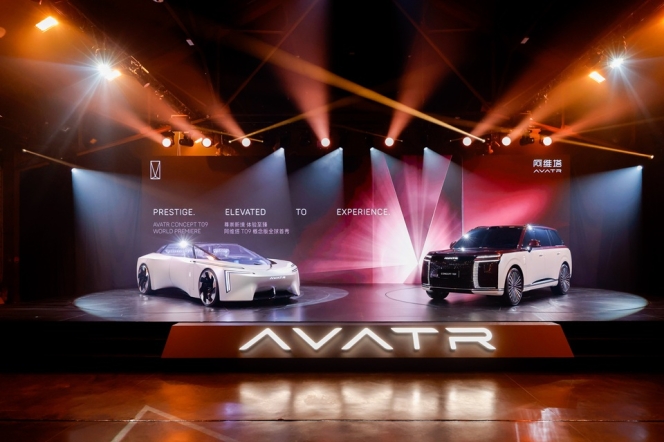
Chinese premium electric vehicle brand AVATR announced its entry into the European market at an event in Paris, marking the next phase of its global growth plan. The manufacturer will initiate European retail operations in 2027, launching first in Norway and Spain with the AVATR 06T and 07L models.
AVATR operates as a joint initiative combining vehicle manufacturing from Changan Automobile, battery technology from CATL and software engineering capabilities from a technology enterprise, with design operations split between hubs in Shanghai and Munich.
Over the next three years, AVATR plans to introduce six models in Europe across mid-size SUV, large SUV and shooting-brake body styles. The company currently operates in 70 countries and regions, with global sales exceeding 280,000 units. AVATR targets expansion into 110 countries and regions by 2030, projecting overseas sales to represent more than 50 per cent of its total volume.
Justin Li, Head of AVATR Overseas Business, said, "AVATR has been a global brand from the very beginning. Over the next three years, six models will be launched in Europe spanning mid‑size SUVs, large SUVs and shooting‑brake body styles. In 2027, Norway and Spain will serve as AVATR’s European launch markets, where the AVATR 06T and 07L will make their European debut, officially embarking on a new journey for AVATR in Europe."
To establish its European retail and service infrastructure, AVATR has partnered with Nordic automotive importer RSA in Norway. The collaboration will establish two flagship locations in Oslo alongside additional experience centres and regional distribution points across major Norwegian cities. The company is setting up a localised service network, factory training programs and a European spare-parts logistics framework to support maintenance, roadside assistance and battery recycling operations.
Toyota Kirloskar Motor Launches 2026 Fortuner Leader Edition In India
- By MT Bureau
- October 09, 2026
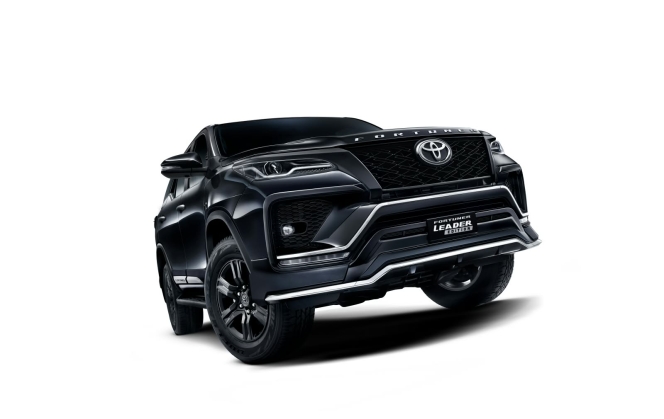
Toyota Kirloskar Motor, one of the leading passenger vehicle manufacturers in the country, has introduced the 2026 Fortuner Leader Edition in India, featuring exterior styling revisions and interior equipment updates.
Bookings for the model open on 12 October 2026 across company dealerships, with ex-showroom prices set at INR 3.65 million for the 4x2 Manual Transmission variant and INR 3.87 million for the 4x2 Automatic Transmission variant.
On the outside, the Leader Edition include the new redesigned front grille design, black rear door garnish, gloss black alloy wheels with matching hub caps, body side mouldings, a hood emblem and a black-finished roof and antenna.
In the cabin, the model features dual-tone black and maroon seat upholstery, matching door trims, ambient lighting and illuminated scuff plates. Additional functional additions comprise auto-folding outside rear-view mirrors and a tyre pressure monitoring system.
Sabari Manohar, Executive Vice-President of Sales-Service-Used Car Business, Toyota Kirloskar Motor, said, "The Fortuner has always represented confidence, capability and a spirit of achievement. With the new Leader Edition of the Fortuner, we are further defining this legacy through exterior enhancements and convenience features that reflect the aspirations of today’s customers. As we continue to align with changing trends, it is our endeavour to continuously evolve the Fortuner experience while staying true to the inherent qualities that have made them iconic. We are confident that the Leader Edition will further strengthen our commitment to delivering ever-better cars and creating Mass Happiness for All."
The model will be offered in three exterior colour options: Super White, Platinum White Pearl and Attitude Black. Toyota offers ownership packages with the vehicle, including a standard three-year or 100,000 km warranty extendable to five years or 220,000 km, 5-years of complimentary roadside assistance, and financing options up to seven years.
Comments (0)
ADD COMMENT