

Tata Motors Unveils Altroz iTURBO
- By MT Bureau
- January 13, 2021

Tata Motors celebrated the first anniversary of its premium hatchback, the Altroz by unveiling the new Altroz iTurbo. The new model will be powered by a new 1.2L Petrol iTurbo engine.
The petrol engine delivers 110 PS of power @ 5500 rpm and 140 Nm torque @1500- 5500 rpm. The high torque at low rpms give an enjoyable drive experience with no drop in power.
The vehicle has Multi Drive Modes: Sport/ City - New Sport mode in Altroz iTurbo for those who want to experience the thrill of driving.
The car is equipped with the iRA tech – a connected car technology by Tata Motors. Apart from 27 new and additional features, it also comes with a natural voice tech, through which the car understands and processes voice commands not only in English or Hindi, but also in Hinglish.
The Altroz in its 2021 avatar sports a new Black and light Grey interiors accentuated with perforated leatherette seats to elaborate on the premium feeling of the cabin.
Altroz iTurbo will be available in XT, XZ and the new top of the line XZ+ variant. A new Harbour Blue color is available in all variants from Altroz XM+ upwards. Contrast Black roof option is available in XZ and XZ+ variants of Altroz iTurbo. This is accompanied with the New Sporty Black and light Grey interiors to set the right mood during those drives. The new interior color theme will be available in all variants and powertrains of Altroz.
|
Technical Specifications |
Petrol |
Diesel |
||
|
|
Engine |
|||
|
Type |
1.2 L Revotron |
1.2 L i-Turbo |
1.5 L Turbocharged Revotorq |
|
|
Fuel |
Petrol |
Petrol |
Diesel |
|
|
Engine Capacity (cc), No of Cylinders |
1199 cc, 3 Cylinders |
1199 cc, 3 Cylinders |
1497 cc, 4 Cylinders |
|
|
Max Power (PS@rpm) |
86 @ 6000 |
110 @ 5500 |
90 @ 4000 |
|
|
Max Torque (Nm@rpm) |
140 @ 1500 – 5500 |
200 @ 1250 -3000 |
||
|
Fuel Efficiency ( kmpl) |
19.05 |
18.13 |
25.11 |
|
|
|
||||
|
Type |
5 Speed Manual Transmission |
|||
|
|
||||
|
Length (mm) x Width (mm) x Height (mm) |
3990 x 1755 x 1523 |
|||
|
Wheelbase (mm) |
2501 |
|||
|
Ground Clearance - Unladen (mm) |
165 |
|||
|
Boot Space (Ltr) |
345 |
|||
|
Min turning radius (m) |
5.0 |
|||
|
|
||||
|
Front/ Rear |
Disc/ Drum |
|||
|
|
||||
|
Front |
Independent MacPherson dual path strut with coil spring |
|||
|
Rear |
Twist beam with coil spring and shock Absorber |
|||
|
|
||||
|
Type |
Steel Wheels with Caps (XE, XM, XM+, XT, XT i-Turbo) |
|||
|
Tyre size |
165/80 R14 (Petrol/ Diesel XE, Petrol/ Diesel XM, Petrol XT i-Turbo) |
|||
|
Spare Tyre Size |
165/80 R14 |
|||
|
Seating Capacity |
5 |
|||
|
Kerb weight Unladen (Kg) |
Petrol: XE-980, XM-1002, XM+ -1027, XT-1028, XT iTurbo -1041 , XZ-1036, XZ iTurbo -1075 , XZ+- 1038 ,XZ+ iTurbo -1077 |
|||
|
Fuel Tank Capacity (Litres) |
||||
|
Fuel Tank Capacity (Litres) |
37 |
|||
Bookings will be open tomorrow and the price will be announced on 22 Jan, the company said.
Toyota Kirloskar Motor Launches 2026 Fortuner Leader Edition In India
- By MT Bureau
- October 09, 2026
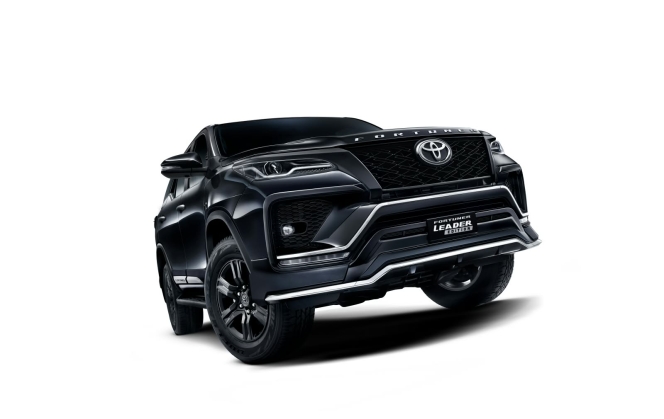
Toyota Kirloskar Motor, one of the leading passenger vehicle manufacturers in the country, has introduced the 2026 Fortuner Leader Edition in India, featuring exterior styling revisions and interior equipment updates.
Bookings for the model open on 12 October 2026 across company dealerships, with ex-showroom prices set at INR 3.65 million for the 4x2 Manual Transmission variant and INR 3.87 million for the 4x2 Automatic Transmission variant.
On the outside, the Leader Edition include the new redesigned front grille design, black rear door garnish, gloss black alloy wheels with matching hub caps, body side mouldings, a hood emblem and a black-finished roof and antenna.
In the cabin, the model features dual-tone black and maroon seat upholstery, matching door trims, ambient lighting and illuminated scuff plates. Additional functional additions comprise auto-folding outside rear-view mirrors and a tyre pressure monitoring system.
Sabari Manohar, Executive Vice-President of Sales-Service-Used Car Business, Toyota Kirloskar Motor, said, "The Fortuner has always represented confidence, capability and a spirit of achievement. With the new Leader Edition of the Fortuner, we are further defining this legacy through exterior enhancements and convenience features that reflect the aspirations of today’s customers. As we continue to align with changing trends, it is our endeavour to continuously evolve the Fortuner experience while staying true to the inherent qualities that have made them iconic. We are confident that the Leader Edition will further strengthen our commitment to delivering ever-better cars and creating Mass Happiness for All."
The model will be offered in three exterior colour options: Super White, Platinum White Pearl and Attitude Black. Toyota offers ownership packages with the vehicle, including a standard three-year or 100,000 km warranty extendable to five years or 220,000 km, 5-years of complimentary roadside assistance, and financing options up to seven years.
Kia India Expands Assured Buyback Scheme Across ICE, Hybrid And EV Portfolio
- By MT Bureau
- October 09, 2026
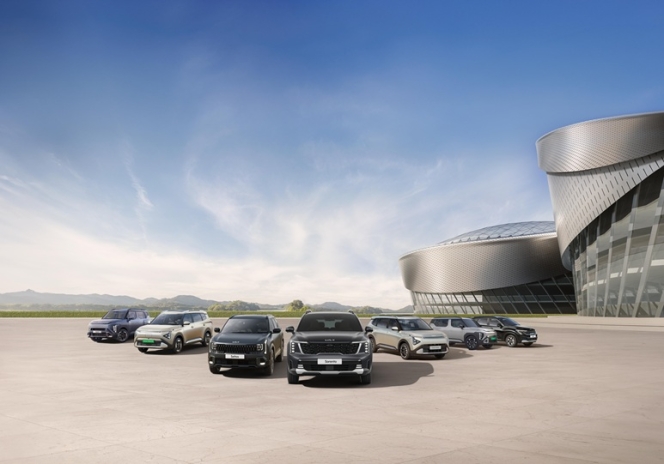
Kia India, one of the leading passenger vehicle manufacturers, has expanded its Assured Buyback Programme to cover internal combustion engine (ICE), hybrid and electric vehicle models.
The programme provides customers with predetermined residual values at the time of purchase to simplify vehicle trade-in and upgrade procedures.
Under the updated terms, eligible internal combustion engine vehicles carry an assured residual value of up to 75 percent after three years, while electric vehicle models offer up to 70 percent over the same timeframe.
The scheme encompasses Kia's product range, including the Sonet, Syros, new Seltos, Carens, Carens Clavis and Sorento across petrol, diesel, CNG, hybrid and electric powertrains.
Atul Sood, Senior Vice-President of Sales and Marketing, Kia India, said, "A vehicle purchase is a long-term decision, and customers increasingly seek greater certainty around future value and upgrade convenience. By expanding our Assured Buyback Programme with industry best resale value of upto 75 percent on ICE and upto 70 percent for EV in 3 years, we are enabling eligible customers to understand their vehicle’s assured residual value at the outset and plan their ownership journey with greater confidence. The initiative reflects our commitment to building enduring customer relationships and delivering consistent value from the first purchase through to the next exchange or upgrade."
The programme offers tenure options of three, four, or five years for ICE models and three or four years for electric vehicles. Annual mileage limits can be set at 10,000 km, 15,000 km or 20,000 km, supporting total usage caps of up to 100,000 km across the contract period. Enrolment is managed through authorised Kia dealerships at the point of vehicle purchase, with guaranteed buyback values executed at the end of the selected tenure subject to contract terms.
Renault Duster Strong Hybrid E-Tech 160 Claims 29 KMPL Fuel Efficiency
- By MT Bureau
- October 09, 2026
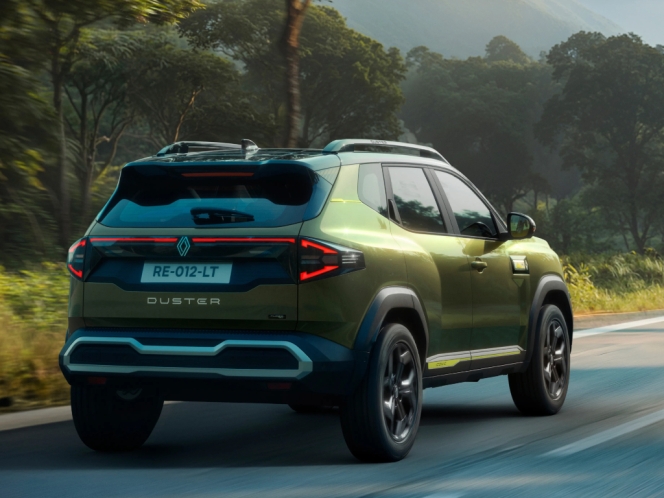
Renault India, one of the leading passenger vehicle manufacturers, has announced that its soon-to-be-launched Renault Duster strong hybrid E-Tech 160 has attained an ARAI-certified fuel efficiency rating of 29 kilometres per litre.
The company has started bookings for the model on 9 October 2026 across its dealership network and website for a booking amount of INR 21,000.
The SUV is powered by a strong-hybrid system combining a 1.8-litre petrol engine, two electric motors and a 1.4 kWh battery, producing a combined output of 160 PS. The system utilises a multi-mode automatic transmission to switch between combustion power, electric drive and energy recovery modes during deceleration. The onboard battery recharges through regenerative braking and engine operation without external charging infrastructure.
Francisco Hidalgo, Vice-President of Sales and Marketing, Renault Group India, said, "Bringing Renault’s proven E-Tech strong-hybrid technology from Europe to India is a significant moment for us. Indian SUV customers should not have to choose between performance and fuel efficiency. With a combined output of 160 PS and an ARAI-certified fuel efficiency of 29 km/litre, the Duster strong hybrid E-Tech 160 brings both together in a versatile SUV, without requiring external charging. For customers considering alternatives to diesel, it offers a compelling new choice for everyday driving. We are pleased to open bookings ahead of its official market debut."
The Duster strong hybrid E-Tech 160 marks the introduction of Renault's E-Tech powertrain technology in India under the company's regional product roadmap. The OEM will conduct the full product reveal and market launch on 17 October 2026.
Jaguar Electric Type 01 Grand Tourer Breaks Cover
- By MT Bureau
- October 07, 2026
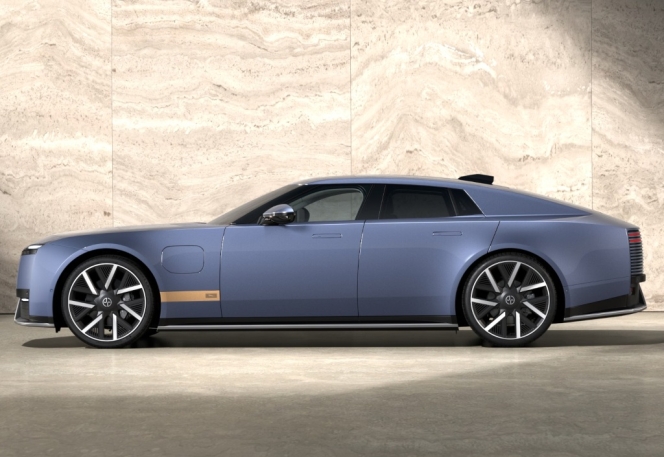
Jaguar has unveiled the Type 01, a four-door electric grand tourer, during a premiere event in New York. The model marks the start of the manufacturer's product architecture overhaul, with customer orders scheduled to open in early 2027 and initial deliveries expected in the second half of that year.
Designed, engineered and built in the United Kingdom, the Type 01 features a low roofline, long bonnet silhouette and aerodynamically focused body panels. Built on the bespoke Jaguar Electric Architecture, the 850-volt system produces over 1,000 PS of power. The electric vehicle provides an estimated 400-mile range under EPA testing standards, with 350kW rapid-charging capabilities adding 200 miles of range in 13 minutes.
During the event, Jaguar named actor Florence Pugh as the brand ambassador for its new product phase. The unveiling at STORIED in West Chelsea included displays detailing the vehicle's production engineering, structural panel development and testing protocols.
Rawdon Glover, Managing Director, Jaguar, said, "From its dramatic design to its captivating drive, Type 01 distils the essence of Jaguar into a luxury grand tourer for a new era. Type 01 is the foundation of this British brand, one that makes no compromise between design and engineering in our quest to create objects of desire, just as it was in the days of the E-type and XJS."
Comments (0)
ADD COMMENT