

Yuma Energy Partners Quantum Energy For Battery Swapping Integration
- By MT Bureau
- April 08, 2026
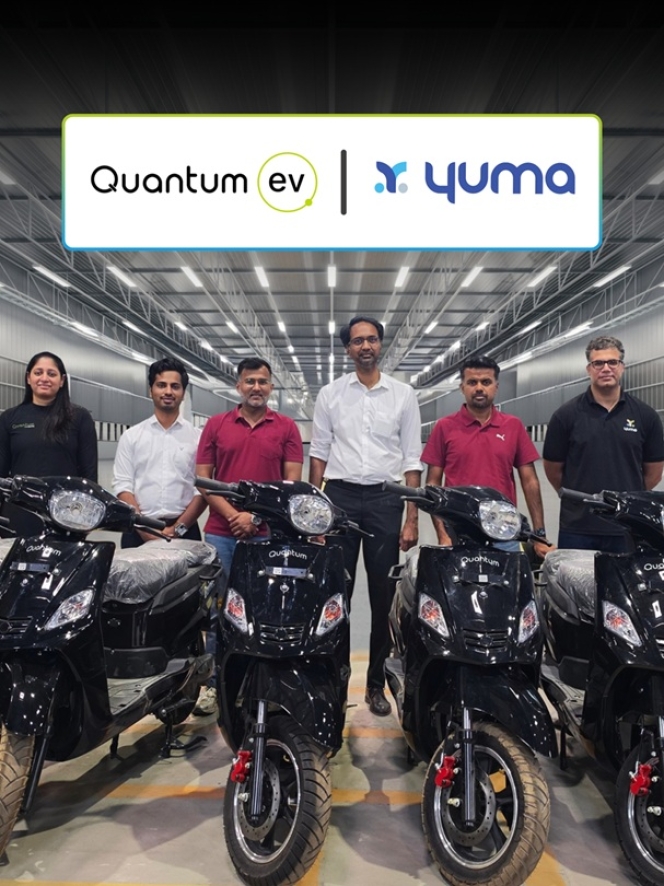
Yuma Energy, a battery-as-a-service (BaaS) and infrastructure provider, has partnered with Quantum Energy, an Indian electric two-wheeler manufacturer. The collaboration enables battery swapping compatibility for the Quantum Bziness, an electric scooter designed for commercial and last-mile mobility applications.
The partnership aims to address vehicle downtime by integrating Quantum’s vehicle engineering with Yuma’s energy network. Yuma Energy reports a network uptime of 99.9 percent, allowing users to exchange depleted batteries for charged units.
The collaboration will focus on fleet operators, businesses and independent commercial riders. The aim is to maximise vehicle uptime by removing the requirement for stationary charging.
The collaboration is intended to lower operational costs and environmental impact for commercial EV users. By providing a scalable energy infrastructure, the companies seek to remove barriers to adoption in the high-utilisation transport segment.
Muthu Subramanian, MD & GM, Yuma Energy, said, "Electric mobility must work for the people who depend on their vehicles every day. Our partnership with Quantum Energy ensures that riders using the Quantum Bziness can operate without interruptions. By making battery swapping as fast and simple as refuelling, we are enabling productivity, improving earnings potential, and accelerating India’s transition to sustainable mobility."
Chakravarthi C, Managing Director, Quantum Energy, added, "At Quantum Energy, we design and manufacture vehicles that solve real mobility challenges. Integrating Yuma’s battery swapping solution with the Quantum Bziness enhances convenience and operational efficiency for commercial users, reinforcing our commitment to delivering practical and scalable EV solutions."
Valeo And KE:SAI Partner On Open-Source Autonomous Driving System Initiative
- By MT Bureau
- October 14, 2026

French tier 1 supplier Valeo and open science research lab KE:SAI have launched a joint research collaboration to develop a generalist artificial intelligence (AI) driving system for autonomous vehicles. The partnership plans to publish models, code, weights and datasets as open-source resources.
The initiative brings together artificial intelligence teams from valeo.ai in Paris and the KE:SAI founding team in Tübingen, Germany. The collaboration focuses on training a unified AI model capable of operating across different vehicle platforms, sensor configurations and geographic environments. Initial development will utilise large-scale real-world driving data before integrating reinforcement learning within simulated environments to address rare driving scenarios.
KE:SAI was co-founded by research organisation Kyutai and the ELLIS Institute Tübingen. By making the underlying code, benchmarks and model weights accessible, the initiative aims to provide automakers, component suppliers and academic laboratories with a standardised reference system for autonomous driving research and development.
Marc Vrecko, CEO, Valeo Brain, said, "This open-science collaboration with KE:SAI marks a strategic milestone for Valeo and the broader European automotive ecosystem. By combining our deep industrial and technological expertise in autonomous driving with world-class open-source research, we are establishing a shared foundation to accelerate the development of physical AI and democratize next-generation self-driving technologies."
Andreas Geiger, CEO, KE:SAI, said, "For language models, open source compressed years of progress into months, yet frontier physical AI is still largely closed. Valeo shares our belief that open foundations create more innovation than any closed system ever could. Everything we develop will be open. Every step forward is a step forward for everyone."
- Chalmers University of Technology
- Nature Communications
- Albert Skegro
- Changfu Zou
- electric vehicle charging
Chalmers University Study Highlights 20% Battery Life Extension Using Reconfigurable Packs
- By MT Bureau
- October 09, 2026
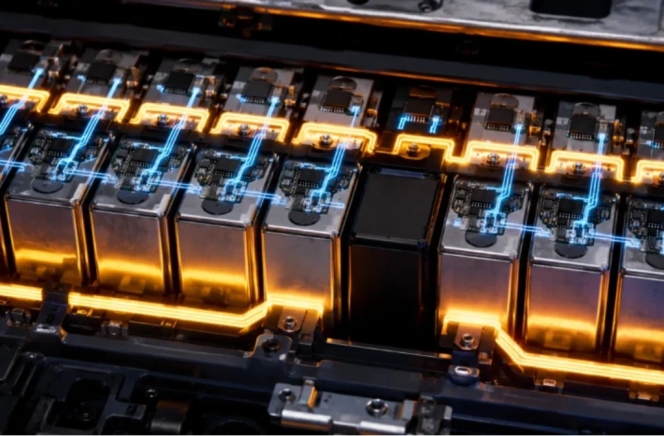
Researchers at Chalmers University of Technology, in collaboration with industry partners, have published a study in Nature Communications demonstrating that reconfigurable battery pack architectures can extend electric vehicle battery operational life by more than 20 percent under specific conditions.
In conventional electric vehicle battery packs, cells are wired in a fixed series configuration, meaning the weakest cell dictates the overall capacity, performance and lifespan of the entire pack. The architecture evaluated by the Chalmers engineering team uses integrated electronic switches and a centralised battery management system to monitor individual cells or cell groups. When a cell experiences accelerated degradation or reduced capacity, the system bypasses the degraded unit while electric current continues to flow through the remaining functional cells.
Albert Skegro, a PhD student at the Department of Electrical Engineering at Chalmers University of Technology, said, "They must all move at the pace of the slowest person and stop when that person stops, regardless of how much energy the others have left. With the architecture we have modelled, the battery can instead bypass the cell that is causing problems and continue using the remaining cells."
Changfu Zou, Professor at the Department of Electrical Engineering at Chalmers, said, "Reconfiguration is not an on-or-off choice. It is a spectrum. Where a manufacturer chooses to position itself on that spectrum determines how much of the potential benefit can be realised."
In a representative modelling scenario featuring an 80 kWh battery pack driven 12,000 kilometres annually over an 18.8-year vehicle lifespan, the reconfigurable system deferred battery replacement by approximately 14 months. The researchers noted that the technology yields the highest performance gains in high-voltage vehicles, including 400-volt and 800-volt electric passenger cars and commercial trucks, where higher cell counts in series increase the statistical probability of individual cell variance.
A techno-economic analysis included in the study determined that implementing cell-level switching hardware increases initial pack production costs by approximately nine per cent based on prototype-scale volumes of 1,000 units. The researchers identified an economic break-even threshold at a 12 percent cost increase, noting that volume manufacturing would lower component costs and increase financial viability for fleet operators and private owners. While prototype applications such as Volvo Cars' SmartCell concept and experimental road vehicles exist, mass-production vehicles using reconfigurable battery packs are yet to enter the commercial market.
Jakson Green Vehicles Adopts Dassault Systèmes 3DEXPERIENCE Platform For EV Engineering
- By MT Bureau
- October 07, 2026
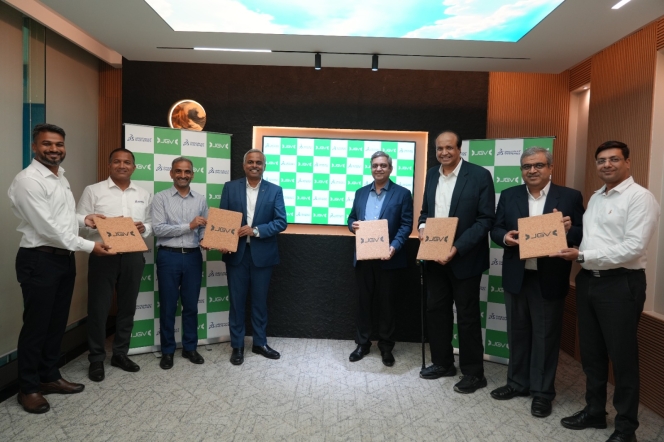
Jakson Green Vehicles has selected Dassault Systèmes’ cloud-based 3DEXPERIENCE platform to manage the design and development of its electric vehicles.
The implementation establishes a collaborative engineering framework to maintain digital continuity across the product development lifecycle. By connecting internal teams and external suppliers, the platform automates workflows, standardises component libraries and manages engineering change requests during early-stage product design. Virtual twin capabilities allow the vehicle manufacturer to conduct virtual validation testing to resolve structural and systems design issues prior to physical manufacturing.
Deepak Thakur, CEO, Jakson Green Vehicles, said, "Using Dassault Systèmes’ 3DEXPERIENCE Platform enables us to apply a collaborative approach and re-engineer our product lifecycle from the ground up. Through this transition from legacy environments to a unified digital thread, it enables strong R&D to achieve twin objectives; accelerated time-to-market and mitigated development costs. This partnership is helping us to transform the early-stage innovation and product design processes."
Deepak NG, Managing Director – India, Dassault Systèmes, said, "As India continues its dynamic growth trajectory, virtual twin technology serves as a powerful catalyst for sustainable innovation, empowering industries to rethink how they design, produce and operate."
The software adoption forms part of Jakson Green Vehicles' plan to build urban zero-emission mobility vehicles and infrastructure across India.
Gelion Signs Battery Assessment Agreement With Leading Automaker
- By MT Bureau
- October 07, 2026
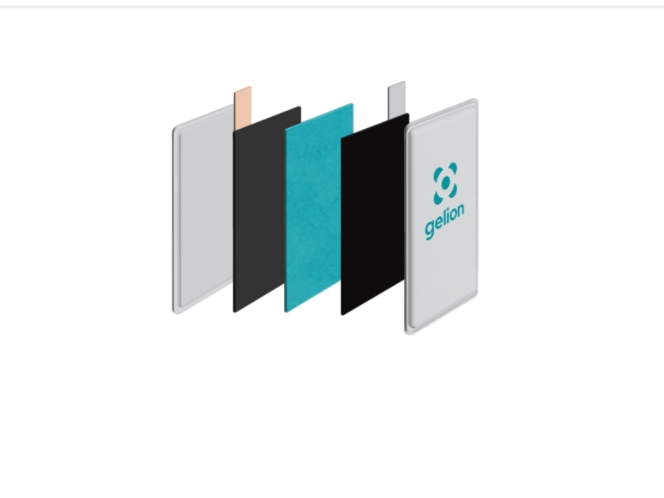
UK-headquartered energy technology company Gelion has entered into a material transfer agreement with a top 15 global automotive original equipment manufacturer to assess its NES cathode platform for future electric vehicle battery applications.
Under the terms of the agreement, Gelion will supply its sulfur-based cathode active material, coated cathodes and liquid electrolyte to the automotive partner. The manufacturer will evaluate the platform in both liquid and solid electrolyte cell configurations, testing compatibility across lithium metal and graphitic anode pathways targeting luxury and mass-market vehicle applications. The technology is designed to serve as a drop-in cathode material capable of integration into existing battery manufacturing lines without re-tooling.
Matt Wood, Chief Executive Officer, Gelion, said, "Our priority markets are commercial & defence drones, EVs and devices. We are honoured to be working with these major global automotive OEMs, and today’s announcement marks further progress towards the adoption of our technology and the generation of commercial revenues via funded programmes and eventually license and royalty revenue in the global EV market, alongside some of the industry’s leading companies."
"The growing engagement from global EV manufacturers reinforces the potential and attractiveness of our NES™ technology. This momentum is also mirrored in our agreements and partnerships across drones and devices, while our work with Tier 1 materials suppliers is advancing the scale-up of our unique, patented battery materials," Wood added.
The agreement expands Gelion’s ongoing industry testing programs with automotive manufacturers, extending the assessment of its sulfur-based cathode platform across liquid and solid battery systems.
Comments (0)
ADD COMMENT