

KTM Duke 160: Pocket Rocket Or A Short-Fall?
- By Biplab Das
- August 28, 2025
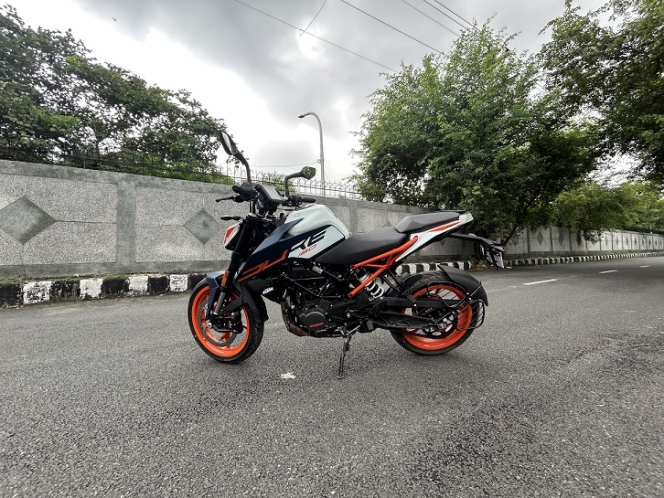
Thumb the starter on the KTM Duke 160 and the first impression is of familiarity – those tense lines, sculpted tank and sit-in stance that signal ‘Duke’ before the wheels even turn – yet there’s also a welcome lightness to how it picks up and changes direction at parking speeds and in the first hundred metres. That easy agility is backed by a chassis brief that reads serious on paper – trellis frame with bolt-on subframe, lighter five-spoke wheels, hollow axles and geometry that’s a shade sharper than the bigger siblings – so the bike feels eager without getting nervous when the pace rises.
Within a few blocks, two things set the tone for daily life: a clutch that’s genuinely light and progressive and a gearbox that slips through ratios cleanly, letting short, tidy shifts replace the usual 160cc thrash – helped by a slipper clutch that takes the drama out of hurried downshifts when traffic opens and closes without warning.
What stands out
The Duke 160 looks and feels like a proper Duke – tense lines, sculpted tank, sit-in stance – and backs it up with a genuinely light and eager front end thanks to the trellis frame, lighter five-spoke wheels and sharper geometry. The motor’s real-world strength is tractability and in-gear urge rather than fireworks off the line; timed roll-ons of 30–70 kmph in 6.8s (4th) and 9.1s (5th) make short overtakes easy without constant downshifts, echoing the sentiment that it feels brisk between gaps more than it feels explosive from a standstill.
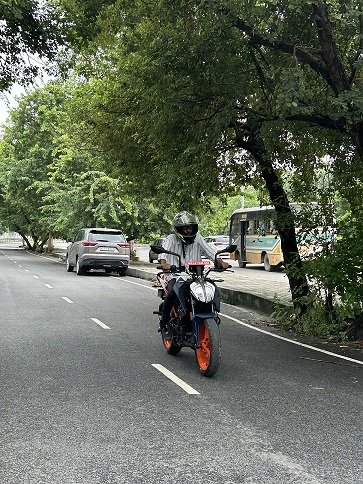 Braking hardware is a headline win: a 320mm front disc with braided lines and dual-channel ABS (rear channel switchable) gives bite and progression few 160s can match and it shows when hustling or panic-stopping in town.
The everyday reality
At 815mm, the seat is on the taller side for an average-height rider; those around 5ft 8in may tip-toe at awkward cambers, though the wide bar and neutral pegs help low-speed balance and leverage in traffic. The clutch and gearbox pairing is excellent – light, smooth and confidence-inspiring – so creeping traffic and quick, clean shifts become second nature within minutes of riding. Lever placement is not perfect from the crate; both the gear and brake pedals could use a quick adjustment during PDI to better match different boot sizes and ankle angles, which takes the edge off initial niggles.
Ride and features
Suspension tuning leans towards control with acceptable compliance: the Duke stays planted and keen to turn, yet retains enough travel to keep sharp edges from jarring too much in the city, though rougher patches still remind that it’s set up to feel taut rather than plush. Thermal management is a positive: a larger radiator surface area helps in slow-moving traffic and while the fan cycles in dense conditions, heat never tips into discomfort during typical urban use in this test window. The monochrome LCD with a dot-matrix pane is clear in bright light, offers all the basics at a glance and the microswitch cubes feel a cut above the class; Bluetooth navigation remains an accessory, which keeps base weight and price in check.
Verdict
Against the Yamaha MT-15 V2, the Duke 160 trades efficiency for feel: the Yamaha is lighter and significantly more frugal (users often report 50+ km/l), while the KTM bites harder on the brakes, feels more planted at the front and pulls stronger in mid-gear bursts on paper and in practice. The KTM’s 19PS and 15.5Nm edge the Yamaha’s 18.4PS and 14.1Nm and its 320mm rotor dwarfs the MT’s 282mm, but the MT-15 counters with lower kerb weight and everyday economy advantages that matter to commuters. If weekly highway runs and traffic sprints define the brief, the Duke’s chassis feedback, brake feel and roll-on pace make a compelling case; if fuel economy and a lower seat are top priorities, the MT-15 remains the pragmatic pick and price positioning in on-road terms still favours the Yamaha in many cities.
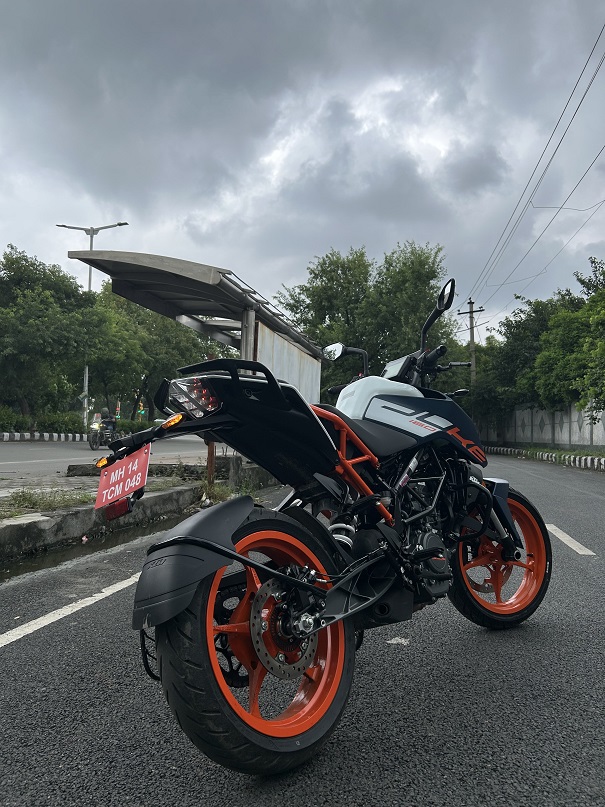
In short, the Duke 160 is not the outright quickest feeling 160 off the mark, nor the most frugal, but it is the most ‘KTM’ in the way that matters: front-end feel, braking confidence and mid-gear urge that make real-world riding more engaging and assured than the spec sheet alone suggests. It could do with lower seat options from the factory and cleaner lever ergonomics out of the box; sort those and it becomes an easy recommendation for riders who value control and character over kilometre-per-litre bragging rights.
TVS Motor Company Reports 7% Sales Growth In April Amid Supply Chain Constraints
- By MT Bureau
- May 02, 2026
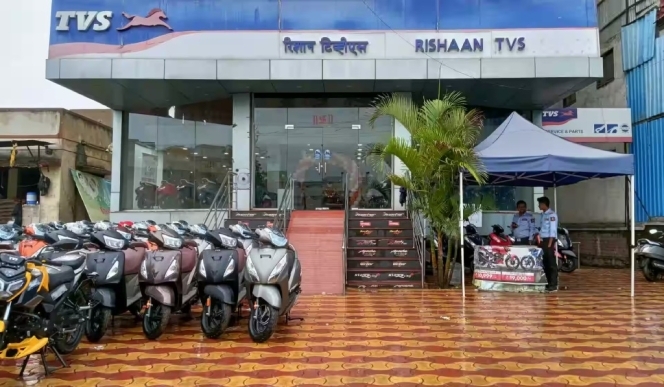
TVS Motor Company (TVSM), one of the leading manufacturers of two-wheeler and three-wheelers, has reported 473,970 units wholesales for April 2026.
This marks a 7 percent growth compared to the 443,716 units sold in April 2025. While customer demand remains strong in both domestic and international markets, the company noted that dispatch volumes were limited by production issues.
The company reported that production was affected by several supply chain constraints. It saw shortages in raw materials, consumables and workforce availability, which impacted tier-1 and tier-2 suppliers. Limited container availability hindered timely international dispatches. It has placed countermeasures and it expects production to recover during May 2026.
Despite manufacturing hurdles, two-wheeler sales grew by 6 percent YoY to 455,333 units, which includes 348,545 units in domestic market, up 8 percent YoY.
Scooter sales increased by 24 percent to 211,158 units, while motorcycles accounted for 200,039 units. The electric vehicle portfolio grew by 36 percent, with sales rising to 37,771 units.
Three-wheeler sales recorded a 37 percent growth, reaching 18,637 units.
Lastly, total international sales grew by 3 percent to 120,008 units.
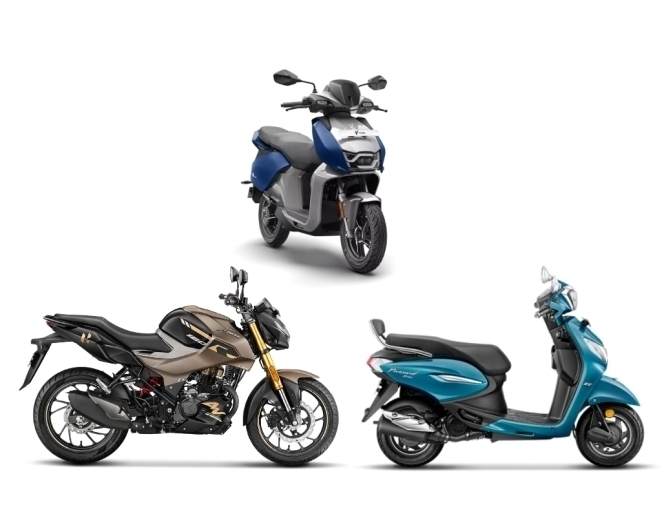
Hero MotoCorp, the world’s largest manufacturer of motorcycles and scooters, has reported 566,086 unit wholesales for April 2026, up 85 percent YoY, as compared to 305,406 units last year.
Domestic sales came at 532,433 units, up 85 percent YoY, as compared to 288,524 units a year ago. This includes 501,791 motorcycles at 75 percent YoY and 64,295 scooters, up 233 percent YoY.
Domestic retail performance also remained robust during the month, with 552,713 two-wheeler registrations (as per VAHAN) indicating growth of around 8 percent.
VIDA, Hero MotoCorp’s e-mobility business, reported a 129 percent YoY growth, albeit a low-base.
|
HERO MOTOCORP |
|||
|
|
APRIL' 26 |
APRIL' 25 |
Change (In %) |
|
Motorcycles |
501,791 |
286,089 |
75% |
|
Scooters |
64,295 |
19,317 |
233% |
|
Total |
566,086 |
305,406 |
85% |
|
Domestic |
532,433 |
288,524 |
85% |
|
Exports |
33,653 |
16,882 |
99% |
Suzuki Motorcycle India Sells 98,004 Two-wheelers In April 2026
- By MT Bureau
- May 01, 2026
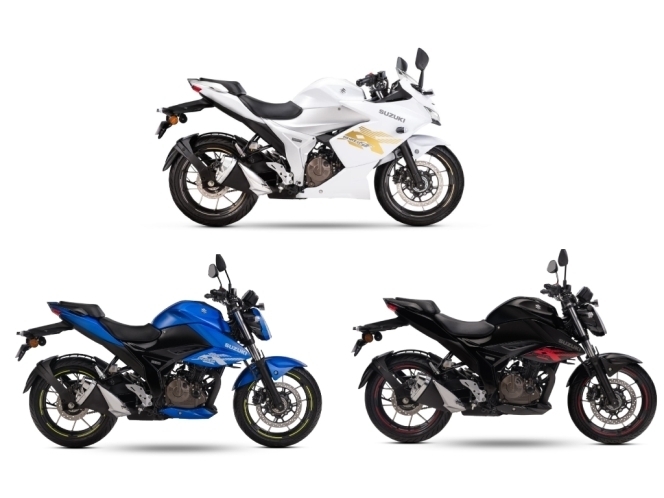
Suzuki Motorcycle India (SMIPL), a leading manufacturer of scooters and motorcycles, has announced its wholesales of 117,514 units in April 2026, marking a 4 percent YoY growth compared to the 112,948 units sold in April 2025.
The company began the new financial year with increases across both its domestic and international operations. Interestingly, while domestic sales at 98,004 units grew by 3 percent as compared to 95,214 units a year ago, exports clocked a 10 percent growth at 19,510 units.
Revenue from spare parts sales reached INR 915.90 million, representing a 14 percent growth over the previous year.
Last month, Suzuki Motorcycle India celebrated two decades of manufacturing in the country and also introduced the new Suzuki Burgman Street ‘One and Only’ and a new colour option for the Suzuki Avenis Special Edition.
Deepak Mutreja, Vice-President – Sales & Marketing, Suzuki Motorcycle India, said, “We have started the new financial year on a steady note with growth across both domestic and exports markets. This performance reflects the continued trust customers place in our products. As we move ahead, we remain focussed on delivering quality products, while deepening our connect with customers and partners across markets. We are also enhancing customer experience through focused events and brand activations.”
Royal Enfield Domestic Wholesales Grows 37% In April 2026
- By MT Bureau
- May 01, 2026
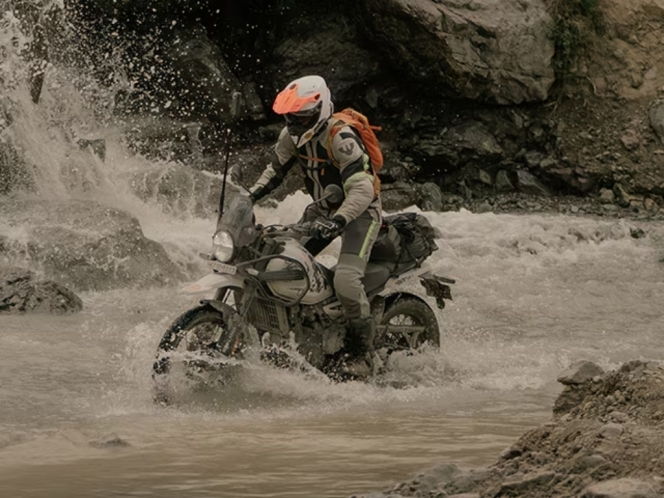
Chennai-headquartered mid-sized motorcycle major Royal Enfield has reported monthly wholesales of 113,164 units in April 2026, which marks a 31 percent growth compared to the 86,559 units sold in April 2025.
The OEM also entered the electric mobility market during the month with the launch of its first electric model.
Last month, the company reported domestic growth of 37 percent at 104,129 units, as compared to 76,002 units a year ago. While, exports came at 9,035 units, down 14 percent, as against 10,557 units last year.
In April, Royal Enfield introduced several updates to its motorcycle and lifestyle portfolio, which includes the launch of the its first electric motorcycle under the Flying Flea brand at INR 279,000 or INR 199,000 under a battery-as-a-service model.
The 2026 Hunter 350 portfolio was expanded with a Base Premium variant in Tarmac Black and two new colours: Mumbai Yellow and Moonshot White.
Interestingly, Himalayan 450 recorded an annual sales growth of 53 percent outside of India, with global sales for the platform exceeding 38,000 units this year.
B. Govindarajan, Managing Director, Eicher Motors and CEO of Royal Enfield, said, “We have started the new financial year with strong momentum, setting the tone for an exciting and important year ahead. April 2026 was special for us as we took our first step into electric mobility with the launch of the Flying Flea C6 - which has received an overwhelmingly encouraging response. During the month our growing global brand strength was further affirmed as Royal Enfield was recognised as the world’s third strongest automobile brand by Brand Finance. Internationally our key markets continue to perform well, driven by successful new launches, industry accolades and a growing rider community. With a robust pipeline of new products and brand initiatives, we are confident of maintaining the growth trajectory through the year.”


Comments (0)
ADD COMMENT