

Solutions By Continental for 2-wheeler Market in India
- By Thalavai Venkatesan
- December 18, 2020

Relatively low cost of ownership and an increase in demand in urban and semi-urban areas are the primary drivers behind the growth of India’s 2-wheeler market. Post the COVID-19 era, there is a general sentiment among the consumers, considering 2-wheelers as the preferred alternative to public transport and shared mobility. The 2-wheeler segment is expected to play a vital role in boosting the automotive sector post- COVID-19 by providing affordable personal mobility alternatives while we observe social distancing.
As the 2-wheeler market continues to boom in India, it is essential to also focus on the safety aspects related to the vehicles.
According to the World Road Statistics Report 2018, India has the largest number of road accident deaths across 199 countries. A report by the National Crime Records Bureau (NCRB) shows that 2-wheeler deaths have increased on a year-on-year basis, rising by 38 percent from 2009 to 2019.
The Indian Government has implemented various new policies related to automotive safety in the last few years. Today’s consumer is also more conscious about safety and looks at key features that ensure safety instead of viewing it as an option confined to premium variants. Today, vehicle safety is transitioning from cost-addition to value addition.
The consumers are continually looking for technology upgrades in all the departments, be it safety or convenience. This has pushed us to be innovative and flexible in adapting globally proven safety technologies to local requirements in the form of effective products.

Anti- Lock Braking System (ABS)
ABS is a piece of safety equipment that prevents the wheels of a vehicle from locking up under emergency, panic, or harsh braking conditions. The introduction of ABS will significantly impact improved road safety, with other factors such as the safety belt and the introduction of speed limits playing a role alongside ABS’s spread. All 2-wheelers over 125-cc are mandated to have ABS as of April 2019 in India.
At Continental, we have a range of solutions in the ABS segment suited to all vehicle types. India has a range of lighter 2-wheelers, where ABS is not mandated. The MiniMAB - One Channel ABS for Motorcycles is suited to scooters and small motorcycles. The small and lightweight solution is easily adaptable to smaller vehicles because only one wheel speed sensor is required. The system prevents the front wheel from locking up and avoids falls or the vehicle from becoming unstable.
Beyond ABS:
As a technology company, Continental is at the forefront of safety technologies. We have all the relevant products for different demands such as ABS ride modes, traction control, optimised curve braking, motorcycle hold & go, and Advanced Rider Assistance Systems (ARAS).
These technologies have a lot of scopes to gain prominence in the safety department in India. ARAS include functionalities like,
● Blind Spot Detection and Lane Change Assist: Warns the rider of vehicles driving in the blind spot area. The alert helps facilitate safe lane changes. The rearward-facing radar sensor monitors the road area behind and next to the motorcycle and warns if a lane change cannot be recommended.
● Emergency Brake Assist (EBA) and Forward Collision Warning: Supports the rider in avoiding run-up accidents by a radar-aided early threat assessment. It detects critical traffic situations and ensures optimum use of the available braking power. When a rear-end accident threatens, the motorcyclist will be alerted first before the EBA function supports his active braking system with slight pre-brake pressure.
● Intelligent Headlight Assist: The ARAS function Intelligent Headlight Assist (IHA) enables better vision at night. Motorcyclists can delegate the constant tedious task of changing from high to low beam to the electronic co-pilot. It detects the vehicles’ lights in front and oncoming vehicles and switches the high-beam headlamp on whenever possible to ensure optimum lighting of the road.
● Traffic Sign Assist: Detects traffic signs using a front camera and displays them to the rider. Failure to see a road sign displaying the permissible maximum speed can be expensive. Especially for people who rely on their driving license for their work, the consequences can be unpleasant. Traffic Sign Recognition has a display on the instrument panel to remind drivers of the current speed limit. This is achieved through multiple uses of the same camera, which is also used for the Lane Departure Warning system. When combined with high-performance software, it can even recognise speed limit signs. Digitised speed limit information of the onboard navigation system will be incorporated to be prepared for roads not assigned with speed limit signs.
● Adaptive Cruise Control: Relives the rider by automatically controlling throttle and brake to maintain the safe riding distance with the vehicle ahead.

Other technologies like Continental’s eHorizon for 2-wheelers is a cloud-based data management service that enables a variety of use-cases, increases safety, eco-efficiency, and enhances riding pleasure. The data, such as road geometry, traffic signs, or temporary events on the road, is collected and aggregated from various sources and transmitted back to the vehicle to either predictively inform the motorcyclist on relevant information on the route or to enhance vehicle functions directly.
This “swarm-intelligent system” uses technologies already present in vehicles, like camera systems, to classify road conditions like dry, wet, very wet (risk of aquaplaning), snowy, or icy. Based on that information, dynamic friction charts can be created and then used to forecast how well the tyres will grip the road stretch in question. I believe both these technologies have a good scope in the market, like India. Then again, a reliable ecosystem is vital to enable it.
We at Continental, with a strong legacy in-vehicle safety systems and inspired by its Vision Zero - Zero Fatalities, Zero Injuries, and Zero Crashes are committed to improving safety across the world awareness through various global and local forums. (MT)
NB: Thalavai Venkatesan is the Head of Sales & Key Account Management, Continental Automotive India. Views expressed are personal.
Honda Motorcycle & Scooter India Announces Prices For QC3 E-Scooter, CB500 And Updated CB350 Range
- By MT Bureau
- September 22, 2026
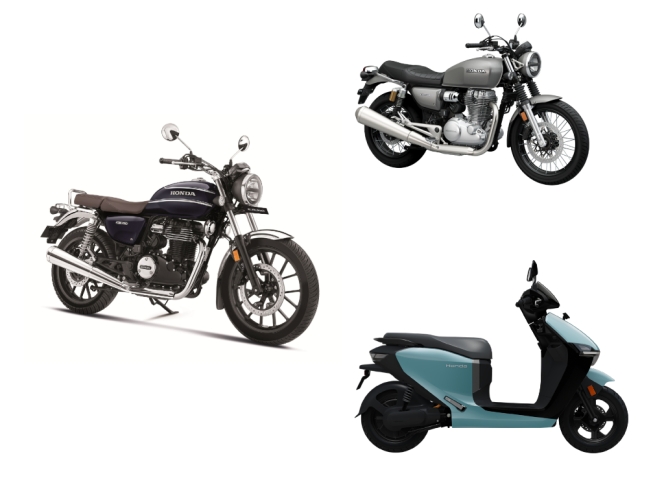
Honda Motorcycle & Scooter India, one of the leading two-wheeler manufacturers in the country, has announced pricing for the Honda QC3 electric scooter, the locally manufactured Honda CB500 roadster and the updated Honda CB350 range comprising the CB350, CB350RS and CB350C models.
The releases mark the next phase of a 10-product portfolio introduced in July 2026. Bookings for all five models have opened across India with a booking deposit of INR 5,000.
The Honda QC3 electric scooter is priced at INR 135,000 (ex-showroom New Delhi) with initial sales to cover five cities — Delhi, Agra, Cuttack, Surat and Kollam — through select Honda RedWing dealerships.
The vehicle incorporates a 3.0 kWh battery providing a certified Indian Driving Cycle (IDC) range of 145 kilometres per charge. Charging from zero to 80 percent requires two hours and 40 minutes, with a full charge taking approximately four hours. The scooter features a 5-inch TFT instrument screen with Honda RoadSync connectivity, turn-by-turn navigation, a smart key and 32 litres of storage capacity. The Honda QC3 e-scooter can be had in colour options include Matt Photon Gray Metallic, Pearl Precious White, Pearl Shallow Blue and Pearl Siren Blue.
The Honda CB500 roadster is priced at INR 275,000 for the alloy wheel variant, INR 299,900 for the spoke tubeless variant and INR 301,900 for the spoke tubeless with stripe variant (ex-showroom Bengaluru).
The motorcycle is produced in India and powered by a 501cc single-cylinder air-cooled engine with an oil cooler. Equipment includes an all-LED lighting system, an analogue-digital instrument cluster, Honda Selectable Torque Control, an assist and slipper clutch, Honda RoadSync and front and rear disc brakes with dual-channel ABS. Deliveries will take place nationwide through Honda BigWing dealerships in Pearl Deep Ground Grey, Pearl Igneous Black, Mat Steel Silver Metallic and Rebel Red Metallic.
The refreshed Honda CB350 range starts at INR 195,200 (ex-showroom Bengaluru), for the standard CB350 model, extending up to INR 204,700 for the top-specification CB350C Special Edition.
The updates introduce new paint options across the CB350, CB350RS and CB350C models without mechanical alterations. The motorcycles retain their 348.6cc air-cooled engines, all-LED lighting, Honda RoadSync, Honda Selectable Torque Control, assist and slipper clutches and dual-channel ABS. Dispatches to Honda BigWing dealerships began on 21 September 2026.
BikeWo Tech To Scale Fleet To 10,000 Vehicles Following Funding And Reliance Contract
- By MT Bureau
- September 22, 2026
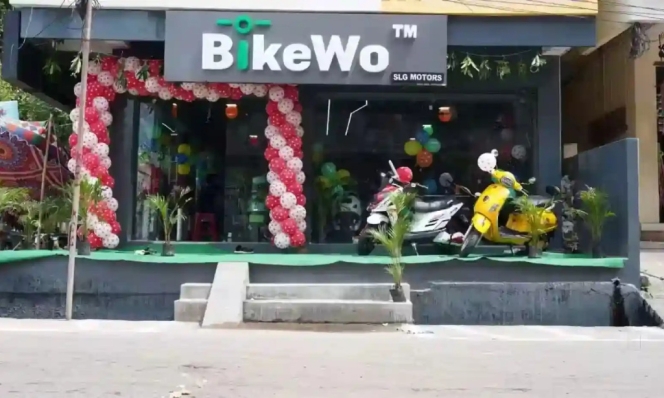
BikeWo Green Tech is aiming to expand its operating fleet to approximately 10,000 vehicles during FY2026-27, supported by a preferential warrant issue of more than INR 760 million.
The expansion forms part of a corporate transition from vehicle sales and distribution toward electric vehicle asset ownership, fleet operations, leasing and logistics technology, operating under the initiative name BikeWo Ascend.
As part of this strategy, BikeWo has secured agreements with Reliance Industries’ Bio Energy Division to supply and deploy electric tractors fitted with loader, catcher and grabber equipment, along with vehicle operation and driver services. The contracts hold an estimated total value of INR 66.4 million, with validity extending through July 2033 for use in biomass-handling and bio-energy operations.
Hiten Pal Saklani, CEO, BikeWo Green Tech, said, "For us, BikeWo Ascend is about building a much larger business around electric mobility. We started with vehicles, but we see a significantly bigger opportunity in the infrastructure, operations and technology that enable those vehicles to deliver value. Our engagement in the bio-energy sector is an encouraging example of how specialised electric mobility can find applications beyond conventional transportation."
The business model covers mid-mile, last-mile and long-mile commercial transport, alongside enterprise fleet management and charging infrastructure. To support the operational shift, BikeWo has named Sumanth Badiga, an executive with 30 years of experience in the automotive sector, to its Advisory Board.
"Scale for us is not simply about putting more vehicles on the road. It is about building the operating capability around those vehicles. We want to create a platform that can bring together the right assets, partners, technology and operating capabilities for different mobility requirements. As we expand across India, that is the business we are focused on building," added Saklani.
The company is listed on the National Stock Exchange under the ticker BIKEWO and plans to establish further operating partnerships across energy, logistics and technology sectors to support its fleet operations across India.
Pulsar 150 Turns 25: Bajaj Auto Unveils Sequel To Iconic Launch Ad
- By MT Bureau
- September 16, 2026
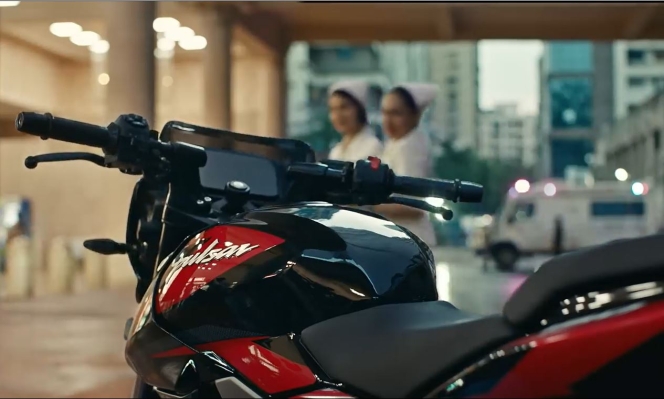
Bajaj Auto Ltd. has unveiled a new television commercial for the all-new Pulsar 150, marking 25 years of a motorcycle and advertising legacy that helped establish India’s sports motorcycling segment. Ogilvy conceptualised the film as a sequel to Pulsar’s iconic launch campaign, considered one of the firsts in advertising history.
The narrative revisits two nurses who, a quarter-century later, encounter something familiar beneath a white sheet, sparking déjà vu that transports them to their original encounter before the new Pulsar 150 is revealed. Retaining the original’s energy and tempo, the sequel brings the story into the present.
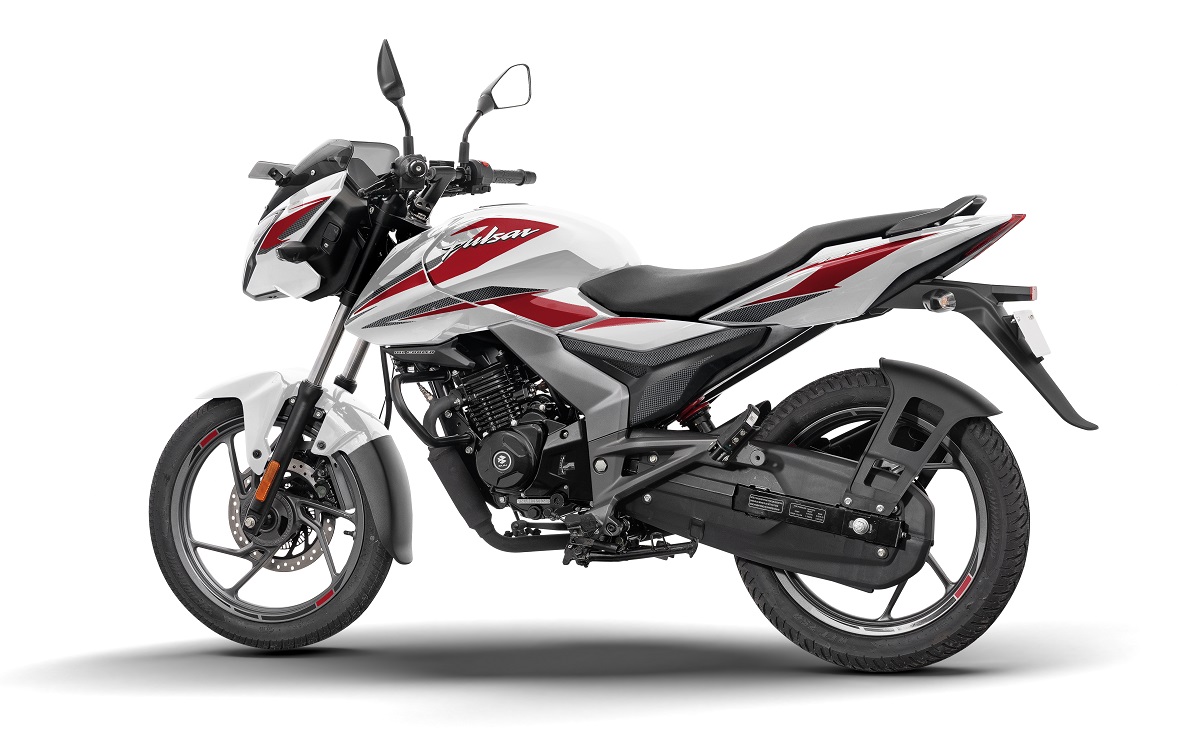
Pulsar’s 2001 arrival reshaped perceptions of what a motorcycle could represent, injecting performance, attitude and excitement into a category dominated by everyday mobility. With over 20 million units sold globally, Pulsar has become a worldwide performance brand, driven by the ‘Definitely Daring’ ethos that has defined it from the start.
Sumeet Narang, President – Marketing, Bajaj Auto Ltd., said, “Pulsar has always stood for an attitude that goes beyond the motorcycle itself. Over the years, that attitude has evolved with the riders, the category and the brand, but its essence remains ‘Definitely Daring’. This campaign gives us an opportunity to celebrate that journey in a way that feels relevant today, with the all-new Pulsar 150 representing the next expression of that spirit.”
Sukesh Nayak, Group Chief Creative Officer, Ogilvy India, said, “Creating the next chapter of a film that is so deeply remembered presents a very different creative challenge. The audience already knows the setup, so the opportunity was to use that familiarity to build anticipation and then surprise them with where the film goes. The visual cues and rhythm create that instant recognition, while the new turn in the story keeps it firmly rooted in the present.”
Hero MotoCorp Launches Glamour X Variant With Integrated ABS At INR 101,000
- By MT Bureau
- September 11, 2026

Hero MotoCorp, the world’s largest two-wheeler manufacturer, has launched a new variant of its Glamour X 125cc motorcycle equipped with single-channel anti-lock braking paired with an integrated braking system.
The motorcycle represents the initial application of single-channel ABS alongside an integrated braking layout in the 125cc commuter segment, aiming to reduce stopping distances and maintain vehicle stability during deceleration.
The braking configuration operates in conjunction with existing safety equipment on the motorcycle, which includes panic brake alert signals that activate flashing LED indicators during sudden deceleration, as well as hazard lamps.
The Glamour X 125 is powered by a Sprint-EBT engine generating 11.4 horsepower (8.5 kW) at 8,250 rpm. It comes with three selectable riding modes – Eco, Road and Power –and features cruise control functionality.
Ashutosh Varma, CBO of the India Business Unit, Hero MotoCorp, said, "The 125cc segment is witnessing a rapid evolution, with customers increasingly demanding a blend of contemporary styling, advanced technology and uncompromised safety. The Glamour X has already disrupted this space with category-first features including Ride Modes and Cruise Control. By introducing first-in-segment integrated ABS, we are not just upgrading a motorcycle; we are reshaping the safety standards for the entire category. This launch strengthens our portfolio and offers intelligent, future-ready mobility solutions that empower the new-age Indian rider."
The motorcycle utilises a 10.7 cm multi-colour instrument console with ambient backlighting that displays gear shift guidance, distance-to-empty metrics and real-time fuel consumption data. The display system supports Bluetooth connectivity to supply turn-by-turn navigation with estimated time of arrival notifications, alongside call and message alerts. Physical features include full LED lighting, a C-type USB charging port, under-seat storage compartments and a flat seat layout.
The Glamour X with integrated ABS is available at dealerships across India priced at INR 101,000 (ex-showroom Delhi). It can be had in Gun Metal Grey, Matt Axis Grey, Black Pearl Red, and Black Teal Blue colour options.

Comments (0)
ADD COMMENT