

- General Motors
- Pacific Gas & Electric Company
- PG&E
- GM Energy
- Vehicle-to-Everything
- Home Energy Assets
- Electric Vehicles
- Bidirectional EV Charging
General Motors Joins Pacific Gas & Electric Company's Residential Vehicle-To-Everything Pilot Programme
- By MT Bureau
- March 15, 2025

General Motors has joined Pacific Gas & Electric Company's (PG&E) residential Vehicle-to-Everything pilot programme, offering qualifying GM Energy home energy products at discounted prices to eligible consumers in Northern and Central California.
In order to increase overall grid resiliency, GM Energy is collaborating with utilities such as PG&E to take advantage of GM's bidirectional EV charging technology, which enables compatible GM EVs to restore power to homes during blackouts and assist the grid by helping in balancing energy demand in the future. Participants in PG&E's residential Vehicle-to-Everything pilot programme can save up to USD 4,500 on eligible GM Energy home devices, including the GM Energy V2H Bundle or Home System, that allow bidirectional charging. Additionally, customers that participate in scheduled backup power events and stay enrolled until the completion of the pilot programme may be eligible for extra incentives.
The programme's charging data will be used by PG&E and GM Energy to assess how bidirectional technology may benefit consumers and promote grid resilience, as well as to assist in the expansion of bidirectional technology initiatives in California. The 2024 Chevrolet Silverado EV, 2024 Chevrolet Equinox EV, 2024 Chevrolet Blazer EV, 2024 Cadillac Lyriq EV, 2024 GMC Sierra and 2025 Cadillac Lyriq EV are among the GM EVs that are eligible for the programme at the time of debut. GM expects to shortly expand the programme to include all 2025 EV models.
Wade Sheffer, Vice President, GM Energy, said, "For Northern California customers looking to take more control of their home energy, this programme with PG&E represents a great opportunity. For utilities, legislators, customers and others, this pilot is an opportunity to see the full value of our V2H technology beyond just providing power to a home during power outages. This can be a tool that helps overall grid resiliency and showcases the unique advantages of EVs while, in the future, may even reduce the overall total cost of EV ownership."
Mike Delaney, Vice President, Utility Partnerships and Innovation, PG&E, said, "PG&E is leading the way to enable vehicle-grid-integration technology creating a path for EVs to power customer homes, ultimately benefiting all Californians. We are proud to continue leading this electric renaissance as we collaborate with automakers and some of the world's top innovators to pioneer bidirectional charging technology where EVs have the potential to offer greater reliability, resiliency and cost savings."
Jio-bp, Vertelo Partner To Build Commercial EV Charging Network
- By MT Bureau
- October 09, 2026
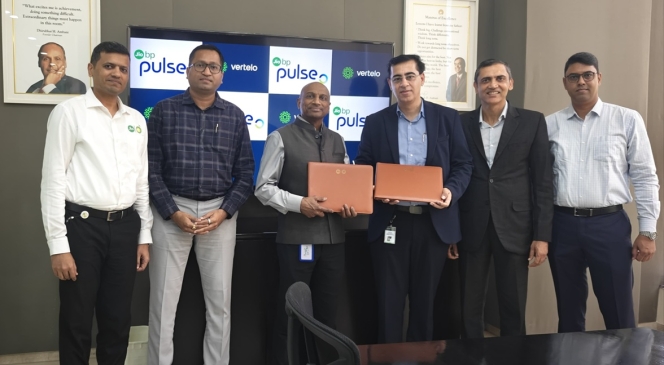
Jio-bp, the operating brand of Reliance BP Mobility, has signed a Memorandum of Understanding (MoU) with electric vehicle leasing platform Vertelo to develop charging infrastructure and financial solutions for electric buses and trucks in India.
The partnership combines Vertelo's commercial vehicle leasing platform with Jio-bp's fast-charging network across urban centres and highway transport corridors.
As per the agreement, both entities will explore providing fleet operators with turnkey charging infrastructure projects, preferential charging rates and location tracking for charging hubs. The initiative aligns with the Government of India's PM E-DRIVE program, which promotes zero-emission commercial transport adoption.
Sarthak Behuria, Chairman, Jio-bp, said, "India's transition to electric mobility is no longer a question, it is happening quickly. At the heart of this transformation are commercial fleets - buses and trucks that keep our people, cargo, and economy moving every day, often covering the longest distances and the toughest routes. At Jio-bp, we believe EV charging infrastructure is a critical part of national infrastructure and our partnership with Vertelo marks an important step towards building the charging backbone needed to cater to the demands of this transition."
Akshay Wadhwa, CEO, Jio-bp, said, "Jio-bp pulse has been built on a simple promise - accessible, reliable, high-uptime EV charging wherever needed. With Vertelo, we are bringing that same reliability to commercial fleets, which have distinct needs shaped by routes, battery capacities and operating patterns. This MoU lets us address those needs directly, while exploring practical charging and financing solutions for fleet operators. Together, we aim to make reliable charging more accessible for electric buses and trucks."
Sandeep Gambhir, CEO, Vertelo, said, "Commercial vehicles cover far more kilometres than passenger cars, which makes them the segment where electrification delivers the greatest environmental return, and where charging access matters most. Jio-bp has built meaningful infrastructure along the major corridors our customers operate on. This collaboration will help connect more cities and communities across the country while reinforcing Vertelo’s status as a trusted enabler of EV adoption through its ecosystem play through leasing and financing solutions along with creating the necessary infrastructure to facilitate the same."
The collaboration addresses charging access, battery performance management, and capital expenditure barriers for commercial fleet operators transitioning from internal combustion engine vehicles.
Kinetic Watts And Volts Partners IDFC FIRST Bank For Retail Financing
- By MT Bureau
- October 06, 2026
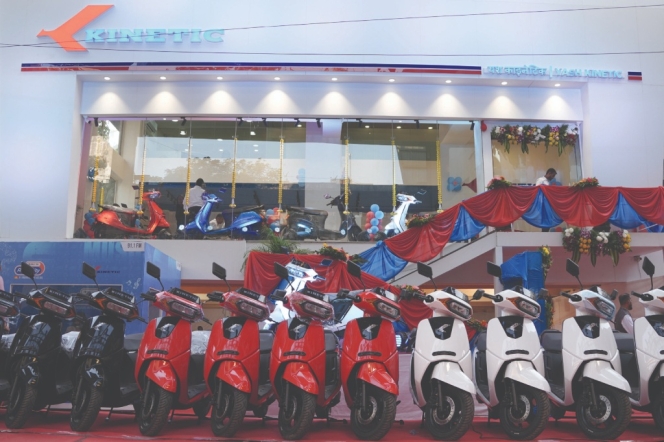
Pune-headquartered electric vehicle company Kinetic Watts and Volts, a subsidiary of Kinetic Engineering, has entered into a retail financing partnership with IDFC FIRST Bank to provide credit options across its dealership network.
The arrangement enables customers at Kinetic EV dealerships to access loan options, interest rates and instalment plans, subject to eligibility criteria. Ground teams from IDFC FIRST Bank will collaborate directly with dealership staff to process applications at the point of sale. The initiative coincides with the expansion of Kinetic EV’s retail footprint, which currently comprises over 65 operational sales, service and spare parts facilities in India.
Ajinkya Firodia, MD, Kinetic Watts and Volts, said, "For many customers, choosing an electric two-wheeler is not just about selecting the right product, but also about finding a purchase option that works for them. Our partnership with IDFC FIRST Bank gives customers greater choice at the point of purchase and strengthens the support available across our dealership network. With quick financing options, attractive EMI plans and exciting offers for eligible customers, we want to make the overall purchase journey simpler and more convenient. As we continue to expand our presence across markets, we look forward to making the journey towards electric mobility more accessible for more customers."
The tie-up leverages the bank's branch and operational network to support dealership sales in multiple regional markets. The companies are also developing customer schemes and promotional offers that will be announced at a later date.
TVS Motor Delivers Over 100 iQube MillionR Special Edition In Cuttack
- By MT Bureau
- October 05, 2026
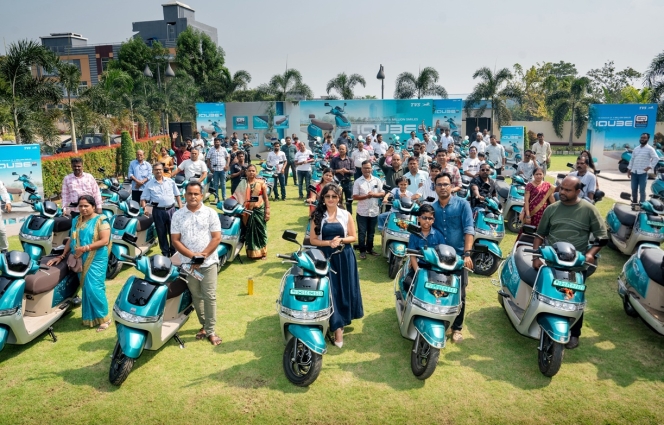
Chennai-headquartered two-wheeler and three-wheeler company TVS Motor Company conducted a single-day delivery event in Cuttack, Odisha, handing over more than 100 units of the TVS iQube MillionR Special Edition electric scooter to customers.
The MillionR Special Edition was launched on 25 August 2026 to mark the cumulative sales milestone of one million TVS iQube scooters. Based on the 3.5 kWh battery variant, the edition features an Aurora Green Dual Tone paint finish, custom seat upholstery and specific graphics alongside MillionR badging.
The e-scooter features a front utility storage compartment that expands overall storage capacity from 32 litres to 35.5 litres, an integrated USB Type-C charging port and over 118 connected features. The 3.5 kWh battery setup provides an Indian Driving Cycle (IDC) range of 145 km on a single charge.
In Odisha, the TVS iQube MillionR Special Edition is priced at INR 131,138 (effective ex-showroom). The standard TVS iQube range starts at INR 105,851 (effective ex-showroom), with Battery-as-a-Service (BaaS) option pricing starting at INR 59,999.
More Retail Inducts Montra Electric Eviator For Mid-Mile Logistics
- By MT Bureau
- October 01, 2026
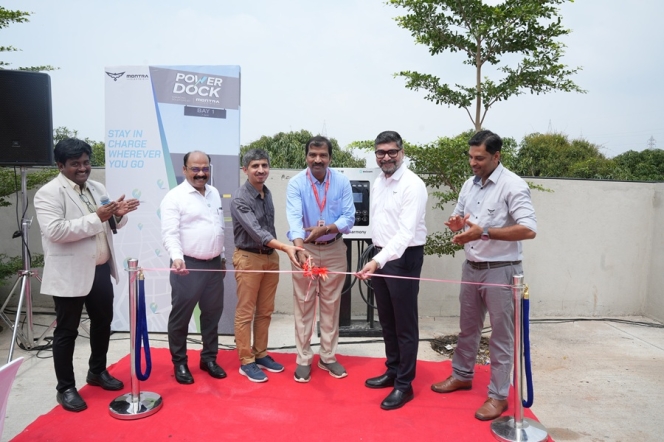
More Retail, a leading supermarket and hypermarket chain, has expanded its electric mid-mile logistics operations through the deployment of 110 Montra Electric Eviator electric small commercial vehicles across its distribution network, including 25 units in Bengaluru.
The company shared that electric commercial vehicles now account for 150 of its 600 total mid-mile logistics fleet. The 110 Montra Electric Eviator units operate across daily store replenishment and delivery routes, covering a combined minimum distance of 22,000 kilometres per day. The transition from internal combustion engine vehicles aims to lower operational energy expenses and vehicle maintenance requirements while providing driver ergonomics for city traffic conditions.
Saju Nair, CEO of the e-SCV Division, Montra Electric, said, "Electrification of commercial mobility will accelerate when it delivers measurable business value at scale. More Retail’s journey towards 100 percent electrification with our Eviator, is a strong example of that shift, from evaluating EVs as an alternative to deploying them as a core part of everyday logistics. As More Retail moves towards a fully electric mid-mile fleet, our focus is to enable that transition with vehicles and an ecosystem built around uptime, efficiency and long-term profitability."
Prasanna Hegde, National Transport Manager, More Retail, said, "Our mid-mile fleet keeps our stores stocked every day, so reliability comes first for us. The move from ICE vehicles to Montra Electric's Eviator e-SCVs has been smooth across our distribution network. The vehicles have already covered over 8.8 lakh kilometres on our routes, and our drivers have responded well to their comfort, instant torque and day-to-day dependability. Alongside lower operating costs, we are cutting emissions with every delivery run. With 150 of our 600 mid-mile vehicles now electric, we are well on our way to a fully electric fleet, and Montra Electric has been a trusted partner at every step."
The Montra Electric Eviator features a 10.3-foot loading deck and a payload capacity of up to 1,707 kg. The vehicles are integrated with telematics systems that monitor battery status, driver metrics, and route planning data to maintain fleet uptime between distribution centres and retail outlets.

Comments (0)
ADD COMMENT