

Simple Energy bags $20 million in Series A, aims to scale up production and expand presence in India
- By MT Bureau
- July 29, 2024

Bengaluru-based electric vehicle start-up Simple Energy has raised $20 million (INR 1.6 billion) in its Series A funding round.
The EV maker states that the funding round saw participation from its current investors as well as high-net-worth individuals (HNIs) from notable family offices like the Haran family office, Dr. A Velumani’s family office, Vasavi family office, and the Desai Family office — promoter group of Apar Industries, among others.
The funds it says will be used to scale up the production of Simple One and Simple Dot One e-scooters. In addition, it aims to enter new markets, expand its presence across India, and facilitate new product development. In alignment with its aggressive growth plans, Simple Energy aims to achieve a top line of INR 1.5 billion this fiscal year.
Suhas Rajkumar, Founder & CEO, Simple Energy said, “As the adoption of electric vehicles (EVs) accelerates significantly in India, we are committed to playing a pivotal role in this burgeoning ecosystem. The enthusiastic reception from our initial customer base in Bangalore has been truly remarkable, and we extend our heartfelt appreciation to all our investors for their trust in our brand. The capital raised will be tactically deployed to bolster our production capacity and expand our dealership network nationwide.”
Balamurugan Arumugam, Chief Growth Officer, Klarity, an HNI who participated in the round, said, “In the realm of sustainable transportation, Simple Energy shines as a beacon of innovation and progress. With a clear vision and a strategic roadmap mapped out for the next phase of growth, Simple Energy is primed to redefine the landscape of technologically advanced EV two-wheelers in India and beyond. As the brand gains momentum, it is poised to not only capture the local market but also emerge as a globally recognized leader in sustainable mobility, resonating with individuals worldwide who value innovation and environmental consciousness.”
It is important to note that Simple Energy had launched the Simple One (212km claimed range) e-scooter in May 2023 and the Simple Dot One (151km claimed range) in December 2023. It has sold a total of 621 e-scooters till date, which includes 65 units in 2023, and 558 units in 2024 (as of July 29). The start-up claims it currently manufactures 95 percent of its components in-house including motors within its 2,00,000 sqft plant located in Shoolagiri, Tamil Nadu.
At present, it says it has begun deliveries in a pilot phase in Bengaluru, and is preparing to open dealership stores in Bengaluru, Mysore, Chennai, Vijayawada, Goa, Vizag, Kochi, Mumbai, Pune, Ahmedabad, Surat, Delhi, and Hyderabad in the coming weeks.
Royal Enfield Expands Flying Flea Sales In Hyderabad
- By MT Bureau
- October 09, 2026
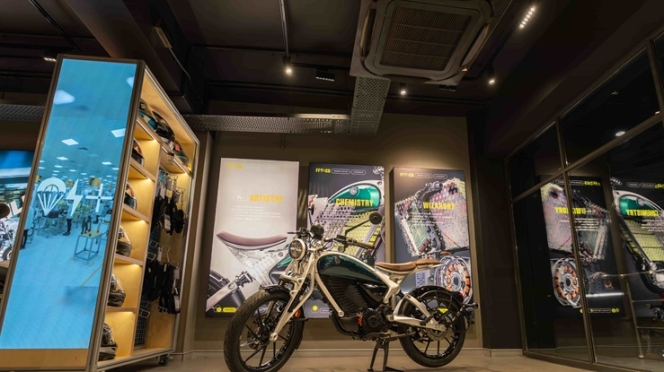
Flying Flea, the electric mobility brand from Royal Enfield, has expanded its retail network in India by launching operations in Hyderabad. Following its initial rollout in Bengaluru, where registered vehicles have accumulated over 100,000 kilometres, Hyderabad becomes the second Indian market for the brand.
The expansion includes four touchpoints across Hyderabad, comprising one company-owned store in Erragadda and three dealer partner locations operated by Taurus Motors in Vanasthalipuram, Bolt Motorcycles in Hi-Tech City and SVR Motors in Kondapur. The network utilises a hub-and-spoke operational structure, designating the Erragadda facility for technical support while the partner locations handle routine service and sales operations.
The brand's initial offering, the Flying Flea C6 electric motorcycle, is priced at INR 279,000 ex-showroom or INR 199,000 under a Battery-as-a-Service model. The vehicle is offered in three colour options: Storm Black, Flea Green, and Parachute White, with roadside assistance provided across retail channels.
The retail launch in Hyderabad follows Flying Flea's international expansion into European and UK markets, including retail locations in Paris, Barcelona, Berlin, Rome and London.
- Zomato
- Blinkit
- Eternal
- EV Bazaar
- Mahmood Ahmed
- MoRTH
- Jitender Patil
- Anjalli Ravi Kumar
- EMO Energy
- Sheetanshu Tyagi
- Zomato Local Services
Zomato And Blinkit Host EV Bazaar 3.0 To Accelerate Fleet Electrification
- By MT Bureau
- October 09, 2026
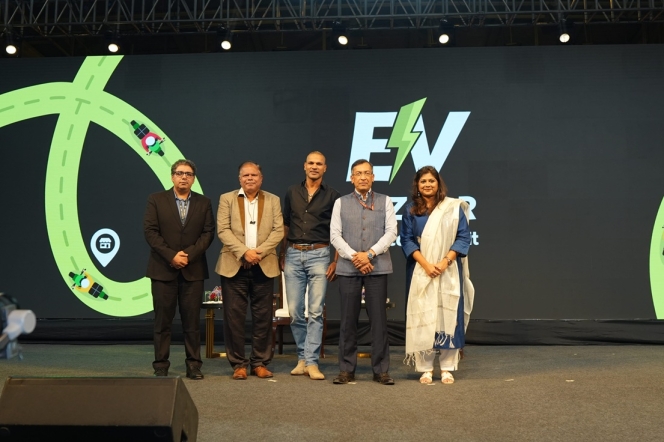
Zomato and Blinkit, operating under parent company Eternal, hosted the third edition of EV Bazaar at the KD Jadhav Stadium in New Delhi to promote electric two-wheeler adoption among delivery partners.
The event drew participation from 2,500 delivery gig workers and over 20 original equipment manufacturers and ecosystem partners, showcasing more than 30 electric two-wheeler models alongside vehicle rental, financing and charging solutions.
The event included addresses by Mahmood Ahmed, Additional Secretary at the Ministry of Road Transport and Highways and Jitender Patil, Head of the EV Cell at the Transport Department of Maharashtra.
As of 30 September 2026, over 200,000 delivery partners across the Zomato and Blinkit platforms operate electric two-wheelers. During FY2026, electric vehicles completed 228 million deliveries across both platforms, avoiding an estimated 9,926 tonnes of carbon dioxide emissions.
Mahmood Ahmed said, “The electrification of the transportation section is a critical contributor to India’s energy security and air pollution control. The adoption of EVs by delivery partners is important to accelerating the transition since charging, swapping and servicing networks will expand for the industry and benefit other users as well. I appreciate this proactive initiative by Zomato and Blinkit to further the gig ecosystem’s shift to electric mobility and enabling a better future for India.”
Anjalli Ravi Kumar, Chief Sustainability Officer, Eternal, said, “For our delivery partners, the performance of their bike is critical to their ability to earn efficiently. Delivery may only be one of their many responsibilities on the same day. That makes the move to electric a practical and financial question as much as an environmental one. EV Bazaar gives delivery partners a place to evaluate their EV bike purchase options by directly interacting with companies who build, rent, finance and charge EV bikes. We thank each of them for being part of the third edition.”
To facilitate vehicle access, the companies operate a 'Rent a vehicle' feature within their delivery partner mobile applications, enabling workers to lease electric two-wheelers and locate charging and battery-swapping stations within assigned delivery zones. Over 23,000 delivery partners utilised the rental feature in fiscal year 2026. Additionally, Zomato Local Services launched an owned electric vehicle rental fleet in June 2025, deploying over 1,500 electric two-wheelers across Delhi and Chennai by March 2026.
Sheetanshu Tyagi, Co-Founder and CEO, EMO Energy, said, “EMO Energy brings advanced batteries and 20-minute charging together to keep last-mile vehicles moving. With Zomato and Blinkit, we are enabling riders to charge faster, operate with zero downtime, and have greater vehicle availability.”
During the event, three delivery partners received new electric two-wheelers and one partner was awarded a one-year rental sponsorship from the network in recognition of operational performance and participation in platform electrification initiatives.
Jio-bp, Vertelo Partner To Build Commercial EV Charging Network
- By MT Bureau
- October 09, 2026
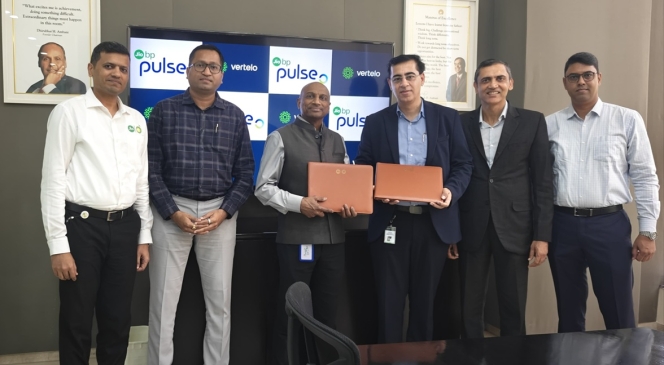
Jio-bp, the operating brand of Reliance BP Mobility, has signed a Memorandum of Understanding (MoU) with electric vehicle leasing platform Vertelo to develop charging infrastructure and financial solutions for electric buses and trucks in India.
The partnership combines Vertelo's commercial vehicle leasing platform with Jio-bp's fast-charging network across urban centres and highway transport corridors.
As per the agreement, both entities will explore providing fleet operators with turnkey charging infrastructure projects, preferential charging rates and location tracking for charging hubs. The initiative aligns with the Government of India's PM E-DRIVE program, which promotes zero-emission commercial transport adoption.
Sarthak Behuria, Chairman, Jio-bp, said, "India's transition to electric mobility is no longer a question, it is happening quickly. At the heart of this transformation are commercial fleets - buses and trucks that keep our people, cargo, and economy moving every day, often covering the longest distances and the toughest routes. At Jio-bp, we believe EV charging infrastructure is a critical part of national infrastructure and our partnership with Vertelo marks an important step towards building the charging backbone needed to cater to the demands of this transition."
Akshay Wadhwa, CEO, Jio-bp, said, "Jio-bp pulse has been built on a simple promise - accessible, reliable, high-uptime EV charging wherever needed. With Vertelo, we are bringing that same reliability to commercial fleets, which have distinct needs shaped by routes, battery capacities and operating patterns. This MoU lets us address those needs directly, while exploring practical charging and financing solutions for fleet operators. Together, we aim to make reliable charging more accessible for electric buses and trucks."
Sandeep Gambhir, CEO, Vertelo, said, "Commercial vehicles cover far more kilometres than passenger cars, which makes them the segment where electrification delivers the greatest environmental return, and where charging access matters most. Jio-bp has built meaningful infrastructure along the major corridors our customers operate on. This collaboration will help connect more cities and communities across the country while reinforcing Vertelo’s status as a trusted enabler of EV adoption through its ecosystem play through leasing and financing solutions along with creating the necessary infrastructure to facilitate the same."
The collaboration addresses charging access, battery performance management, and capital expenditure barriers for commercial fleet operators transitioning from internal combustion engine vehicles.
Kinetic Watts And Volts Partners IDFC FIRST Bank For Retail Financing
- By MT Bureau
- October 06, 2026
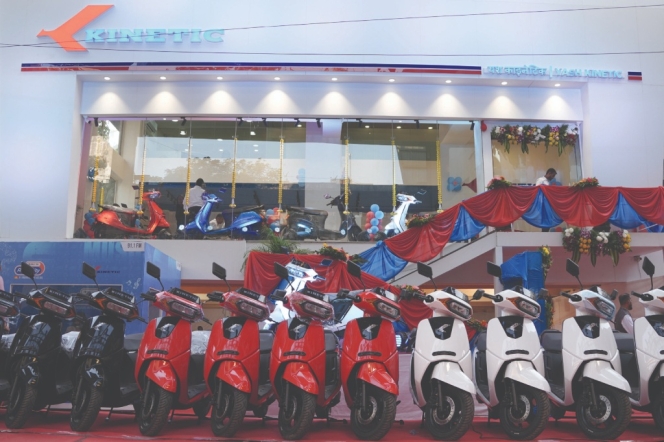
Pune-headquartered electric vehicle company Kinetic Watts and Volts, a subsidiary of Kinetic Engineering, has entered into a retail financing partnership with IDFC FIRST Bank to provide credit options across its dealership network.
The arrangement enables customers at Kinetic EV dealerships to access loan options, interest rates and instalment plans, subject to eligibility criteria. Ground teams from IDFC FIRST Bank will collaborate directly with dealership staff to process applications at the point of sale. The initiative coincides with the expansion of Kinetic EV’s retail footprint, which currently comprises over 65 operational sales, service and spare parts facilities in India.
Ajinkya Firodia, MD, Kinetic Watts and Volts, said, "For many customers, choosing an electric two-wheeler is not just about selecting the right product, but also about finding a purchase option that works for them. Our partnership with IDFC FIRST Bank gives customers greater choice at the point of purchase and strengthens the support available across our dealership network. With quick financing options, attractive EMI plans and exciting offers for eligible customers, we want to make the overall purchase journey simpler and more convenient. As we continue to expand our presence across markets, we look forward to making the journey towards electric mobility more accessible for more customers."
The tie-up leverages the bank's branch and operational network to support dealership sales in multiple regional markets. The companies are also developing customer schemes and promotional offers that will be announced at a later date.

Comments (0)
ADD COMMENT