

- Matel Motion & Energy Solutions
- Matel
- UC Impower
- Catamaran
- Transition VC
- Sunil Patel
- Netaji Patro
- Richa Natarajan
- Shantanu Chaturvedi
- Deepak Padaki
- Maruti Suzuki India
- Bajaj Auto
- Chetak
Matel Motion & Energy Solutions Secures INR 1.3 Billion In Series B Funding
- By MT Bureau
- August 03, 2026
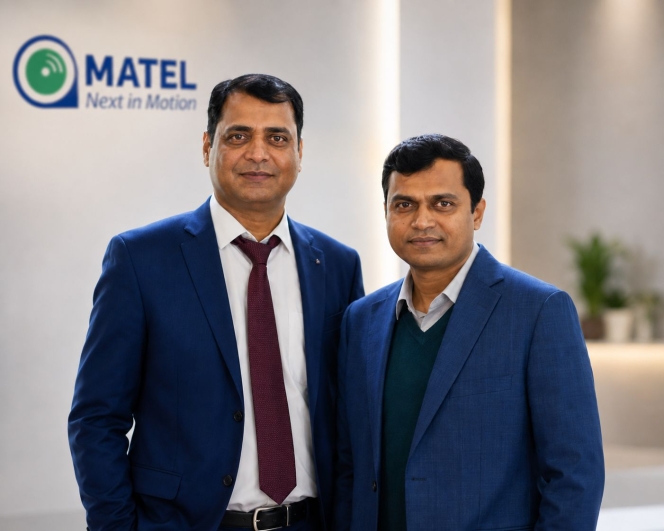
L-R: Sunil Patel, Founder & CEO, Matel and Netaji Patrio, Co-Founder & CMO, Matel.
Mechatronics company Matel Motion & Energy Solutions (Matel) has raised Rs 1.3 billion in a Series B funding round led by UC Impower, along with new investor Catamaran and participation from existing backer Transition VC.
Founded in 2017, Pune-based Matel develops motors, motor controllers and integrated powertrains for automotive and industrial uses, including electric vehicles, pumping and cooling systems. The company manufactures permanent magnet synchronous motor (PMSM)-based IE5 industrial motors and is developing an IE6 product line. It also produces magnet-free motor designs to mitigate supply chain reliance on raw materials. Matel supplies components to original equipment manufacturers in two-wheeler, three-wheeler and industrial sectors.
The capital will be used to expand manufacturing capacity, advance research and development infrastructure, enlarge product offerings for commercial electric vehicles, and expand international distribution channels.
Sunil Patel, Founder and Chief Executive Officer, Matel, said, "Securing this funding is a significant milestone for Matel, but more importantly, it is a testament to the incredible hard work of our team and the trust our early customers have placed in us. We founded Matel to address a major vacuum in Indian industries by delivering locally designed and developed energy-efficient mechatronics products and this investment allows us to double down on our mission. With this capital, our primary focus will be accelerating our product roadmap with advanced R&D infrastructure and expanding state-of-the-art manufacturing set-up. We are thrilled to welcome New Investors (UC Impower and Catamaran) as our new partners in this journey, and we are deeply grateful to our existing investors (Transition VC, Gruhas and Haresh Abichandani) for their continued belief and support from day one."
Netaji Patro, Co-Founder and Chief Marketing Officer, Matel, said, “We are incredibly excited and grateful for the trust our investors have placed in our vision. The unwavering commitment of our existing investors, who have chosen to double down and reinvest in this round, is the ultimate vote of confidence in our growth trajectory. In addition to R&D, and manufacturing capacity expansion, this capital will support expanding our product range and entry into the Electric CV segment as well as broadening the company's international footprint to acquire new customers worldwide.”
Richa Natarajan, Co-Founder and Partner, UC Impower, said, "Energy efficiency will be one of the defining themes of the next industrial cycle, and companies that own core technology will create disproportionate value. Very few companies combine deep motor technology, power electronics and software into a single platform - and fewer still have translated that capability into products being adopted by leading OEMs. Matel has done both. We believe the company is building category-defining technology for the future of electrification, with the potential to become a global leader in energy-efficient motion systems. We're excited to partner with Sunil, Netaji and the team as they build an enduring technology company from India."
Shantanu Chaturvedi, Partner at Transition VC, said, “Matel isn't just a motor manufacturer; they have demonstrated the ability to be an integrated drive solutions platform across segments like Industrials, EV, Auto ancillary and multiple others. We saw Matel having the capability to build the platform the world needs when we earlier invested, and that is exactly how this has panned out, making doubling down in this round a no-brainer. Super excited to work with the incredible team.”
Deepak Padaki, President, Catamaran, said, "Catamaran's investment in Matel reflects our continued conviction in India's precision engineering and advanced manufacturing ecosystem, and marks a deepening of our exposure to companies building core, IP-led hardware technology. Matel is in mission mode, and we are confident of its ability to scale given its engineering talent, in-house R&D, process expertise and OEM traction. We look forward to supporting Sunil, Netaji and the team on their journey."
The management team is led by Patel, who previously headed the Chetak EV development program at Bajaj Auto and Patro, who held research and development leadership positions at Maruti Suzuki India and Bajaj Auto.
Kuraray America Showcases GENESTAR PA9T At SAE Thermal Management Symposium
- By MT Bureau
- October 10, 2026
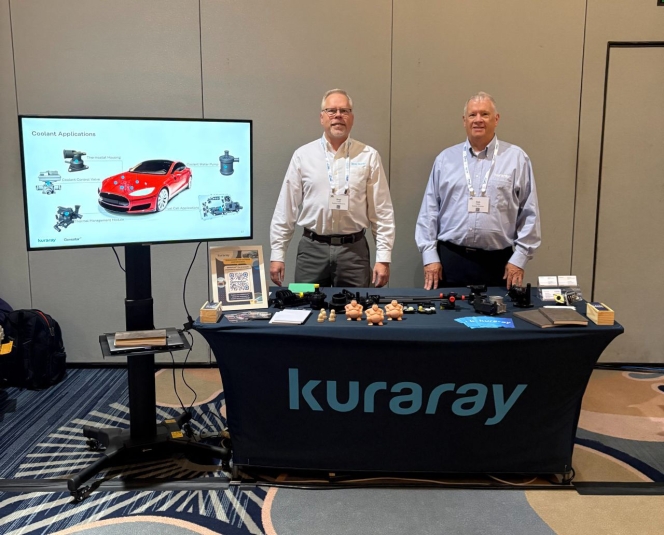
Kuraray America, Inc. (KAI) recently took part in the SAE International Thermal Management Systems Symposium, held on 6–7 October 2026 in Dearborn, Michigan. The event gathered mobility-industry professionals to discuss technologies and emerging challenges in vehicle thermal management. Throughout the two-day symposium, the Kuraray GENESTAR team connected with attendees at Booth #19, sharing insights into high-performance engineering materials.
The team demonstrated how GENESTAR PA9T can meet demanding automotive application requirements. This heat-resistant polyamide engineering plastic was developed by Kuraray using unique monomers, combining low water absorption, high heat resistance, chemical resistance, dimensional precision and excellent moldability. It also offers electrical properties suitable for demanding electrical and electronic applications, including low water absorption, chemical resistance, moldability, insulation performance, thermal resistance and dimensional stability.
These characteristics make GENESTAR relevant for a broad range of electrical, electronic and automotive components. Kuraray lists automotive applications including connectors, relays, insulators and wire harnesses, while GENESTAR materials also serve in sliding, fuel and air-intake systems. The company reports use in automotive gears, bearings, piping and intercooler tanks, and the material is being considered for electric-vehicle applications as well.
The SAE symposium provided a forum for exchanging insights into evolving thermal management technologies. The 2026 programme covered battery and electronics cooling, climate control, alternative refrigerants and vehicle thermal engineering approaches. For Kuraray, participation enabled direct engagement with engineers and industry professionals about how high-performance materials can address increasingly complex automotive design requirements, with GENESTAR PA9T offering a material option where multiple performance demands must be met simultaneously.
- Highway Roop Precision Technologies
- Carlyle
- Chamundi Die Cast
- Mohit Oswal
- Dharmesh Arora
- Yasin Khan
- Amit Jain
- Carlyle India Advisors
Highway Roop Precision Technologies Acquires Chamundi Die Cast
- By MT Bureau
- September 29, 2026
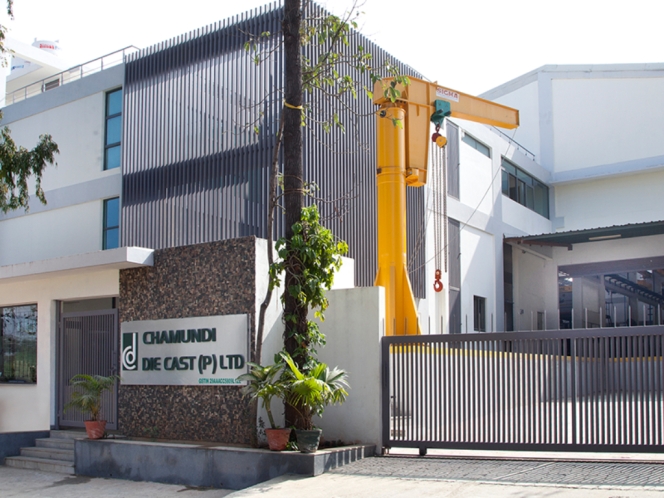
Highway Roop Precision Technologies, a Carlyle-backed manufacturer of precision torque and control components, has completed the acquisition of Chamundi Die Cast, which manufactures complex aluminium die-cast components for automotive and industrial applications.
The transaction adds integrated aluminium die-casting and machining capabilities to Highway Roop's existing forging and precision-machining operations across steering, transmission and powertrain systems.
The acquisition expands Highway Roop’s product portfolio into lightweight vehicle solutions and electric vehicle components, while establishing a manufacturing footprint in South India alongside Chamundi's existing customer base in India, North America and Europe.
At present, Chamundi exports 60 percent of its products to global markets, while domestic business accounts for 40 percent. Interestingly, 98 percent of its business comes from the automotive industry, while the remaining comes from non-automotive sector.
Mohit Oswal, Chairman, Highway Roop, said, “This acquisition is an important milestone in our journey to build Highway Roop into a scaled, diversified precision manufacturing platform anchored in mission-critical torque and control applications. Chamundi’s capabilities and customer relationships complement our existing strengths and strengthen our ability to serve customers across automotive and industrial applications. Together, we are building a stronger platform for the next phase of growth.”
Dharmesh Arora, Group CEO and Director, Highway Roop, said, “Chamundi meaningfully strengthens Highway Roop’s capabilities around our core focus on torque and control applications. Its integrated aluminum die-casting and precision-machining capabilities expand our ability to deliver complex, lightweight engineered solutions across vehicle technologies. Its South India manufacturing base also diversifies our footprint, brings us closer to key customers, and strengthens the resilience of our manufacturing network and supply chain. We are delighted to welcome the Chamundi team to Highway Roop and look forward to building a stronger platform together.”
Yasin Khan, Managing Director, Chamundi, said, “Over four decades, Chamundi has built a strong business anchored in engineering excellence, a committed workforce and long-standing customer relationships. We are pleased to partner with Highway Roop for the next phase of our journey and will continue to hold a stake in the combined entity. Highway Roop’s complementary capabilities and scale will enable us to build on this foundation, deepen our relationships with customers, and create new opportunities for our employees, as we grow together.”
Amit Jain, Partner and Head, Carlyle India Advisors, said, “This transaction reflects Carlyle’s continued commitment to building a scaled, differentiated precision manufacturing platform in India. Highway Roop has established itself as a trusted partner to global OEMs for mission-critical torque and control components, and Chamundi adds complementary capabilities that further strengthen its customer proposition. We remain focused on supporting Highway Roop as it scales its capabilities and builds towards becoming one of India’s leading precision manufacturing companies serving automotive and industrial customers globally.”
Following the completion of the acquisition, Chamundi's leadership will retain an equity stake in the combined entity as part of the integration into Highway Roop's global supply platform.
- Stoneridge
- Uwe Brandeburg
- Natalia Noblet
- Valeo
- DXC Technology
- Continental
- Autoliv
- TRW Automotive
- BlincVision
Stoneridge Appoints Uwe Brandenburg As Global VP Of Engineering & Innovation
- By MT Bureau
- September 25, 2026
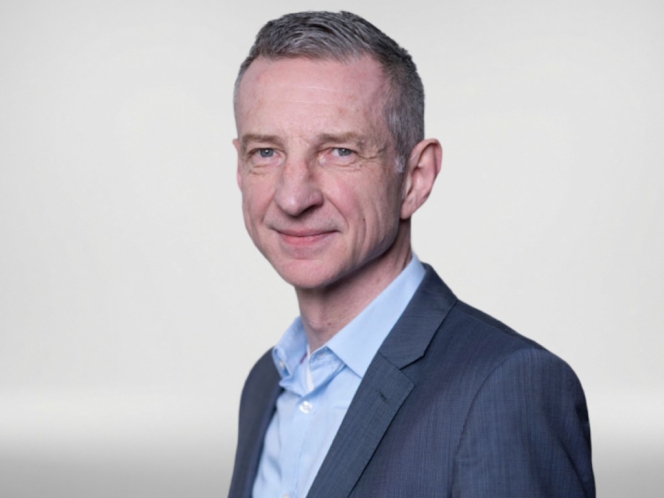
American component supplier Stoneridge has appointed Uwe Brandenburg as its Global Vice-President, Engineering and Innovation, effective 2 November 2026. Brandenburg will report to President and Chief Executive Officer Natalia Noblet and join the company’s executive management team.
In his new role, Brandenburg will oversee Stoneridge’s global engineering division, managing product development, technology innovation and product roadmaps across vision systems, safety technology, vehicle intelligence and connectivity platforms for commercial vehicles and off-highway equipment.
Natalia Noblet said, "Uwe is a recognised voice in automotive electronics and engineering leadership, with a proven track record of building world-class engineering teams and delivering breakthrough innovations in ADAS, autonomous driving and software-defined vehicles. His extensive experience bringing next-generation radar, camera, safety electronics and AI-powered platforms to market, combined with his strategic vision and commitment to operational excellence, make him an exceptional addition to our Executive Team. We are excited to leverage his expertise to accelerate Stoneridge’s technology roadmap and strengthen our competitive position in vehicle intelligence and safety.”
Brandenburg comes with over 25 years of experience in Tier 1 automotive electronics, software engineering and vehicle systems. Prior to joining Stoneridge, he served as Chief Technology Officer and Senior Vice-President for Automotive and Manufacturing at DXC Technology.
His previous positions include Global Head of Engineering and Chief Technology Officer for advanced driver assistance systems at Valeo, alongside engineering leadership roles at Continental, Autoliv and TRW Automotive focused on radar, camera and safety electronics systems.
Uwe Brandenburg said, “Stoneridge has a clear technology strategy, a highly talented engineering organisation, and a mission centred on improving safety, reducing emissions and increasing vehicle efficiency for our customers. When cutting-edge technology is paired with the right team and a purpose that truly matters, we have what it takes to create strong value for our customers. I look forward to building on this strong foundation and helping the team deliver the next generation of vision and safety solutions.”
Brandenburg holds a degree in Electrical and Telecommunications Engineering from the University of Applied Sciences Constance and currently serves on the board of directors of BlincVision.
HS HYOSUNG ADVANCED MATERIALS To Exhibit At CAMX 2026 In Atlanta
- By MT Bureau
- September 23, 2026
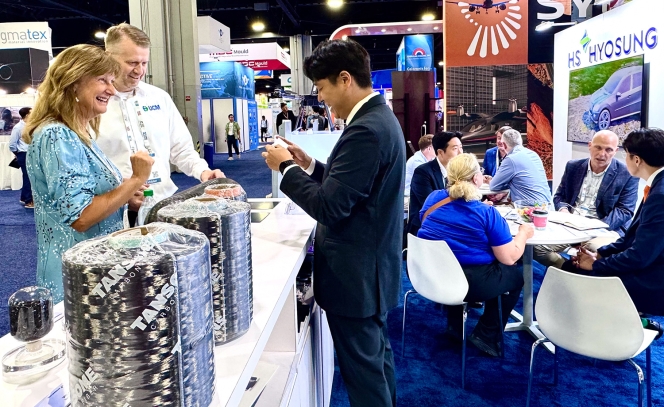
HS HYOSUNG ADVANCED MATERIALS will participate in CAMX 2026, the Composites and Advanced Materials Expo, held in Atlanta from 22 to 24 September. As North America's largest exhibition for composite and advanced materials, it expects over 500 companies and roughly 7,000 visitors. The company has exhibited every year since the event's debut in 2014, strengthening its North American presence.
At this year's show, HS HYOSUNG ADVANCED MATERIALS will display 3K carbon fibre, 3K fabrics and composites for drones and high-pressure vessels for satellites. Carbon fibre applications are expanding across automotive wheels, hoods and brake discs, sports goods such as hockey sticks, pickleball rackets and surfboards, wire cores and increasingly aerospace, defence and drones.
TANSOME, independently developed in 2011 as Korea's first proprietary carbon fibre, weighs one-quarter as much as steel while offering ten times the strength and seven times the elasticity. Commercial production began in Jeonju in 2013, followed by a China base in 2024 and planned Vietnam operations in late 2026, ensuring a stable global supply chain.
International certifications validate the company's capabilities, including IATF 16949 in 2019 and AS9100 in 2021. In 2022, it developed H3065, a T-1000-grade ultra-high-strength carbon fibre, becoming only the third company worldwide after Japan and the United States to do so.
Jin-dal Lim, CEO, HS HYOSUNG ADVANCED MATERIALS, said, “CAMX 2026 is an important platform for sharing the latest technologies and market trends with leading companies and customers in the global composite materials industry and exploring new business opportunities. We will provide differentiated carbon fibre solutions for advanced industries, including aerospace and aviation, based on our high-performance carbon fibre technologies and stable supply capabilities.”
Comments (0)
ADD COMMENT