

DICV Reinforces India's Strategic Role In Daimler Truck, Unveils BharatBenz Growth Plans
- By MT Bureau
- September 15, 2026
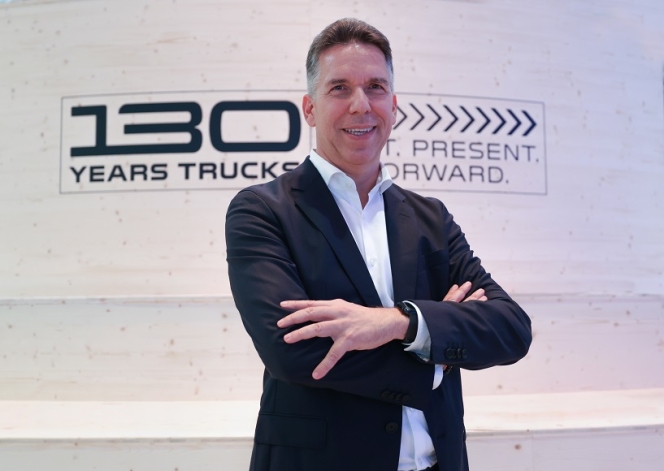
Torsten Schmidt, CEO & Managing Director, Daimler India Commercial Vehicles and President, Mercedes-Benz Trucks Customer Region ISEAA
Daimler India Commercial Vehicles (DICV) has reaffirmed India's strategic value within Daimler Truck after the formation of the ISEAA customer region for the Mercedes-Benz Trucks segment. The company also outlined BharatBenz's next growth phase, driven by product innovation, customer ecosystem expansion and continued investment.
The Mercedes-Benz Trucks segment houses two brands: Mercedes-Benz Trucks and BharatBenz. DICV serves Indian customers under BharatBenz, while the Mercedes-Benz Trucks brand caters to South-East Asia, Australia-Pacific and other markets. Under a new operating model, the segment is divided into Europe, LAMEA, China and ISEAA regions. ISEAA unites previously separate markets under one customer-focused structure.
DICV anchors the ISEAA region, placing India at the centre of a framework spanning India, South-East Asia and Australia-Pacific. This reflects DICV's growing role as a manufacturing, engineering and export hub. Since operations began, DICV has exported over 75,000 trucks and buses and more than 330 million parts to over 70 markets, and supplies medium-duty transmissions from Chennai to Daimler Truck plants in Germany. Covering 42 countries and nearly 2.8 billion people, ISEAA offers substantial long-term growth, with commercial vehicle demand expected to rise over 5 percent annually.
DICV is accelerating BharatBenz's transformation, targeting safer, more productive transport solutions. With India's safety norms evolving, BharatBenz is readying its portfolio with Advanced Driver Assistance Systems calibrated for Indian conditions. Building on HX and Torqshift launches in construction and mining, BharatBenz continues bringing globally proven Daimler Truck technologies to India. Torqshift Automated Manual Transmission, proven worldwide and adapted for Indian duty cycles, improves driver comfort, reduces fatigue and lowers Total Cost of Ownership.
DICV keeps investing in a customer ecosystem maximising uptime and lifecycle value. BharatBenz's TruckConnect digital fleet management solution enables performance monitoring and data-driven insights. The BharatBenz Rakshana programme now services over 98 percent of vehicles within 48 hours. DICV plans to expand its service network from 430 touchpoints to 600 by 2030, focusing on northern, eastern and north-eastern India.
India's expanded role is backed by continued investment in local manufacturing, engineering and technology. These build on DICV's recently announced additional investment of approximately INR 40 billion in Tamil Nadu under a non-binding facilitation MoU with the state government. This takes DICV's cumulative investment in India beyond INR 145 billion. DICV operates with 92percent localisation and is supported by more than 400 local suppliers, strengthening its ability to develop products for Indian and global markets.
Torsten Schmidt, CEO & Managing Director, Daimler India Commercial Vehicles and President Mercedes-Benz Trucks Customer Region ISEAA, said, "India has long been an important market for Daimler Truck and the home of BharatBenz. Through the new ISEAA customer region, we are bringing India, South-East Asia and Australia-Pacific closer together to strengthen collaboration, share capabilities and respond faster to customer needs across these markets. DICV serves as the anchor entity for the region, building on its established strengths in manufacturing, engineering and exports. For our customers in India, BharatBenz remains focused on delivering products and services designed specifically for local operating conditions, while benefiting from the scale, expertise and collaboration of the broader Mercedes-Benz Trucks segment.”
Truck Rentals Hold Firm On Festive Dispatches And Core Sector Expansion
- By MT Bureau
- October 06, 2026
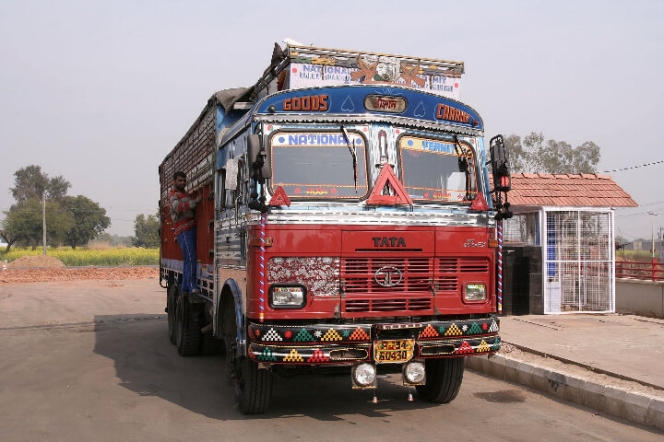
India’s transportation sector recorded growth across vehicle categories in September 2026, driven by festive dispatches and core sector demand, according to the Shriram Mobility Bulletin.
Truck rentals remained stable across key trunk routes, remaining above levels recorded during the same period in the previous year.
The company finds that on a MoM basis, rentals on the Bengaluru–Mumbai–Bengaluru route grew by 1.3 percent, followed by the Delhi–Mumbai–Delhi route at 1.1 percent and the Delhi–Hyderabad–Delhi route at 1 percent.
The YoY perspective showed increases on all monitored routes, led by Delhi–Kolkata–Delhi at 13 percent, Bengaluru–Mumbai–Bengaluru at 11 percent and Kolkata–Guwahati–Kolkata at 10 percent.
Vehicle dispatches reflected sequential expansion in core industries. Construction equipment sales rose 31 percent MoM, earth-moving equipment increased 17 percent and goods carriers grew 13 percent. Passenger cars and two-wheelers each recorded a 4 percent sequential rise, whereas agricultural tractors fell 15 percent and commercial tractors declined 22 percent.
On a YoY basis, maxi cab sales grew 75 percent, three-wheeler goods vehicles rose 63 percent and goods carriers increased 40 percent. Agricultural trailers recorded a year-on-year decline of 27 percent.
Electric vehicle adoption increased across all monitored segments. Electric two-wheelers recorded a 13 percent MoM rise and a 111 percent YoY gain. Electric passenger cars grew 12 percent sequentially and 143 percent YoY, while electric three-wheelers increased 8 percent MoM and 113 percent YoY.
Sudarshan Holla, Joint MD & COO, Commercial Vehicles, Shriram Finance, said, "Firm truck rentals amid festive dispatches, strong two-wheeler demand, accelerating EV adoption, and healthy sales of heavy-duty trucks and construction equipment all point to resilient economic activity. Importantly, the strength seen in commercial vehicles and construction equipment indicates continued momentum in infrastructure and core sectors, reinforcing a positive outlook for the broader economy. Concerns of a potential interest rate increase during the festive season may be a sentiment dampener."
Interestingly, fuel consumption data showed a 2 percent sequential rise in diesel use alongside a 5 percent decline in petrol consumption. On a YoY basis, petrol and diesel consumption increased by 7.2 percent and 4.9 percent, respectively. FASTag collections fell 3.9 percent in volume and 1.2 percent in value MoM, though YoY collection value increased by 11 percent.
- FlixBus
- Ministry of Tourism
- Government of India
- Gajendra Singh Shekhawat
- Bhuvnesh Kumar
- Surya Khurana
FlixBus Partners Ministry of Tourism To Promote Destination Discovery And Sustainable Travel
- By MT Bureau
- October 05, 2026
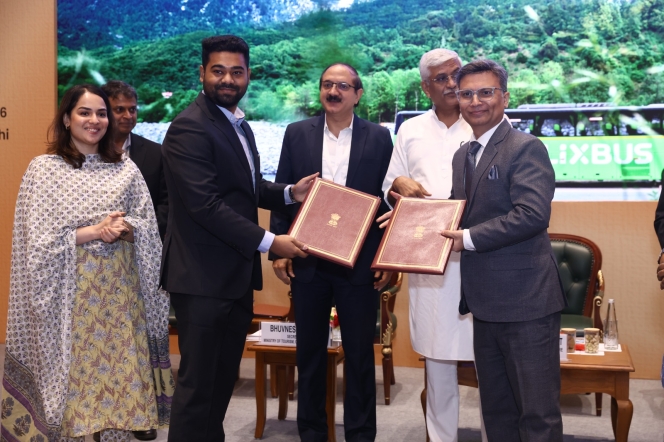
FlixBus has signed a Memorandum of Understanding (MoU) with the Ministry of Tourism, Government of India, on World Tourism Day to promote domestic destinations and advocate responsible tourism practices across its intercity transport network.
The agreement was signed in the presence of Gajendra Singh Shekhawat, Union Tourism Minister, Bhuvnesh Kumar, Secretary and Suman Billa, Additional Secretary, Ministry of Tourism.
Under the agreement, FlixBus will integrate destination content and Incredible India branding across its digital platforms, while deploying co-branded coaches on select intercity routes.
FlixBus has launched ‘Trails of India,’ a dedicated microsite showcasing thematic travel circuits and regional destination highlights. The partnership also includes a national campaign titled ‘Har Safar, Swachh Safar,’ aimed at encouraging environmental awareness, community respect, and sustainable practices among intercity passengers in alignment with the government's Mission LiFE initiative. Additionally, FlixBus will participate in policy dialogues to share international insights on intercity mobility and tourism development.
Gajendra Singh Shekhawat said, "India’s tourism landscape is as diverse as the country itself, with countless destinations offering distinctive cultural, natural and local experiences beyond the well-known tourist circuits. Enabling travellers to access and explore these destinations more easily is key to unlocking their wider tourism potential. Our partnership with FlixBus brings together its technology-enabled platform and intercity network with the Ministry’s vision of taking India’s tourism story to a wider audience. As we connect travellers with a broader range of destinations, it is equally important to foster greater awareness of responsible travel, encouraging journeys that are enriching for visitors while contributing positively to the local communities and destinations they encounter. We believe this partnership can help open up new avenues for destination discovery while promoting a more conscious and inclusive travel experience."
Bhuvnesh Kumar said, "Mobility can play a transformative role in bringing destinations closer to travellers, particularly those that lie beyond the established tourism circuits. FlixBus’s technology-driven approach and growing intercity network offer an opportunity to reach travellers at scale and connect them with a wider range of destinations and tourism experiences across India. Through this partnership, we also have an opportunity to use the travel journey itself to build greater awareness around responsible tourism and encourage travellers to be more mindful of the places they visit and the communities they interact with. By bringing together destination discovery, accessibility and responsible travel, we hope to create greater value for travellers while supporting tourism opportunities across India."
Surya Khurana, Managing Director, FlixBus India, said, "At FlixBus, we believe mobility is a powerful catalyst for tourism, economic development and cultural exchange. We are proud to partner with the Ministry of Tourism in supporting the Incredible India campaign through a collaboration that goes beyond transportation to strengthen India's tourism ecosystem. By combining our technology platform, global expertise and growing domestic network, we aim to enhance the visibility of Indian destinations, encourage travel beyond traditional circuits and contribute to a more connected, responsible and resilient tourism landscape."
Toyota Launches New Sora Fuel Cell Route Bus Jointly Developed With Isuzu
- By MT Bureau
- October 05, 2026
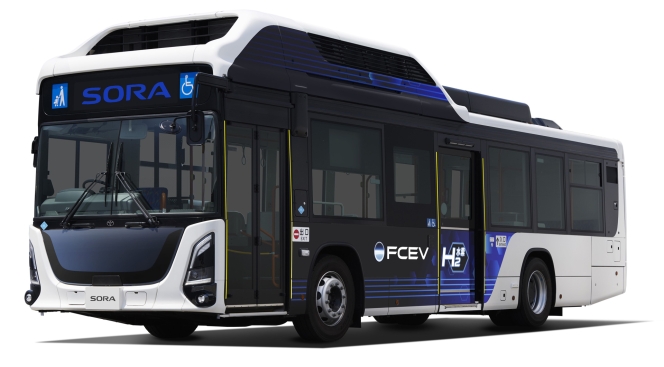
Toyota Motor Corporation has launched the new Sora fuel cell route bus, developed in partnership with Isuzu Motors. The vehicle combines Isuzu's battery-electric full-flat route bus platform with Toyota's fuel cell system as part of joint efforts to achieve zero-emission public transportation.
The updated bus utilises a commercial-grade fuel cell stack and a large-capacity battery, reducing total hydrogen tank capacity by approximately 20 percent while increasing operating range to over 300km on a single fill. The fuel cell stack and hydrogen tanks are mounted on the roof structure to facilitate vehicle maintenance for bus operators.
The company claims that refuelling takes approximately 10 minutes, with support for high-speed filling standards designed to reduce refuelling times as compatible station infrastructure develops. As of September 2026, Toyota has supplied over 3,500 fuel cell systems across commercial buses, rail, and stationary generator applications globally.
Safety systems on the new Sora include an Emergency Driver Stop System linked with a Driver Status Monitor, which decelerates and stops the vehicle while engaging the parking brake if driver impairment is detected. A front blind spot monitor alerts the driver to pedestrians and cyclists ahead of the vehicle.
The passenger compartment features a step-free full-flat floor layout, optional one-touch wheelchair securement systems, and four seating configurations across urban and suburban variants. The bus can also function as an emergency power source during disaster events when connected to an external power supply unit.
Force Motors Sells 4,027 Units In September 2026
- By MT Bureau
- October 01, 2026
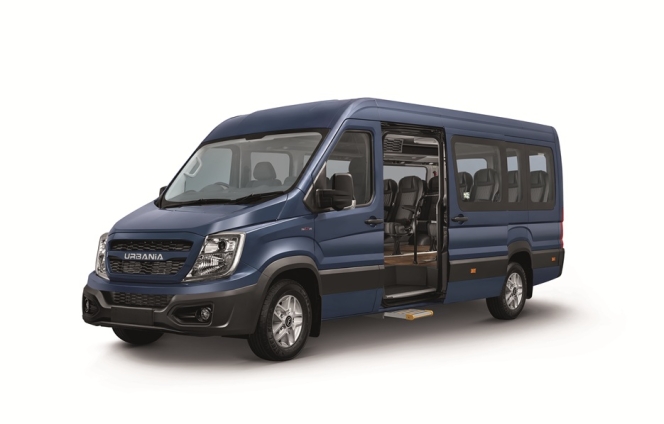
Pune-headquartered automotive company Force Motors has reported its wholesales for September 2026, selling 4,027 units last month, marking a 62 percent YoY, as compared to 2,486 units in September 2025.
The company said it witnessed volume growth across the month driven by customer demand across multiple vehicle lines. The sales were supported by market adoption of the Force Traveller N Range, increased adoption of the Urbania Deluxe within the shared mobility sector and volume contributions from the Trax model line.
Prasan Firodia, MD, Force Motors, said: "September has been a positive month for us, with healthy demand across our key products. The new Traveller N Range is witnessing encouraging market acceptance, while the new Urbania Deluxe continues to gain traction. These trends reinforce our confidence in the strength of our product portfolio and our understanding of customer needs. As we enter the festive season, we look forward to building on this momentum and continuing to serve our customers with products that meet their evolving needs."
Comments (0)
ADD COMMENT