

SIAM Concludes 6th International Conference On Climate Action And Low-Carbon Mobility
- By MT Bureau
- June 06, 2026
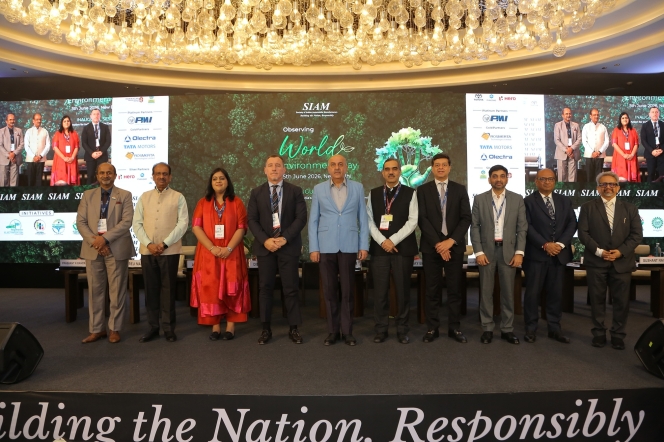
The Society of Indian Automobile Manufacturers (SIAM) organised the 6th International Conference on ‘Climate Action: Accelerating India’s Transition to a Low-Carbon Future’, to mark World Environment Day.
The forum brought together automobile policymakers, industry CEOs, academic researchers and sustainability experts to detail decarbonisation pathways across the entire automotive value chain.
The conference emphasised that for a market as diverse as India, no single technology will satisfy the country's net-zero roadmap. Instead, progress relies on the parallel maturation of vehicle electrification, alternative bio-fuels, circular material economies and green factory manufacturing.
The transport sector was highlighted as a focal point for reinforcing India's domestic energy security and reducing its macro-economic reliance on volatile fuel imports. Government and industry speakers mapped out a multi-fuel ecosystem designed to transition the country toward localised and clean energy pathways.
While the three-wheeler category is experiencing a fast transition driven by favourable unit economics, panellists called for accelerated adoption curves within the four-wheeler and public transport segments, specifically via electric buses.
India is actively advancing a wide range of low-carbon fuel alternatives, including biofuels, ethanol and isobutanol blends, flex-fuel configurations, compressed biogas (CBG), liquefied natural gas (LNG/CNG), green hydrogen and synthetic fuels.
Technical pathways involving coal gasification-based fuels are being structurally explored to further diversify domestic supply lines.
Experts noted that tech adoption cannot be driven by immediate costs alone; long-term scale will naturally deflate pricing over the next decade. Crucially, vehicle deployment and localised charging/refuelling networks must expand in tandem.
The conference was segmented into three core technical tracks, evaluating circularity, fuel diversification and manufacturing supply chains.
The first thematic session, ‘Circularity in the Automotive Sector: From Materials to End-of-Life Vehicles,’ focused on circular economy practices across the automotive value chain, including sustainable sourcing, recycling, resource efficiency, and end-of-life vehicle management was addressed by Guest of Honour Dr. Virender Sharma, Member Technical (Additional Secretary to Government of India level), Commission for Air Quality management in National Capital Region and Adjoining Areas. The session was chaired by M S Anand Kumar, Chairperson, SIAM Recycling & Material Groups, and Assistant Vice-President, TVS Motor Company, the session included presentations by Dr. Rashi Gupta, Founder & Managing Director, Vision Mechatronics; Bhuwan Purohit, Executive Director, Rubamin; Dr Swati Singh, Head of Regional Standards, South Asia (UL Standards and Engagements) and Abhijit Sen Roy, General Manager (TS), Indian Oil Corporation Ltd. (IOCL), who shared perspectives on sustainable technologies, EPR frameworks, and circular resource recovery.
The session also included a panel discussion on ‘Building a Circular Automotive Value Chain,’ moderated by Sandeep Kumar Mohanty, Partner, PwC.
The second thematic session, ‘Alternate Fuels for Sustainable Mobility – Diversifying the Energy Mix: Pathways for Low-Carbon Fuels,’ focused on the role of alternate fuels in reducing transport emissions and supporting India’s mobility transition. Chaired by Vikram Gulati, Country Head & EVP – Corporate Affairs & Governance, Toyota Kirloskar Motor, the session included presentations by Dr. Santanu Gupta, Director Technical, Global Biofuels Alliance; Sumit Sarkar, Chief Executive Officer, Chhattisgarh Biofuel Development Authority and Santosh Gurunath, Chief Executive Officer, Umagine Hydrogen, who shared insights on global biofuel trends, agricultural residue-based fuels being developed, and elaborated on hydrogen as a pathway for low-carbon mobility.
A panel discussion on ‘Multi-Fuel Pathways to Achieve Sustainable Mobility,’ moderated by Atul Jairaj, Partner, Deloitte India, brought together Suruchi Bhadwal, TERI and Vedang Pittie, Harinagar Sugar Mills, along with the presenters and session chair. The discussion focused on the role of biofuels, hydrogen and other low-carbon fuels and the policy and infrastructure support needed to accelerate their adoption.
The third thematic session, ‘Decarbonising the Automotive Value Chain: Green Manufacturing and Sustainable Supply Chains,’ chaired by Suneet Deshmukh, Head Operations Excellence, Hero MotoCorp, discussed strategies for reducing emissions across manufacturing operations and supplychain.
The session included presentations by Chaitanya Kanuri, Director E-Mobility, WRI India; Mayur Karmarkar, Managing Director, International Copper Association India and Mohit Jauhari, Head SCM, Shriram Pistons and Rings, who shared insights on copper, critical minerals, rare earth magnets and elaborated on sustainable supply chain practices.
The session also included a panel discussion on ‘Accelerating the Transition to a Low-Carbon Automotive Value Chain,’ moderated by Pratik Shah, Partner, EY Parthenon. The panel brought together Parag Sharma, Stellantis; Lt Col Monish Ahuja (Retd), Punjab Renewable Energy Systems along with the session presenters. They discussed green manufacturing, renewable energy, sustainable sourcing and supply chain decarbonisation.
To actively support India's target of carbon neutrality by 2070 and the Viksit Bharat vision by 2047, SIAM formalized its long-term actions under six targeted environmental and structural initiatives – विद्युतीकरण (Electrification), जैविक पहल (Bio-Initiatives), चक्रीयता (Circularity), गैस गतिशीलता (Gas Mobility), हरित हाइड्रोजन (Green Hydrogen) and सुरक्षित सफर (Safe Journey).
Tarun Kapoor, Advisor to the Prime Minister of India, stated during the opening session, "The transport sector must play a central role in strengthening India's energy security. We cannot continue to depend on large-scale fuel imports and, over time, must move towards fuels that can be produced within the country. While three-wheelers are ready for rapid electrification, we need much faster adoption in the four-wheeler segment as well."
Prashant K. Banerjee, Executive Director, SIAM, added, "We are living through a time of unprecedented challenges, from climate change and air pollution to energy security concerns. But every challenge also creates an opportunity and as the world's largest market for two-wheelers and three-wheelers, India has already demonstrated remarkable progress in sustainable mobility."
Cedric Ratinaud Becomes New Global Brand Head Of Nissan Motor Corporation
- By MT Bureau
- August 24, 2026
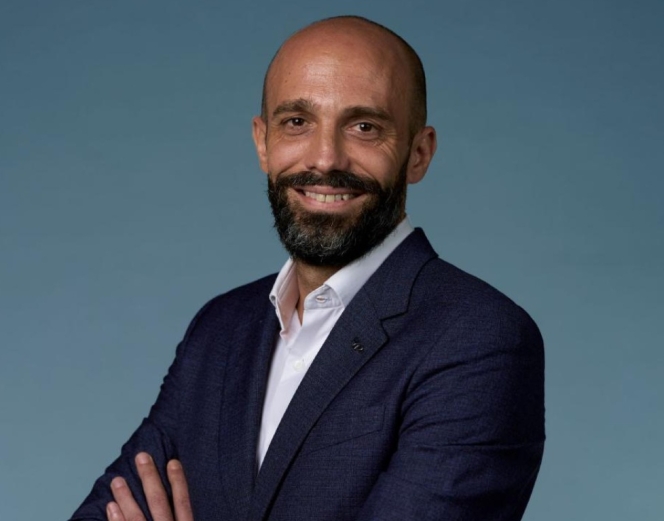
Japanese automaker Nissan Motor Corporation has announced the appointment of Cedric Ratinaud as the new Global Head of Brand, Nissan.
Ratinaud previously served as the Director of Creative and Campaigns for Global Communications at Nissan Motor Corporation, a role he held from April 2024. Prior to that position, he worked as General Manager of INFINITI Global Communications. His background includes two decades in the automotive sector across communications, marketing communications, and brand management roles.
His career at Nissan spans operations across Europe, Asia, and Oceania. Most recently, he served as General Manager of Brand, Marketing, and Communications for Nissan Motor Asia Pacific, operating out of Thailand.
TVS Supply Chain Solutions, Japan’s Sankyu Inc. Ink Strategic MoU
- By MT Bureau
- August 24, 2026
TVS Supply Chain Solutions has signed a Memorandum of Understanding with Japan-based Sankyu Inc. to collaborate across supply chain and engineering services.
As part of the agreement, Sankyu intends to acquire a 0.5 percent equity stake in TVS Supply Chain Solutions, subject to regulatory approvals.
The partnership combines TVS Supply Chain Solutions' logistics network in India with Sankyu's engineering capabilities and corporate connections in Japan. Initial operations will focus on serving manufacturing and industrial clients in India, where over 1,400 Japanese companies operate.
Future plans include expanding joint operations into regions across Asia, the Middle East, Africa and additional international markets where both firms hold established infrastructure.
To manage operations under the agreement, the companies will form a joint steering committee with representatives from both organisations to identify operational opportunities and oversee joint initiatives.
R. Dinesh, Chairman, TVS Supply Chain Solutions, said, “This partnership represents an important step in our strategy to strengthen our capabilities and create greater value for customers. Sankyu's engineering expertise and deep relationships across the Japanese industrial ecosystem complement TVS Supply Chain Solutions' integrated supply chain capabilities, strong customer relationships and market presence. We share a strong commitment to long-term value creation, and together we are well positioned to deliver more comprehensive solutions, support the evolving needs of manufacturing and industrial customers, and unlock new growth opportunities across India and other strategic markets.”
Kimihiro Nakamura, President and CEO, Sankyu Inc, said, "Since our inception in 1918, Sankyu has been dedicated to supporting the progress of the manufacturing sector, underpinned by our core philosophy of valuing our people. We are profoundly honoured to enter into this partnership with TVS SCS, an organisation that shares our philosophy and commitment to the highest ethical standards. Our two companies possess a strong strategic alignment, and by integrating and complementing our respective strengths, we look forward to achieving collective growth in the global market and contributing to sustainable industrial development."
VinFast Elevates India Head Tapan Ghosh To Oversee Operations In Indonesia
- By MT Bureau
- August 18, 2026
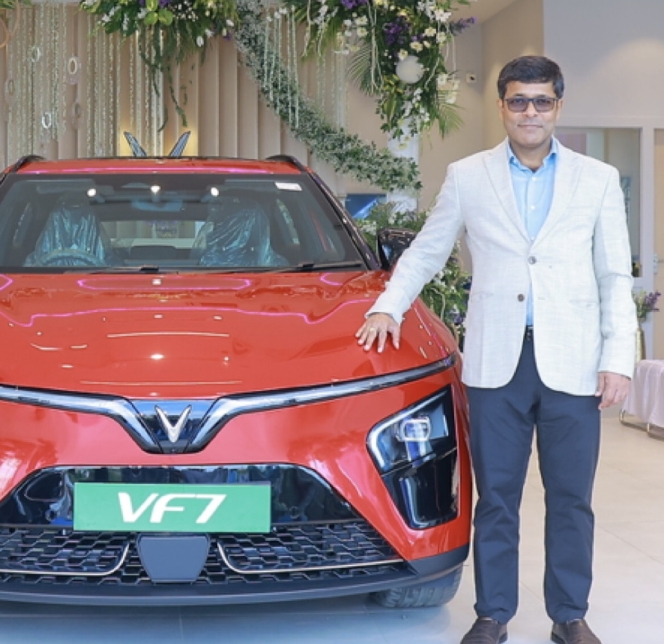
Vietnamese automotive company VinFast has expanded the role of its India Chief Executive Officer, Tapan Ghosh, to oversee operations in Indonesia, uniting the company's management structure across both regional markets.
Interestingly, Ghosh becomes Chief Executive Officer for VinFast Operations across both countries, making him the first executive from India to manage multiple markets for the Vietnamese company.
Since joining the Vietnamese brand in 2025 from Hyundai Motor India, Ghosh has managed local manufacturing setups, dealership distribution expansion and product strategies. His new responsibilities will include overseeing the development of a complete knock-down (CKD) assembly operation in Indonesia.
The dual-country manufacturing and distribution setup establishes operational hubs for VinFast across South Asia and Southeast Asia, supporting its strategy to expand production beyond Vietnam.
An Cong Hui Succeeds Li Shu Fu As Chairman Of Geely, Gan Jia Yue Becomes CEO
- By MT Bureau
- August 18, 2026
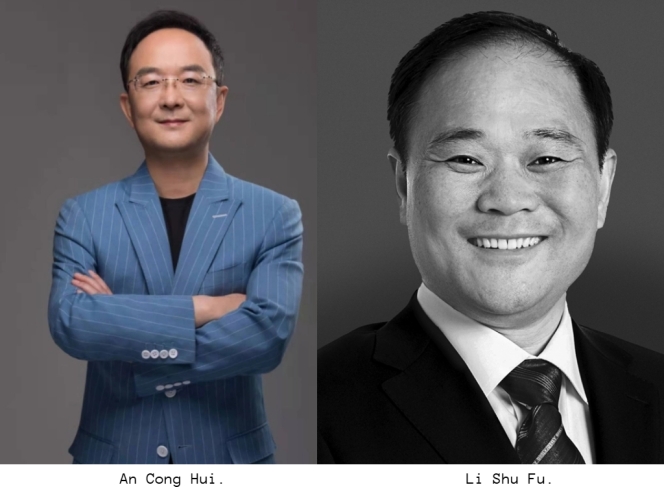
Chinese automotive major Geely Automobile Holdings has announced changes to its board of directors and executive leadership structure, effective 18 August 2026, as part of its succession planning framework.
Li Shu Fu has resigned as Chairman of the Board and Executive Director to focus on other business commitments. He has accepted an appointment as Honorary Chairman for Life, a role outside the formal corporate governance structure. Li remains a controlling shareholder of the company and confirmed that he has no disagreement with the board regarding his departure.
On the other hand, Executive Director An Cong Hui has been appointed Chairman of the Board. The board cited An's operational experience within the group and strategic alignment with the controlling shareholder entity as factors supporting the appointment. Independent non-executive directors will continue to oversee potential conflict management protocols under Hong Kong Stock Exchange listing rules.
Further board adjustments include the resignation of Li Dong Hui, Daniel, from the role of Vice-Chairman. He retains his seat as an Executive Director. Gui Sheng Yue has stepped down as Chief Executive Officer and assumed the role of Vice Chairman while remaining an Executive Director.
Following Gui's transition, Executive Director Gan Jia Yue has been appointed Chief Executive Officer. Gan assumes responsibility for managing the group's operational activities and executing long-term business objectives.
Comments (0)
ADD COMMENT