

Mercedes-Benz India Rolls Out 200,000th Made-in-India Car From Chakan Facility
- By MT Bureau
- April 15, 2025
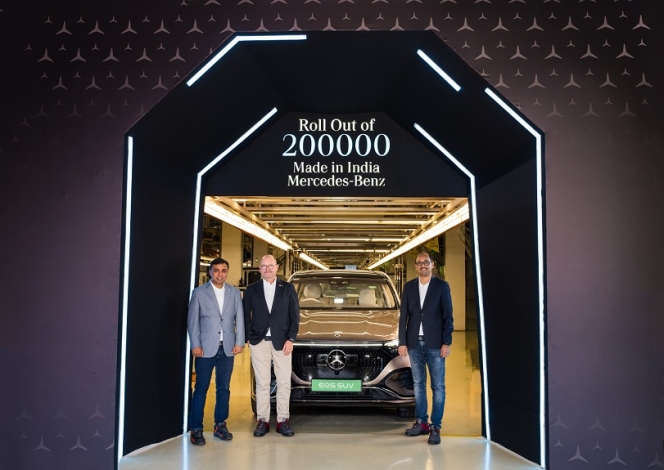
German luxury car brand Mercedes-Benz India has attained a new production milestone of rolling out its 200,000th made-in-India car the EQS SUV, from its Chakan facility in Pune, Maharashtra.
The event was attended by Dr Joerg Burzer, Member of the Board of Management of Mercedes-Benz Group AG responsible for Production, Quality & Supply Chain Management, rolled out the 200,000th Mercedes-Benz in India in the presence of Santosh Iyer, Managing Director & CEO, Mercedes-Benz India and Vyankatesh Kulkarni, Executive Director & Head of Operations, Mercedes-Benz India.
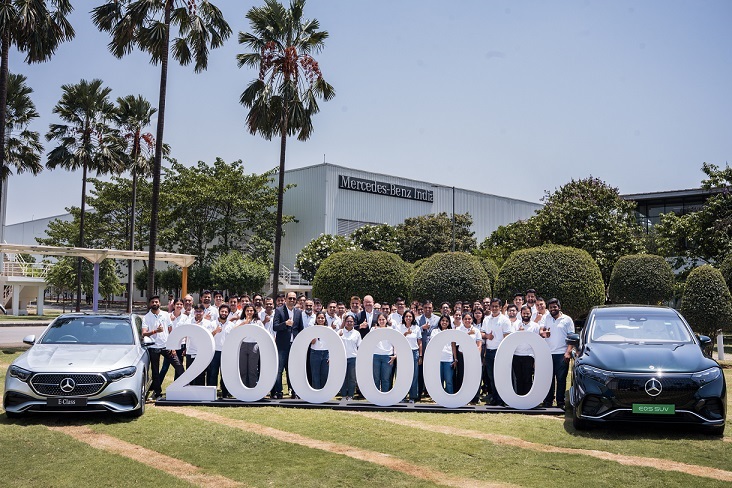
It is important to note that Mercedes-Benz India was among the first luxury car brands to set-up production and assembly in India way back in 1994. The company clocked 50,000 units production milestone in 2014 taking a total of 19 years; the next 150,000 units came in a decade (2015-2025).
Interestingly, in the last two years, Mercedes-Benz India produced 50,000 cars, which the OEM stated demonstrates the rapid evolution of India's luxury car market and the increasing aspiration for the Mercedes-Benz brand among Indian customers.
The Chakan facility also boasts several notable distinctions, including being the first market to produce a Mercedes-Maybach (S500) outside Germany in 2015, production of the EQS 580 Sedan in 2022, localisation of a second BEV – EQS 580 SUV. Since 2022, the Chakan facility uses 100 percent green energy for production.
What’s more, Mercedes-Benz has invested over INR 30 billion in India till date with INR 2 billion in 2024 alone.
Dr Joerg Burzer, said, “Mercedes-Benz’s remarkable milestone of 200,000 'Made in India' Mercedes-Benz cars, underlines India’s potential as a key manufacturing hub in the long run. The Indian plant has achieved high level of production agility, manufacturing world-class ICE and EVs under one-roof, underscoring the technical prowess of the team and high level of flexible manufacturing, capable of responding fast to market and customer requirements. The Indian production hub's contribution to our global sustainable manufacturing strategy, through 100 percent renewable energy use, exemplifies our commitment to sustainable manufacturing.”
Santosh Iyer, added, "Mercedes-Benz production facility is the backbone of our Indian operations and has played a critical role in our market success, manufacturing world-class ICE and BEV products for the discerning Indian customers. Mercedes-Benz continues to set new standards in production quality, remaining invested in the market with highest investment by any luxury OEM in India. We will stay invested in our state-of-art manufacturing facility, catering to growing market demand for Mercedes-Benz products in the Indian market."
E3 Electric.Ai Commences Production Of Trion E-Scooter In Hyderabad
- By MT Bureau
- October 05, 2026
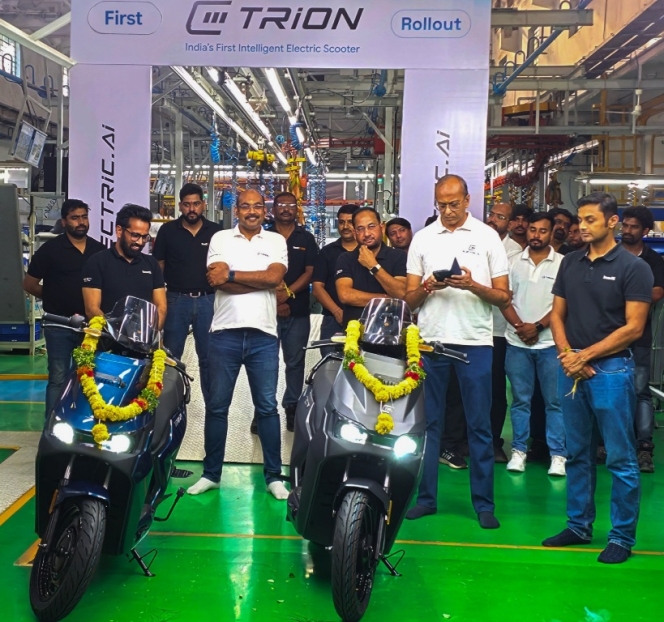
Bengaluru-based electric mobility startup E3 Electric.Ai has commenced production of its electric scooter, the E3 Trion, at its manufacturing facility in Hyderabad. Customer deliveries are scheduled to begin in batches from 7 October 2026, coinciding with the company's second anniversary.
The E3 Trion is offered in three variants – C1, C1X and C2 – designed for individual, family and commercial users. The variants will be delivered in phased schedules across six colour options: Nova Blue, Teal Blue, Graphite Grey, Misty Green, Solar Red and Luna White.
The e-scooter completed a testing and validation programme comprising over 550 Design Validation Plan tests, including chassis dynamometer power evaluation, range validation and brake-pressure sensor testing. Accelerated durability assessments were conducted on a Cam Drum Test Rig with a 205 kg payload, alongside water-wading tests at depths between 100 mm and 300 mm, rainstorm exposure and a 260-km mixed-terrain road test between Bengaluru and Hogenakkal.
Sanjeev P, Founder and CEO, E3 Electric.Ai, said, "This is a significant moment for everyone at E3, where engineering, testing and validation translate into a product that is ready to reach our customers. Our philosophy has been simple: build an intelligent, robust, electric scooter engineered for the real world. The rigorous validation programme, particularly our focus on durability across challenging conditions, has been central to that. With production now underway and deliveries beginning in batches from October 7, which also marks our second anniversary, we are proud to take the E3 Trion from the test track to the road and begin this journey with our first 100 customers."
The initial 100 buyers will receive an extended warranty covering the battery and primary components for eight years or 100,000 kilometres, along with one year of roadside assistance. The coverage package applies to the 2.3 kWh battery configuration on the C1 variant and the 3 kWh battery setup on the C1X and C2 variants.
BMW M Produces 1 Millionth Vehicle As Munich Plant Prepares For Electric M3
- By MT Bureau
- October 05, 2026
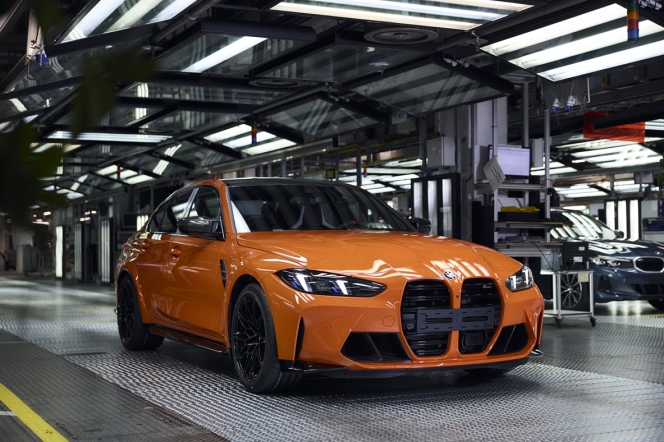
German automotive luxury brand BMW M has produced its one-millionth vehicle, a BMW M3 finished in BMW Individual Fire Orange III special paintwork, at the BMW Group Plant Munich. The milestone vehicle was presented by Peter Weber, head of BMW Group Plant Munich, to Franciscus van Meel, CEO of BMW M, during an official ceremony.
The production milestone marks over five decades of BMW M manufacturing. Moving forward, the Munich facility will produce the fully electric BMW M3 based on BMW M Neue Klasse technology, following the fully electric BMW i3 as the second Neue Klasse model manufactured at the site.
The Munich facility has produced the current generation of the BMW M3 since 2020. From 2027 onwards, the BMW Group will manufacture exclusively fully electric vehicles at the site. The company is investing approximately EUR 650 million to convert the Munich facility, incorporating a new body shop, vehicle assembly line, and logistics infrastructure across one-third of the total plant area.
Franciscus van Meel said, "BMW M combines road and racetrack capabilities with everyday practicality. The one-millionth BMW M vehicle shows that these values are still very much appreciated by our customers, 40 years after the market launch of the first BMW M3. This motivates us to continuously develop our BMW M high-performance vehicle portfolio based on BMW M Neue Klasse technology, including fully-electric models, in line with our core brand promise."
Peter Weber said, "The BMW M3 has close ties to the BMW Group’s main plant in Munich. We are delighted that we will also be producing the first fully-electric BMW M3 here in Munich. BMW M has a special emotional significance for our associates here – so we are especially proud to be actively shaping the future of this icon."

Ultium Cells To Upgrade US Facility For Prismatic LMR Battery Cell Production
- By MT Bureau
- September 30, 2026
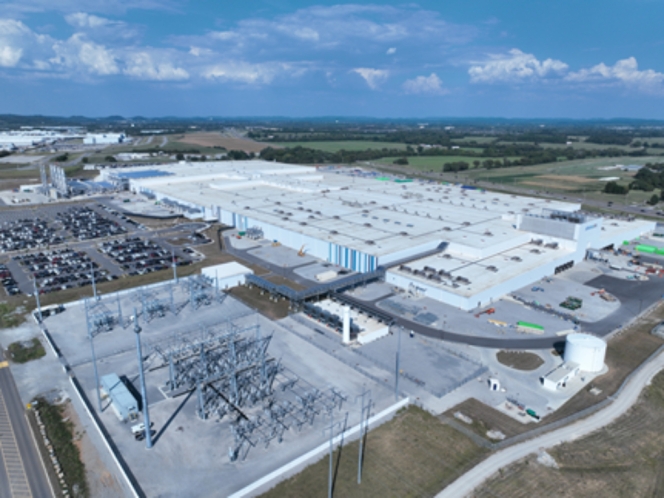
Ultium Cells, the joint venture between General Motors and LG Energy Solution, will upgrade its battery cell manufacturing plant in Spring Hill, Tennessee, United States, to produce lithium manganese rich (LMR) battery cells for General Motors electric vehicles.
The facility is scheduled to begin retooling later this year, with completion expected in 2028. The conversion will enable mass production of prismatic LMR cells, a chemistry which it claims offers up to 33 percent higher energy density than lithium iron phosphate (LFP) at a similar cost profile.
The project will create 500 positions, expanding the plant's existing workforce of 1,200 employees. The upgrade follows the start of LFP cell production for energy storage systems at the facility in June 2026, bringing cumulative investment across both projects to USD 1 billion by 2030.
The modification will allow Ultium Cells to manufacture high-nickel, LFP and LMR chemistries across pouch and prismatic form factors at the Tennessee site, supplying battery cells for General Motors' North American vehicle assembly plants and external stationary storage applications.
Kurt Kelty, Vice-President of Battery and Sustainability, GM, said, “Establishing LMR prismatic cell production at Ultium Cells in Spring Hill is a key step in GM’s strategy to match the right battery technology to customer needs and strengthen our leadership in domestic battery manufacturing and innovation. High-nickel batteries will continue to give customers the highest range in our portfolio, while adding LMR positions us to leapfrog today’s more affordable chemistries and deliver lower costs with better performance. This flexibility allows us to scale efficiently, reach more customers, and support GM’s long-term EV strategy and profitability journey.”
Tennessee Governor Bill Lee said, “Ultium Cells’ continued investment in Spring Hill underscores Tennessee’s role as a hub for advanced manufacturing and technological innovation. I thank Ultium Cells for their commitment to create new, high-quality jobs and to reinforce the strength of Tennessee’s manufacturing economy as we advance toward a future focused on clean, reliable energy.”
Injae Pahk, President, Ultium Cells, said, “This marks Ultium Cells’ second major investment in Spring Hill and reflects the company’s continued growth as a diversified battery cell manufacturer. By evolving production to meet changing market demands, Ultium Cells is reinforcing its long-term position as a key employer and technology leader in the U.S. battery cell sector.”
- Skoda Auto Volkswagen India
- Skoda Slavia
- Andreas Dick
- Skoda Auto
- Piyush Arora
- Ashish Gupta
- Skoda Auto India
Skoda Auto Volkswagen India Commences Production Of New Slavia Sedan At Pune Facility
- By MT Bureau
- September 28, 2026
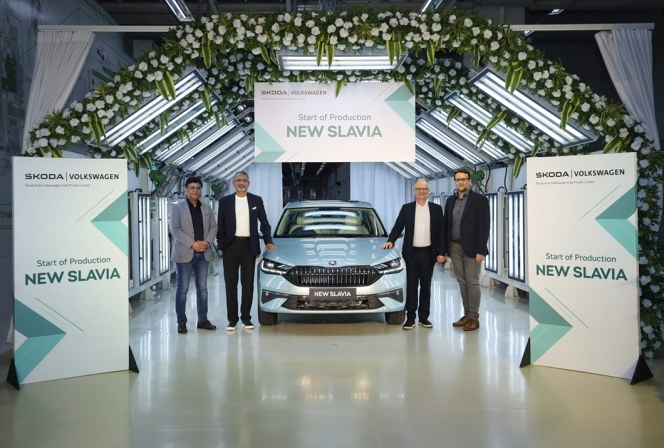
Skoda Auto Volkswagen India, one of the leading passenger vehicle manufacturers, has commenced production of the updated Skoda Slavia sedan at its manufacturing plant in Chakan, Pune, ahead of the festive sales period in India.
The Slavia model line has recorded sales of nearly 80,000 units in India since its initial launch, capturing a segment market share of approximately 30 percent in its segment. The revised version introduces mechanical updates, including an eight-speed torque converter automatic transmission paired with the 1.0-litre TSI petrol engine, alongside a 5-star Global NCAP safety rating. It also gets a rear seat massage function, a 360-degree camera system and an infotainment setup with a Google Cloud-powered artificial intelligence assistant.
Andreas Dick, Skoda Auto Chief Production Officer, said, "India has become an increasingly important production location for Skoda Auto and an integral part of our global manufacturing network. Over the years, we have built strong capabilities here, combining local expertise with Skoda Auto’s global standards for quality, efficiency and engineering. The start of production of the new Slavia is another demonstration of these capabilities and further underlines the strategic importance of India within our global operations. We are confident in the continued development of our Indian manufacturing capabilities and their contribution to Skoda Auto’s international growth."
Piyush Arora, Managing Director & CEO, Skoda Auto Volkswagen India, said, "The start of production of the new Slavia marks an important milestone in our India journey and demonstrates the strength of our development and manufacturing capabilities in the country. The Slavia has developed a strong fan base through its design, driving dynamics, safety and engineering, and the new model builds on these strengths with meaningful enhancements in technology, comfort and convenience. With production now underway in Pune, we look forward to bringing the latest evolution of the Slavia to our customers while continuing to deliver the quality and engineering excellence they expect from a Skoda."
Ashish Gupta, Brand Director, Skoda Auto India, said, “For over 90 years, sedans have been an integral part of our global heritage. The new Slavia proudly carries this legacy forward. With close to 30% segment share, the Slavia has earned the trust of Indian customers. The new Slavia elevates everything customers value about the car, combining timeless design, European engineering and safety, engaging performance, modern technology, and greater comfort. As we begin production of the new Slavia, we reaffirm our commitment to strengthening Skoda’s sedan legacy in India with products that remain fresh, relevant, and aspirational.”
The assembly of the model forms part of Skoda Auto Volkswagen India's manufacturing operations across its two facilities, which possess a total annual production capacity of 315,000 units. The group surpassed two million locally manufactured vehicles in 2025 and has exported over 725,000 units to more than 40 international markets, supported by product development and localisation efforts at its Technology Centre in Pune.
Comments (0)
ADD COMMENT