

Kia Sonet Targets Young At Heart Indians
- By MT Bureau
- October 12, 2020

Kookhyun Shim, MD and CEO at Kia Motors India said “The aggressive pricing has been arrived at to bring delight and offer incredible value to the young and the young-at-heart customer of the Sonet. As our endeavour has been to ensure there is a Sonet for virtually all customers in this category, it is being offered with the widest choice in this segment.”
The SUV is available across 17 variants, including two petrol engines – Smartstream 1.2-litre four-cylinder and 1.0 T-GDi (turbocharged petrol direct injection), and two 1.5-litre CRDi diesel engine (WGT & VGT configurations). Available in two trim levels - Tech Line and GT-Line, the car comes with five transmission options - five- and six-speed manuals, an intuitive seven-speed DCT, six-speed automatic, and a new six-speed Smartstream intelligent manual transmission (iMT). A technological breakthrough from the company the iMT offers fatigue-free driving thanks to the absence of a clutch pedal, yet the same driver control as a conventional manual transmission. For the first time in this segment, the 1.5 CRDi diesel motor is also available with a six-speed automatic transmission.
According to Ho Sung Song, President and CEO, Kia Motors Corporation, the company has already grabbed a six percent market share in the passenger car segment in India. With the launch of the Sonet, the carmaker aims at becoming the segment leader not only in India but globally and make Kia the brand of choice. “With its aggressive and modern, design language, quantum-drive dynamics, and an array of the latest high-tech features, the Sonet puts an exclamation point on our ambition to make Kia the brand of choice, especially among millennial and Gen Z consumers. The Sonet fills a need in the growing SUV market,” said Song.
The interiors of the Kia Sonet is designed to offer comfort and luxury at the same time, with a well laid-out, easy-to-use connected infotainment and cluster interface along with high-quality materials all around. Despite compact exterior dimensions, the interior of the Sonet offers ample, ergonomic space for all the passengers. In addition to this, the Sonet comes loaded with multiple segment-first features offering complete comfort, convenience, safety and optimum driving pleasure to customers.
Design
The design team travelled to India before the project started and it discovered many elements that it implemented in the Sonet, said Karim Habib, Senior Vice President and Head at Global Design, Kia Motors Corporation. “The Sonet is inspired by the young, passionate and dynamic culture that you find in India. We were inspired by traditional architecture and the modern architecture that you find in the big cities in India. The silhouette, the presence of the vehicle, has a lot to do with what we believe the young people and young at heart in India would like to have. Other small details like material, light and colour that is very important in India,” said Habib.
The first thing anyone would notice is the distinctive bold profile of the car. Inspired by the baby elephant, the Sonet is compact but powerful. The car has got a powerful presence with long hood and bumper and powerful stance. It has black A-pillars that allow the dynamic silhouette for the hood to seem longer for such a compact car. “When you look at the car and look at the baby elephant, we see the link and believe power is visible from the inspiration to design,” added Habib.
At the front, the brand’s signature design trait – the Kia’ tiger-nose’ grille – is reinterpreted to suit the car’s personality. The company tries to evolve the tiger-nose grille to a bit more power with a tusk-like feature to it. The headlamps look like a tiger eye-line that gives a powerful concentrated look in daytime and night. Flanked by ‘heart beat’ LED DRLs and stylish front skid plates below, the wild nature of the car comes alive. Within the tiger-nose grille, with its classy chrome and diamond knurling pattern, is the distinctive grille mesh featuring a three-dimensional geometric design inspired by India’s iconic step-wells. The grille mesh design pays respects to India’s historic strengths in sophisticated mathematics, science and architecture.
At the rear, ‘heart beat’ LED tail lamps and its unique reflector garnish give the car even more significant presence and impart a wider look. “At the rear too, Kia tries to create the same sense of power, and that’s why the car feels very wide for a compact car as it is and that’s why we have the wrapped -round glass that gives the car lot of width. The signature of the tail lamp is similar to the front and has a very continuous feature to it and gives it a lot of widths,” said Habib. Additional highlights at the rear include a sporty dual muffler design and diffuser fin rear skid plate.
For the interior, the company emphasises on keeping it natural and intuitive and establishing a strong emotional connection in the car. To appeal to young-at-heart and always-connected consumers, the Sonet offers a sophisticated and lively cabin with a smooth, flowing dashboard. The 10.25-inch (26.03 cm) HD touchscreen with infotainment and navigation system at the centre on the dashboard has 57 connected car features. The 4.2-inch (10.66 cm) instrument cluster gives turn-by-turn navigation instructions, Highline Tyre Pressure Monitoring System (TPMS) and drive mode and traction mode selection. The double-layer AC vents are ideal for the Indian weather. It also offers Kia’s UVO ‘connected car’ technology, Bose speakers, LED Sound Mood Lighting, a wireless smartphone charger with cooling function and Smart Pure Air Purifier with virus protection.
“On the technology front, we offer many futures for our customers, including intelligent manual transmission, an air purification system that is the world’s first just mention a few. We make sure that our customers will benefit from the latest for their life at the very beginning as soon as we launch the model. I promise that there will be much more excitement in future from Kia for the Indian market,” said Lorenz Glaab, VP and Head of global product management, Hyundai Motor. He also added that in the future, it is not the ecosystem that will be built around the car, but the car will be part of the ecosystem of each customer. (MT)
Toyota Kirloskar Motor Launches 2026 Fortuner Leader Edition In India
- By MT Bureau
- October 09, 2026
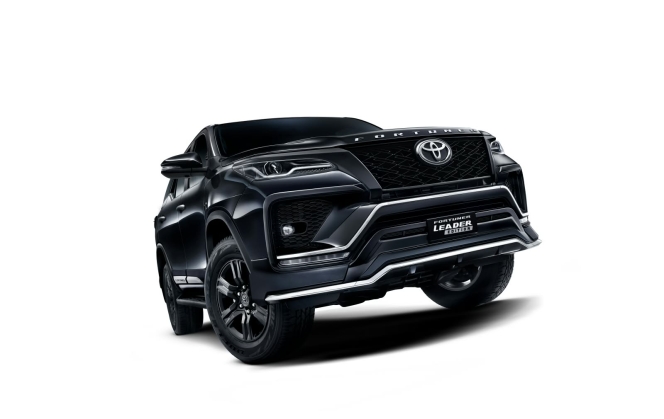
Toyota Kirloskar Motor, one of the leading passenger vehicle manufacturers in the country, has introduced the 2026 Fortuner Leader Edition in India, featuring exterior styling revisions and interior equipment updates.
Bookings for the model open on 12 October 2026 across company dealerships, with ex-showroom prices set at INR 3.65 million for the 4x2 Manual Transmission variant and INR 3.87 million for the 4x2 Automatic Transmission variant.
On the outside, the Leader Edition include the new redesigned front grille design, black rear door garnish, gloss black alloy wheels with matching hub caps, body side mouldings, a hood emblem and a black-finished roof and antenna.
In the cabin, the model features dual-tone black and maroon seat upholstery, matching door trims, ambient lighting and illuminated scuff plates. Additional functional additions comprise auto-folding outside rear-view mirrors and a tyre pressure monitoring system.
Sabari Manohar, Executive Vice-President of Sales-Service-Used Car Business, Toyota Kirloskar Motor, said, "The Fortuner has always represented confidence, capability and a spirit of achievement. With the new Leader Edition of the Fortuner, we are further defining this legacy through exterior enhancements and convenience features that reflect the aspirations of today’s customers. As we continue to align with changing trends, it is our endeavour to continuously evolve the Fortuner experience while staying true to the inherent qualities that have made them iconic. We are confident that the Leader Edition will further strengthen our commitment to delivering ever-better cars and creating Mass Happiness for All."
The model will be offered in three exterior colour options: Super White, Platinum White Pearl and Attitude Black. Toyota offers ownership packages with the vehicle, including a standard three-year or 100,000 km warranty extendable to five years or 220,000 km, 5-years of complimentary roadside assistance, and financing options up to seven years.
Kia India Expands Assured Buyback Scheme Across ICE, Hybrid And EV Portfolio
- By MT Bureau
- October 09, 2026
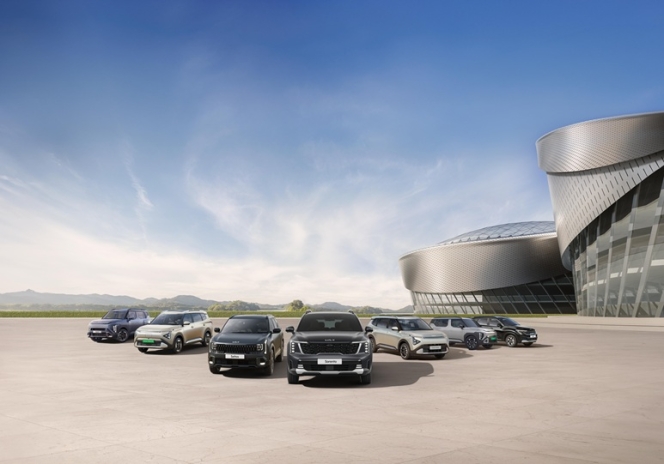
Kia India, one of the leading passenger vehicle manufacturers, has expanded its Assured Buyback Programme to cover internal combustion engine (ICE), hybrid and electric vehicle models.
The programme provides customers with predetermined residual values at the time of purchase to simplify vehicle trade-in and upgrade procedures.
Under the updated terms, eligible internal combustion engine vehicles carry an assured residual value of up to 75 percent after three years, while electric vehicle models offer up to 70 percent over the same timeframe.
The scheme encompasses Kia's product range, including the Sonet, Syros, new Seltos, Carens, Carens Clavis and Sorento across petrol, diesel, CNG, hybrid and electric powertrains.
Atul Sood, Senior Vice-President of Sales and Marketing, Kia India, said, "A vehicle purchase is a long-term decision, and customers increasingly seek greater certainty around future value and upgrade convenience. By expanding our Assured Buyback Programme with industry best resale value of upto 75 percent on ICE and upto 70 percent for EV in 3 years, we are enabling eligible customers to understand their vehicle’s assured residual value at the outset and plan their ownership journey with greater confidence. The initiative reflects our commitment to building enduring customer relationships and delivering consistent value from the first purchase through to the next exchange or upgrade."
The programme offers tenure options of three, four, or five years for ICE models and three or four years for electric vehicles. Annual mileage limits can be set at 10,000 km, 15,000 km or 20,000 km, supporting total usage caps of up to 100,000 km across the contract period. Enrolment is managed through authorised Kia dealerships at the point of vehicle purchase, with guaranteed buyback values executed at the end of the selected tenure subject to contract terms.
Renault Duster Strong Hybrid E-Tech 160 Claims 29 KMPL Fuel Efficiency
- By MT Bureau
- October 09, 2026
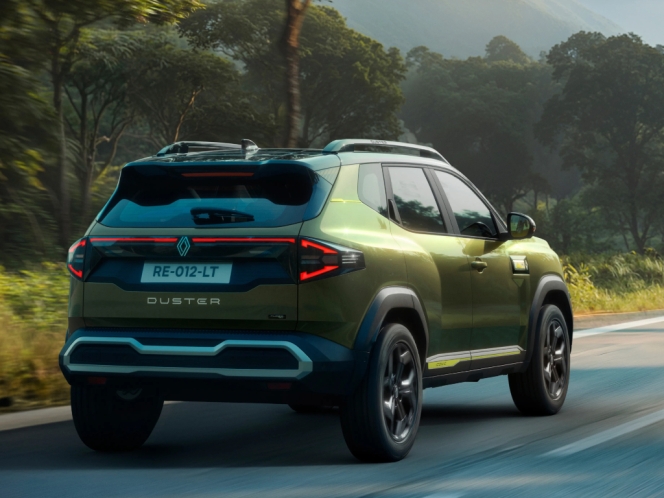
Renault India, one of the leading passenger vehicle manufacturers, has announced that its soon-to-be-launched Renault Duster strong hybrid E-Tech 160 has attained an ARAI-certified fuel efficiency rating of 29 kilometres per litre.
The company has started bookings for the model on 9 October 2026 across its dealership network and website for a booking amount of INR 21,000.
The SUV is powered by a strong-hybrid system combining a 1.8-litre petrol engine, two electric motors and a 1.4 kWh battery, producing a combined output of 160 PS. The system utilises a multi-mode automatic transmission to switch between combustion power, electric drive and energy recovery modes during deceleration. The onboard battery recharges through regenerative braking and engine operation without external charging infrastructure.
Francisco Hidalgo, Vice-President of Sales and Marketing, Renault Group India, said, "Bringing Renault’s proven E-Tech strong-hybrid technology from Europe to India is a significant moment for us. Indian SUV customers should not have to choose between performance and fuel efficiency. With a combined output of 160 PS and an ARAI-certified fuel efficiency of 29 km/litre, the Duster strong hybrid E-Tech 160 brings both together in a versatile SUV, without requiring external charging. For customers considering alternatives to diesel, it offers a compelling new choice for everyday driving. We are pleased to open bookings ahead of its official market debut."
The Duster strong hybrid E-Tech 160 marks the introduction of Renault's E-Tech powertrain technology in India under the company's regional product roadmap. The OEM will conduct the full product reveal and market launch on 17 October 2026.
Jaguar Electric Type 01 Grand Tourer Breaks Cover
- By MT Bureau
- October 07, 2026
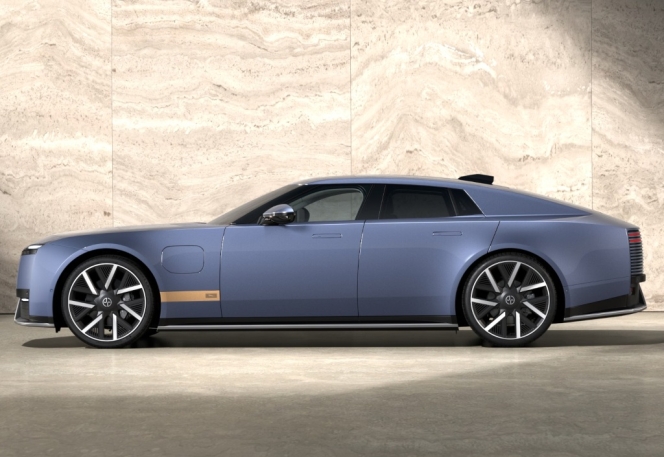
Jaguar has unveiled the Type 01, a four-door electric grand tourer, during a premiere event in New York. The model marks the start of the manufacturer's product architecture overhaul, with customer orders scheduled to open in early 2027 and initial deliveries expected in the second half of that year.
Designed, engineered and built in the United Kingdom, the Type 01 features a low roofline, long bonnet silhouette and aerodynamically focused body panels. Built on the bespoke Jaguar Electric Architecture, the 850-volt system produces over 1,000 PS of power. The electric vehicle provides an estimated 400-mile range under EPA testing standards, with 350kW rapid-charging capabilities adding 200 miles of range in 13 minutes.
During the event, Jaguar named actor Florence Pugh as the brand ambassador for its new product phase. The unveiling at STORIED in West Chelsea included displays detailing the vehicle's production engineering, structural panel development and testing protocols.
Rawdon Glover, Managing Director, Jaguar, said, "From its dramatic design to its captivating drive, Type 01 distils the essence of Jaguar into a luxury grand tourer for a new era. Type 01 is the foundation of this British brand, one that makes no compromise between design and engineering in our quest to create objects of desire, just as it was in the days of the E-type and XJS."
Comments (0)
ADD COMMENT