

JLR Deploys Aerospace Technology To Develop Future Lightweight Vehicles
- By MT Bureau
- October 22, 2020

Jaguar Land Rover is taking part in pioneering research trials to test the capability of advanced lightweight metals and composites to be used in future vehicles. The research forms part of Gesamtverband der Aluminiumindustrie (GDA), a consortium of aluminium manufacturers and car makers researching the longevity of materials and how they can be made lighter and more durable.
As part of a two-year project, the company will use technology developed for the aerospace industry to understand how materials respond to corrosive environments, in global markets and over rigorous terrains. Samples of new metals and composites planned for use in future Jaguar and Land Rover vehicles will be built into aerospace-grade sensors and put through their paces in some of the world’s most extreme physical conditions, tested for over 400,000km across North America.
Working with industry leaders across quality assurance and manufacturing to develop future lightweight vehicles, increasing efficiency and reducing emissions further is a key part of Jaguar Land Rover’s Destination Zero vision - a future with zero emissions, zero accidents and zero congestion.
The project builds on continued research into future materials, from the REALITY project, a pioneering recycling process which gives premium automotive-grade aluminium a second life, to the development of printed structural electronics, which can reduce the weight of in-car electronics by up to 60%.
The sensors will continuously measure the performance of the materials and share data with the Jaguar Land Rover’s product development team in the UK. With this information, the engineers can accurately forecast the material’s behaviour in the development of future vehicle programmes to ensure that next-generation lightweight metals meet the company’s stringent standards, delivering a longer-lasting, high quality finish.
Matt Walters, Lead Engineer, Metals and Process Materials for Jaguar Land Rover, said, “This research project is a prime example of our commitment to developing lightweight, durable and robust materials for our future vehicles. Using advanced aerospace-grade technology, such as these sensors, is testament to the quality and standards we are achieving. We are working alongside world-class partners on this ground-breaking research project and will improve the correlation between real-world and accelerated testing as we continue to raise the bar for quality and durability.” (MT)
- Chalmers University of Technology
- Nature Communications
- Albert Skegro
- Changfu Zou
- electric vehicle charging
Chalmers University Study Highlights 20% Battery Life Extension Using Reconfigurable Packs
- By MT Bureau
- October 09, 2026
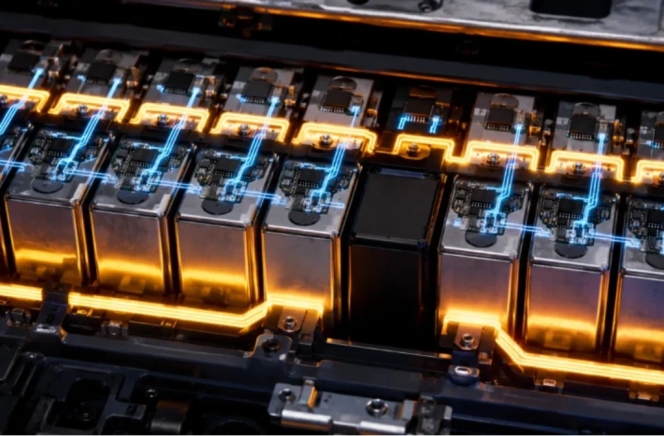
Researchers at Chalmers University of Technology, in collaboration with industry partners, have published a study in Nature Communications demonstrating that reconfigurable battery pack architectures can extend electric vehicle battery operational life by more than 20 percent under specific conditions.
In conventional electric vehicle battery packs, cells are wired in a fixed series configuration, meaning the weakest cell dictates the overall capacity, performance and lifespan of the entire pack. The architecture evaluated by the Chalmers engineering team uses integrated electronic switches and a centralised battery management system to monitor individual cells or cell groups. When a cell experiences accelerated degradation or reduced capacity, the system bypasses the degraded unit while electric current continues to flow through the remaining functional cells.
Albert Skegro, a PhD student at the Department of Electrical Engineering at Chalmers University of Technology, said, "They must all move at the pace of the slowest person and stop when that person stops, regardless of how much energy the others have left. With the architecture we have modelled, the battery can instead bypass the cell that is causing problems and continue using the remaining cells."
Changfu Zou, Professor at the Department of Electrical Engineering at Chalmers, said, "Reconfiguration is not an on-or-off choice. It is a spectrum. Where a manufacturer chooses to position itself on that spectrum determines how much of the potential benefit can be realised."
In a representative modelling scenario featuring an 80 kWh battery pack driven 12,000 kilometres annually over an 18.8-year vehicle lifespan, the reconfigurable system deferred battery replacement by approximately 14 months. The researchers noted that the technology yields the highest performance gains in high-voltage vehicles, including 400-volt and 800-volt electric passenger cars and commercial trucks, where higher cell counts in series increase the statistical probability of individual cell variance.
A techno-economic analysis included in the study determined that implementing cell-level switching hardware increases initial pack production costs by approximately nine per cent based on prototype-scale volumes of 1,000 units. The researchers identified an economic break-even threshold at a 12 percent cost increase, noting that volume manufacturing would lower component costs and increase financial viability for fleet operators and private owners. While prototype applications such as Volvo Cars' SmartCell concept and experimental road vehicles exist, mass-production vehicles using reconfigurable battery packs are yet to enter the commercial market.
Jakson Green Vehicles Adopts Dassault Systèmes 3DEXPERIENCE Platform For EV Engineering
- By MT Bureau
- October 07, 2026
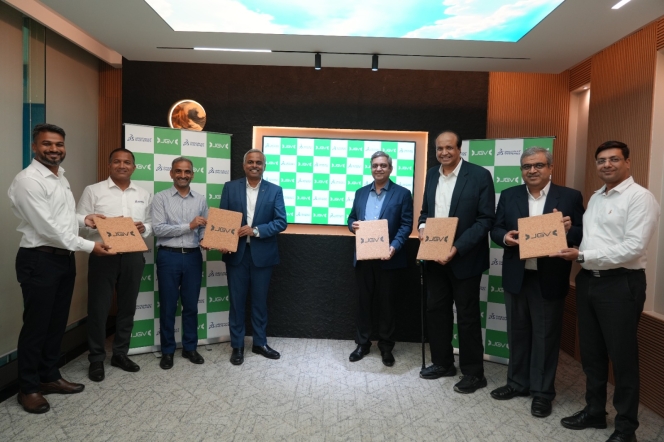
Jakson Green Vehicles has selected Dassault Systèmes’ cloud-based 3DEXPERIENCE platform to manage the design and development of its electric vehicles.
The implementation establishes a collaborative engineering framework to maintain digital continuity across the product development lifecycle. By connecting internal teams and external suppliers, the platform automates workflows, standardises component libraries and manages engineering change requests during early-stage product design. Virtual twin capabilities allow the vehicle manufacturer to conduct virtual validation testing to resolve structural and systems design issues prior to physical manufacturing.
Deepak Thakur, CEO, Jakson Green Vehicles, said, "Using Dassault Systèmes’ 3DEXPERIENCE Platform enables us to apply a collaborative approach and re-engineer our product lifecycle from the ground up. Through this transition from legacy environments to a unified digital thread, it enables strong R&D to achieve twin objectives; accelerated time-to-market and mitigated development costs. This partnership is helping us to transform the early-stage innovation and product design processes."
Deepak NG, Managing Director – India, Dassault Systèmes, said, "As India continues its dynamic growth trajectory, virtual twin technology serves as a powerful catalyst for sustainable innovation, empowering industries to rethink how they design, produce and operate."
The software adoption forms part of Jakson Green Vehicles' plan to build urban zero-emission mobility vehicles and infrastructure across India.
Gelion Signs Battery Assessment Agreement With Leading Automaker
- By MT Bureau
- October 07, 2026
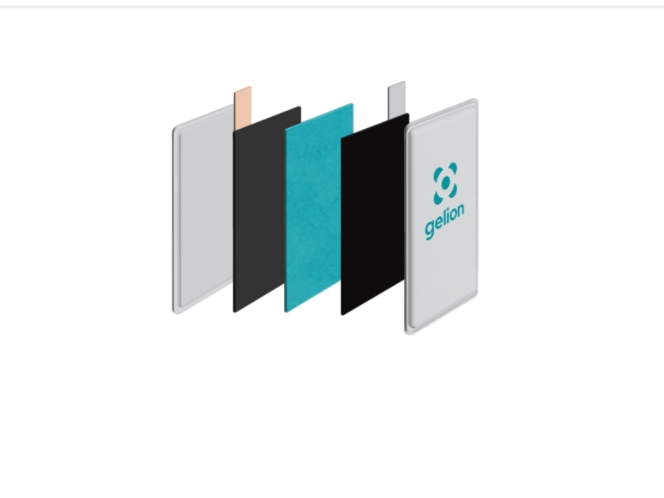
UK-headquartered energy technology company Gelion has entered into a material transfer agreement with a top 15 global automotive original equipment manufacturer to assess its NES cathode platform for future electric vehicle battery applications.
Under the terms of the agreement, Gelion will supply its sulfur-based cathode active material, coated cathodes and liquid electrolyte to the automotive partner. The manufacturer will evaluate the platform in both liquid and solid electrolyte cell configurations, testing compatibility across lithium metal and graphitic anode pathways targeting luxury and mass-market vehicle applications. The technology is designed to serve as a drop-in cathode material capable of integration into existing battery manufacturing lines without re-tooling.
Matt Wood, Chief Executive Officer, Gelion, said, "Our priority markets are commercial & defence drones, EVs and devices. We are honoured to be working with these major global automotive OEMs, and today’s announcement marks further progress towards the adoption of our technology and the generation of commercial revenues via funded programmes and eventually license and royalty revenue in the global EV market, alongside some of the industry’s leading companies."
"The growing engagement from global EV manufacturers reinforces the potential and attractiveness of our NES™ technology. This momentum is also mirrored in our agreements and partnerships across drones and devices, while our work with Tier 1 materials suppliers is advancing the scale-up of our unique, patented battery materials," Wood added.
The agreement expands Gelion’s ongoing industry testing programs with automotive manufacturers, extending the assessment of its sulfur-based cathode platform across liquid and solid battery systems.
- Honda R&D
- Honda Motor Co.
- Taise Corporation
- Taisei Rotec Corporation
- wireless charging
- East Nippon Expressway Company
Honda Develops In-Motion Wireless EV Charging Technology For Public Road Trials In 2027
- By MT Bureau
- October 06, 2026
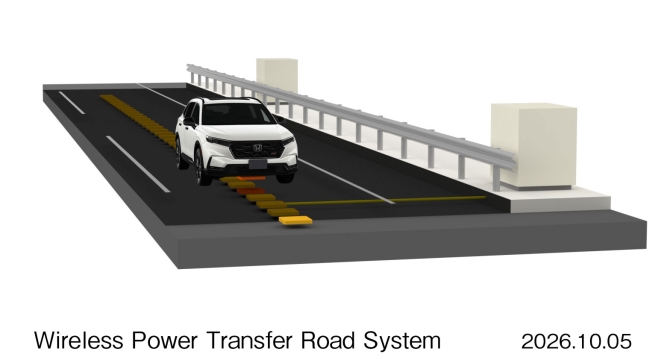
Honda R&D, a subsidiary of Honda Motor Co., has developed underlying technology for a magnetic coupling wireless power transfer road system in partnership with Taisei Corporation and Taisei Rotec Corporation.
The system enables wireless in-motion charging for electric vehicles, including passenger cars and heavy commercial fleets. The partners plan to initiate demonstration testing on public roads starting in FY2027.
The technology integrates high-power-density receiver and transmitter units from Honda with a high-response direct current power supply system from Taisei and road-embedding construction techniques from Taisei Rotec. By supplying power to electric vehicles while in motion, dynamic wireless power transfer reduces the need for stationary charging infrastructure. The initial commercial focus targets logistics and transport operations, where continuous operation offers economic benefits.
The ground assembly embedded in the roadway combines the inverter and coil into a single unit designed to connect via direct current distribution. This design reduces component counts, simplifies wiring and supports installation into existing road surfaces through standard milling methods. The road pavement structures are engineered to withstand continuous traffic loads from vehicles weighing up to 20 tonnes (20,000kg).
Testing conducted at Taisei Group’s T-FIELD facility in Satte verified system stability and structural durability. Starting in late 2026, the companies will build a test roadway at T-FIELD Tamura to evaluate long-term durability under one million wheel-load cycles, measure power transfer efficiency at outputs up to 150 kW and analyse electromagnetic shielding.
The partnership will also join the Tateyama Expressway demonstration project managed by East Nippon Expressway Company starting in 2027.
Comments (0)
ADD COMMENT