

- TIER IV
- Next-Generation Edge AI Semiconductor Research and Development Programme
- Japan Science and Technology Agency
- JST
- Level 4 autonomous
- SoC
- Professor Yoshihiro Kawahara
- Tensor Operator Set Architecture
- TOSA
- PyTorch
- Shinpei Kato
TIER IV Joins Japan's Edge AI Semiconductor Development Programme
- By MT Bureau
- August 16, 2026
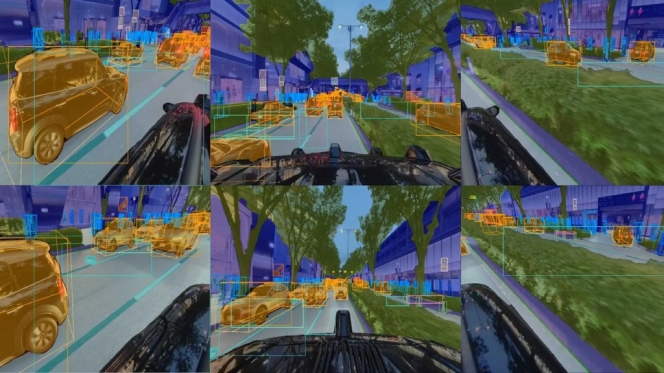
Open-source autonomous driving software company TIER IV has joined the Next-Generation Edge AI Semiconductor Research and Development Programme, led by the Japan Science and Technology Agency (JST). The initiative focuses on the development of a software-defined system-on-chip (SoC) designed for Level 4 autonomous driving applications.
As part of the programme, a team led by Professor Yoshihiro Kawahara at the University of Tokyo is researching physical AI chip design based on specific use cases. Concurrently, TIER IV is developing the logic design for an AI chip aimed at processing inference for end-to-end autonomous driving systems. TIER IV plans to open-source the resulting logic design, compiler, and software toolchain to allow semiconductor manufacturers and developers to modify and build upon the hardware architecture.
The project focuses on developing hardware architectures tailored for Transformer AI models, which process sensor data from cameras and point clouds for perception and motion planning.
The chip design incorporates dedicated circuits for matrix multiplication and attention mechanisms, aiming to reduce power consumption from external memory transfers. To maintain software adaptability, TIER IV is integrating the Tensor Operator Set Architecture (TOSA) as an intermediate representation layer between AI frameworks such as PyTorch and the chip hardware.
The initiative also applies formal verification techniques to mathematically trace numerical consistency during AI model compilation.
Shinpei Kato, Founder and Chief Executive Officer, TIER IV, said, “Advances in AI have been accelerated by powerful computing platforms, including GPUs, which have enabled rapid progress across the industry. As Level 4 autonomous driving moves toward broader deployment, we believe the next step is to complement these platforms with computing architectures designed for real-world and real-time requirements. Through this initiative, we are introducing a software-defined and open approach to AI chip design that combines power efficiency, adaptability, transparency and verifiability. In particular, the ability to understand how an AI model is transformed for execution and to verify the correctness of that processing will be increasingly important as autonomous driving systems are deployed in safety-critical environments. By extending the open-source philosophy behind Autoware from software to AI chip design and related toolchains, we aim to create an open ecosystem in which automakers, semiconductor manufacturers and developers can build upon the technology and continue advancing their own systems. This represents an important step toward a scalable, adaptable and reliable computing foundation for Level 4 autonomous driving.”
Professor Yoshihiro Kawahara stated, “In physical AI applications such as robotics and autonomous driving, GPU power consumption has long been a major bottleneck for deployment on battery-powered devices. This project aims to fundamentally overcome this constraint through a functionally differentiated chip design backward-mapped from specific use cases. I look forward to TIER IV developing chips responsible for high-level decision-making – specifically, the high-level behavioural layer that handles the thinking process essential for end-to-end physical AI and autonomous driving. As the leading force behind Autoware, the global standard open-source software for autonomous driving, TIER IV is democratising design, with an approach spanning application requirements to hardware. This enables applied researchers to shape their ideal semiconductors. This initiative, supported by an open ecosystem, has the potential to lay the foundations for a steady stream of Japanese startups creating high-value semiconductors.”
Valeo And KE:SAI Partner On Open-Source Autonomous Driving System Initiative
- By MT Bureau
- October 14, 2026

French tier 1 supplier Valeo and open science research lab KE:SAI have launched a joint research collaboration to develop a generalist artificial intelligence (AI) driving system for autonomous vehicles. The partnership plans to publish models, code, weights and datasets as open-source resources.
The initiative brings together artificial intelligence teams from valeo.ai in Paris and the KE:SAI founding team in Tübingen, Germany. The collaboration focuses on training a unified AI model capable of operating across different vehicle platforms, sensor configurations and geographic environments. Initial development will utilise large-scale real-world driving data before integrating reinforcement learning within simulated environments to address rare driving scenarios.
KE:SAI was co-founded by research organisation Kyutai and the ELLIS Institute Tübingen. By making the underlying code, benchmarks and model weights accessible, the initiative aims to provide automakers, component suppliers and academic laboratories with a standardised reference system for autonomous driving research and development.
Marc Vrecko, CEO, Valeo Brain, said, "This open-science collaboration with KE:SAI marks a strategic milestone for Valeo and the broader European automotive ecosystem. By combining our deep industrial and technological expertise in autonomous driving with world-class open-source research, we are establishing a shared foundation to accelerate the development of physical AI and democratize next-generation self-driving technologies."
Andreas Geiger, CEO, KE:SAI, said, "For language models, open source compressed years of progress into months, yet frontier physical AI is still largely closed. Valeo shares our belief that open foundations create more innovation than any closed system ever could. Everything we develop will be open. Every step forward is a step forward for everyone."
- Chalmers University of Technology
- Nature Communications
- Albert Skegro
- Changfu Zou
- electric vehicle charging
Chalmers University Study Highlights 20% Battery Life Extension Using Reconfigurable Packs
- By MT Bureau
- October 09, 2026

Researchers at Chalmers University of Technology, in collaboration with industry partners, have published a study in Nature Communications demonstrating that reconfigurable battery pack architectures can extend electric vehicle battery operational life by more than 20 percent under specific conditions.
In conventional electric vehicle battery packs, cells are wired in a fixed series configuration, meaning the weakest cell dictates the overall capacity, performance and lifespan of the entire pack. The architecture evaluated by the Chalmers engineering team uses integrated electronic switches and a centralised battery management system to monitor individual cells or cell groups. When a cell experiences accelerated degradation or reduced capacity, the system bypasses the degraded unit while electric current continues to flow through the remaining functional cells.
Albert Skegro, a PhD student at the Department of Electrical Engineering at Chalmers University of Technology, said, "They must all move at the pace of the slowest person and stop when that person stops, regardless of how much energy the others have left. With the architecture we have modelled, the battery can instead bypass the cell that is causing problems and continue using the remaining cells."
Changfu Zou, Professor at the Department of Electrical Engineering at Chalmers, said, "Reconfiguration is not an on-or-off choice. It is a spectrum. Where a manufacturer chooses to position itself on that spectrum determines how much of the potential benefit can be realised."
In a representative modelling scenario featuring an 80 kWh battery pack driven 12,000 kilometres annually over an 18.8-year vehicle lifespan, the reconfigurable system deferred battery replacement by approximately 14 months. The researchers noted that the technology yields the highest performance gains in high-voltage vehicles, including 400-volt and 800-volt electric passenger cars and commercial trucks, where higher cell counts in series increase the statistical probability of individual cell variance.
A techno-economic analysis included in the study determined that implementing cell-level switching hardware increases initial pack production costs by approximately nine per cent based on prototype-scale volumes of 1,000 units. The researchers identified an economic break-even threshold at a 12 percent cost increase, noting that volume manufacturing would lower component costs and increase financial viability for fleet operators and private owners. While prototype applications such as Volvo Cars' SmartCell concept and experimental road vehicles exist, mass-production vehicles using reconfigurable battery packs are yet to enter the commercial market.
Jakson Green Vehicles Adopts Dassault Systèmes 3DEXPERIENCE Platform For EV Engineering
- By MT Bureau
- October 07, 2026
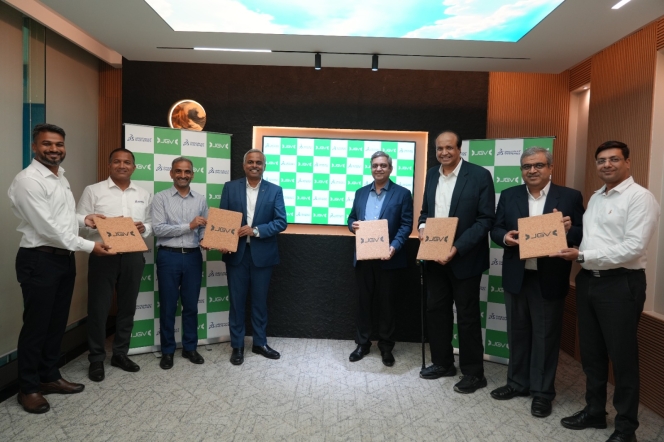
Jakson Green Vehicles has selected Dassault Systèmes’ cloud-based 3DEXPERIENCE platform to manage the design and development of its electric vehicles.
The implementation establishes a collaborative engineering framework to maintain digital continuity across the product development lifecycle. By connecting internal teams and external suppliers, the platform automates workflows, standardises component libraries and manages engineering change requests during early-stage product design. Virtual twin capabilities allow the vehicle manufacturer to conduct virtual validation testing to resolve structural and systems design issues prior to physical manufacturing.
Deepak Thakur, CEO, Jakson Green Vehicles, said, "Using Dassault Systèmes’ 3DEXPERIENCE Platform enables us to apply a collaborative approach and re-engineer our product lifecycle from the ground up. Through this transition from legacy environments to a unified digital thread, it enables strong R&D to achieve twin objectives; accelerated time-to-market and mitigated development costs. This partnership is helping us to transform the early-stage innovation and product design processes."
Deepak NG, Managing Director – India, Dassault Systèmes, said, "As India continues its dynamic growth trajectory, virtual twin technology serves as a powerful catalyst for sustainable innovation, empowering industries to rethink how they design, produce and operate."
The software adoption forms part of Jakson Green Vehicles' plan to build urban zero-emission mobility vehicles and infrastructure across India.
Gelion Signs Battery Assessment Agreement With Leading Automaker
- By MT Bureau
- October 07, 2026
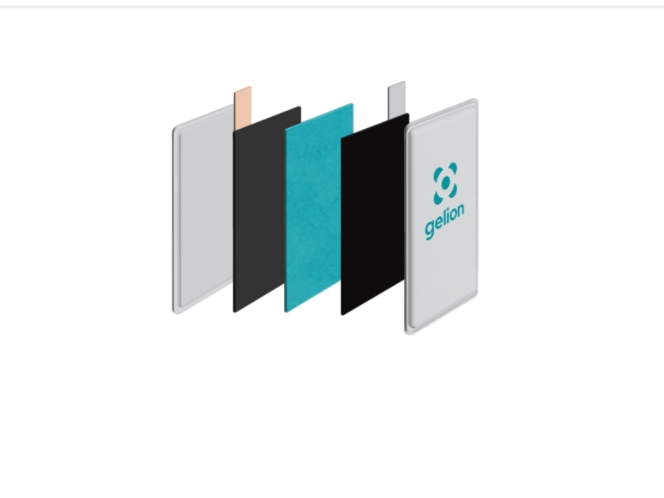
UK-headquartered energy technology company Gelion has entered into a material transfer agreement with a top 15 global automotive original equipment manufacturer to assess its NES cathode platform for future electric vehicle battery applications.
Under the terms of the agreement, Gelion will supply its sulfur-based cathode active material, coated cathodes and liquid electrolyte to the automotive partner. The manufacturer will evaluate the platform in both liquid and solid electrolyte cell configurations, testing compatibility across lithium metal and graphitic anode pathways targeting luxury and mass-market vehicle applications. The technology is designed to serve as a drop-in cathode material capable of integration into existing battery manufacturing lines without re-tooling.
Matt Wood, Chief Executive Officer, Gelion, said, "Our priority markets are commercial & defence drones, EVs and devices. We are honoured to be working with these major global automotive OEMs, and today’s announcement marks further progress towards the adoption of our technology and the generation of commercial revenues via funded programmes and eventually license and royalty revenue in the global EV market, alongside some of the industry’s leading companies."
"The growing engagement from global EV manufacturers reinforces the potential and attractiveness of our NES™ technology. This momentum is also mirrored in our agreements and partnerships across drones and devices, while our work with Tier 1 materials suppliers is advancing the scale-up of our unique, patented battery materials," Wood added.
The agreement expands Gelion’s ongoing industry testing programs with automotive manufacturers, extending the assessment of its sulfur-based cathode platform across liquid and solid battery systems.
Comments (0)
ADD COMMENT